
Business restructuring

Search documents
Australia's Qantas to exit Jetstar Japan to focus on domestic operations
Reuters· 2026-02-03 03:20
Group 1 - Qantas Airways is divesting its stake in Jetstar Japan to concentrate on its core domestic operations [1] - The decision reflects a strategic shift away from budget international businesses [1]


Qorvo(QRVO) - 2026 Q3 - Earnings Call Transcript
2026-01-27 22:32
Financial Data and Key Metrics Changes - Qorvo reported fiscal third quarter revenue of $993 million, with a non-GAAP gross margin of 49.1% and non-GAAP diluted earnings of $2.17 per share, all exceeding guidance [16] - The company generated operating cash flow of approximately $265 million and free cash flow of $237 million during the quarter [17] - For fiscal Q4, revenue guidance is set at $800 million ± $25 million, with a non-GAAP gross margin between 48% and 49% [17] Business Line Data and Key Metrics Changes - In the ACG segment, December quarterly revenue declined sequentially, but there was double-digit revenue growth compared to last December due to content gains from the largest customer [7] - CSG is expanding in automotive and enterprise sectors, with first production orders received for an automotive ultra-wideband program [10] - HPA continues to see growth across defense and aerospace markets, with expected sales in D&A markets totaling approximately $500 million for fiscal 2027 [12][13] Market Data and Key Metrics Changes - Android revenue is expected to decline by approximately $300 million in fiscal 2027, primarily due to strategic exit from lower-margin segments and memory pricing impacts [9][27] - The company anticipates a mid-single-digit decline in full-year revenue for fiscal 2027, with ACG declining but becoming more profitable, CSG remaining flat, and HPA continuing double-digit growth [15] Company Strategy and Development Direction - Qorvo is focusing on optimizing profitability and reducing capital intensity through restructuring actions, including the closure of the Costa Rica facility and transitioning production to external partners [6] - The company is intentionally resizing its Android business to reduce exposure to low-margin segments while maintaining a strong presence in premium and flagship smartphone markets [10] - Qorvo aims to achieve gross margins above 50% and EPS approaching $7 per share in fiscal 2027, reflecting a structurally improved portfolio mix and ongoing operational excellence [15] Management's Comments on Operating Environment and Future Outlook - Management expressed confidence in the long-term growth strategy, highlighting the importance of innovation and operational excellence in navigating the current market challenges [5] - The company is closely monitoring changes in tax policy that may affect operations and financial results [19] - Management noted that while there are pressures from memory pricing and availability, the strategic exit from lower-margin Android segments is expected to support overall profitability [54] Other Important Information - The company ended the quarter with approximately $1.3 billion in cash and equivalents and $1.5 billion in long-term debt, with no near-term maturities [16] - Qorvo's non-GAAP tax rate for fiscal 2026 is expected to be approximately 15% [18] Q&A Session Summary Question: Content roadmap and competition in sockets - Management acknowledged increased competition due to dual sourcing but remains optimistic about growth opportunities in future generations [22][24] Question: Android revenue decline and seasonal expectations - Management clarified that the expected decline in Android revenue is due to strategic exits and not typical seasonal patterns [25][27] Question: Impact of memory pricing on Android business - Management indicated that higher memory prices are affecting build plans, accelerating the exit from lower-margin Android segments [54] Question: Gross margin outlook for fiscal 2027 - Management stated that margin improvements will primarily come from a favorable business mix, particularly as HPA grows in significance [33] Question: Changes in inventory levels at customers - Management reported no abnormal inventory levels, attributing adjustments to customer build plans in response to memory pricing [58]

ALLY Q4 Earnings Beat as Revenues Grow Y/Y & Provisions Decline
ZACKS· 2026-01-22 18:35
Core Insights - Ally Financial's fourth-quarter 2025 adjusted earnings of $1.09 per share exceeded the Zacks Consensus Estimate of $1.01, marking a 39.7% increase from the previous year [1][8] - The company's net income attributable to common shareholders on a GAAP basis was $300 million, significantly up from $81 million in the prior-year quarter [2] - Total quarterly GAAP net revenues were $2.12 billion, a 4.8% increase year-over-year, although it slightly missed the Zacks Consensus Estimate of $2.13 billion [3] Financial Performance - Adjusted total revenues for the quarter were $2.17 billion, reflecting a 3.7% increase from the prior-year quarter [3] - Quarterly net financing revenues grew by 5.9% year-over-year to $1.60 billion, primarily due to lower interest expenses [4] - Total non-interest expenses decreased by 8.1% year-over-year to $1.25 billion, contributing to improved profitability [4][5] Loan and Deposit Growth - As of December 31, 2025, total net finance receivables and loans reached $134 billion, up 2.2% from the previous quarter [6] - Deposits also increased by 2.2% sequentially to $151.6 billion [6] Credit Quality - Non-performing loans decreased to $1.37 billion, down 8.1% year-over-year [7] - Net charge-offs were recorded at $452 million, a decline of 16.8% from the prior-year quarter [7] Capital Ratios - The total capital ratio improved to 13.6% from 13.2% in the prior-year period [9] - The tier 1 capital ratio increased to 11.7% from 11.3% as of December 31, 2024 [9] Strategic Outlook - The company's restructuring initiatives and balance sheet repositioning are expected to strengthen financials, although weak credit quality remains a near-term challenge [10]


Good Business Still There For Saks: Singer
Yahoo Finance· 2026-01-14 19:51
Core Viewpoint - Saks Global has filed for bankruptcy to restructure its debt and stabilize the business after experiencing significant losses [1] Group 1: Company Situation - The bankruptcy filing is aimed at addressing mounting losses and improving financial stability [1] - Mortimer Singer from Traub Capital Partners highlights that Saks possesses valuable assets, including a loyal high-net-worth customer base [1] - The company has strong flagship stores in New York and a robust e-commerce business, which are seen as key strengths during the restructuring process [1]
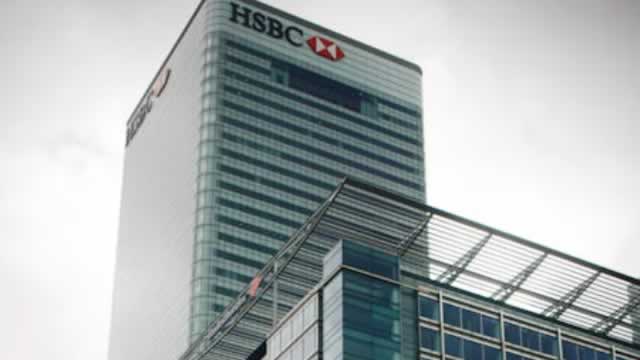
HSBC Considers Selling Singapore Insurance Unit While Sharpening Focus on Key Businesses
PYMNTS.com· 2026-01-14 15:47
Core Viewpoint - HSBC is considering selling its insurance business in Singapore, potentially valued at over $1 billion, as part of a broader strategy to reorganize and simplify its operations [1][2]. Group 1: Business Strategy - HSBC CEO Georges Elhedery has initiated an overhaul of the bank, which includes reorganizing divisions and exiting certain businesses [3]. - The bank has already sold its life insurance business in the UK and its custody and private banking operations in Germany, and has also sold its life insurance unit in France [3]. - HSBC aims to focus on areas where it has a competitive advantage and opportunities for growth, as indicated by its recent transactions and strategic decisions [4]. Group 2: Market Activity - Interest from other insurance and investment companies in HSBC Life (Singapore) has been noted, although the review process is still in its early stages [2]. - HSBC has launched a new asset management business in the UAE, which is expected to enhance its wealth franchise in the Middle East, North Africa, and Turkey (MENAT) [5]. - The bank has registered 10 new onshore investment funds in the UAE, indicating a commitment to expanding its presence in the region [5].

汽车零部件-海外投资者交流核心议题-Auto Parts-Key Discussions in Our Meetings With Overseas Investors
2026-01-13 02:11
Summary of Key Points from the Conference Call Industry Overview - **Tire Industry**: Positive sentiment due to steady replacement demand and growth in large-diameter tire sales. [2] - **Auto Parts Industry**: Cautious outlook due to declining new car production and completion of price pass-throughs to OEMs. [3] Company-Specific Insights Tire Industry - **TOYO**: High expectations for the expansion of high-performance tire sales and aggressive share buybacks. The stock outperformed in 2025, with potential for P/B re-rating based on ROE improvement. [2] - **Bridgestone**: Focus on cost improvements from restructuring and demand for mining tires. Comparisons with Michelin were discussed, indicating a competitive landscape. [2][9] Auto Parts Industry - **Nifco**: Plans for further share buybacks under a mid-term plan starting in F3/27 and sales expansion to Chinese OEMs. [3] - **Koito**: Expected earnings improvement through streamlining operations and enhancing lamp added value. [3] - **Toyoda Gosei**: Rated Overweight (OW) with investor interest in airbag growth and market share gains. Target P/E is set at 11.0x, slightly above the industry benchmark of 10.0x. [9][10] Investor Sentiment - Investors showed less interest in Tires compared to Japanese and Asian investors, but remained positive about stable earnings driven by solid replacement demand and a shift to larger tires. [9] - Interest in business restructuring within the Toyota group was noted, particularly regarding Nifco and Koito Mfg. [9] Risks and Opportunities - **Upside Risks for Toyoda Gosei**: Recovery in Toyota sales and production, expansion of airbag sales beyond Toyota, and growth in the eRubber business. [12] - **Downside Risks**: Competition for orders with overseas competitors and declining sales of sedan models. [12] Valuation Methodology - Toyoda Gosei's target P/E is based on expected competitive standing in the passive safety space and market share growth in the medium term. [10] Conclusion - The overall sentiment in the Tire industry is attractive, while the Auto Parts industry is viewed as in-line. There are specific growth opportunities and risks associated with key players in both sectors. [6][9]
HSBC vs. Barclays: Which Global Bank is Better Positioned for 2026?
ZACKS· 2025-12-23 14:01
Core Insights - HSBC and Barclays are restructuring to enhance operational efficiency and focus on core operations [1][2] HSBC Overview - HSBC is implementing a $1.5 billion cost-saving plan aimed at organizational simplification by 2026, with expected total severance and upfront charges of $1.8 billion [3] - The bank is divesting non-core operations in various regions, including the U.K., Europe, and the U.S., while concentrating on Asia and the Middle East [4] - HSBC is expanding its presence in Asia, proposing to privatize Hang Seng Bank and enhancing wealth operations in China and India [5] - Despite these initiatives, HSBC's revenue generation has been subdued due to a challenging macroeconomic environment and weak loan demand [6] Barclays Overview - Barclays is also simplifying operations, recently acquiring Best Egg for $800 million to strengthen its U.S. consumer finance capabilities [7] - The bank has divested its stake in Entercard Group for $273 million and its Germany-based consumer finance business, which is expected to improve profitability [8] - Barclays achieved gross savings of £1 billion in 2024 and anticipates total gross efficiency savings of £2 billion by the end of next year [9] Performance Comparison - Over the past six months, Barclays' shares increased by 43.9%, while HSBC's shares rose by 33.6%, outperforming the industry average of 26% [11] - In terms of valuation, HSBC has a price/tangible book (P/TB) ratio of 1.37X, while Barclays has a lower ratio of 0.96X, indicating that Barclays is relatively inexpensive [13] - Earnings estimates for HSBC suggest a 14.9% increase in 2025 and a 3.3% rise in 2026, while Barclays is projected to grow by 23.9% in 2025 and 21.3% in 2026 [15][17] Strategic Outlook - HSBC's strategic pivot towards high-growth Asian markets and comprehensive cost optimization positions it favorably for long-term gains despite near-term revenue pressures [19] - Barclays shows a stronger earnings outlook on paper, but its exposure to volatile capital markets raises concerns about consistent core income performance [20]


Ford to record $19.5 billion in special charges related to EV pullback
CNBC· 2025-12-15 21:05
Core Viewpoint - Ford Motor expects to incur approximately $19.5 billion in special items due to restructuring and a reduction in all-electric vehicle investments, primarily affecting the fourth quarter [1] Financial Impact - The charges will affect the automaker's net results but will not impact adjusted earnings, with an increase in guidance for adjusted earnings before interest and taxes to about $7 billion in 2025, aligning with earlier targets [2] Business Strategy Changes - The restructuring includes $8.5 billion in writedowns of EV assets and a shift in focus towards hybrid vehicles, cancellation of next-generation large all-electric trucks, and a rebalancing of investments in core products like trucks and SUVs [3] Leadership and Restructuring Plan - These changes are part of CEO Jim Farley's "Ford+" restructuring plan, which has evolved since its initial announcement as an EV growth strategy in 2021 [4]

HIGHWAY HOLDINGS REPORTS SECOND QUARTER FISCAL YEAR 2026 RESULTS
Prnewswire· 2025-12-15 12:00
Financial Performance - Net sales for the second quarter of fiscal year 2026 were $1.18 million, a decrease from $2.11 million in the same quarter of fiscal year 2025, representing a decline of approximately 44% [2][9] - The net loss for the second quarter of fiscal year 2026 was $373,000, or $0.08 per diluted share, compared to a net income of $231,000, or $0.05 per diluted share in the second quarter of fiscal year 2025 [2][9] - Gross profit for the second quarter of fiscal year 2026 was $301,000, down from $834,000 in the prior year, with gross profit as a percentage of sales decreasing to 25.5% from 39.4% [2][9] Operational Challenges - The company faced adverse pressure on its long-term OEM business due to a reorganization of a customer's production plant, which shifted a significant portion of its motor OEM business to the customer's own manufacturing in Czechia [3] - Despite the reduction in revenue from one OEM customer, another OEM customer has approved mass production of its motor product, which is expected to compensate for the loss over time [3] - The company is also experiencing a workforce reduction in its Myanmar plant due to the shift in motor manufacturing to China [3] Strategic Initiatives - The company is exploring mergers and acquisitions to ease its dependency on existing customers, having identified a suitable target for negotiation that is expected to create synergies [3] - There is an ongoing effort to enter the Chinese market, focusing on manufacturing for local demand and exploring new revenue streams related to services for the elderly population [3] - These new initiatives are aimed at reinvigorating revenue and profit growth while building a more stable business model [3] Balance Sheet Strength - The company's balance sheet remains strong, with total assets of $8.37 million and cash and cash equivalents exceeding $5.6 million, equating to approximately $1.21 per diluted share [6] - Total shareholders' equity at September 30, 2025, was $6.0 million, or $1.30 per diluted share, indicating a solid financial position despite recent operational challenges [6]


SBC Medical Group Holdings (NasdaqGM:SBC) Conference Transcript
2025-12-11 21:17
SBC Medical Group Holdings Conference Call Summary Company Overview - SBC Medical Group Holdings operates primarily in the aesthetic medicine sector, providing comprehensive management support services to franchise clinics. The company generates income through franchise fees and has diversified its offerings to include specialized medical services such as orthopedics, ophthalmology, and infertility treatment [2][3]. Industry Insights - The aesthetic medicine market is experiencing steady growth, with SBC holding a significant market share of approximately 25% in Japan. The company aims to enhance customer retention and satisfaction through high-quality services, reflected in a 72% repeat visit rate [10]. Financial Performance - In Q3 2025, SBC's sales had declined due to business restructuring and franchise fee revisions but have since stabilized, supported by increased point-related revenue. The decline in listing-related costs has also contributed to an upturn in operating and net income [4]. - The company maintains a robust financial foundation with approximately $180 million in cash and cash equivalents and minimal debt [20]. Growth Strategy - SBC plans to expand into Thailand through a partnership with BrightAsia, focusing on the aesthetic medical market. However, significant revenue contributions from this expansion are not expected until 2027 [15]. - The company has initiated a tender offer to acquire a majority stake in WAKU, which specializes in regenerative medicine and skincare products, aiming to enhance R&D capabilities and service offerings [5]. Revenue Drivers - Key revenue drivers identified for 2026 include: 1. Aesthetic dermatology segment, expected to see steady demand and growth. 2. Medical services in Japan, particularly orthopedics, driven by demographic trends. 3. International business expansion, with a cautious approach to scaling operations [8][9]. Risks and Challenges - SBC recognizes several risks that could impact its 2026 outlook: 1. Potential decline in average customer spend, which could affect financial performance. 2. Regulatory changes in Japan that may impact clinical operations. 3. Challenges in identifying successful business models in international markets [17]. Performance Indicators - The company monitors the number of franchise clinic locations and total revenue of medical corporations as key indicators of growth. A projected growth of 10%-15% in the number of clinics is expected, which may correlate with financial performance [19]. Capital Allocation Strategy - SBC's capital allocation strategy prioritizes growth investments both domestically and internationally, exploring opportunities in aesthetic medicine and broader medical fields. Share buybacks are considered but depend on market conditions and M&A opportunities [21]. Conclusion - SBC Medical Group Holdings is positioned for growth in the aesthetic medicine sector, with a focus on expanding its service offerings and geographic reach while maintaining a strong financial foundation. The company is cautiously optimistic about its future performance, particularly in light of its strategic initiatives and market positioning [11][12].