Copyright

Search documents
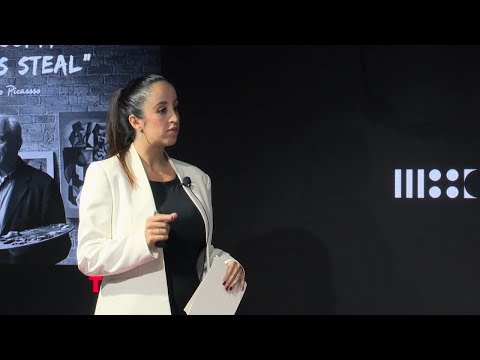
The Anthropic case: Creativity on trial | Laura Morató | TEDxEsade Salon
TEDx Talks· 2025-11-12 17:20
Any of us can be best-selling authors and not only that we also can be script writers, musician, software developers, illustrators. But no, I'm not referring to the typical motivational phrase I will tell my daughter. You can be anything you want in life. I'm talking about something much more literal because today any of us can write a book in a matter of hours. So what has changed? It's not that we are suddenly smarter or that we became much more creative. What has happened is that AI has burst into the sc ...

Getty Images Holdings, Inc. (GETY) Faces Financial and Legal Challenges
Financial Modeling Prep· 2025-11-07 17:00
Core Insights - Getty Images Holdings, Inc. is a significant player in the global visual content industry, providing a wide range of images and videos to businesses and consumers [1][5] - The company is set to release its quarterly earnings on November 10, 2025, with analysts predicting an earnings per share (EPS) of $0.04 and revenue of approximately $240 million [1][5] Financial Metrics - The price-to-sales ratio of Getty Images is 0.79, indicating that the stock is valued at less than one times its sales, which may raise concerns for investors [2] - The debt-to-equity ratio stands at 2.29, showing that the company has more than twice as much debt as equity, which could pose risks if cash flow generation is insufficient [2] - The current ratio is 0.70, suggesting that the company may struggle to meet its short-term obligations due to insufficient current assets to cover current liabilities [3] Legal Challenges - Getty Images is currently involved in a legal battle against Stability AI, with a recent setback in a lawsuit concerning copyright infringement related to Stability AI's image generator [4][5] - This legal issue underscores ongoing discussions about copyright and the use of AI in the media industry [4]

Universal Music went from suing an AI company to partnering with it. What will it mean for artists?
TechXplore· 2025-11-07 11:24
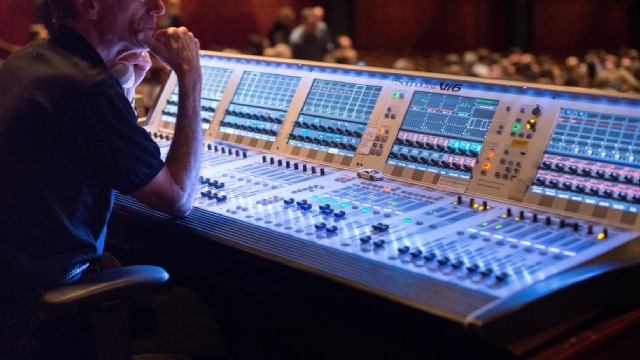
Core Viewpoint - Udio, an AI music company, reached an out-of-court settlement with Universal Music Group (UMG) over copyright infringement allegations, marking a significant shift from litigation to collaboration in the music industry [1][2][3] Group 1: Settlement Details - The lawsuit was initiated by the Recording Industry Association of America on behalf of UMG, Sony Music, and Warner Records, claiming Udio trained its AI on UMG's music catalog [2] - The settlement includes a strategic agreement to develop a new product that will be trained exclusively on UMG's catalog while respecting copyright [3] - The private nature of the settlement leaves uncertainty regarding how compensation for artists will be calculated [4] Group 2: Industry Implications - The agreement reflects the evolving dynamics of the music business, where major labels are increasingly engaging with AI technologies [4][6] - Similar settlements and partnerships are becoming common, as seen with Spotify's recent deal with UMG, Sony, and Warner to create responsible AI products [6] - These arrangements may allow music giants to financially benefit from non-infringing AI uses and receive a share from copyright payments [8] Group 3: Impact on Creators - The engagement of major rights-holders with generative AI products pressures smaller players to participate in the evolving landscape [9] - There is currently no clear model for how attribution and revenue will be distributed to creators whose works are used in AI training [10] - Emerging companies are developing "attribution tracing" technologies to potentially divide royalties based on AI-generated outputs, but this raises concerns about the economic power assigned to algorithms [11][12] Group 4: Broader Considerations - Individual artists lack clear protection against having their work used for AI training, leading to potential power imbalances in the industry [15] - A model trained on UMG's extensive catalog could revolutionize music creation, offering diverse styles and applications [16] - The traditional copyright framework may not adequately support the shared cultural value of music in the age of AI, prompting a need for new support mechanisms for original music [17]

X @The Economist
The Economist· 2025-11-07 06:40
The government is keen to encourage AI firms to invest in Britain. But they will be reluctant without guarantees that they will not face lawsuits for training their models on material that is copyrighted https://t.co/fXMQgFADwB ...
AI company Anthropic to pay $1.5 billion to settle author in lawsuit
NBC News· 2025-11-07 03:45
Copyright & AI - The AI industry faces increasing scrutiny regarding copyright infringement, highlighted by class action lawsuits [1] - Anthropic was ordered to pay $15 billion (15 亿) in a copyright settlement after illegally pirating over 7 million digitized books to train its AI model [2] - The court ruled that while AI can train on legally obtained copyrighted works under fair use, this doesn't extend to illegally downloaded material [4] - Under the settlement, Anthropic must compensate approximately 500 thousand authors, with $3 thousand for each work used [5] Legal Landscape - Over 40 lawsuits are currently in litigation between AI companies and copyright holders across the country [6] - Nearly 20 best-selling authors are suing OpenAI, alleging systematic theft for using their work to train ChatGPT [6] Industry Concerns - Authors express concerns about the potential for AI to devalue content creation and potentially replace human creativity [7][8] - Authors perceive AI as an existential threat to their profession [9]

X @Cointelegraph
Cointelegraph· 2025-11-06 01:00
🇬🇧 LATEST: UK High Court issues mixed ruling in Getty Images v. Stability AI case, mostly favoring Stability but leaving key AI copyright questions unanswered.What does this mean for the future of AI training? 👇 https://t.co/NznSH6U9mS ...
How artists can protect their work from AI | Dr. Heather Zheng | TEDxChicago
TEDx Talks· 2025-10-28 17:00
Generative AI Impact on Identity - Generative AI models pose a serious threat to human identity by enabling the creation of fake versions of individuals using their data [6] - AI models can mimic voices with short audio recordings, leading to misuse, as seen with celebrities like Tom Hanks and Scarlett Johansson [7] - Scammers are using AI to generate fake faces and voices of loved ones to deceive seniors, and harmful content like undressing apps is being created [8] Impact on Creative Professionals - Generative AI models are trained to mimic the creations of artists, impacting their identity and livelihoods [11] - Artists are losing jobs and income due to AI-generated mimics overshadowing their work, leading some to quit or reconsider their careers [12] - Artists face a dilemma: share their work and risk it being used to train AI models, or disconnect from the community [13][14] Solutions and Tools - Glaze and Nightshade were developed as tools to protect visual artists by adding modifications to artwork that mislead AI models [16][17] - Glaze protects artistic style, while Nightshade protects individual objects or copyrighted characters [18][19] - These tools have been downloaded over 10 million times by artists from more than 160 countries [21] Regulatory and Future Considerations - The research team testified in front of state legislatures in California and Illinois on data and identity privacy, leading to regulation bills being signed into law [23] - New protective tools are being developed to disrupt deep fake facial models and undressing apps, with other researchers working on protecting audio and music [24] - Protecting creativity and identity is essential for the future, as highlighted by children's concerns [26][27]

X @The Economist
The Economist· 2025-10-23 15:10
Many creative companies claim that AI made content infringes their copyright. Yet for the best-known creators, it presents two opportunities https://t.co/QDK39rnS24 ...
News Corp CEO Robert Thomson says AI firms aren't paying enough for content: ‘fundamental miscalculation'
New York Post· 2025-10-21 20:46
Core Viewpoint - News Corp CEO Robert Thomson criticized AI companies for prioritizing infrastructure investments over content creation, labeling this as a "fundamental miscalculation" [1][4]. Group 1: Investment in Content vs. Infrastructure - Thomson emphasized that AI businesses must invest significantly in "editorial content," which he considers essential for the functionality of AI systems [1][2]. - He pointed out that without substantial investment in content, AI companies risk undermining the value of their operations [1]. Group 2: Licensing and Legal Strategies - Under Thomson's leadership, News Corp has adopted a "woo or sue" strategy, engaging in licensing agreements with companies that respect copyrights while pursuing legal action against those that do not [2][3]. - News Corp's licensing deal with OpenAI, valued at over $250 million over five years, sets a precedent for future collaborations between media organizations and AI firms [3]. Group 3: Accountability and Rights Protection - Thomson highlighted the importance of transparency and accountability in the AI industry, advocating for news organizations to assert their rights proactively [6][10]. - He urged the media to continuously improve and not adopt a defensive stance, as this is not a winning strategy [8]. Group 4: Legal Landscape and Copyright Issues - A wave of copyright lawsuits has emerged against AI firms, with notable cases involving The New York Times and several other publishers [10][11]. - Thomson argued that creators of AI systems must be held responsible for the outcomes of their technologies, regardless of the complexities involved [9][10].

Neural fingerprinting makes media identifiable even when distorted by AI: SoundPatrol co-founders
CNBC Television· 2025-10-21 01:16
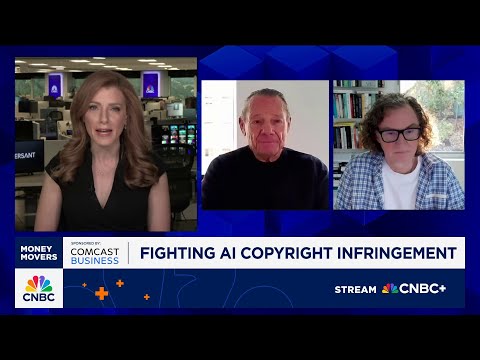
As viral AI models like OpenAI soar too raise these ex existential risks about Hollywood's copyrighted material, new tools are emerging to protect IP rights. Uh for today's tech check, our Julia Benston joins us with the co-founders of antipiriracy startup Sound. One of whom has a long history in Hollywood.Hey Julia. >> Hey Carl. That's right.Legendary Hollywood super agent and co-founder of CA Michael Oitz. Also a longtime tech investor. He co-founded antipiriracy company Sound Control with AI researcher W ...