Cost efficiency

Search documents
American Airlines Group Inc. (AAL) Presents at Goldman Sachs Industrials and Materials Conference 2025 Transcript
Seeking Alpha· 2025-12-03 23:43
Core Insights - The company is optimistic about its future, particularly looking forward to 2026, which marks its centennial year [2] - Significant progress has been made in improving the balance sheet post-COVID, with a focus on reducing debt levels [2] Financial Performance - The company had peak debt levels of $54 billion during COVID and has successfully reduced this by $15 billion ahead of its target, achieving this reduction by 2024 [2] - A new target has been set to lower total debt below $35 billion by the end of 2027, with ongoing progress being made towards this goal [2] Operational Efficiency - The company is recognized as a leader in cost efficiency, implementing a transformation initiative referred to as "reengineering the business" [2]



American Strategic Investment (NYC) - 2025 Q3 - Earnings Call Transcript
2025-11-20 00:02
Financial Data and Key Metrics Changes - Third quarter 2025 revenue was $12.3 million, down from $15.4 million in the third quarter of 2024, primarily due to the sale of 9 Times Square in Q4 2024 [10] - GAAP net gain attributable to common stockholders was $35.8 million in Q3 2025, influenced by a $44.3 million non-cash gain related to the foreclosure at 1140 Avenue of the Americas, compared to a net loss of $34.5 million in Q3 2024 [10] - Adjusted EBITDA for Q3 2025 was $1.9 million, down from $4.1 million in Q3 2024, while cash net operating income decreased to $5.3 million from $7 million in the same period [10][11] Business Line Data and Key Metrics Changes - The company executed a significant lease renewal at 196 Orchard, extending the weighted average remaining lease term of the portfolio to 6.2 years, up from 5.9 years at the end of Q2 2025 [5] - Near-term lease expirations represent 8% of annualized straight-line rent, with 56% of leases now extending beyond 2030, an increase from 54% last quarter [6] Market Data and Key Metrics Changes - The company's real estate portfolio, valued at approximately $390 million and covering about 743,000 sq ft, is primarily located in Manhattan, benefiting from a strong tenant base that includes large investment-grade firms [7] - The focus on resilient industries near transit-oriented locations is expected to support occupancy growth and tenant retention [7] Company Strategy and Development Direction - The company aims to unlock value, diversify holdings, and strengthen its balance sheet by marketing properties like 123 Williams Street and 196 Orchard for sale [8] - The strategic disposition of 1140 Avenue of the Americas is anticipated to eliminate a $99 million liability, aligning with the strategy to manage the balance sheet proactively [8] Management's Comments on Operating Environment and Future Outlook - Management emphasized the importance of enhancing operational flexibility through the consensual foreclosure of 1140 Avenue of the Americas and ongoing property sales [12] - The focus remains on leasing available space, renewing existing leases, and maintaining strict expense controls [12] Other Important Information - The company has changed its audit partners to CBIZ CPAs to streamline costs and reduce general and administrative expenses, with no disputes with the previous firm [11] Q&A Session Summary - No specific questions or answers were recorded in the provided content, as the call concluded without a Q&A segment [13]

American Strategic Investment (NYC) - 2025 Q3 - Earnings Call Transcript
2025-11-20 00:00
Financial Data and Key Metrics Changes - Third quarter 2025 revenue was $12.3 million, down from $15.4 million in the third quarter of 2024, primarily due to the sale of 9 Times Square in Q4 2024 [9] - GAAP net gain attributable to common stockholders was $35.8 million in Q3 2025, influenced by a $44.3 million non-cash gain related to the foreclosure at 1140 Avenue of the Americas, compared to a net loss of $34.5 million in Q3 2024 [9] - Adjusted EBITDA for Q3 2025 was $1.9 million, down from $4.1 million in Q3 2024, while cash net operating income decreased to $5.3 million from $7 million in the same period [9][10] Business Line Data and Key Metrics Changes - The company executed a significant lease renewal at 196 Orchard, extending the weighted average remaining lease term of the portfolio to 6.2 years, up from 5.9 years at the end of Q2 2025 [5] - Near-term lease expirations represent 8% of annualized straight-line rent, with 56% of leases now extending beyond 2030, an increase from 54% last quarter [6] Market Data and Key Metrics Changes - The real estate portfolio, excluding the property expected to be disposed of, is valued at approximately $390 million and spans about 743,000 square feet, primarily located in Manhattan [6] - The tenant base includes large investment-grade firms, contributing to portfolio stability [6] Company Strategy and Development Direction - The company is focused on unlocking value from current assets, emphasizing tenant retention, property improvements, and cost efficiency [5] - Ongoing marketing efforts for the sale of 123 Williams Street and 196 Orchard are aimed at generating cash to retire debt and reinvest in higher-yielding assets [7] - The strategic disposition of 1140 Avenue of the Americas is expected to eliminate a $99 million liability, aligning with the strategy to manage the balance sheet proactively [7] Management's Comments on Operating Environment and Future Outlook - Management highlighted the importance of operational flexibility through the consensual foreclosure of 1140 Avenue of the Americas and ongoing sales efforts [11] - The focus remains on leasing available space, renewing existing leases, and maintaining strict expense controls [11] Other Important Information - The company has changed its audit partners to CBIZ CPAs to streamline costs and reduce general and administrative expenses [10] Q&A Session Summary - No specific questions or answers were documented in the provided content, indicating a focus on the presentation rather than an interactive Q&A session.
LATAM AIRLINES GROUP S.A.(LTM) - 2025 Q3 - Earnings Call Transcript
2025-11-17 14:02
Financial Data and Key Metrics Changes - LATAM Airlines Group reported total revenues of $3.9 billion, an increase of 17.3% year-over-year, driven by growth in both Passenger and Cargo segments [16] - Passenger revenues rose by 18.5%, with premium traveler revenues increasing by more than 15% compared to the same period last year [17] - Adjusted operating margin expanded to 18.1%, while adjusted EBITDAR reached $1.15 billion during the quarter, and net income totaled $379 million, up 26% year-over-year [8][18] Business Line Data and Key Metrics Changes - LATAM transported over 22.9 million passengers, with a consolidated load factor of 85.4% [8] - Passenger RASK increased by 8.4% year-over-year in US dollars, reflecting strong operational performance [11] - Cargo revenues grew by 6.3%, contributing to overall revenue growth [17] Market Data and Key Metrics Changes - In Brazil, LATAM Airlines Brazil grew capacity by over 12% year-over-year, with a load factor increase of 2.2 percentage points [11] - Spanish-speaking affiliates saw passenger RASK increase by 18% year-over-year, indicating improved performance in those markets [11] - The international segment operated with high load factors, although demand to the U.S. was noted to be softer, particularly in leisure travel [27][28] Company Strategy and Development Direction - LATAM is focused on maintaining disciplined execution and cost control while enhancing customer experience through product improvements [5][14] - The company plans to launch a new Premium Comfort Class in 2027, reflecting its commitment to offering more choices to passengers [15] - LATAM's fleet modernization strategy includes the acquisition of up to 74 Embraer E2 aircraft, which will improve regional connectivity and fuel efficiency [9][10] Management's Comments on Operating Environment and Future Outlook - Management expressed confidence in the demand environment and the company's ability to maintain profitable growth despite some softness in international leisure travel [28] - The company anticipates high single-digit consolidated capacity growth for the next year, supported by efficiency and a robust fleet delivery schedule [14][21] - LATAM updated its full-year 2025 guidance, projecting adjusted EBITDAR between $4 billion and $4.1 billion, reflecting a more constructive outlook [21][22] Other Important Information - LATAM executed a share repurchase program totaling $433 million, demonstrating a disciplined approach to capital allocation [9][20] - The company ended the quarter with a liquidity level of 25.8% and an adjusted net leverage ratio of 1.5 times, aligning with financial policy targets [20] Q&A Session Summary Question: International performance compared to Brazil and Spanish-speaking countries - Management noted stable demand in most international segments, with softer demand to the U.S. linked to leisure travel preferences [27][28] Question: Update on Brazil's legislation regarding free baggage - The law passed in Brazil allows passengers to carry a bag without charge for both domestic and international flights, but its implementation is still uncertain [33][34] Question: Impact of premium experience investments on revenue growth - Premium revenue is growing faster than capacity, contributing significantly to RASK improvements, driven by enhanced customer experience and product offerings [45][46] Question: Reasons for growth slowdown in international traffic - Management attributed the slowdown to external factors affecting leisure travel to the U.S., rather than a fundamental decline in demand [51] Question: Outlook on fleet and booking curve for next year - LATAM expects high single-digit ASK growth for 2026, with a total fleet of around 410 aircraft by year-end [60][62] Question: Lower percentage of hedge fuel this quarter - Management clarified that the current hedge fuel percentages are standard and consistent with past practices, with expectations for increases as quarters progress [66][68] Question: Expected impact of the pallet strike in Chile - Management indicated no clarity on the potential impact of the strike at this time [73]

Jumia(JMIA) - 2025 Q3 - Earnings Call Transcript
2025-11-12 14:30
Financial Data and Key Metrics Changes - Revenue for Q3 2025 reached $45.6 million, up 25% year over year, with first-party sales representing 52% of total revenue [7][16] - Adjusted EBITDA loss improved to $14 million compared to $17 million in the same quarter last year, reflecting operating leverage and cost discipline [9][20] - Loss before income tax was $17.7 million, a 1% decrease year over year [9][20] Business Line Data and Key Metrics Changes - Physical goods GMV grew by 26% year over year, and by 37% when excluding corporate sales [6][7] - Adjusted for perimeter effects, physical goods orders grew 34% year over year, driven by strong consumer demand and improved product offerings [5][6] - Marketing and advertising revenue totaled $1.3 million, down 24% year over year, reflecting lower spending from large sellers [17][55] Market Data and Key Metrics Changes - Nigeria saw physical goods orders up 30% year over year, with GMV up 43% [11] - Kenya experienced physical goods orders up 56% year over year, driven by up-country expansion [11] - Ghana delivered outstanding performance with physical goods orders up 94% year over year and GMV increasing 157% [14] Company Strategy and Development Direction - The company aims to achieve full-year profitability by 2027, focusing on profitable growth through efficiency and strategic investments [5][23] - Continued emphasis on up-country expansion to unlock opportunities beyond major urban centers [10][52] - The company is phasing out non-core digital transactions to streamline operations and enhance efficiency [6] Management's Comments on Operating Environment and Future Outlook - Management expressed confidence in achieving full-year guidance, citing strong customer demand and operational improvements [8][23] - The competitive environment remains stable, with some global entrants pulling back, allowing the company to gain local market share [15][39] - Management highlighted the importance of adapting to local market conditions to maintain a competitive edge [39][40] Other Important Information - The average order value for physical goods in Q3 2025 was $35, down from $38 in Q3 2024, mainly due to reduced corporate sales in Egypt [7][18] - The total headcount declined by 7% to just over 2,010 employees, reflecting a leaner organization [9][21] - The company launched Jumia Instant, offering four-hour delivery in Nairobi, to compete with quick delivery platforms [12][42] Q&A Session Summary Question: Guidance for PBT and cost management - Management expects significant acceleration in usage in Q4 due to strong seasonality, which will translate into revenue and monetization [26][27] - Fulfillment cost per order is expected to remain at the new baseline of $1.86, reflecting improved efficiency [28] Question: Working capital movements for Q4 - Management indicated that they do not expect significant changes in working capital dynamics for Q4, as they can ramp up inventory faster [30][31] Question: October order and GMV growth - Management confirmed that the above 30% growth in October is indicative of continued momentum, but they remain cautious about expectations for the full quarter [32][33] Question: Supply access in Q4 - Management noted that currency stability is positively impacting supply, with increased willingness from local and international sellers to commit inventory to Africa [35][36] Question: Competitive environment - Management observed reduced marketing investment from international platforms, indicating challenges for them in operating at scale in Africa [37][38] Question: Advertising monetization opportunities - Management sees significant upside potential in advertising revenue, aiming to reach around 2% of GMV in the mid to long term [55][56]

Wells Fargo Shares Jump Nearly 10% in a Month: Should You Buy Now?
ZACKS· 2025-11-11 19:26
Core Viewpoint - Wells Fargo's stock has shown strong performance, rising 9.7% in the past month, outperforming the industry and close peers [1][4]. Group 1: Asset Cap Removal and Growth Opportunities - The Federal Reserve lifted Wells Fargo's $1.95 trillion asset cap in June 2025, allowing the bank to expand its balance sheet and growth potential [5][8]. - The removal of the asset cap enables Wells Fargo to increase deposits, grow its loan portfolio, and broaden securities holdings, leading to a rise in net interest income (NII) [6][8]. - The bank is focusing on expanding fee-generating activities, with trading-related assets increasing by approximately 50% since the end of 2023 and investment banking fees rising by 19% in the first nine months of 2025 [7][8]. Group 2: Financial Performance and Projections - Management expects Wells Fargo's fourth-quarter 2025 NII to be between $12.4 billion and $12.5 billion, up from $11.8 billion a year ago [11]. - For 2025 and 2026, the company's earnings are projected to rise by 16.8% and 10.8%, respectively, with upward revisions in estimates for both years [23][24]. Group 3: Cost Efficiency Initiatives - Wells Fargo is implementing cost-cutting measures, including streamlining its organizational structure and reducing its branch network, which declined by 2.1% year over year to 4,108 branches [13][14]. - The company aims to achieve $15 billion in gross expense savings by the end of the year through ongoing investments in digital infrastructure and process automation [15]. Group 4: Capital Management and Shareholder Returns - As of September 30, 2025, Wells Fargo's liquidity coverage ratio was 121%, with liquid assets totaling $486.1 billion, supporting robust capital distribution [19][21]. - The bank raised its common stock dividend by 12.5% to 45 cents per share and has a $40 billion share repurchase program in place, enhancing investor confidence [19][21]. Group 5: Valuation and Investment Appeal - Wells Fargo is trading at a forward P/E multiple of 12.58X, below the industry average of 14.86X, indicating it may be undervalued relative to peers [27][29]. - The stock is considered an attractive entry point for investors seeking steady growth and income potential, currently carrying a Zacks Rank of 2 (Buy) [29].


BrightSpring Health Services (NasdaqGS:BTSG) 2025 Conference Transcript
2025-11-11 17:02
Summary of BrightSpring Health Services Conference Call Company Overview - **Company**: BrightSpring Health Services (NasdaqGS: BTSG) - **Date**: November 11, 2025 - **Speakers**: Jon Rousseau (President and CEO), Jennifer Phipps (Chief Financial Officer) Key Points Industry and Market Performance - BrightSpring has experienced broad-based growth across its three pharmacy and three provider businesses, driven by volume increases and efficiency initiatives [2][3] - The company operates in home and community health services, focusing on high-quality services for complex and high-need individuals [3][4] Financial Performance and Growth Projections - The company has achieved a compound annual growth rate (CAGR) of approximately 15% over the past nine years, with recent growth rates around 20% [5][6] - Future growth is expected to maintain historical levels, with aspirations to reach a 20% CAGR, although this is not guaranteed due to the company's size [6][7] Operational Investments - BrightSpring is investing heavily in IT and HR to strengthen operational processes and support long-term growth [4][6] - The company is focused on maintaining a strong balance sheet, with leverage expected to be around three times or below by year-end, allowing for more acquisition flexibility [10][11] Acquisitions and Divestitures - The company is working towards closing a divestiture of its community living segment in Q1 2026 and expects to finalize the acquisition of Amedisys in Q4 2025 [11][12] - BrightSpring has completed 73 acquisitions in the last five years, with a focus on ensuring that EBITDA from these acquisitions exceeds purchase prices [40] Pharmacy Business Insights - Specialty pharmacy revenues, particularly in oncology and rare diseases, grew by 42% in Q3 2025, with expectations for continued strength in these areas [14][15] - The company anticipates a similar number of new drugs entering the market next year, maintaining a strong pipeline of limited distribution drugs [19][22] Challenges and Regulatory Environment - The Inflation Reduction Act (IRA) is expected to impact the business, with ongoing efforts to secure regulatory fixes and enhanced dispensing fees for long-term care pharmacies [28][29] - The company is actively working with payers to mitigate potential impacts through operational efficiencies [29] Future Outlook - BrightSpring is optimistic about the home health sector, emphasizing the importance of long-term rate sustainability and the value of home health services in reducing hospitalizations [34][35] - The company aims to deepen its market presence in infusion therapy, targeting a national market share increase from low single digits to around 10% over the next three to five years [25][26] Conclusion - BrightSpring Health Services is positioned for continued growth through strategic investments, operational efficiencies, and a robust acquisition strategy, while navigating regulatory challenges and market dynamics [4][6][34]

GreenPower Announces Voluntary Delisting from the TSXV
Prnewswire· 2025-11-05 20:45
Core Viewpoint - GreenPower Motor Company Inc. has announced its decision to voluntarily delist its common shares from the TSX Venture Exchange, effective November 14, 2025, to focus on strategic priorities and operational efficiencies [1][2]. Delisting Reasons - The delisting is influenced by consistently low trading volumes on the TSX Venture Exchange, with less than 2% of the trading volumes compared to NASDAQ for the nine months ended September 30, 2025 [6]. - The company aims to reduce regulatory and compliance costs, allowing for better allocation of resources towards growth initiatives [6]. - This decision aligns with the company's strategy to streamline operations and focus on markets that provide greater shareholder value [6]. Impact on Shareholders - Shareholders' ownership will not be affected by the delisting, as the company will maintain its NASDAQ listing, ensuring continued trading opportunities [2]. - The company will remain a reporting issuer under Canadian securities laws, ensuring transparency and compliance with regulatory requirements [2]. Commitment to Shareholders - GreenPower is dedicated to delivering long-term value to its shareholders, and the delisting reflects its commitment to optimizing operations and focusing on sustainable growth initiatives [4]. Next Steps - The company is collaborating with the Exchange to ensure a smooth transition, and shareholders are encouraged to consult their brokers or financial advisors regarding trading options and account adjustments [3]. Company Overview - GreenPower designs, builds, and distributes a range of all-electric medium and heavy-duty vehicles, including transit buses, school buses, shuttles, and cargo vans, with a focus on zero-emission solutions [5]. - The company was founded in Vancouver, Canada, and has primary operational facilities in southern California, having completed its U.S. IPO and NASDAQ listing in August 2020 [5].


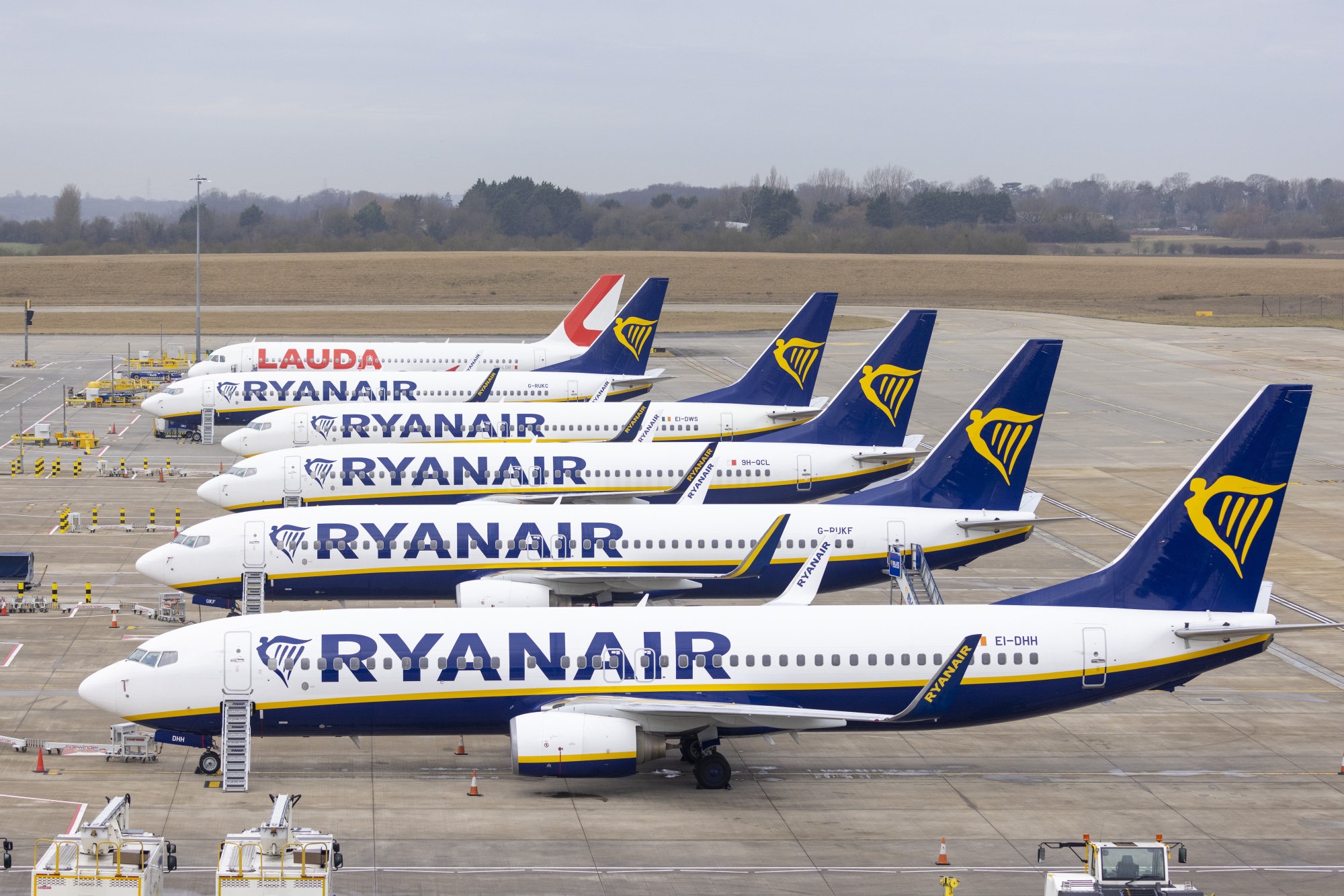
Ryanair Holdings plc (NASDAQ:RYAAY) Surpasses Earnings Expectations
Financial Modeling Prep· 2025-11-03 22:00
Core Insights - Ryanair Holdings plc has demonstrated strong financial performance, with earnings per share of $3.71 and revenue of approximately $6.32 billion, significantly exceeding expectations [2][6] - The company's strategic acquisition of Boeing 737 Max-8 aircraft has enhanced passenger capacity, leading to an updated full-year traffic forecast of 207 million passengers [2][6] - Ryanair's financial metrics indicate a low valuation with a P/E ratio of approximately 5.8 and a compelling earnings yield of around 17.24%, suggesting robust growth potential [4][5][6] Financial Performance - Ryanair reported earnings per share of $3.71, surpassing the forecasted $3.62, and revenue of approximately $6.32 billion, which was well above the expected $3.11 billion [2][6] - The company's price-to-earnings (P/E) ratio stands at approximately 5.8, indicating a relatively low valuation against its earnings [4] - An earnings yield of around 17.24% highlights the company's strong return on investment for shareholders [5][6] Strategic Direction - The Q2 2026 earnings call featured key executives discussing Ryanair's financial health and strategic plans, reflecting the investment community's interest [3] - Ryanair's commitment to maintaining its competitive edge in the airline sector was emphasized during the earnings call [3] - The earlier-than-anticipated deliveries of Boeing 737 Max-8 aircraft have played a crucial role in boosting passenger capacity [2][6] Financial Stability - Ryanair's debt-to-equity ratio is approximately 0.31, indicating a conservative approach to debt usage [5] - The current ratio of about 0.66 may suggest potential short-term liquidity challenges [5] - The enterprise value to sales ratio of 0.32 and enterprise value to operating cash flow ratio of 1.25 demonstrate the company's efficiency in generating operational cash flow [4]

Mammoth Energy Services(TUSK) - 2025 Q3 - Earnings Call Transcript
2025-10-31 16:00
Financial Data and Key Metrics Changes - For Q3 2025, revenue was $14.8 million, down from $16.4 million in Q2 and $17.1 million year-over-year, primarily due to the divestiture of the Piranha division assets and underperformance in the sand segment [4][5] - Net loss from continuing operations was $12.1 million, or $0.25 per diluted share, compared to a loss of $8.9 million, or $0.18 per diluted share, in Q3 2024 [5][17] - Adjusted EBITDA from continuing operations was a loss of $4.4 million in Q3 compared to a loss of $2.9 million in the prior year [18] Business Line Data and Key Metrics Changes - Rentals segment revenue was $2.8 million, down 11% sequentially but up 24% year-over-year, with aviation performing well [13][14] - Infrastructure segment revenue declined 13% sequentially to $4.8 million, impacted by operational execution challenges [15] - Sand segment revenue was $2.7 million, down 49% from Q2 and 44% year-over-year, reflecting the Piranha division divestiture and weather-related disruptions [16] - Accommodations revenue increased 29% sequentially to $2.3 million, with solid EBITDA growth [16] Market Data and Key Metrics Changes - Market fundamentals in energy services remain steady, with firm pricing in most basins [7] - Infrastructure demand is benefiting from grid hardening, broadband expansion, and data center investments [8] - The aviation platform is positioned to capture sustained leasing demand in the regional passenger market [8] Company Strategy and Development Direction - The company is focused on transforming and simplifying its portfolio towards higher-return businesses, with a notable emphasis on the drilling segment [4][6] - Capital deployment is disciplined, with investments directed towards aviation assets that generate consistent cash flow [7][8] - The company aims to build a leaner organization centered on sustainable returns rather than scale [6][9] Management's Comments on Operating Environment and Future Outlook - Management acknowledges the challenges faced in the sand and infrastructure segments but remains optimistic about the long-term opportunities [10][11] - The company expects improved cash generation and margin recovery in 2026 as transformation initiatives take hold [22][23] - Management emphasizes the importance of operational excellence and strategic capital deployment for future growth [30] Other Important Information - The company maintained a strong balance sheet with $110.9 million in unrestricted cash and total liquidity of approximately $153.4 million [20] - Subsequent to the quarter end, approximately $19.8 million of restricted cash was released, improving the liquidity position [21] Q&A Session Summary Question: Visibility for sand volumes in 2026 - Management expects an increase in sand volumes compared to Q3, with encouraging sales dialogues for 2026 [24][25] Question: Balance sheet details - Cash and marketable securities were about $123 million, excluding $10 million in escrow and $5 to $10 million from land rigs held for sale [26][27] Question: Path to getting the sand business back to free cash flow neutral - Management highlighted several levers, including encouraging sales dialogues and one-time charges related to railcar returns [28][29]