Cost inflation

Search documents
Can Chipotle's Restaurant Margins Withstand Cost Inflation Headwinds?
ZACKS· 2025-11-12 18:06
Core Insights - Chipotle Mexican Grill, Inc. is tightening operational and pricing discipline due to pressure on restaurant-level margins from rising cost inflation, with margins contracting 100 basis points year over year to 24.5% in Q3 2025 [1][8] - The company anticipates continued margin pressure as inflation persists into late 2025 and 2026, expecting cost of sales to remain around 30% of revenues in Q4 [2][8] - Chipotle is prioritizing price stability over fully offsetting inflation through price increases, maintaining a 20-30% pricing discount relative to fast-casual peers to preserve customer retention [3][5] Financial Performance - In Q3 2025, labor costs rose to 25.2% of sales, up about 30 basis points year over year, with expectations for labor expenses to remain in the high-25% range in Q4 [2][8] - Chipotle's stock has declined 50.6% year-to-date, compared to an industry decline of 11.3% [6][8] - The forward price-to-sales (P/S) multiple for Chipotle is 3.03, below the industry average of 3.35, while competitors like Starbucks and Sweetgreen have P/S multiples of 2.52 and 0.75, respectively [10] Operational Strategy - The company is focusing on efficiency and consistency to stabilize profitability, with initiatives like high-efficiency equipment rollout and menu innovation aimed at improving throughput and food quality [4][5] - Digital engagement enhancements and retraining of field teams are also part of the strategy to improve order accuracy and enhance the in-store experience [4][5] Long-term Outlook - Despite near-term margin pressures, Chipotle is implementing structural initiatives to improve operational productivity and deepen customer loyalty, aiming for sustainable, margin-accretive growth in the future [5][8] - The Zacks Consensus Estimate for Chipotle's 2026 earnings per share has declined 12% to $1.25, with projections indicating a 7% rise in earnings for 2026 [11][13]


CompX International Q3 Profit Rises Y/Y on Strong Segment Sales Growth
ZACKS· 2025-11-07 18:55
Core Viewpoint - CompX International Inc. reported strong financial results for the third quarter of 2025, with significant growth in net sales and net income, although the stock has shown modest underperformance compared to the S&P 500 index [1][2][3]. Financial Performance - Third-quarter 2025 net sales reached $40 million, a 19% increase from $33.6 million in the same quarter of 2024 [2]. - Net income grew approximately 20% to $4.2 million (34 cents per share) from $3.5 million (28 cents per share) year-over-year [2]. - For the nine months ended September 30, 2025, revenues climbed 12% year-over-year to $120.6 million, while net income rose 23% to $14.8 million ($1.20 per share) [3]. Segmental Performance - The Security Products segment generated third-quarter revenues of $30.3 million, up 14% from $26.6 million a year earlier, driven by stronger government-security orders [4]. - The Marine Components segment recorded revenues of $9.7 million, a 36% year-over-year increase, supported by higher sales to industrial, towboat, and government markets [4]. - Operating income for Security Products rose 9%, while Marine Components saw a remarkable 156% increase in operating income, indicating strong profitability growth [4]. Margin Analysis - The gross margin for Security Products decreased to 28.3% from 30.4% due to higher inventory costs and increased employee-related expenses [5]. - In contrast, Marine Components experienced margin improvement to 25.4% from 19.5%, benefiting from better fixed-cost coverage [5]. - Overall, the company's gross margin was 27.6%, slightly down from 28.1% a year earlier [5]. Management Insights - Management highlighted broad demand across both divisions, particularly strong government-security orders, which offset weaknesses in healthcare and tool-storage markets [6]. - The company emphasized disciplined cost control and manufacturing flexibility, with all operations based in the U.S. to limit supply-chain disruptions [7]. - Input price pressures, especially for electronic components imported from Asia, continue to impact margins [7]. Operational Factors - Third-quarter operating income expanded 42% year-over-year, reflecting higher sales volume and improved fixed-cost absorption [8]. - Operating expenses as a share of sales decreased to 15.7% from 18.2% in the prior year, partially offsetting the gross margin contraction [8]. - Interest income fell to $0.8 million from $1.3 million due to declining average cash balances and rates [8]. Cash Flow and Dividends - Net cash provided by operating activities decreased to $10.8 million for the first nine months of 2025, down from $15.6 million in the same period of 2024 [10]. - Cash and equivalents stood at $46.3 million as of September 30, 2025, down from $60.8 million at the end of 2024 [10]. - The company paid out dividends totaling $23.4 million in the first nine months, including a special payout of $1 per share declared in August 2025 [11]. Future Outlook - CompX International anticipates continued demand strength across both segments for the remainder of 2025, although input-cost pressures are expected to persist [12]. - Security Products sales are projected to remain strong due to government-security demand, but may be tempered by softness in transportation and tool-storage markets [12]. - Marine Components is expected to achieve year-over-year growth in both sales and margins, supported by fixed-cost leverage and sustained demand [13]. Other Developments - On November 5, 2025, the board declared a regular quarterly dividend of 30 cents per share, payable December 9 to shareholders of record as of November 21 [14]. - No acquisitions or divestitures were disclosed, and there were no changes to the company's operating footprint or capital-allocation strategy beyond ongoing share repurchase authorization [14].

Marie Brizard Wine & Spirits: Q3 2025 revenues
Globenewswire· 2025-10-23 15:55
Core Insights - The company reported a significant decline in revenues for Q3 2025, with total sales down 10.5% compared to Q3 2024, and a nine-month revenue decrease of 9.2% to €127.5 million [1][4][24] Revenue Breakdown - France cluster revenues for the first nine months of 2025 were €50.0 million, reflecting a 19.3% decline compared to 2024, with Q3 sales down 23.4% [9][10] - International cluster revenues decreased by 1.2% to €77.5 million for the nine-month period, with Q3 sales down 1.1% [11][12] Brand Performance - The William Peel brand faced challenges due to delisting from certain Off-Trade distributors, contributing to a 7.1% decline in consolidated revenue over nine months [9][10] - The Marie Brizard brand experienced sales growth driven by innovations launched in 2024, while Sobieski showed resilience in a competitive environment [7][10] - Spain reported a strong Q3 performance with a 6.0% sales increase, primarily due to Industrial Services [12] Market Conditions - The decline in sales was attributed to difficult annual commercial negotiations and a continuing downturn in the spirits market, particularly in France [7][17] - Export activity faced challenges despite growth in specific markets like Benelux and Poland, with overall export revenues down 18.8% in Q3 [3][11] Strategic Initiatives - The company is focusing on establishing conditions for sustainable development and strengthening its market presence through targeted initiatives and cost management [16][20] - Efforts are being made to mitigate the impact of trade tensions and inflation in cost prices, including price adjustments and expense reductions [18][19] Future Outlook - The company aims to identify profitable growth opportunities, both organic and external, amidst ongoing consolidation in the wine and spirits market [21][24]

Tyson's Beef Problems Aren't Going Away Anytime Soon
Benzinga· 2025-09-30 19:02
Core Viewpoint - Tyson Foods is facing a complex market environment characterized by tight beef supplies and ongoing cost inflation, which are impacting margins, while strong performance in the chicken segment provides some balance [1][2][10] Group 1: Market Challenges - The company is navigating immediate operational pressures alongside its long-term growth strategy, with supply constraints and rising costs being significant factors [2] - Analysts from Piper Sandler project that beef supply stabilization may take two to three years, affecting the fiscal 2026 outlook [3] - A slow recovery in heifer retention is a key challenge, contributing to ongoing supply shortages in the beef sector [4] Group 2: Financial Projections - Tyson anticipates that fiscal 2026 will represent the "low point" for supply, with margin pressures expected to continue through the fourth quarter of fiscal 2025 [5] - The Prepared Foods division is experiencing cost inflation, particularly due to a 41.9% year-to-date increase in pork belly prices, which is straining margins [6] - Revenue is expected to grow modestly from $54.7 billion in fiscal 2025 to $55.5 billion in fiscal 2026, with supply constraints being a primary risk [9] Group 3: Operational Highlights - A recent recall of 58 million pounds of products has raised operational risks, but analysts expect the financial impact to be adjusted out of fourth-quarter results [7] - The chicken segment is performing well, with a revised sales growth forecast of 2.5% for the fourth quarter of fiscal 2025, driven by operational efficiencies and value-added products [7] - Cost savings from phasing out owned cold storage facilities are projected to generate $200 million in benefits through 2028, potentially improving chicken margins from 8% towards historical levels of 10-11% [8] Group 4: Profitability Outlook - Piper Sandler maintains fiscal 2025 earnings per share (EPS) estimate at $3.90 and fiscal 2026 EPS at $4.20, indicating stable core profitability [8] - The company's ability to manage costs and gradually rebuild cattle herds will be crucial for maintaining steady profitability and positioning for long-term supply stabilization [10]

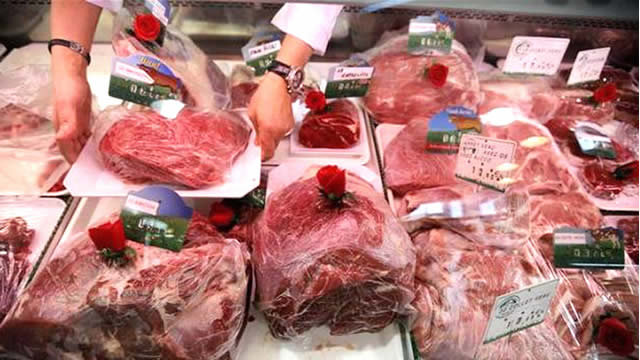
Elevated Costs Challenge Coca-Cola: How Will the Brand Adapt?
ZACKS· 2025-09-16 17:40
Core Insights - The Coca-Cola Company (KO) reported steady revenue growth of $12.62 billion in Q2 2025, with a 5% organic sales increase, driven by sparkling soft drinks, hydration, and dairy-based beverages, but faces challenges from rising costs impacting profitability [1][9] - Commodity inflation, particularly in sweeteners, packaging materials, and logistics, is a major cost driver, leading to a contraction in gross margins despite pricing initiatives [2][9] - Coca-Cola's "all-weather" strategy aims to balance affordability in price-sensitive markets with premium innovations in developed economies, while packaging innovations are helping manage consumer affordability [3][4] Financial Performance - Coca-Cola's operating margin has narrowed due to cost inflation outpacing efficiency benefits, despite revenue growth [2][9] - The company trades at a forward price-to-earnings ratio of 21.02X, higher than the industry's 17.42X [10] - The Zacks Consensus Estimate for KO's earnings implies year-over-year growth of 3.5% for 2025 and 8.3% for 2026, with estimates remaining unchanged over the past week [11] Competitive Landscape - Competitors like PepsiCo and Keurig Dr Pepper are also facing cost pressures but are leveraging pricing, productivity, and innovation to protect margins and sustain growth [5][6][7] - PepsiCo has managed to expand margins through strong price realization and operational savings, while Keurig is focusing on pricing actions and innovation to bolster growth [6][7] Brand Performance - Brands such as Coca-Cola Zero Sugar, fairlife, BODYARMOR, and Sprite are showing strong growth, indicating resilience in Coca-Cola's diversified portfolio despite inflationary pressures [3][9]

Is Mondelez's Pricing Power Enough to Offset Cocoa Cost Surge?
ZACKS· 2025-08-13 17:30
Core Insights - Mondelez International, Inc. faced significant cocoa cost inflation in Q2 2025, but its pricing power was crucial in driving organic net revenues up by 5.6%, with a 7.1 percentage point contribution from pricing despite a 1.5% decline in volume/mix [1][10] - The adjusted gross profit margin contracted by 680 basis points year-over-year to 33.7% due to increased raw material and transportation costs, as well as an unfavorable product mix [2][10] - Mondelez is implementing another round of pricing increases across its portfolio in North America and emerging markets to combat sustained cocoa inflation [3][10] Pricing and Cost Management - The company is seeing relief in cocoa butter prices, which have decreased to about half of last year's peak levels, although cocoa bean prices remain historically high [4] - Management anticipates that favorable crop conditions in West Africa will lead to easing cocoa prices into 2026, despite low industry stock levels [4][5] - Mondelez's global presence and brand portfolio are aiding in offsetting higher cocoa costs through pricing strategies, although margins remain under pressure [5] Stock Performance and Valuation - Mondelez shares have declined by 9.2% over the past month, underperforming the industry and broader Consumer Staples sector [6] - The stock currently trades at a forward 12-month P/E ratio of 19.02, which is above the industry average of 15.59 and the sector's 17.19, indicating market expectations of business stability [11] - Recent upward revisions in the Zacks Consensus Estimate for earnings reflect positive sentiment, with estimates increasing to $3.03 per share for the current fiscal year and $3.35 for the next fiscal year [14]


Will Higher Expected Costs Put a Dent in Kinross Gold's Margins?
ZACKS· 2025-07-28 12:40
Core Insights - Kinross Gold Corporation (KGC) experienced a 6% year-over-year increase in production costs of sales per ounce, reaching $1,043 in Q1 2025, while all-in-sustaining costs (AISC) rose nearly 3% to $1,355 per gold equivalent ounce sold, indicating inflationary pressures [1][7] - The company anticipates further cost pressures in 2025, projecting full-year AISC to reach $1,500 and production cash costs around $1,120 per ounce, driven by weaker production expectations and inflation [2][7] - KGC's stock has increased by 73.6% year-to-date, outperforming the Zacks Mining – Gold industry, which rose by 58.7%, largely due to a rally in gold prices [6] Cost Analysis - KGC's AISC remains lower than peers such as Barrick Mining Corporation and Newmont Corporation, but the expected rise in costs for the remainder of 2025 suggests potential margin compression risks [5] - Barrick reported a 22% sequential increase in AISC to $1,775 per ounce, influenced by operational challenges and lower production [3] - Newmont's costs applicable to sales rose 16% year-over-year to $1,227 per ounce, with AISC at $1,651, reflecting a significant increase due to production declines [4] Earnings and Valuation - The Zacks Consensus Estimate indicates a year-over-year earnings rise of 94.1% for KGC in 2025 and 7.5% in 2026, with EPS estimates trending higher over the past 60 days [8] - KGC is currently trading at a forward 12-month earnings multiple of 11.72, which is a 7.9% discount to the industry average of 12.73X, and holds a Value Score of A [9]


Hexcel(HXL) - 2025 Q2 - Earnings Call Transcript
2025-07-25 14:00
Financial Data and Key Metrics Changes - Hexcel generated sales of $490 million in Q2 2025, with adjusted diluted EPS of $0.50 per share [12][24] - Commercial aerospace sales were $293 million, down 8.9% year-over-year on a constant currency basis [12][25] - Gross margin decreased to 22.8% from 25.3% in the previous year, impacted by lower operating leverage and inventory reduction actions [14][27] - Adjusted operating income was $54.2 million, or 11.1% of sales, compared to $72 million, or 14.4% of sales in the prior year [29] Business Line Data and Key Metrics Changes - The Composite Materials segment represented 80% of total sales, with an adjusted operating margin of 14.1%, down from 17.2% in the prior year [29] - Defense, Space, and Other sales totaled $197 million, up 7.6% year-over-year, driven by various military programs [13][26] - Sales for other commercial aerospace increased by 5.1% year-over-year, led by international demand [13][25] Market Data and Key Metrics Changes - The commercial aerospace market accounted for approximately 60% of total sales in Q2 2025 [24] - Defense budgets globally are increasing, with NATO members in Europe indicating a rise to 5% of GDP, supporting higher build rates for military platforms [9][10] - The outlook for the A350 program remains challenging due to supply chain disruptions, but Airbus aims to stabilize production rates [6][12] Company Strategy and Development Direction - Hexcel is focused on maintaining operational excellence and controlling costs while navigating near-term production reductions [14][18] - The company is investing in automation and digitization to improve production efficiency and reduce costs per unit over the next several years [18][20] - Hexcel plans to generate over $1 billion in cash cumulatively over the next four years, driven by strong demand in commercial aerospace and defense sectors [7][36] Management's Comments on Operating Environment and Future Outlook - Management remains optimistic about the commercial aerospace industry's recovery, with a strong backlog for new aircraft orders [36] - The company expects production rates to increase in the second half of 2025, leading to improved margins and cash flow [15][21] - Management highlighted the importance of maintaining strong relationships with customers and adapting to changing market conditions [10][74] Other Important Information - Hexcel took a restructuring charge of $24 million in Q2 2025 related to the closure of its engineered products facility in Belgium [19][28] - The company repurchased $50 million of shares in Q2 2025, totaling $100 million for the year [22][31] - Hexcel's average contract length is about seven years, with 15-20% of contracts up for renewal each year, allowing for pricing adjustments [66][67] Q&A Session Summary Question: Can you outline the assumptions on build rates for the A350 program? - Management indicated that the A350 program's build rate has been adjusted down to the low sixties for the full year, with expectations for a strong fourth quarter as destocking ends [41][42] Question: What is the outlook for defense spending in the second half of the year? - Management expressed optimism about continued growth in defense spending, which has been higher than expected, and expects this trend to continue [45][46] Question: What were the actual shipping rates for the A350 in the first half of the year? - Shipping rates were in the low sixties in Q1 and high fives in Q2, with destocking primarily affecting European shipments [53][56] Question: How does the company plan to manage tariff impacts? - Management noted that tariffs are expected to impact earnings by $3-4 million per quarter, but they are working on mitigating strategies [34][85] Question: What is the long-term growth outlook for the defense business? - Management sees defense as a significant growth opportunity, with increased spending in the US and Europe expected to benefit Hexcel's defense segment [94][95]

Hershey raising chocolate prices by double-digits as cocoa costs soar: report
Fox Business· 2025-07-22 23:20
Group 1 - The Hershey Company is raising prices across its candy portfolio due to an unprecedented increase in cocoa costs, with price increases expected to be in the double digits [1][4] - The price increase will involve adjustments to both the list price and the weight and amount of candy in product packaging [1][4] - The rise in cocoa costs is attributed to supply shortages in the Ivory Coast and Ghana, which have significantly impacted prices over the last two years [4] Group 2 - The Hershey Company is currently in discussions with its retail partners regarding the new pricing but has not disclosed specific details [6] - The announcement of the price increase follows the news that Wendy's CEO, Kirk Tanner, will be stepping down to take the CEO position at Hershey, effective August 18 [7] - Hershey owns over 90 brands, including popular products like Reese's Peanut Butter Cups and Kit Kat [9]


Axon vs. Teledyne: Which Defense & Security Stock has Better Prospects?
ZACKS· 2025-07-16 14:11
Core Insights - Axon Enterprise, Inc. (AXON) and Teledyne Technologies Incorporated (TDY) are key players in the aerospace and defense equipment industry, benefiting from increased demand in public safety and surveillance due to rising terrorism and crime rates globally [1] Axon Enterprise, Inc. (AXON) - The Connected Devices segment is a major growth driver for Axon, with revenues increasing by 26.1% year over year in Q1 2025, fueled by the popularity of TASER 10 products and cartridge revenues [2] - Axon's new body-worn camera, Axon Body 4, launched in 2023, has generated significant demand, contributing to the segment's growth [3] - The Software & Services segment is also performing well, with revenues increasing by 39% in Q1 2025 and a year-over-year increase of 33.4% in 2024, driven by a growing user base of the Axon network [4] - Annual recurring revenues (ARR) for Axon reached $1.1 billion in Q1 2025, reflecting a 34% year-over-year increase, supported by high customer satisfaction and demand for digital evidence management [5] - Approximately 70% of Axon's domestic user base is still on basic plans, indicating significant growth potential for the Software & Services segment [6] - However, rising costs and expenses are a concern, with cost of sales and SG&A expenses increasing by 18.2% and 48% year over year, respectively, leading to total operating expenses climbing 54.7% to $374.5 million in Q1 2025 [7] Teledyne Technologies Incorporated (TDY) - Teledyne is experiencing growth due to the recovery in commercial air travel, with first-quarter sales from the Aerospace and Defense Electronics segment improving by 30.6% year over year [8] - The Digital Imaging segment has also shown strength, with first-quarter sales of $757 million, reflecting a 2.2% increase, driven by higher sales of infrared imaging components and surveillance systems [9] - Despite growth, Teledyne faces supply-chain challenges, including increased lead times and cost inflation, which have negatively impacted profit margins and delayed revenue conversion from backlog [11] - In Q1 2025, Teledyne's cost of sales totaled $830 million, a 7.8% year-over-year increase, while SG&A expenses rose by 6.5% [12] - Teledyne's long-term debt reached $2.96 billion, a 12% sequential increase, raising concerns about financial obligations and profitability [13] Price Performance and Valuation - Over the past six months, Axon shares have risen by 25.6%, while Teledyne's stock has gained 12.9% [16] - The Zacks Consensus Estimate for Axon's 2025 sales implies a year-over-year growth of 27.2%, while Teledyne's sales are expected to grow by 6.8% [17][19] - Axon trades at a premium forward P/E ratio of 103.36X, compared to Teledyne's more attractive 23.54X [10][20] Final Assessment - Axon's diversified product portfolio and strong growth in the Connected Devices and Software & Services segments position it favorably in the public safety market, despite its higher valuation [21] - Conversely, Teledyne's growth is hindered by supply-chain issues and high operating costs, along with a highly leveraged balance sheet, suggesting a cautious approach for investors [22] - Overall, Axon appears to be a more favorable investment choice compared to Teledyne at this time [23]