
Oil shock

Search documents
Wall Street Lunch: Fed Holds, Powell Staying Put
Seeking Alpha· 2026-03-18 20:43
Kevin Dietsch/Getty Images News Listen below or on the go via Apple Podcasts and Spotify Fed holds rates steady as Middle East uncertainty clouds outlook. (0:16) Dot plot still pencils in one rate cut this year. (0:37) Powell will wait until investigation ‘well and truly over.’ (1:20) The following is an abridged transcript: This is a special Fed edition of Wall Street Lunch Amid what one economist calls a “central banker’s nightmare” of inflation and labor market risks, the Federal Reserve clearly ...



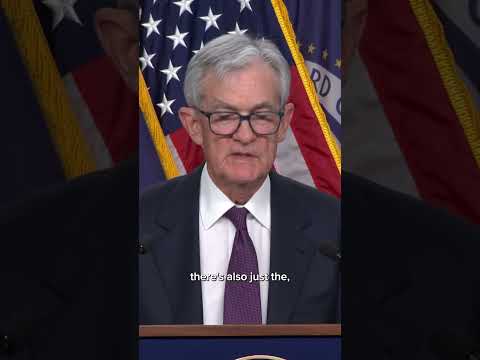
Powell: Oil shock 'part of' higher inflation projection for 2026
CNBC Television· 2026-03-18 19:45
Is the higher inflation pencileled in here for 2026 solely the result of the oil shock or or or something else. >> So that's going to be part of it. Uh but you know that wouldn't be most of core, right.So the oil shock for sure shows up here. Some of that will be in core as well. Yes.But no, there there's also just just the the the feeling that we haven't seen um you know the progress that we had hoped for on uh on core goods uh and on on tariffs and on the rest of it. You know, we've we've so for whatever ...
Why oil shocks turn markets into a game of whack-a-mole
Yahoo Finance· 2026-03-17 13:01
Group 1 - The core viewpoint is that rising crude oil prices are likely to lead to higher inflation, but the effects of oil shocks extend beyond inflation, impacting other economic factors [1][2]. - The bond market and the US dollar may provide early signals of economic damage before stock markets fully adjust [2][5]. - Europe is highlighted as a clear example of how oil shocks can escalate into inflation concerns due to its higher exposure to energy costs compared to the US [4][5]. Group 2 - Analysts from Bank of America suggest that the market is currently more focused on the inflationary impacts of rising oil prices rather than the potential risks to economic growth [5]. - The recent increase in long-term Treasury yields is attributed to both higher inflation expectations and investors seeking greater compensation for holding government debt [6]. - The US dollar index briefly surpassed 100, indicating a potential shift in market dynamics, although a pullback has occurred, which may relieve some immediate market pressure [7][8].
One Number Separates This Oil Shock From A Full-Blown Recession — Fidelity Did The Math
Benzinga· 2026-03-16 17:04
Core Insights - Oil prices have surpassed $100 a barrel for the first time since 2022, driven by geopolitical tensions in Iran and disruptions in the Strait of Hormuz, leading to rising gasoline prices and a decline in the S&P 500 [1] - Fidelity Investments identifies a critical price range of $135 to $145 per barrel, where consumer spending on energy would exceed 5% of household income, historically a threshold for economic contraction [2] Price Impact and Consumer Behavior - Current oil prices, with Brent at approximately $103 and WTI near $99, indicate a cushion of $32 to $42 per barrel before reaching a level that could significantly harm the economy [3] - Historically, consumer spending remains resilient to oil price spikes until energy costs exceed 5% of income; currently, American households spend about 3% on energy, significantly lower than the 8% to 9% during the 1973 oil crisis [4][5] Duration of Price Levels - The duration of elevated oil prices is crucial; sustained high prices for three to four months could materially impact inflation and economic growth, while temporary spikes are manageable [6] - BlackRock's Investment Institute concurs, suggesting that current market conditions reflect weeks of disruption rather than months, keeping the situation within manageable limits [7] Market Sentiment and Opportunities - Despite a 5% decline in the S&P 500 and deteriorating consumer sentiment, Fidelity's analysis indicates that the economy is not in the danger zone, requiring a 30% increase in oil prices sustained over months to reach that point [8] - If geopolitical tensions stabilize or coordinated strategic petroleum reserve releases occur, the recessionary premium currently affecting stocks may need to be reassessed [9] Historical Context - Historical analysis from Fidelity suggests that after past geopolitical shocks, oil prices have tended to decrease rather than increase over the following year [10]

When Oil Moves, Bitcoin Bleeds
Yahoo Finance· 2026-03-16 11:56
Core Insights - Bitcoin's structure leads to disproportionate reactions during geopolitical shocks, as it trades 24/7 and absorbs selling pressure that would otherwise be spread across multiple markets [1] - Unlike gold, Bitcoin lacks institutional trust, making it less appealing during crises when investors prefer to buy gold and sell risk [2] - Bitcoin's performance is closely tied to oil price movements, with significant sell-offs occurring in both oil crashes and surges, but for different reasons [5] Market Dynamics - High oil prices above $100 lead to persistent inflation and elevated interest rates, making Bitcoin unattractive as a speculative asset [4] - Bitcoin's price fell from a pre-war high of $69,000 to below $18,000 during the 2022 oil surge, illustrating its vulnerability to oil price dynamics [4] - In contrast, during the COVID oil crash, Bitcoin fell 50% in less than a month as it was the only large liquid market available [5] Current Market Situation - As of March 2026, Bitcoin is trading around $70,000, down 45% from its October 2025 all-time high of $126,000, indicating it entered the current crisis in a bear market [7] - The starting point for Bitcoin's current situation is a crash from its highest nominal price, which complicates recovery due to the need to regain institutional trust [8] Recovery Timeline - Historical patterns suggest recovery timelines depend on oil stabilization, with potential recovery beginning by late 2026 if oil prices retreat [12] - If the conflict extends and oil remains elevated, recovery could be delayed until 2028, compressing the crypto cycle [13] - Past recoveries from significant crashes have shown that Bitcoin often experiences substantial rallies following macro-driven downturns [14] Future Outlook - The potential upside for Bitcoin post-oil stabilization could see it reclaiming $100,000, with further growth towards $150,000-$180,000 in the following 18-24 months [16] - The macro environment driven by fiscal spending related to geopolitical conflicts could enhance Bitcoin's scarcity narrative, leading to increased demand [15] - The key question for investors is not whether Bitcoin will recover, but whether they have the conviction and liquidity to hold through the interim volatility [18]
Morning Bid: Triple digit crude
Yahoo Finance· 2026-03-12 10:41
Oil Market Dynamics - Crude oil prices are testing the $100 per barrel mark again, briefly exceeding this threshold after a nearly 5% increase, driven by attacks on ships in the Gulf, overshadowing the International Energy Agency's record release of crude reserves [1][4] - Iran has warned that ongoing conflicts could push oil prices to $200 per barrel, indicating a strategic use of oil supply disruptions as a defensive measure [2] Market Reactions - Global stock markets are experiencing declines due to the recent surge in oil prices, with major U.S. indexes finishing flat to lower and Asian indexes losing some gains [4] - The oil market's reaction to the record 400-million-barrel reserve release is concerning, suggesting traders are anticipating tighter market conditions if the conflict continues [4][5] Inflation and Central Bank Responses - Financial markets are shifting focus to potential inflation impacts and central bank responses, with a second U.S. interest rate cut becoming unlikely, as markets now barely price in one for 2026 [6] - Upcoming central bank decisions are expected to lean towards rate increases, with the Reserve Bank of Australia likely to raise rates and the European Central Bank anticipated to follow suit by July [7]
Saudi Aramco CEO Warns “Iran war will have ‘catastrophic consequences’ for global oil market”
Yahoo Finance· 2026-03-12 10:35
Core Viewpoint - The warning regarding the potential closure of the Strait of Hormuz is accurate and likely understated, with significant implications for global oil supply and investor portfolios [1] Oil Market Impact - The Strait of Hormuz is a critical chokepoint for oil shipments, with approximately 20% of the world's oil passing through daily. A closure would have severe consequences for the oil market, as highlighted by Saudi Aramco's CEO, who stated that the Iran war could lead to catastrophic outcomes for global oil [3][4] - Historical events, such as the 1973 Arab oil embargo and the 1990 Gulf War, resulted in significant oil price increases, suggesting that a sustained closure of Hormuz could lead to even larger price spikes [2] Company Performance - ExxonMobil reported record production of 4.7 million oil-equivalent barrels per day in 2025, with every $10 increase in oil prices potentially adding approximately $2 billion to annual earnings [5][7] - The stock performance of ExxonMobil has been strong, with shares up about 24% year-to-date in 2026 and 38% over the past year, reflecting the benefits of rising crude prices [6][7] Economic Consequences - Oil price shocks not only benefit energy stocks but also act as a tax on the broader economy, compressing margins across various sectors such as airlines, manufacturing, and agriculture [8] - The crisis has disrupted shipping and insurance sectors, leading to potential domino effects on multiple industries, indicating that even investors without direct energy holdings are exposed to these risks [8] Investor Profiles - Investors with a modest energy allocation (3-4% in S&P 500) may face net negative impacts from an oil shock due to indirect economic damage outweighing benefits [10] - Conversely, investors with significant exposure to energy stocks (20% of their portfolio) have seen rewards but also face concentrated geopolitical risks, as demonstrated by the volatility in Brent crude prices [11] Diversification Strategy - The performance of companies like Vertex Pharmaceuticals, which operates independently of oil price fluctuations, illustrates the importance of diversification in mitigating risks associated with concentrated energy investments [13][14] - Holding a mix of assets with different earnings drivers can reduce exposure to single geopolitical events, emphasizing the practical application of diversification [14] Recommendations for Investors - Investors should assess their actual energy exposure and consider adjusting their portfolios to align with broader market allocations, especially if they hold concentrated energy positions [15][16] - The uncertainty surrounding the duration of the Hormuz disruption suggests that no single commodity-linked position should dominate a retirement portfolio, advocating for a balanced approach to investment [17]


Oil Shock Didn't Just Move Energy Stocks — It May Lift This Fertilizer Giant's Earnings
Benzinga· 2026-03-11 17:53
Core Insights - The recent volatility in the oil market is positively impacting fertilizer producers, particularly nitrogen producers like CF Industries Holdings, Inc. [1][5] - Rising natural gas and petrochemical costs are driving fertilizer prices higher, benefiting companies with large-scale production capacity [3][4] Group 1: Market Dynamics - Geopolitical tensions and energy market disruptions are causing a ripple effect through agricultural supply chains, leading to increased fertilizer costs [2][3] - Nitrogen fertilizer production is energy-intensive, primarily relying on natural gas for ammonia production, which means that tighter energy markets often result in higher fertilizer prices [3] Group 2: Company Performance - CF Industries has seen its stock surge over 21% in the past month, approximately 47% year-to-date, and over 53% in the past year, indicating strong investor interest [1] - The company operates major nitrogen facilities across North America and supplies fertilizer globally, positioning it well to benefit from rising prices [4] Group 3: Profitability Outlook - The increase in fertilizer stock prices suggests that investors are anticipating stronger margins for producers as energy costs continue to rise [5] - Established infrastructure and scale among fertilizer producers could lead to improved profitability in upcoming quarters, as the oil shock may drive unexpected earnings boosts in the fertilizer sector [5]


全球经济:石油冲击与全球经济传导-Global Economic Briefing-The Weekly Worldview Oil Shocks and the Global Economic Transmission
2026-03-10 10:17
Summary of Key Points from the Conference Call Industry Overview - The focus of the conference call is on the **energy sector**, particularly the implications of recent geopolitical tensions involving **Iran** on global oil supply and prices [3][4]. Core Insights and Arguments - **Oil Price Scenarios**: Analysts have outlined potential oil price scenarios ranging from **$65 to $130 per barrel**, influenced by Gulf production capacity and logistical constraints at the **Strait of Hormuz** [3]. - **Logistics-Driven Disruptions**: The current situation aligns with a **fleet productivity shock scenario**, where commercial traffic continues but at reduced efficiency due to increased war risk insurance and operational bottlenecks [5]. - **Inflation Impact**: A **10% rise in oil prices** is projected to add approximately **35 basis points (bp)** to headline Consumer Price Index (CPI) in the **US** for three months, with limited pass-through to core inflation [9][12]. - **Regional Differences**: - In the **Euro area**, higher energy prices significantly impact both headline and core inflation, leading to a more pronounced stagflationary environment [10][15]. - **Asia** is particularly vulnerable, as higher oil prices reduce disposable income and economic activity, with varied policy responses across developed and emerging markets [16]. - **Central Bank Responses**: The **Federal Reserve** faces a challenge in balancing inflation and growth, while the **European Central Bank (ECB)** may have less flexibility due to its singular inflation mandate [12][15]. Additional Important Insights - **Asymmetric Trade-Off**: The current oil price shock creates an asymmetric trade-off between inflation and growth, with inflation responding first and growth effects lagging [10]. - **Logistics vs. Production Losses**: The tightening of effective supply is driven more by logistics issues rather than outright production losses, amplifying price pressures [5][17]. - **Global Economic Risks**: The primary macroeconomic risk is not a single spike in oil prices but the persistence of logistics-driven frictions that could influence inflation expectations and growth [17]. Conclusion - The conference call highlights the complex interplay between geopolitical tensions, oil supply dynamics, and macroeconomic implications across different regions, emphasizing the need for careful monitoring of inflation and growth indicators in the context of rising energy prices.

Traders were certain of rate cuts this year - until they weren't. What happened?
Youtube· 2026-03-10 08:53
Central Bank Reactions - Recent volatility in markets has led traders to reassess their expectations for central bank rate decisions, with initial predictions of rate cuts now shifting towards potential hikes due to rising oil prices and inflation fears [1][2] - Money markets are now pricing in a 1 in 4 chance of the European Central Bank (ECB) hiking rates this year, with a 1 in 5 chance of a second hike by December, indicating a significant shift in expectations [2] - The Bank of England's rate futures have also reversed, with over a 50% chance of a rate cut earlier in the week now showing more than a 10% probability of a hike [2] Market Reactions - Global bond markets are experiencing sell-offs, with the UK's 2-year gilt yield rising by over six basis points, reflecting a broader trend of increasing yields following the recent market turmoil [3] - Lenders are adjusting their rate cut predictions, with Standard Chartered and UBS pushing back their calls, indicating a cautious approach in response to market conditions [3] Economic Context - The current oil shock is prompting economists to reconsider the historical responses of central banks, particularly in light of the 2022 experiences with inflation and consumer behavior [5][6] - The sensitivity to energy prices in the UK and mainland Europe is notably high, suggesting that central banks may not be able to overlook the inflationary impacts as they have in the past [9][10] - The labor market in the US is less secure than in 2022, which may lead to divergent reactions from the Federal Reserve compared to the ECB and the Bank of England [9][12] Market Sentiment - There is a perception that the market's reaction to recent events has been disproportionate, with some analysts suggesting that the pricing of rate hikes may not align with the current economic fundamentals [10][13] - The potential for investment opportunities may arise from the magnitude of market reactions to the oil price movements, indicating a need for careful analysis of market sentiment [13]
