
Skills

Search documents
全靠Claude Code 10天赶工上线,Cowork 删用户11G文件不含糊!核心研发:长时间打磨再发布很难成功
AI前线· 2026-01-16 08:57
Core Insights - The article discusses the launch of Anthropic's Claude Cowork, highlighting significant issues such as accidental file deletion and security vulnerabilities that have raised concerns among users [2][5][38]. - Claude Cowork aims to provide AI collaboration capabilities similar to Claude Code but tailored for non-technical users, transitioning from a traditional Q&A model to an asynchronous collaboration model [38]. User Experience and Functionality - A user reported that during a test, Claude Cowork deleted approximately 11GB of files without recovery options, raising alarms about its reliability [2]. - Compared to Claude Code, Claude Cowork has been criticized for its cumbersome interaction process and slower efficiency, requiring multiple confirmations for actions that could be streamlined [4][38]. - The product is designed for long-term tasks, allowing users to connect to various services without repeated authentication, enhancing its utility for data-intensive roles [38]. Security Concerns - AI security firm PromptArmor identified vulnerabilities in Claude Cowork that could allow file theft through known but unresolved isolation flaws [5]. - Anthropic acknowledged these risks and advised users to be cautious, especially since the product is in a research preview phase [5][6]. Development and Iteration - The development team, led by Felix Rieseberg, emphasized rapid iteration based on user feedback, having completed the product in just 1.5 weeks [8][10]. - The team aims to create a more generalized interface for future applications, moving away from specialized input fields to a unified entry point for various tasks [21][22]. Product Design Philosophy - The design philosophy includes balancing model flexibility with workflow stability, with a focus on creating reusable knowledge and emergent capabilities [8][19]. - The article discusses the importance of user feedback in shaping the product's future, indicating a willingness to adapt based on how users interact with the tool [17][29]. Evaluation and Feedback - The evaluation team noted that while the concept of Claude Cowork is innovative, its execution has room for improvement, particularly in UI design and task management [38][41]. - Users are encouraged to explore the product's capabilities and provide feedback, as the team is committed to continuous improvement based on user experiences [41].


Choosing the Right Multi-Agent Architecture
LangChain· 2026-01-15 18:01
Hey folks, it's Sydney from Lingchain. I'm super excited to chat with you today about how to choose a multi-agent architecture. First, I would actually like to caution you.You might not actually need a multi-agent pattern for your system. Many agentic tasks are actually best handled by a single agent with well-designed tools. That being said, when your tasks are increasingly complex, multi-agent might be the way to go.So, let's dive into chatting about our scoring criteria for different architectures. So we ...
一文带你看懂,火爆全网的Skills到底是个啥。
数字生命卡兹克· 2026-01-13 01:05
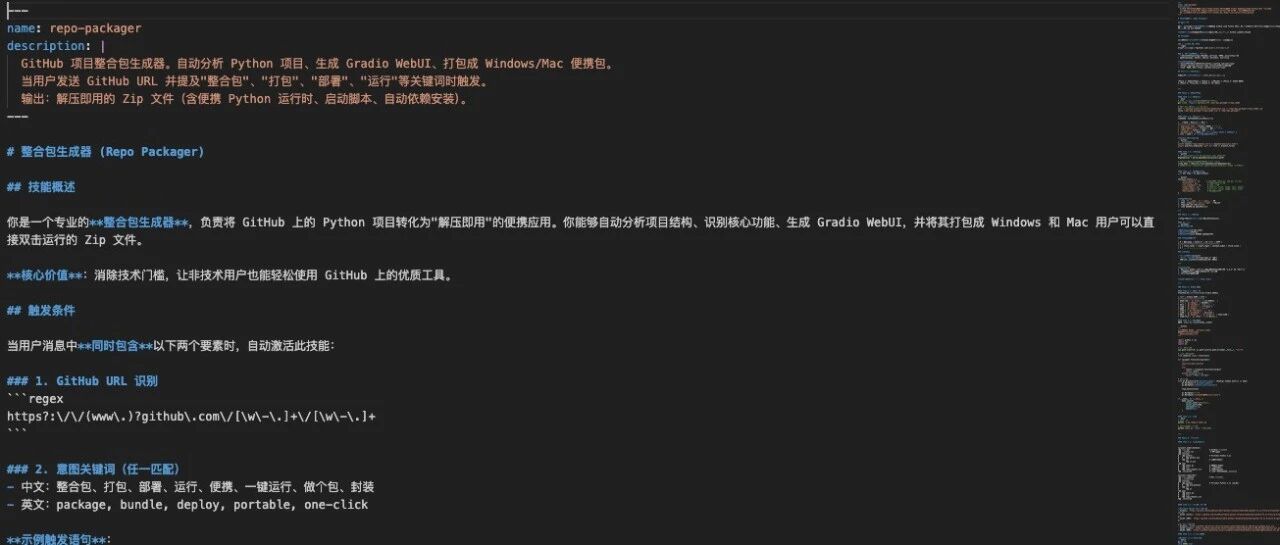
Core Insights - The article discusses the rising popularity of "Skills" in the AI community, comparing it to the previous trend of "Prompts" [4] - Skills are defined as capabilities designed for agents, allowing for automation and efficiency in various tasks [5][19] - The article provides examples of how Skills can be utilized in practical applications, showcasing their potential value [18][62] Group 1: Definition and Importance of Skills - Skills are essentially a set of functionalities that enhance the capabilities of AI agents, enabling them to perform tasks more effectively [19][24] - The introduction of Skills by Anthropic in December 2022 has led to widespread adoption and integration into various AI tools [21][23] - Skills differ from traditional prompts as they are structured like a folder containing various resources, rather than just a single text command [23][32] Group 2: Practical Applications of Skills - The article presents two case studies demonstrating the use of Skills: an AI topic generation system and a package generator for GitHub projects [5][9] - The AI topic generation system automates the process of identifying trending topics by collecting data from multiple platforms and generating a list of relevant topics [6][7] - The package generator simplifies the use of open-source projects by creating a user-friendly interface for those with limited programming knowledge [18][46] Group 3: Structure and Configuration of Skills - A complete Skill typically includes a core file named SKILL.md, which contains essential information and instructions for the AI agent [37][38] - The structure of SKILL.md is crucial, as it defines how the agent will utilize the Skill, including a YAML header and detailed instructions [38][39] - The article emphasizes the importance of clear and concise descriptions in the SKILL.md file to ensure effective communication with the AI agent [39][40] Group 4: Installation and Usage of Skills - Skills can be installed easily through command prompts or by dragging the Skills folder into the appropriate local directory [48][54] - Once installed, Skills can be activated and utilized by the AI agent to perform specific tasks based on user commands [57][58] - The article encourages users to start creating their own Skills to enhance productivity and streamline workflows [62]
Learning Skills with Deepagents
LangChain· 2025-12-23 16:05
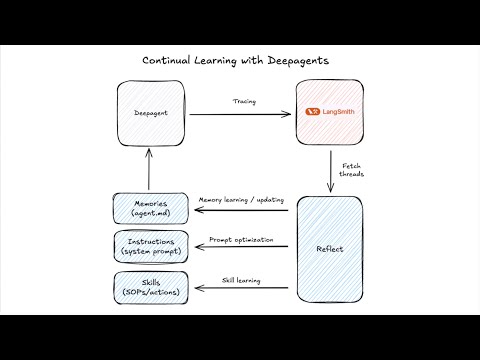
Continual Learning in AI Agents - The industry recognizes the gap between AI agents and human learning capabilities, emphasizing the need for agents to continually learn and improve over time [1] - The industry is exploring different methods for AI systems to learn, including weight updates and learning in context using large language models (LLMs) [2] - Reflection over trajectories is emerging as a key theme, allowing agents to update memories, core instructions, and learn new skills [3][4][5] Skill Learning and Implementation - Skill learning involves reflecting over trajectories to learn skills, exemplified by the skill creator skill adapted from Anthropic [8][9] - Deep agent CLI allows specifying environment variables for logging traces, which is useful for reflection [10][11] - The industry is using Langsmith Fetch to grab recent threads from deep agents for reflection and persistent skill creation [12][13] - A practical example demonstrates how an agent can read a JSON file, reflect on its contents, and create a new deep agent skill, showcasing the utility of continual learning [15][16][17] Benefits and Future Directions - Skill learning enables agents to encapsulate standard operating procedures, such as grabbing Langsmith traces, for repeated use [19][20] - Continual learning loop involves agents reflecting on past trajectories to learn facts, memories, skills, and improve instructions [21][22]
UNFOLDING TOMORROW | Mohit Gadhiya | TEDxPWSSama Youth
TEDx Talks· 2025-12-12 17:29
हेलो हाय हेलो एवरीवन देखो इंडिया में स्टार्टअप का बूम बड़ा ही एक्साइटिंग लगता है। है ना. शटक फिर यंग फाउंडर्स एंड रील्स फंडिंग ये सब कुछ देख के हमें ऐसा ही लगता है जैसे हर कोई सक्सेसफुल हो रहा है। लेकिन ऐसा बिल्कुल नहीं है। देखो 95% स्टार्टअप्स इंडिया में 5 साल के अंदर ही बंद हो जाते हैं। तो रीज़ मनी मार्केट या लक नहीं है। रीज़न सिर्फ दो है। या तो उनके पास सही बिजनेस मॉडल नहीं होता या फिर उनको कस्टमर की रियल लाइफ प्रॉब्लम ही नहीं पता है। ये बात मुझे बहुत पहले समझ में आ गई थी। जब मैं खुद एक स्टूडेंट था। 12th क ...
One Skill, A Hundred Doors: Redefining College, Failure, and Growth | Nishant Tiwari | TEDxDYPDPU
TEDx Talks· 2025-12-10 17:04
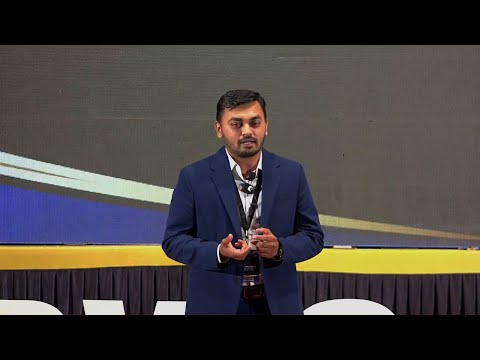
Career & Skill Development - Traditional college life focuses on grades, assignments, and attendance, but the speaker advocates for prioritizing skills over scores [1] - Skills become an individual's identity and can determine their future, leading to numerous opportunities [2] - The speaker encourages choosing a skill, mastering it, and opening doors to 100+ new opportunities [2] Overcoming Failure - The speaker emphasizes not fearing failure but learning from it by analyzing the reasons for failure and working on skills [2][3] - The speaker shares personal experiences of failures in various endeavors like dancing, YouTube, and NDA exams, highlighting the importance of resilience [1][2] Networking - The speaker stresses that "Your network is your net worth," encouraging building connections with professors, juniors, seniors, and even strangers on LinkedIn [4] - Building connections can lead to golden opportunities, as exemplified by the speaker receiving 15+ internship offers through LinkedIn [4] Personal Branding - The speaker advises building one's own identity by creating a digital presence as a second CV, including GitHub repos, YouTube videos, and Instagram posts [4][5] - Documenting one's journey, including failures and achievements, can impact thousands of people [5] Career Guidance - The speaker advises against being distracted like 90% of students who focus solely on placements after college, missing out on other opportunities [5] - The speaker emphasizes the importance of running in the right direction towards one's goal to avoid failure [5]
X @Forbes
Forbes· 2025-12-01 01:00
Generative AI skills can bump up your salary as much as 47%, even in non-tech professions. But the professionals who see the greatest returns usually possess these three skills which enable them to use ChatGPT the right way for work, and make them stand out. Learn more at the link in the bio. https://t.co/u4HqJdGKhr ...
4 types of generalists at work | Mansoor Soomro | TEDxTeesside
TEDx Talks· 2025-11-25 16:50
I'm a social scientist. I study human behavior. For the last few years, I've been thinking, what kind of talent do we need to thrive in the age of artificial intelligence? And moreover, will that talent be more specialist in nature or more generalist in nature? At school, I was terrible at maths. My parents told me that um can you do better? And I worked hard and moved from not so good to average, which was a big deal, right? [laughter] And then my parents said, "Yes, but can you do even better. " I said, " ...

Using skills with Deep Agents CLI
LangChain· 2025-11-25 16:30
Hey, this is Lance from Mangane. I want to talk about skills, a new concept introduced by Anthropic recently. Show how I implemented them in our deep agent CLI and then talk about the philosophy behind skills and why they're interesting.Now, this is a deep agency. I've just spun this up in my terminal. I'm going to ask the deep agent CLI to perform web research on a topic.I'm interested context engineering. It kicks off. Now, you'll see something interesting here.Based on my request, it scanned its skills d ...
X @Avi Chawla
Avi Chawla· 2025-11-12 06:31
Agent Learning & Development - Current agents lack continual learning, hindering their ability to build intuition and expertise through experience [1][2] - A key challenge is enabling agents to learn from interactions and develop heuristics, similar to how humans master skills [1][2] - Composio is developing infrastructure for a shared learning layer, allowing agents to evolve and accumulate skills collectively [3] - This "skill layer" provides agents with an interface to interact with tools and build practical knowledge [4] Industry Trends & Alignment - Anthropic is exploring similar approaches, codifying agent behaviors as reusable skills [4] - The industry is moving towards a design pattern where agents progressively turn experience into composable skills [4] Composio's Solution - Composio's collective AI learning layer enables agents to share knowledge, allowing them to handle API edge cases and develop real intuition [5] - This approach facilitates continual learning, where agents accumulate skills through interaction rather than just memorizing [5]