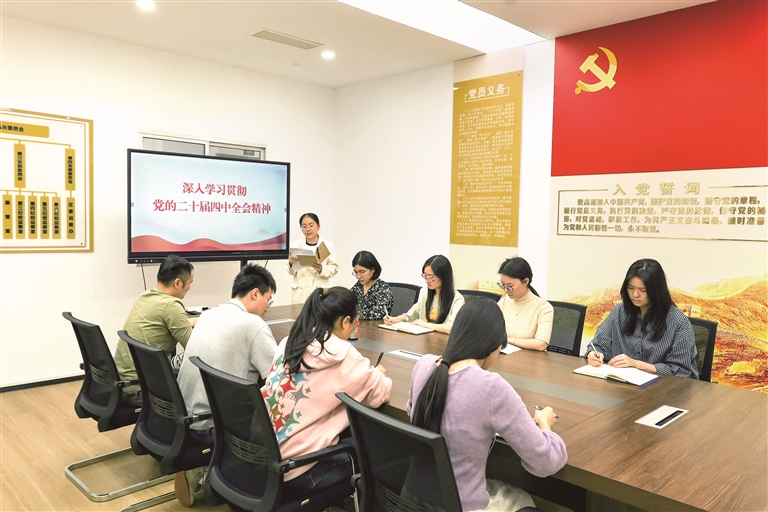
党的自我革命

Search documents
12月1日晚间央视新闻联播要闻集锦
Yang Shi Xin Wen Ke Hu Duan· 2025-12-01 14:09
今日摘要 《求是》杂志发表习近平总书记重要文章《推进党的自我革命要做到"五个进一步到位"》。 应习近平邀请,法国总统将访华。 系列报道《新思想引领新征程·非凡"十四五"》今天播出:推动绿色低碳发展,助力中国式现代化。 系列报道《学习贯彻四中全会精神在基层》今天来看:北京、江西深化数据资源开发利用,推动高质量 发展。 今年以来,一系列政策举措加力实施,持续激发民间投资活力。 今年我国快递业务量已突破1800亿件,创历史新高。 五部门联合开展医养结合促进行动。 多国人士表示,高市早苗的错误言论凸显日本政治右倾化加剧的趋势,国际社会须对此高度警惕。 内容速览 《求是》杂志发表习近平总书记重要文章《推进党的自我革命要做到"五个进一步到位"》 12月1日出版的第23期《求是》杂志发表中共中央总书记、国家主席、中央军委主席习近平的重要文章 《推进党的自我革命要做到"五个进一步到位"》。 应习近平邀请 法国总统将访华 应国家主席习近平邀请,法国总统马克龙将于12月3日至5日对中国进行国事访问。 【新思想引领新征程·非凡"十四五"】推动绿色低碳发展 助力中国式现代化 2025年"读懂中国"国际会议在广州举办 11月30日至1 ...
新疆:坚决拥护党中央决定
中国基金报· 2025-12-01 07:07
会议指出,中央纪委国家监委对自治区党委常委、自治区常务副主席陈伟俊涉嫌严重违纪违法 进行纪律审查和监察调查,充分彰显了以习近平同志为核心的党中央坚定不移推进全面从严治 党、把党的自我革命进行到底的坚定决心,再次释放了反腐败斗争永远在路上、一步不停歇、 半步不退让的强烈信号。 全区各级党组织和广大党员干部要深刻领悟"两个确立"的决定性意义、坚决做到"两个维 护",切实把思想和行动统一到党中央决定上来,深刻汲取陈伟俊涉嫌严重违纪违法问题教 训,认真落实推进党的自我革命"五个进一步到位"重要要求,持续抓好党的政治建设、干部 队伍建设和党风廉政建设,坚决打好反腐败斗争攻坚战、持久战、总体战,为建设社会主义现 代化新疆提供坚强政治保证。 会议强调,要坚持旗帜鲜明讲政治,始终把对党忠诚摆在首位,坚持不懈用习近平新时代中国 特色社会主义思想凝心铸魂,切实筑牢信仰之基、补足精神之钙、把稳思想之舵,进一步严明 党的政治纪律和政治规矩,自觉在政治立场、政治方向、政治原则、政治道路上同以习近平同 志为核心的党中央保持高度一致。 要不断推动全面从严治党向纵深发展,认真抓好中央巡视反馈意见整改,把严的基调、严的措 施、严的氛围长期坚持 ...

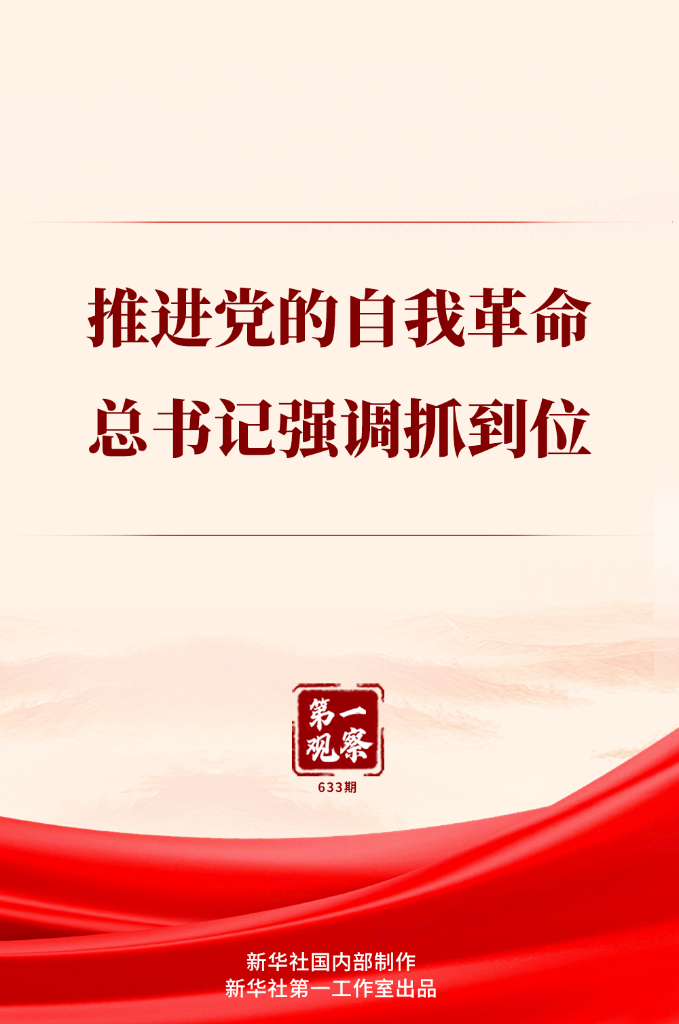
推进党的自我革命,总书记强调抓到位
Xin Hua She· 2025-12-01 07:03
Core Viewpoint - The article emphasizes the importance of advancing the Party's self-revolution, highlighting the need for effective implementation of key strategies to ensure the Party's self-governance and integrity [3]. Group 1: Key Strategies for Self-Revolution - Xi Jinping outlines "five further steps" that need to be taken to advance the Party's self-revolution, which include enhancing understanding of self-revolution, strengthening Party spirit among members, ensuring the proper functioning of power, enforcing strict supervision and discipline, and fulfilling responsibilities in Party governance [3][4]. - The article stresses that the Party must maintain a serious attitude towards its own construction, with a commitment to continuous improvement and accountability [3]. Group 2: Misconceptions and Challenges - Xi Jinping identifies common misconceptions about self-revolution, such as the belief that it creates unnecessary trouble or hinders economic development, and counters these with the assertion that corruption is a significant threat to both the Party and societal progress [4]. - The article highlights the need for Party members to cultivate strong Party spirit, especially during challenging times, and emphasizes the importance of moral development through practical experience [4]. Group 3: Power Supervision and Responsibility - The article underscores that the primary challenge for the Party is the supervision of power, with a focus on preventing corruption rooted in privilege and self-interest [5]. - Xi Jinping calls for strict adherence to institutional regulations and a correct understanding of power among Party members to ensure that power is exercised fairly and transparently [5]. - The article reiterates the necessity for leaders to take responsibility for Party governance, emphasizing that neglecting this duty is a significant failure [5].
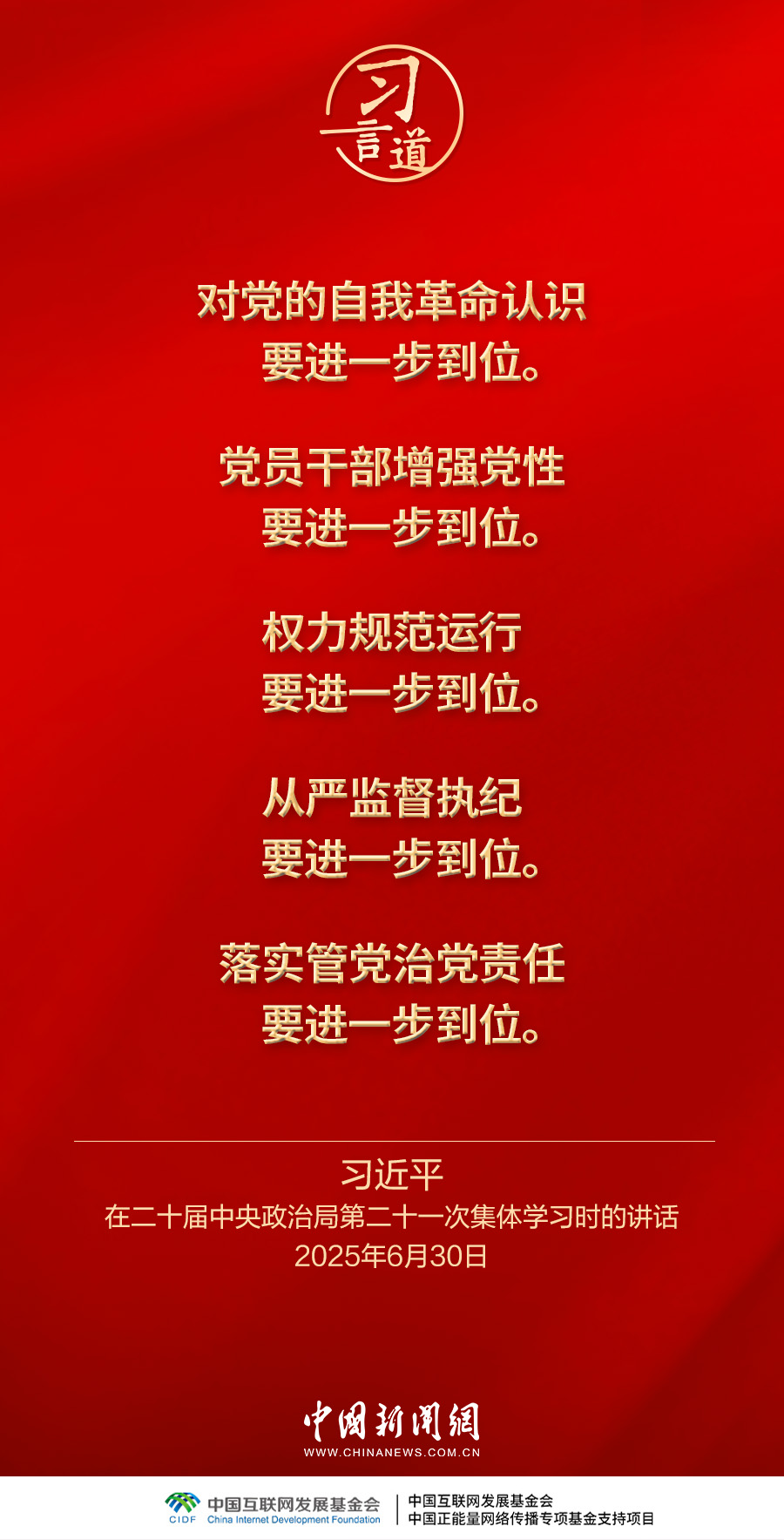
习言道|党内不允许有特权思想、特权现象存在,更不允许出现利益集团、权势团体、特权阶层
Zhong Guo Xin Wen Wang· 2025-12-01 02:34
12月1日出版的《求是》杂志发表中共中央总书记、国家主席、中央军委主席习近平的重要文章《推进党的自我革命要做到"五 个进一步到位"》。这是习近平总书记2025年6月30日在二十届中央政治局第二十一次集体学习时讲话的主要部分。 习近平 在二十届中央政治局第二十一次集体学习时的讲话 2025年6月30日 EM V WWW.CHINANEWS.COM.CN | 中国互联网发展基金会 v 中国互联网发展基金会 必须明确, 不正之风和腐败现象 是党和人民的大敌, 中国正能量网络传播专项基金支持项目 China Internet Development Foundation URE - > 11 - 5 持续健康发展的大敌。 习近平 在二十届中央政治局第二十一次集体学习时的讲话 2025年6月30日 WWW.CHINANEWS.COM 中国互联网发展基金会 China Internet Development Foundation 中国互联网发展基金会 中国正能量网络传播专项基金支持项目 我们党进行自我革命, 刀刃向内、激浊扬清、刮骨疗毒, 非但不会影响党的形象和威信, 反而能够提高党的形象和威信; 非但不会挫伤党员干部 ...
第一观察|推进党的自我革命,总书记强调抓到位
Xin Hua She· 2025-12-01 02:21
Core Points - The article emphasizes the importance of implementing the "Five Further Improvements" in the context of the Party's self-revolution, which includes enhancing understanding of self-revolution, strengthening party character among members, regulating power operations, strict supervision and discipline enforcement, and fulfilling responsibilities in party governance [5][6][7] - Xi Jinping highlights the necessity of maintaining a strong focus on self-revolution amidst the complex governance environment and the heavy tasks of Chinese-style modernization [5][6] - The article addresses misconceptions about self-revolution, asserting that corruption and misconduct are significant threats to both the Party and the sustainable development of society [6][7] Summary by Sections Understanding Self-Revolution - Xi Jinping identifies current misunderstandings about self-revolution, such as it being seen as self-inflicted trouble or detrimental to economic and social development [6] - He stresses that the Party must confront corruption and misconduct as they are major enemies of both the Party and the people [6] Strengthening Party Character - The article emphasizes the need for practical methods to enhance party character, especially during challenging times [6] - Young cadres are encouraged to strengthen their party character to ensure the continuity of the Party's mission [6] Regulating Power Operations - The article underscores that the core of the Party's self-revolution lies in regulating power, with a focus on preventing corruption rooted in privilege [7] - Xi Jinping calls for strict adherence to institutional execution and a correct understanding of power among Party members [7] Supervision and Discipline - The article advocates for a persistent and rigorous approach to maintaining a clean political environment within the Party [7] - Xi Jinping reiterates the importance of party leadership in governance and the necessity of accountability in party building [7]
第一观察 | 推进党的自我革命,总书记强调抓到位
Xin Hua She· 2025-12-01 02:20
Core Viewpoint - The article emphasizes the importance of advancing the Party's self-revolution, highlighting the need for effective implementation of key strategies to ensure the Party's self-discipline and governance [3]. Group 1: Key Strategies for Self-Revolution - Xi Jinping outlines "five further steps" that need to be taken to advance the Party's self-revolution, which include enhancing understanding of self-revolution, strengthening Party spirit among members, ensuring the proper functioning of power, strict supervision and discipline enforcement, and fulfilling responsibilities in Party governance [3][4]. - The article stresses that the Party must maintain a serious attitude towards its own construction, with a commitment to continuous improvement and accountability [3]. Group 2: Misconceptions and Challenges - Xi Jinping identifies several misconceptions regarding self-revolution, such as the belief that it creates unnecessary trouble or negatively impacts economic and social development [4]. - The article highlights that corruption and misconduct are significant threats to both the Party and the broader society, necessitating a robust response to these issues [4]. Group 3: Power Supervision and Accountability - The article emphasizes that the core of the Party's self-revolution lies in the governance of power, with a focus on preventing corruption and ensuring that power is exercised in a lawful and ethical manner [5]. - Xi Jinping calls for strict adherence to institutional regulations and a culture of accountability among Party members, stressing the importance of a clean political environment [5]. Group 4: Leadership and Responsibility - The article underscores the critical role of leadership in promoting Party values and ensuring effective governance, with leaders expected to demonstrate loyalty and commitment to the Party [5]. - Xi Jinping reiterates that effective Party building is a fundamental responsibility, and failure to do so is considered a dereliction of duty [5].
《求是》杂志发表习近平总书记重要文章《推进党的自我革命要做到“五个进一步到位”》
国家能源局· 2025-12-01 01:36
Core Viewpoint - The article emphasizes the importance of the Party's self-revolution, highlighting the need for five key areas to be further improved to ensure effective governance and enhance the Party's image and credibility [2][10]. Group 1: Understanding of Self-Revolution - The understanding of the Party's self-revolution must be further improved, as it is crucial for addressing the complex challenges of modern governance and ensuring the Party's credibility [2][10]. - Misconceptions among some Party members regarding self-revolution need to be corrected, as they may believe it could harm the Party's image or hinder economic development [10][11]. Group 2: Enhancing Party Character - Strengthening Party character is essential for the self-revolution, focusing on ideals, loyalty to the Party, and moral integrity [3][13]. - Active participation in political life and self-reflection are necessary for Party members to maintain their character and commitment [3][13]. Group 3: Regulating Power Operations - The regulation of power must be further improved to prevent corruption and misuse, emphasizing the need for strict adherence to laws and regulations [4][14]. - The Party aims to confine power within institutional frameworks to minimize opportunities for corruption and ensure accountability [4][14]. Group 4: Strict Supervision and Discipline - Strict supervision and enforcement of Party discipline are vital tools for the self-revolution, requiring a combination of internal and external oversight [4][15]. - The Party must adopt a zero-tolerance approach to violations, ensuring that disciplinary measures are effectively communicated and enforced [4][15]. Group 5: Responsibility in Party Governance - The responsibility for Party governance must be clearly defined and strictly adhered to, with all levels of leadership held accountable for their roles [4][16]. - Leaders are expected to foster a culture of accountability and integrity within their jurisdictions, reinforcing the importance of Party discipline [4][16].

《求是》杂志发表习近平总书记重要文章《推进党的自我革命要做到“五个进一步到位”》
证监会发布· 2025-11-30 09:05
新华社北京11月30日电 12月1日出版的第23期《求是》杂志将发表中共中央总书 记、国家主席、中央军委主席习近平的重要文章《推进党的自我革命要做到"五个进一步 到位"》。 记,我们一切权力都是人民赋予的,必须正确行使、对人民负责,党内不允许有特权思 想、特权现象存在,更不允许出现利益集团、权势团体、特权阶层。从入党、当干部那 一天起,就要敬畏人民、敬畏组织、敬畏法纪。 文章指出,从严监督执纪要进一步到位。从严监督执纪是党的自我革命的利器。对 违纪违法问题必须坚决处理,霹雳手段决不能少。在从严监督上,要把党内监督和人民 监督结合起来,推动各类监督贯通协调。在从严执纪上,要严格标准,将党风党纪硬要 求变为硬举措、让铁规矩长出铁牙齿,对不正之风和腐败现象露头就打、严肃查处,向 全党释放一严到底、寸步不让的信号,形成有效的震慑效应。 文章指出,落实管党治党责任要进一步到位。抓好党建是本职,不抓党建是失职, 抓不好党建是不称职。管党治党责任有主体责任、监督责任、第一责任人责任、"一岗双 责"等,这些构成一个完整的责任链条,每一种责任都很重要,都要严格落实。各级领导 干部要坚决扛起管党治党责任,层层传导压力,切实把严的 ...
成都:坚决拥护党中央决定
Xin Jing Bao· 2025-11-26 12:58
会议强调,要深刻汲取教训、时刻警钟长鸣,自觉筑牢拒腐防变思想堤坝,始终做到忠诚干净担当。王 凤朝涉嫌严重违纪违法,再次警醒我们全面从严治党永远在路上,党的自我革命永远在路上。必须把政 治纪律和政治规矩挺在前面,自觉把对党绝对忠诚牢记于心、践之于行,始终做政治上的"明白人"。必 须自觉把锤炼党性、提高思想觉悟作为终身课题,坚持不懈用习近平新时代中国特色社会主义思想凝心 铸魂,不断掸去思想上的灰尘、校正行动上的偏差,切实筑牢拒腐防变的思想防线。必须时刻牢记一切 权力都是人民赋予的,牢固树立正确权力观、政绩观、事业观,切实做到公正用权、依法用权、为民用 权、廉洁用权。必须时刻谨记党纪国法是从政做人的底线、是不可逾越的红线,巩固拓展党纪学习教育 和深入贯彻中央八项规定精神学习教育成果,进一步学纪、知纪、明纪、守纪,始终做到清清白白为 官、干干净净做事、老老实实做人。 11月26日消息,四川省成都市委副书记、市长王凤朝被查。 据成都日报消息,11月26日晚,成都市委常委会召开扩大会议,通报中央纪委国家监委对王凤朝涉嫌严 重违纪违法进行纪律审查和监察调查的决定。四川省委常委、成都市委书记曹立军主持会议并讲话,与 会同志作 ...
重视学习 善于学习
Zhong Yang Ji Wei Guo Jia Jian Wei Wang Zhan· 2025-11-25 00:33
Group 1 - The core viewpoint emphasizes the importance of continuous learning for the Communist Party of China (CPC) to maintain its vitality and effectiveness in governance [3][4][9] - The CPC has historically prioritized learning as a means to enhance its capabilities and adapt to changing circumstances, which is seen as essential for its success [4][6] - Recent initiatives have focused on integrating learning into the party's operational framework, ensuring that theoretical knowledge translates into practical applications [10][11] Group 2 - The CPC's commitment to learning is reflected in various educational campaigns and programs aimed at reinforcing party discipline and ideological coherence among its members [5][9] - Continuous learning is viewed as a necessary response to contemporary challenges, enabling the CPC to remain competitive and effective in governance [6][8] - The establishment of structured learning mechanisms and the promotion of a culture of learning within the party are critical for fostering a robust cadre of leaders [11]