台湾问题

Search documents
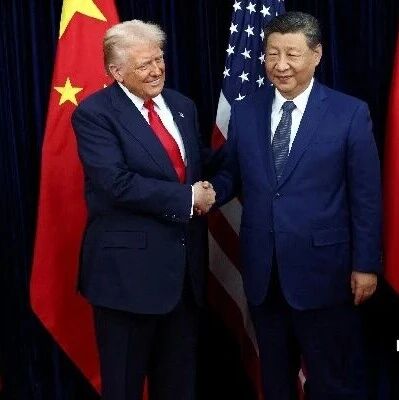
中美在釜山举行首脑会谈
日经中文网· 2025-10-30 03:19
Core Viewpoint - The meeting between Chinese President Xi Jinping and U.S. President Donald Trump on October 30 in Busan, South Korea, marks their first face-to-face interaction since the beginning of Trump's second term, with a focus on trade issues [2][4]. Group 1: Meeting Context - The meeting is significant as it is the first since the establishment of Trump's second administration in January this year [2]. - The discussions are expected to address the importance of stabilizing U.S.-China relations and easing trade tensions [4]. Group 2: Key Discussion Topics - Trade friction between the two countries is a primary topic of negotiation during the meeting [4]. - The issue of synthetic drug "fentanyl" smuggling is also anticipated to be a point of discussion [4]. - The meeting occurs just before Xi's attendance at the APEC leaders' meeting, indicating a broader context of international economic cooperation [4].

新华社发表署名文章:台湾问题的由来和性质
第一财经· 2025-10-26 15:58
Core Viewpoint - The article emphasizes that the Taiwan issue is an internal matter of China, rooted in historical conflicts and external interventions, and asserts that it will ultimately be resolved with the rejuvenation of the Chinese nation [3][8][16]. Historical Context - Taiwan has historically belonged to China, with archaeological evidence showing that its indigenous peoples migrated from the mainland. The earliest records date back to 230 AD, and various Chinese dynasties established administrative control over Taiwan [5][6]. - The Qing Dynasty officially incorporated Taiwan as a province in 1885, marking its development as a prosperous region under Chinese governance [5][6]. - The Taiwan issue arose from Japan's illegal annexation of Taiwan through the Treaty of Shimonoseki in 1895, and the subsequent efforts of the Chinese people to reclaim it during the anti-Japanese war [6][9]. Legal and International Recognition - The legal status of Taiwan as part of China was reaffirmed after World War II, with the Cairo Declaration and the Potsdam Declaration emphasizing the return of Taiwan to China [6][7]. - The establishment of the People's Republic of China (PRC) in 1949 marked a significant shift, with the PRC recognized as the sole legitimate government of China, maintaining that Taiwan is an integral part of its territory [11][12]. One China Principle - The One China principle is a fundamental tenet of international relations, supported by the majority of countries worldwide, which recognize Taiwan as part of China [12]. - The UN General Assembly Resolution 2758 in 1971 acknowledged the PRC as the only legitimate representative of China, reinforcing the notion that Taiwan does not possess independent status [12]. Path to Resolution - The article argues that the Taiwan issue must be resolved by the Chinese people themselves, highlighting the shared cultural and historical ties between the people on both sides of the Taiwan Strait [14][16]. - The "1992 Consensus," which acknowledges the One China principle, is presented as a foundation for peaceful relations and potential resolution of the Taiwan issue [15][16]. - The article concludes that national rejuvenation and unification are inevitable trends, and both sides can work towards a peaceful resolution of the Taiwan issue, benefiting all Chinese people [16].
国台办:台湾是中国的台湾 决不允许民进党当局把宝岛变成“地狱”
Zhong Guo Xin Wen Wang· 2025-10-22 07:23
Core Viewpoint - The Taiwan issue is strictly an internal matter of China, and any foreign interference is unacceptable. The remarks from U.S. individuals reveal a malicious intent to use Taiwan as a pawn for political and economic gains, potentially leading to conflict and endangering the lives of Taiwanese people [1]. Group 1 - The spokesperson from the Taiwan Affairs Office emphasized that Taiwan is an integral part of China and that the current Taiwanese administration should not collude with external forces [1]. - The statement highlighted the dangers of U.S. involvement in Taiwan, suggesting it could lead to Taiwan becoming a "hell" due to external manipulation [1]. - The spokesperson called for the U.S. to adhere to the One China principle and the three joint communiqués between China and the U.S., urging them to stop escalating tensions in the Taiwan Strait [1].
国台办回应特朗普涉台言论:解决台湾问题是中国人自己的事,只能由中国人来决定
Huan Qiu Wang· 2025-10-22 05:40
Core Viewpoint - The spokesperson of the Taiwan Affairs Office emphasized that Taiwan is an integral part of China and that the resolution of the Taiwan issue is a matter for the Chinese people to decide. The spokesperson criticized the Democratic Progressive Party for colluding with external forces and provoking independence, which poses the greatest threat to peace and stability in the Taiwan Strait [1]. Group 1 - The spokesperson reiterated that the Chinese government is willing to create broad space for peaceful reunification and will make maximum efforts to achieve this goal [1]. - There is a clear stance against any form of "Taiwan independence" activities, indicating a firm position on national sovereignty [1].
中方回应特朗普涉华言论:如何解决台湾问题是中国人自己的事
Zhong Guo Xin Wen Wang· 2025-10-21 09:38
Core Viewpoint - The Chinese government maintains a consistent and clear stance on the Taiwan issue, asserting that Taiwan is an inseparable part of China and that the resolution of the Taiwan issue is a matter for the Chinese people alone [1] Group 1: Taiwan Issue - The Chinese government expresses its commitment to peaceful reunification regarding Taiwan, while firmly opposing any attempts to separate Taiwan from China by any individual or force [1] - The Chinese government emphasizes that the Taiwan issue is purely an internal matter of China [1] Group 2: Diplomatic Relations - The Chinese government highlights the irreplaceable strategic role of summit diplomacy in guiding China-U.S. relations [1] - There is a mention of close communication and interaction between the leaders of China and the United States [1]
外交部最新回应
券商中国· 2025-10-21 09:04
Core Viewpoint - The article discusses the recent comments made by U.S. President Trump regarding Taiwan and the response from the Chinese Foreign Ministry, emphasizing China's firm stance on Taiwan as an inseparable part of its territory and the importance of maintaining communication between the leaders of China and the U.S. [1] Group 1 - The Chinese Foreign Ministry reiterated its consistent and clear position on Taiwan, stating that it is an inseparable part of China and that the Taiwan issue is purely a domestic matter for China [1] - The spokesperson, Guo Jia Kun, expressed China's willingness to strive for peaceful reunification while firmly opposing any attempts to separate Taiwan from China by any individual or force [1] - Guo emphasized the irreplaceable strategic role of leader diplomacy in U.S.-China relations, highlighting the close communication and interaction between the two countries' leaders [1]
特朗普将于明年初访问中国?外交部回应
第一财经· 2025-10-21 08:05
Core Viewpoint - The article discusses the recent statements made by U.S. President Trump regarding Taiwan and the response from the Chinese Foreign Ministry, emphasizing China's firm stance on Taiwan as an inseparable part of its territory and the importance of high-level diplomatic communication between the U.S. and China [3]. Group 1 - Trump's comments on Taiwan and his confidence in relations with Chinese leaders were highlighted, along with his planned visit to China next year [3]. - The Chinese Foreign Ministry reiterated its consistent and clear position on Taiwan, stating that the issue is purely an internal matter for China and that peaceful reunification is the goal [3]. - The spokesperson emphasized the irreplaceable strategic role of high-level diplomacy in guiding U.S.-China relations, noting the close communication between the two countries' leaders [3].

特朗普称将于明年初访问中国,外交部回应
财联社· 2025-10-21 07:49
Core Viewpoint - The article discusses the recent comments made by U.S. President Trump regarding Taiwan and the response from the Chinese Foreign Ministry, emphasizing China's firm stance on Taiwan as an inseparable part of its territory and the importance of maintaining communication between the leaders of China and the U.S. [1] Group 1 - The Chinese Foreign Ministry reiterated its consistent and clear position on Taiwan, stating that it is an inseparable part of China's territory and that the Taiwan issue is purely a matter of China's internal affairs [1] - The Ministry expressed willingness to strive for peaceful reunification with the utmost sincerity and effort, while firmly opposing any attempts to separate Taiwan from China by any person or force [1] - The spokesperson highlighted the irreplaceable strategic guiding role of leader diplomacy in China-U.S. relations, noting that the two countries' leaders maintain close communication and interaction [1]