
Autonomous Driving

Search documents
Tech Corner: TSLA Evolution in EV & Energy to Robotaxi & Robotics
Youtube· 2025-12-20 18:00
Core Viewpoint - Tesla is a leading player in the electric vehicle and energy sectors, with significant market share and innovative projects that position it for future growth [6][20]. Company Overview - Tesla operates in two main segments: automotive and energy generation/storage [2][3]. - The automotive segment includes popular models like Model 3, Model Y, Model S, and the upcoming Cybertruck, as well as commercial vehicles like the Tesla semi-truck [2][3]. - The energy segment offers products such as Powerwall and Megapack, along with solar energy systems for various applications [3]. Competitive Landscape - Tesla faces competition from established automakers like General Motors and Ford, as well as emerging players like BYD, Rivian, and Lucid [4][5]. - In the technology space, competitors include Alphabet's Waymo, which focuses on autonomous vehicle technology [5]. Recent Developments - Tesla began testing its Model Y robo taxis in Austin without any occupants, indicating progress in its autonomous driving technology [7]. - In Q3 2025, Tesla reported earnings that missed EPS estimates by 6 cents but showed revenue growth of 11.6% year-over-year, beating estimates by approximately $1.4 billion [8][9]. - Free cash flow for the quarter increased to nearly $4 billion, a significant rise from $150 million in the previous quarter [9]. Growth Drivers - The robo taxi initiative is seen as a major growth driver, with potential revenue from urban transportation [11]. - The CyberCab and Optimus segments are projected to generate substantial revenue, with CyberCab potentially reaching $54 billion by 2030 [12]. - The energy storage segment is experiencing rapid growth, driven by demand for energy solutions [13]. - Tesla's AI chip roadmap could add an additional $11 billion in annual profits by 2028 [13]. - The company is expected to generate over $100 billion in annual sales in fiscal year 2026 [14]. Challenges and Concerns - Tesla's full self-driving technology faces regulatory and technical challenges, impacting its readiness for mass market deployment [14]. - Ambitious projects like the robo taxi and humanoid robotics may strain financial resources due to their capital-intensive nature [15]. - Tesla's valuation is high, with a forward earnings multiple of over 283 times, significantly above the sector median of 18 [15]. - Sales growth is projected to slow to around 4% year-over-year, below the 5-year average of nearly 30% [16]. Market Performance - Tesla's stock hit a new all-time high of approximately $495 but has underperformed the broader market over the past 52 weeks, with only a 2% increase [18]. - Year-to-date, the stock is up nearly 21%, with strong near-term price momentum [18][19]. - The stock price remains above key moving averages, indicating a positive intermediate trend [19]. Conclusion - Tesla is positioned as a leader in electric vehicles and energy solutions, with ongoing innovations in AI and robotics [20]. - The recent developments in autonomous driving and energy storage enhance its competitive edge and growth potential [21].


2026 年新能源汽车需求仍具韧性_ EV demand resilience into 2026e
2025-12-20 09:54
Summary of Key Points from the Conference Call Industry Overview - **Industry**: Electric Vehicles (EV) in China - **Current Trends**: EV demand shows resilience, with expectations of continued support for consumption into 2026, driven by government policies and market dynamics [2][9] Core Insights - **EV Market Performance**: - In November, the China passenger car market recorded sales of 2.22 million units, an 8% year-over-year decline, and a 1% month-over-month decrease [2] - EV sales increased by 4% year-over-year and 3% month-over-month, achieving a penetration rate of 59.3% [2][34] - Anticipated growth in EV demand through December due to year-end promotions and potential frontloading sales ahead of tax exemption reductions [2] - **Robotaxi Commercialization**: - Companies like Pony and WeRide plan to expand their robotaxi fleets from approximately 1,000 to 3,000 by the end of next year, with some areas achieving breakeven unit economics [3] - XPEV is set to launch three robotaxi models in 2026, indicating a clear acceleration in commercialization [3] - **Battery Market Dynamics**: - The battery trading market is currently experiencing volatility, particularly affecting smaller firms and upstream battery materials [4] - The battery segment is expected to benefit from an upcycle, with companies like CATL showing growth visibility [5] Investment Recommendations - **Preferred OEMs**: - Companies with strong product pipelines such as BYD A/H, Geely, and Leapmotor are favored due to expected policy support for domestic consumption [5][9] - **Battery Suppliers**: - CATL is highlighted for its resilience and growth potential, especially in the face of demand volatility expected in early 2026 [5] - **Autonomous Driving Enablers**: - XPeng and Horizon Robotics are well-positioned to capture growth in autonomous driving, with Joyson noted for its overseas exposure and robotics optionality [5] Additional Insights - **Market Share Trends**: - The top 10 brands in the China passenger car market captured 72% of the market share in the first ten months of 2025, indicating a competitive landscape with 144 brands vying for the remaining share [13][15] - **EV Market Share**: - The top 10 EV makers accounted for 75% of the market share in November 2025, with 50 brands competing for the remaining 25% [18] - **Discount Levels**: - The discount level for EVs slightly increased to 10.1% in November 2025, while ICE vehicles remained stable at 24.0% [26][28] - **Inventory Levels**: - The inventory indicator rose to 1.57 in November 2025, suggesting potential oversupply concerns [38] - **Future Projections**: - New model launches are expected to peak in the third quarter of 2025 and the second quarter of 2026, with EVs projected to account for 91% of new models [42] This summary encapsulates the key points from the conference call, focusing on the electric vehicle industry in China, market dynamics, investment recommendations, and additional insights that may be relevant for stakeholders.




X @Tesla Owners Silicon Valley
Tesla Owners Silicon Valley· 2025-12-20 02:30
The future is autonomous https://t.co/oncscgUUkG ...
Chinese Self-Driving Tech Firm CiDi Lists in HK
Yahoo Finance· 2025-12-19 05:39
CiDi, a provider of autonomous driving technology for commercial vehicles, has listed its shares in Hong Kong. Its CEO Albert Sibo Hu discusses the company's growth and international expansion strategy. He speaks with Yvonne Man on "Bloomberg: The China Show." ...
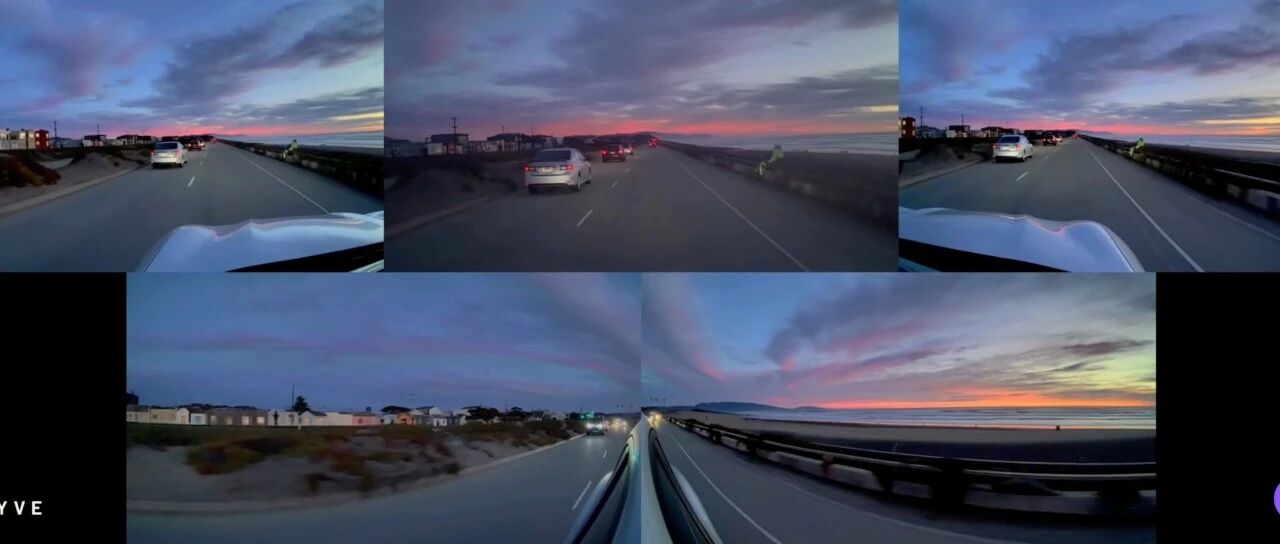
Wayve最近的GAIA-3分享:全面扩展世界模型的评测能力......
自动驾驶之心· 2025-12-19 00:05
Core Insights - GAIA-3 represents a significant advancement in the evaluation of autonomous driving systems, transitioning world modeling from a visual synthesis tool to a foundational element for safety assessment [4][20] - The model combines the realism of real-world data with the controllability of simulations, enabling the generation of structured and purposeful driving scenarios for safety validation [6][20] Group 1: GAIA-3 Features - GAIA-3 is a powerful testing tool that can modify vehicle trajectories, weather conditions, and adapt to different sensor configurations [3] - It is built on a latent diffusion model with 15 billion parameters, doubling the video tokenizer size compared to its predecessor GAIA-2 [3][19] - The model allows for the generation of controlled variants of real-world driving sequences, maintaining consistency in the environment while altering vehicle behavior [6][8] Group 2: Safety and Evaluation - GAIA-3 addresses the limitations of traditional testing methods by generating systematic variations of critical safety scenarios, such as collisions, using real-world data metrics [7][8] - The model enables offline evaluation of autonomous systems by recreating unexpected events, allowing for quantitative testing of recovery capabilities in edge cases [9][20] - It emphasizes consistency in generated scenarios, ensuring that changes in vehicle behavior do not disrupt the physical and visual coherence of the environment [8][11] Group 3: Data Enrichment and Robustness - GAIA-3 enhances data coverage by generating structured variants from rare failure modes, facilitating targeted testing and retraining [12][13] - The model supports controlled visual diversity, allowing for measurable changes in appearance while keeping the underlying structure consistent, thus improving robustness assessments [11] - It can transfer scenarios across different sensor configurations, enabling data reuse across various vehicle projects without the need for paired collection [10] Group 4: Technical Advancements - The advancements in GAIA-3 are driven by increased scale, with training compute five times that of GAIA-2 and a dataset covering eight countries across three continents [16][19] - The model captures critical spatial and temporal structures, enhancing the fidelity of generated scenarios and improving the understanding of causal relationships in driving behavior [19][18] - GAIA-3's capabilities provide a reliable framework for structured, repeatable testing, marking a significant step towards scalable evaluation of end-to-end driving systems [20]
Everything EV & Autonomy: RIVN Next Step & Waymo, UBER Riding A.I. Wave
Youtube· 2025-12-18 20:30
Core Insights - The electric vehicle (EV) market is experiencing significant consumer enthusiasm, driven by advancements in autonomous technology and the need for improved charging infrastructure [2][4][10] - Affordability and vehicle form factors are critical factors influencing consumer adoption of EVs, particularly for families seeking practical options [3][4] - Rivian is positioning itself competitively in the EV market with its upcoming R2 vehicles, targeting a price range of $45,000 to $55,000, and plans to enhance autonomy features [6][7][12] Industry Trends - The development of charging infrastructure is a key barrier to wider EV adoption, with many potential consumers waiting for improvements before making the switch [1][4] - The integration of autonomy in EVs is expected to accelerate adoption, as consumers value the convenience and time savings associated with autonomous driving [5][20] - Companies like Tesla and Rivian are leading the charge in autonomous technology, with Rivian's plans for a hands-free driving feature and Tesla's successful robo-taxi launch [8][11] Company Analysis - General Motors is highlighted as a strong player in the EV market, particularly with its full-size pickups and SUVs, despite some criticism regarding its transition strategy from internal combustion engines to EVs [10][12] - Rivian is recognized for its innovative approach, including in-house development of processors and software, which may provide a competitive advantage in the EV space [12] - The potential for personal vehicle autonomy is seen as a transformative opportunity, allowing consumers to utilize their vehicles in new ways, such as self-driving to pick up passengers [18][20]



The Zacks Analyst Blog Alphabet, Tesla, Sony, Tredegar and CVD Equipment
ZACKS· 2025-12-18 10:25
Core Insights - The Zacks Equity Research team has highlighted key stocks including Alphabet Inc., Tesla, and Sony Group Corp., along with micro-cap stocks Tredegar Corp. and CVD Equipment Corp. [1][2] Alphabet Inc. (GOOGL) - Alphabet's shares have outperformed the Zacks Internet - Services industry over the past year, gaining 63.8% compared to the industry's 59% [4] - The company is experiencing accelerated growth in AI infrastructure, Google Cloud, and Search, with Google Cloud's backlog reaching $155 billion, up 46% sequentially [4] - New Google Cloud Platform customers increased by approximately 34% year-over-year, and 70% of these customers are utilizing Alphabet's AI products [5] - Revenues from products based on Alphabet's generative AI models grew over 200% year-over-year, indicating strong adoption [5] - Search growth is supported by AI features, while YouTube benefits from increased demand for shorts, although competition in cloud computing remains a concern [6] Tesla, Inc. (TSLA) - Tesla's shares have increased by 11.3% over the past year, underperforming the Zacks Automotive - Domestic industry, which gained 13.9% [7] - The company achieved a new delivery record in Q3, largely due to buyers taking advantage of the expiring $7,500 EV tax credit, but Q4 deliveries are expected to decline due to the withdrawal of incentives and increased competition from Chinese EV manufacturers [7] - Automotive margins are under pressure, but the Energy Generation & Storage unit is performing well, and the Supercharger network is expanding [8] - Tesla's robotaxi service is operational in Austin and San Francisco, with driverless tests recently initiated, although significant results from AI and autonomous projects may take years [9] Sony Group Corp. (SONY) - Sony's shares have outperformed the Zacks Audio Video Production industry, rising 26.5% compared to 24.4% for the industry [10] - The company's performance is driven by strong results in Game & Network Services, Music, and Imaging & Sensing Solutions, despite challenges in Pictures and Entertainment, and Technology & Services [10] - Increased engagement in PlayStation and higher streaming in Recorded Music are contributing to growth, while Imaging & Sensing Solutions benefits from higher image sensor sales [11] - The acquisition of STATSports is expected to enhance sports analytics capabilities, although there are concerns about business volatility and a slowdown in the imaging market [12] Tredegar Corp. (TG) - Tredegar's shares have underperformed the Zacks Chemical - Plastic industry, declining 1.6% compared to the industry's 23.8% gain [13] - The company reported a strong Q3 2025 rebound, with Aluminum Extrusions EBITDA surging 172% year-over-year, driven by higher volumes and improved pricing [14] - Net income improved to $7.1 million from a loss of $3.4 million in Q3 2024, supported by stronger operating cash flow [14] - Despite facing challenges such as elevated corporate costs and high customer concentration, Tredegar maintained its market position through pricing flexibility and achieved 34% year-over-year volume growth in specialty products [15] CVD Equipment Corp. (CVV) - CVD Equipment's shares have gained 9.3% over the past six months, slightly underperforming the Zacks Manufacturing - General Industrial industry's gain of 10.5% [16] - The company is positioned for long-term growth in advanced materials for aerospace and EV batteries, supported by differentiated CVD/CVI platforms [16] - Key growth drivers include the adoption of ceramic matrix composites in aerospace and alignment with the shift to 200mm SiC wafers in power electronics [17] - Recent margin improvements and a restructuring plan targeting $2 million in annual cost savings are expected to enhance operating leverage, although risks include order volatility and customer concentration [18]




纯图像理解的时代该翻篇了!MMDrive:给自动驾驶装上「多模态大脑」
自动驾驶之心· 2025-12-18 03:18
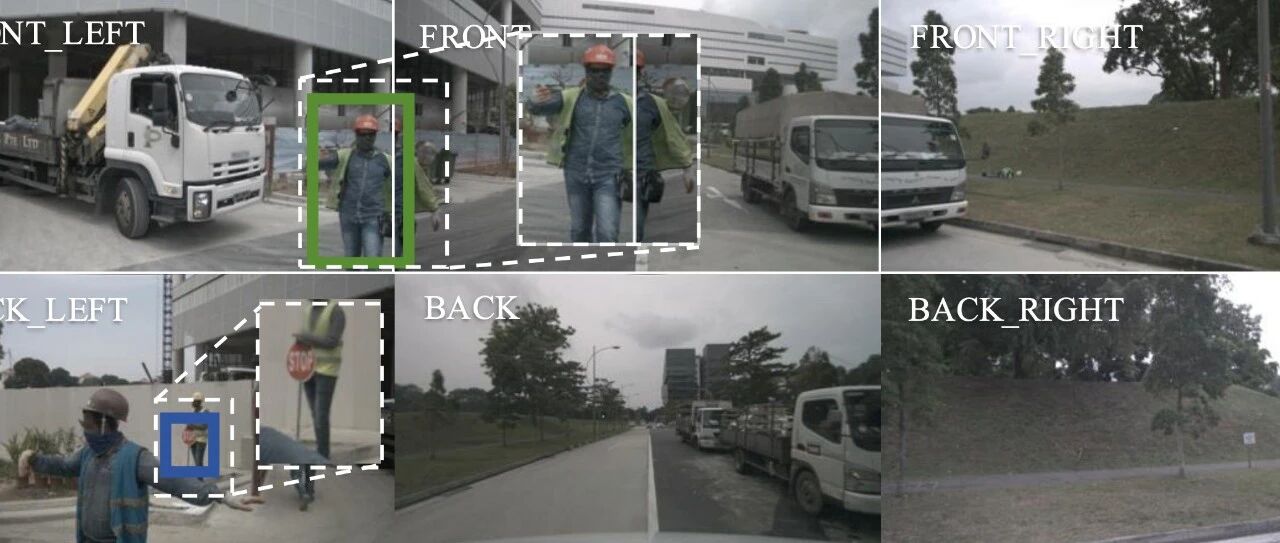
点击下方 卡片 ,关注" 自动驾驶之心 "公众号 戳我-> 领取 自动驾驶近30个 方向 学习 路线 >>自动驾驶前沿信息获取 → 自动驾驶之心知识星球 论文作者 | Minghui Hou等 编辑 | 自动驾驶之心 "只看图说话"的自动驾驶视觉模型,在真实路况中够用吗?遮挡、恶劣天气、复杂空间关系……这些挑战让传统模型捉襟见肘。今天要介绍的这项研究,正是要为自 动驾驶系统打造一个更懂"场景"、更会"思考"的视觉语言模型——MMDrive。 一、为什么传统方法不够用了? 论文标题 :MMDrive: Interactive Scene Understanding Beyond Vision with Multi-representational Fusion 论文链接 :https://arxiv.org/abs/2512.13177 作者单位 :吉林大学,香港科技大学(广州),佐治亚理工学院,密歇根大学安娜堡分校 1. 缺乏三维感知能力 :二维图像难以表达深度、空间布局等关键信息; 2. 语义融合能力有限 :不同模态之间往往是"硬拼接",未能实现语义对齐; 3. 关键信息提取效率低 :在复杂动态环境中,模型 ...
从具身到自驾,VLA和世界模型的融合趋势已经形成......
自动驾驶之心· 2025-12-18 00:06
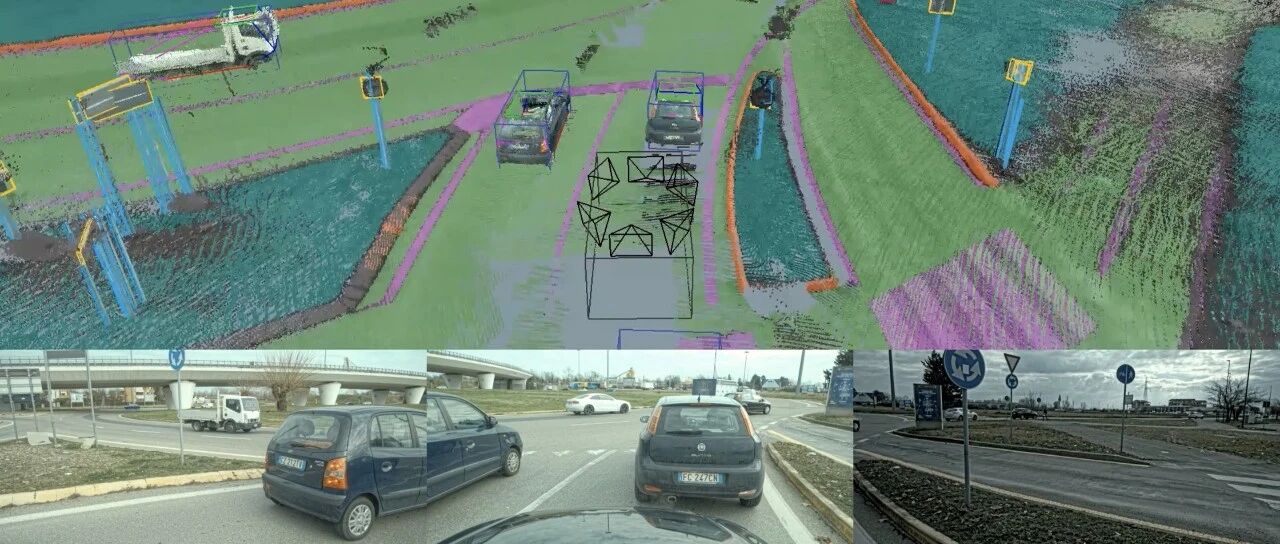
Core Insights - The article discusses the convergence of two leading directions in autonomous driving technology: Vision-Language-Action (VLA) and World Model, highlighting their distinct functionalities and potential for integration [1][2]. Summary of VLA - VLA, or Vision-Language-Action, is a multimodal model that integrates visual input, language commands, and action decisions, enabling vehicles to understand and execute driving instructions while providing explanations [4][5]. - The architecture of VLA consists of three layers: input (multimodal perception), middle (unified reasoning and decision-making), and output (vehicle control commands) [5][6]. - VLA aims to create a seamless interaction between human commands and driving actions, enhancing the interpretability and responsiveness of autonomous systems [6][11]. Summary of World Model - World Model is a generative spatiotemporal neural network that compresses high-dimensional sensor data into a compact internal state, allowing for future scenario predictions through internal simulations [8][9]. - Its architecture also follows a three-layer structure: input (multimodal temporal observations), core (state encoding and generative prediction), and output (future state representations) [9][10]. - The primary goal of World Model is to enable vehicles to simulate potential future scenarios, thereby improving decision-making and safety in complex driving environments [10][12]. Comparison of VLA and World Model - VLA focuses on human-vehicle interaction and interpretable end-to-end driving, while World Model emphasizes building a predictive and simulation-based system for future scenario analysis [11]. - The input for VLA includes sensor data and explicit language commands, whereas World Model relies on temporal sensor data and vehicle state assumptions [11]. - VLA outputs direct action control signals, while World Model provides future state representations rather than immediate driving actions [11]. Integration Potential - Both VLA and World Model share a common technical origin, aiming to address the fragmentation of traditional autonomous driving systems and enhance reasoning capabilities [12][16]. - The ultimate goal of both technologies is to equip autonomous systems with human-like cognitive and decision-making abilities [12][16]. - They face similar challenges in addressing corner cases and improving robustness, albeit through different methodologies [14][16]. Future Directions - The article suggests that the future of autonomous driving may lie in the deep integration of VLA and World Model, creating a comprehensive system that combines perception, reasoning, simulation, decision-making, and explanation [16][47]. - Companies like Huawei and XPeng are already exploring these integration paths, indicating a competitive landscape in the development of advanced autonomous driving technologies [47].
X @Bloomberg
Bloomberg· 2025-12-17 19:01
Nvidia settled a lawsuit involving a former engineer who had inadvertently revealed autonomous driving trade secrets that he stole from a previous employer. https://t.co/9Ednoy4i3i ...
