Trust

Search documents
X @Consensys.eth
Consensys.eth· 2025-06-23 18:45
A paradigm shift is underway and trust is a new kind of commodity.We believe in @Ethereum. https://t.co/0tojBfqj5P ...
Can creativity help us navigate life with AI? | Frauke Zeller | TEDxBerlin
TEDx Talks· 2025-06-17 16:45
Human-AI Relationship & Trust - The industry highlights the shift in focus from "Can humans trust robots?" to "Can robots trust humans?", emphasizing the importance of authenticity and trust in technology [3][4] - The industry observes that people creatively adapt to technology without needing explicit instructions, and technology doesn't need to be perfect to be meaningful [4] - The industry notes that AI has transitioned from an abstract concept to an everyday tool, raising questions about the nature of the relationship being built with technology [6] Dialectical Intelligence & Synthesis - The industry introduces the framework of dialectical intelligence, holding the tension between thesis (human emotion, life experience, creativity) and antithesis (AI speed, scale, synthetic output) to create synthesis (collaboration, co-creation) [7][9][10] - The industry emphasizes that understanding the ingredients of both human and AI intelligence is crucial for building synthesis, questioning the nature of AI knowledge and learning [11][12] - The industry acknowledges that AI mimics human learning by gathering data, connecting patterns, and arriving at internal logic, but lacks the emotional and sensory experiences that shape human understanding [12][13] Creativity & AI - The industry explores the role of creativity in AI systems, questioning whether AI is a tool or something more, and whether it shapes output or is shaped by it [15] - The industry suggests open, participatory projects are needed to instill creativity and explore the human-AI relationship, referencing the Hitchbot experiment [26][27] - The industry advocates for a future of intelligent technology that is an invitation to all to participate, shape, and create, revealing values through collaborative building with machines [28][29] Ethical Considerations & Future Implications - The industry raises concerns about the potential for technology to adapt to humans or vice versa, and the need to consider what love and other human concepts will mean in the context of AI [19] - The industry cautions against thinking in dichotomies of master and slave, winner or loser, and emphasizes the importance of asking different questions to challenge assumptions [24][25] - The industry acknowledges the risk of AI being trained on biased data, leading to flawed understanding and outcomes [14]

The „for one another spirit“ - military principle for civilian leaders | Thomas Harbaum | TEDxBerlin
TEDx Talks· 2025-06-13 16:04
I must admit it is an amazing feeling to be here tonight to deliver a speech in uniform in Berlin, reunited 35 years ago and on the day 80 years after the end of World War II, I would consider this as freedom that we can enjoy this event here this beautiful TEDex bellin for me this is part of our freedom and I think we should never take that freedom for granted considering the actual political situation globally we should try our best and stand together to preserve that freedom collective memory needs to re ...

Why You Keep Breaking Promises to Yourself (and How to Stop) | Walt Brown | TEDxAtlanta
TEDx Talks· 2025-06-13 15:41
Core Argument - Promises kept and accepted form the bedrock of trust, which is the foundation of shared humanity [15] - Focusing on promises made, accepted, and kept can build collaboration, cooperation, and trust [16] Personal Promises - Promises made to oneself often fail because a promise requires two people [4][5] - Seeking help from others and accepting their promise can lead to achieving goals [5][6] Promises at Work - Companies often break promises to employees through poorly defined roles, procedures, and workflows [8] - Core values represent a promise from the company to surround employees with people who demonstrate certain attitudes and behaviors [8] - Breaking promises, even by high-performing individuals, can kill trust within a company [9] - Companies that prioritize keeping promises enjoy more trust and greater results [13] - Companies should overtly make promises and ensure employees accept them, implementing systems to facilitate promise-keeping [13]
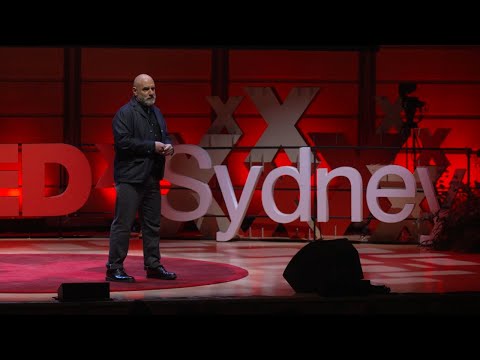
The evolution of AI—how we can solve for trust | Matt Kuperholz | TEDxSydney
TEDx Talks· 2025-06-11 16:03
[Music] Hi, I'm Matt. I reckon it's a giveaway when someone spells their name with the at sign that they're probably a pretty serious computer nerd. and I have been in a deep and meaningful relationship with computers since the late 70s and have been using AI almost every day in anger and with love since the late '9s. And I'm here to talk to you about the evolution of AI, some of the challenges we're facing to optimize this amazing technology for humanity and put forward a solution about how we can be doing ...
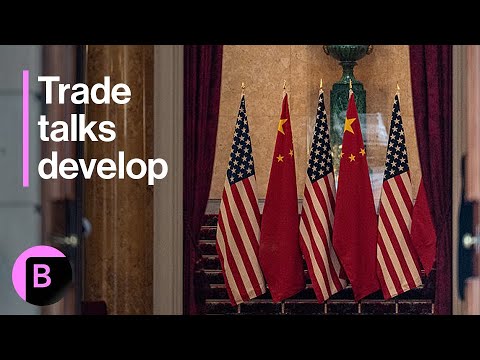
US, China Trade Talks: What We Know
Bloomberg Television· 2025-06-11 05:45
What do we know about the details, if any, on the back of these discussions. Well, Tom, they were thrashed out over many, many hours yesterday. The talks when all through the day and into the night as well.The US Treasury secretary, Scott Bessant, having to leave early because he had to get back to Washington to testify in Congress. But they got back around the table. Howard Lutnick, the commerce secretary, and the U.S. Trade Representative, Jamison Greer, emerging finally, as you heard there, to announce t ...
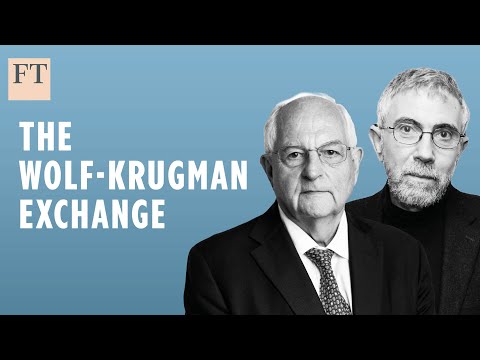
The Wolf-Krugman Exchange: The cost of losing trust in the US | FT Podcasts
Financial Times· 2025-06-06 23:15
US Economic & Political Shifts - The US administration has undermined trust by abandoning trade agreements and rule of law, leading to erratic and unpredictable governance [7][8] - The abandonment of the "most favored nation" principle in international trade signals a disregard for past agreements [9][10] - The US is behaving like an arbitrary despot, undermining the ability of businesses and individuals to plan [14][16] - The US is becoming increasingly unreliable compared to other economic superpowers like the EU and China [35][37] Trade & Tariffs - The US has blown up the international trading system, exemplified by doubling the tariff on steel from 25% to 50% [29] - The invocation of the national security clause (Section 232) to justify tariffs is seen as a veneer of legality [30] - Unpredictable tariff rates create uncertainty for businesses, potentially leading to investment paralysis [31][32] Corruption & Influence - The US is perceived to have abandoned anti-corruption efforts, setting a bad example for other governments [40][41] - The presidency appears to be "for sale," potentially altering the nature of successful business leadership [44] - Bribing people in power may become a way to get business in America, disadvantaging countries with rule of law [45] Financial System Risks - Suggestions of converting American debt into ultra-long-term debt (century bonds) are viewed as a potential default [47][48] - The reliability of US debt is being questioned, potentially leading to a world system without a safe asset [53] Assault on Science & Universities - There is a systematic attack on the American scientific system and universities, including foreign students and faculty [59][60] - Restrictions on foreign students and faculty are damaging collaboration between universities and business [62][63] - Hostility to independent thought and science is undermining the factors that made the US successful [66][67]
Mastercard Incorporated (MA) Bernstein 41st Annual Strategic Decisions Conference (Transcript)
Seeking Alpha· 2025-05-28 22:48
Mastercard Incorporated (NYSE:MA) Bernstein 41st Annual Strategic Decisions Conference May 28, 2025 2:30 PM ET Company Participants Michael Miebach - CEO Conference Call Participants Harshita Rawat - Bernstein Harshita Rawat Great. I think you're live. Good afternoon again everyone. I'm Harshita Rawat, Bernstein's Senior Analyst covering Payments Processors and IT Services. I'm delighted to be joined today by Michael Miebach, Mastercard's CEO at Bernstein's 41st Annual Strategic Decisions Conference. Michae ...


聊聊我是怎么赚钱的 | 我们的团队
小Lin说· 2025-02-04 13:06
Business Model & Revenue Streams - The channel's revenue is primarily divided into four parts: advertising, YouTube ad revenue, book royalties, and commercial activities [5][6] - Book royalties typically range from 8% to 12% of the book price, depending on the author's influence [8] - YouTube ad revenue is influenced by video views and the average watch time, with longer videos potentially generating more revenue [14] - Advertising models include direct ad insertions within content and customized ads that integrate business information into the channel's regular content style [15][17] Content Creation & Team Structure - The content creation team is small, consisting of single-digit members, with roles in content writing, post-production, business development, and operations [24][25] - The production cycle for a single video is approximately two weeks, involving topic selection, research, script writing, recording, and editing [26] - The channel prioritizes creating systematic and long-term useful content, aiming to build a "knowledge tree" for viewers [28][29] - The channel focuses on building trust with its audience by consistently meeting or exceeding their expectations with each video [31] Future Plans & Challenges - The channel is not currently considering live streaming, membership channels, or online courses due to time and resource constraints [21][22] - Recruiting content creators is a challenge, potentially due to the specialized skills required for personal media that are not typically taught in formal education [35] - The channel aims to maintain a balance between creating valuable content and incorporating advertisements, controlling the frequency and proportion of ads [18]