
企业可持续发展

Search documents
煤泥治理为企业可持续发展注入新动力
Ke Ji Ri Bao· 2025-06-19 02:38
Group 1 - The coal-water pool sludge treatment project by Guodian Power's Jinjie Company has officially entered the trial operation phase, aiming to efficiently process and recycle sludge, thus addressing environmental concerns related to sludge accumulation [1] - The project utilizes an integrated treatment process that includes wastewater collection, high-frequency coarse interception, efficient concentration, sludge dewatering, and water reuse, replacing traditional outdoor drying methods [1] - The technology allows for the separation of sludge and clean water, achieving a stable sludge moisture content of below 20%, which meets boiler co-firing standards, while the quality of recycled water exceeds industry reuse standards [1] Group 2 - Guodian Power emphasizes ecological priority and proactive governance, focusing on pollution reduction and carbon reduction, while promoting the principles of solid waste reduction, resource utilization, and harmlessness [2] - The company is exploring new models and pathways for solid waste governance and utilization in the coal-based energy sector, systematically addressing the reduction and disposal of coal-based solid waste [2] - Guodian Power aims to enhance the comprehensive utilization and disposal levels of solid and hazardous waste, supporting high-quality development of ecological environment and social economy [2]


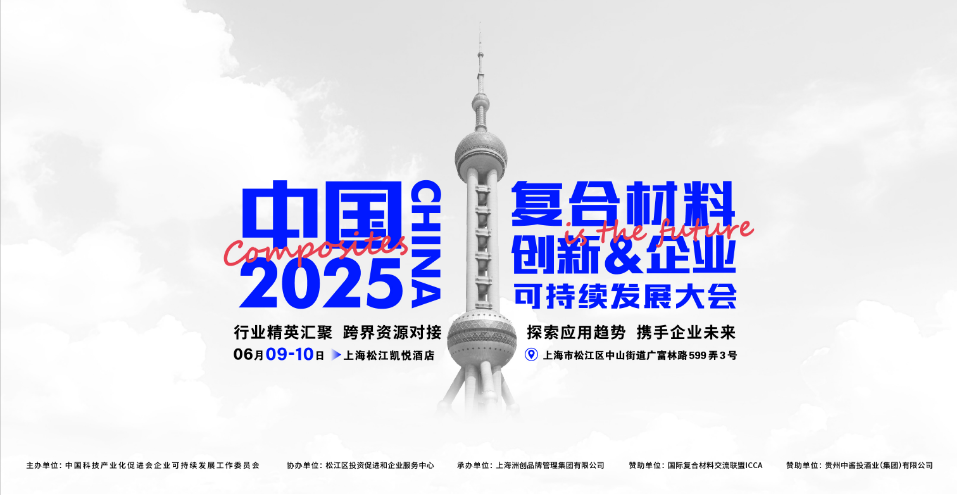
2025中国复合材料创新及企业可持续发展大会即将在沪召开
Xin Hua Wang· 2025-06-07 00:32
Group 1 - The "2025 China Composite Materials Innovation and Corporate Sustainable Development Conference" will be held in Shanghai on June 9-10, 2025, focusing on the future of the composite materials industry in China [1] - The conference aims to enhance corporate sustainable development through authoritative policy interpretation, soft power enhancement, high-quality development discussions, market demand analysis, and financial investment empowerment [1] - Composite materials have shown strong growth globally, with an annual growth rate exceeding 12%, and are widely used in major national projects such as the C919 aircraft, lightweight electric vehicles, and offshore wind turbine blades [1] Group 2 - The exhibition area will feature 15 selected exhibitors, creating a "mini-ecosystem" that spans the entire composite materials industry chain [2] - Participants will have the opportunity to engage in a "composite materials journey," showcasing a value closed loop from raw material suppliers to end application manufacturers [2] - The conference will provide a one-stop deep experience combining "conference + exhibition + industry," serving as a starting point for industry collaboration [2]
中国复合材料创新及企业可持续发展大会 点燃中国复材企业发展引擎
Sou Hu Wang· 2025-06-06 05:07
Core Insights - The upcoming "2025 China Composite Materials Innovation and Corporate Sustainable Development Conference" will take place on June 9-10, 2025, in Shanghai, focusing on innovation and sustainable development in the composite materials industry [1][4] - The global composite materials market has experienced an annual growth rate exceeding 12% over the past five years, highlighting its significant role in major national projects such as the C919 aircraft and the lightweight revolution in new energy vehicles [3] Group 1: Conference Overview - The conference is organized by the China Science and Technology Industrialization Promotion Association and aims to empower companies through authoritative policy interpretations, market demand insights, and financial investment opportunities [1][3] - A diverse lineup of over 10 industry elites and corporate executives will participate in keynote speeches, focusing on the latest research achievements, application cases, and industry trends in composite materials [3] Group 2: Networking and Collaboration - The event will feature roundtable discussions and high-end closed-door meetings, inviting representatives from government agencies, industry experts, and corporate leaders to explore opportunities and challenges in the composite materials sector [3][4] - The exhibition area will showcase 15 selected exhibitors, creating a "mini-ecosystem" that spans the entire composite materials supply chain, facilitating collaboration from raw material suppliers to end-use manufacturers [3][4]
专访安永刘国华:推动行业标准统一 我国积极引导资金流向绿色低碳领域
Zheng Quan Shi Bao Wang· 2025-06-05 13:45
Core Viewpoint - The article discusses the challenges and opportunities for Chinese companies in climate information disclosure and the significance of the newly proposed guidelines for sustainable disclosure in promoting low-carbon transformation and aligning with international standards [1][3][6]. Group 1: Challenges in Climate Information Disclosure - Chinese companies face challenges in climate information disclosure, including the complexity of data collection and management, lack of professional talent, and insufficient understanding of international standards [2][3]. - Issues such as dispersed data sources and varying data quality complicate data integration and analysis [2]. - The shortage of personnel skilled in climate risk management, carbon accounting, and ESG reporting limits companies' progress in climate disclosure and low-carbon transformation [2][3]. Group 2: Significance of the New Guidelines - The proposed guidelines for sustainable disclosure mark a critical step in standardizing climate information disclosure in China and aligning it with international standards [3][4]. - The guidelines aim to enhance transparency in climate risk management, directing funds towards green and low-carbon sectors, and accelerating the low-carbon transition of companies [3][4]. - By providing clear disclosure requirements, the guidelines promote uniformity in sustainable disclosure standards, reducing confusion and uncertainty caused by differing standards [3]. Group 3: Impact on Corporate Strategy and Risk Management - The guidelines introduce a dual disclosure framework that considers both the impact of climate on companies and the reverse effect of corporate activities on climate [5]. - This framework encourages companies to proactively plan for low-carbon transitions, transforming compliance costs into core competitive advantages [5]. - Companies can leverage green energy to reduce long-term energy costs and develop low-carbon products to capture emerging market shares [5]. Group 4: International Influence and Adaptability - The guidelines not only fill a gap in climate information disclosure standards for developing countries but also offer a model for global climate governance through a "disclosure-driven transformation" approach [6][7]. - The design of the guidelines incorporates the principle of "common but differentiated responsibilities," providing flexibility for developing countries in implementing disclosure standards [7]. - The combination of mandatory and voluntary disclosures, along with incentives from carbon markets and green finance, offers a governance model for other developing nations facing regulatory challenges [7]. Group 5: Future Trends and Implementation - The implementation of the guidelines is expected to bring systemic changes to climate governance for Chinese companies, prompting adjustments in operational models and value chain management [8]. - Companies are advised to establish dedicated ESG departments, integrate climate risk management into strategic planning, and conduct comprehensive carbon footprint assessments [8]. - The government is encouraged to create carbon data management platforms and explore connections between disclosure data and existing policy tools, while industry associations can develop targeted disclosure guidelines based on sector-specific characteristics [8].
碳黑N231产品成本预算引领行业发展的可持续之道
Sou Hu Cai Jing· 2025-05-01 08:27
Core Insights - Carbon black is a widely used additive in various industries such as rubber, plastics, inks, and coatings, with N231 being a high-quality product that enjoys a good reputation in the market [2] Cost Structure - The cost of carbon black N231 consists of several components, including raw material costs, production costs, labor costs, sales and marketing costs, and other indirect costs [2][3] - Raw material costs are the primary component of carbon black N231's overall cost, with fluctuations in the price of petroleum carbon black oil directly impacting these costs [2] - Production costs are influenced by equipment maintenance, energy consumption, and transportation costs, necessitating optimization of production processes and logistics to reduce expenses [2] - Labor costs are significant, and investing in employee training and incentive mechanisms can enhance productivity and quality, thereby lowering these costs [3] - Sales and marketing costs must be carefully planned, as marketing activities and channel selection incur expenses that can affect overall profitability [3] - Other indirect costs, such as research and development and management expenses, should also be included in the cost budget, with clear goals and effective budget management to ensure proper utilization [3]

限量招募|2025企业可持续发展大会开幕在即,议程嘉宾抢先看!
第一财经· 2025-04-23 05:47
由第一财经与上海现代服务业联合会共同主办的2025企业可持续发展大会将于4月25日在上海中心 盛大召开。本次大会以"在乎者赢,行动者胜" 为主题,汇聚全球顶尖机构代表、跨国企业高管及可 持续发展领域先锋,共探双碳目标下的商业变革路径,解锁可持续实践与全球协作新机遇。 常启德 联合国驻华协调员 孙建平 联合会会长 李 蓉 上海现代服务业 上海广播电视台(上海文广集团 ) 副台长、副总裁 第一财经董事长 刘元春 上海财经大学校长 党委副书记 杨宇东 第一财经总编辑 马克漫 格兰富中国区总裁 兰珍珍 欧莱雅北亚及中国 公共事务总裁 简大年 上海现代服务业 联合会副会长 楼剑锋 巴斯夫大中华区董事长兼总裁 杨亦鸣 艺康集团高级副总裁 兼艺康大中华区机构 与专业服务事业群 总经理 刘 萌 联合国全球契约组织 亚太区总代表 张政伟 国际可持续发展准则理事会 (ISSB) 主席特别顾问 国际财务报告准则基金会 北京办公室主任 鲍嘉龙 中坚科技股份有限公司 副总经理 汪 钧 第一财经总经理 刘 宇 上海现代服务业联合会秘书长 洪湧翔 华侨银行中国 首席执行官 陈姿丹 晨光首席可持续发展官 杜坚 第一财经 常务副总经理 赵 嘉 ...