地磁暴

Search documents
地球出现特大地磁暴
财联社· 2026-01-20 12:54
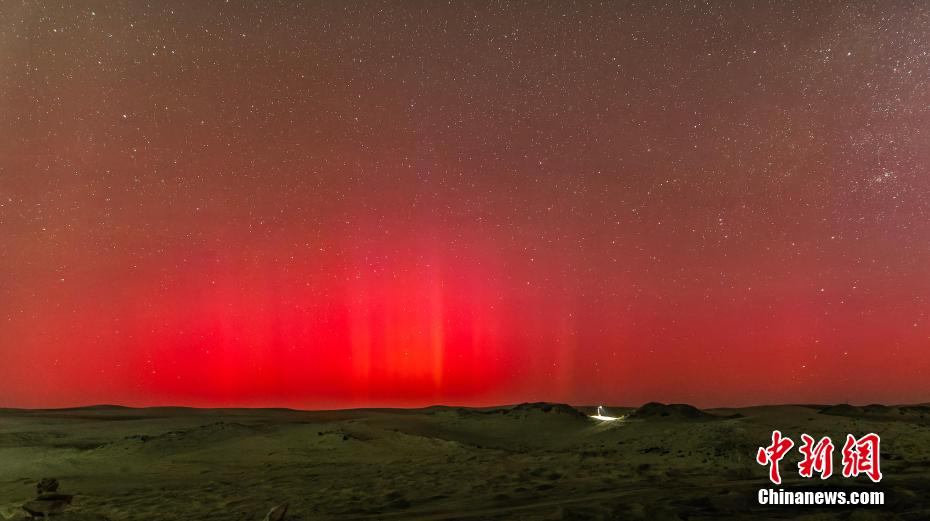
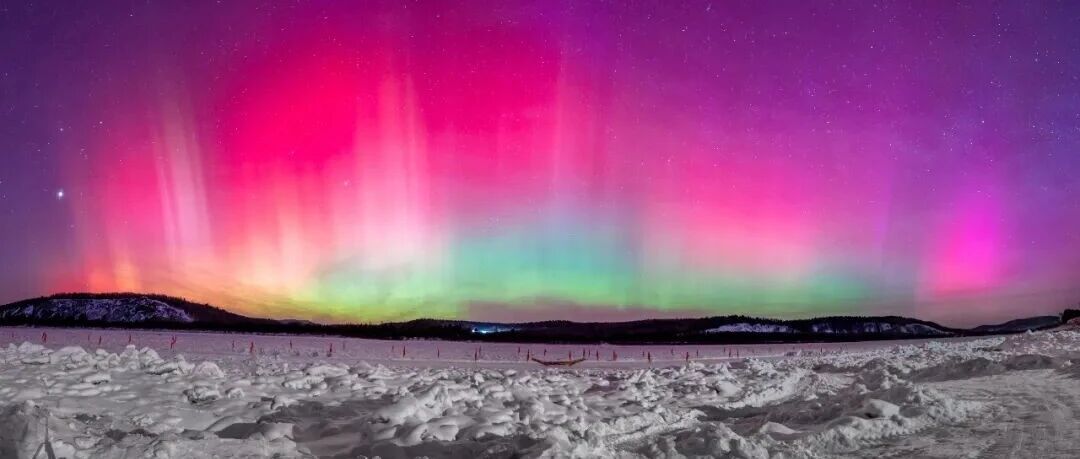
Core Viewpoint - The article discusses the occurrence of an X1.9-class solar flare and its subsequent impact on Earth, including the emergence of geomagnetic storms and auroras in various regions of China [1][3]. Group 1: Solar Activity and Geomagnetic Storms - On January 19, 2026, a significant X1.9-class solar flare was recorded, marking the first occurrence of an X-class flare in 2026 [1]. - Following the solar flare, geomagnetic storms began on January 20, 2026, with reports of 6 hours of severe geomagnetic storms and 6 hours of moderate storms, which are still ongoing [3]. Group 2: Auroras and Observation Conditions - Northern regions of China have the opportunity to witness notable auroras, including the possibility of red-green composite auroras, due to favorable observation conditions during the winter season [4]. - The Daxing'anling area in Heilongjiang province experienced rare and beautiful auroras as a result of the geomagnetic storm [7]. Group 3: Impact of Geomagnetic Storms - Geomagnetic storms can disrupt shortwave communication and navigation systems across most regions of China [8]. - The storms cause disturbances in the ionosphere, affecting ground communication and satellite signals, which may impact the accuracy of navigation satellite systems and the quality of mobile and satellite TV signals [10]. - Strong geomagnetic storms can also affect power transmission systems, increasing current loads on transmission lines and potentially damaging transformers or other grid facilities, leading to power outages [11]. - While the impact on daily life and public health is minimal, strong geomagnetic activity may affect animal migration and navigation abilities, particularly for species that rely on solar and geomagnetic navigation [12].

太阳耀斑爆发,可能引发中等或更强地磁暴
Xin Jing Bao· 2025-12-08 02:49
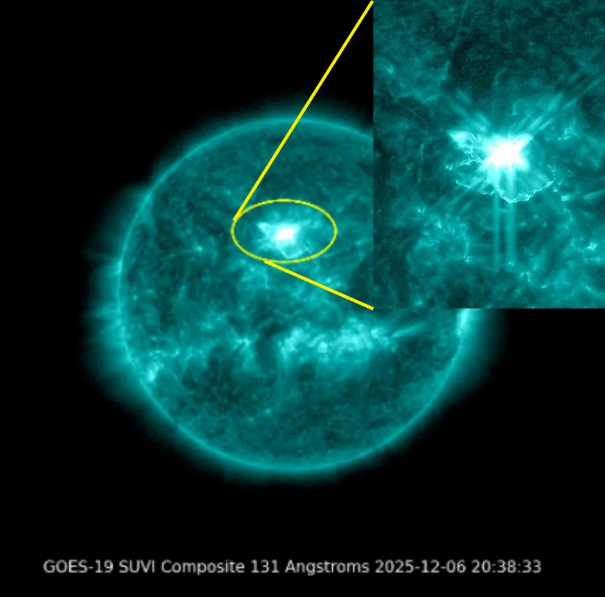
Core Viewpoint - A medium-strength solar flare of M8.1 occurred on December 7, 2025, from solar activity region 14299, but it did not affect China as it happened during nighttime [1][2]. Group 1: Solar Activity - The solar flare was accompanied by a coronal mass ejection (CME), which was relatively weak and emitted a small amount of material [2][3]. - The material from the CME is expected to reach Earth on December 9, potentially causing geomagnetic storms with moderate to strong intensity [3]. - Solar activity region 14299 has a complex β-δ magnetic field structure and covers an area of 268 microhemispheres (µh) [3]. Group 2: Future Predictions - The solar activity level is expected to remain moderate over the next three days, with the possibility of M-class flares [5]. - Geomagnetic activity is predicted to be calm to minor on December 8, but geomagnetic storms may occur on December 9-10 due to the CME [5]. - Ionospheric weather is expected to be mostly calm, with potential disturbances on December 9-10 [6]. Group 3: Recent Observations - In the past 24 hours, solar activity was low, with no M-class flares observed, and a new activity region 14303 was identified [8]. - The largest current activity region, 14294, has an area of 800 µh and a complex β-γ-δ magnetic field structure, indicating potential for future eruptions [8]. - Geomagnetic activity was active for three hours, while solar wind speed decreased from 630 km/s to around 440 km/s [8].
中国气象局:太阳活动区14274爆发X4.0级耀斑
Yang Shi Xin Wen· 2025-11-15 03:48
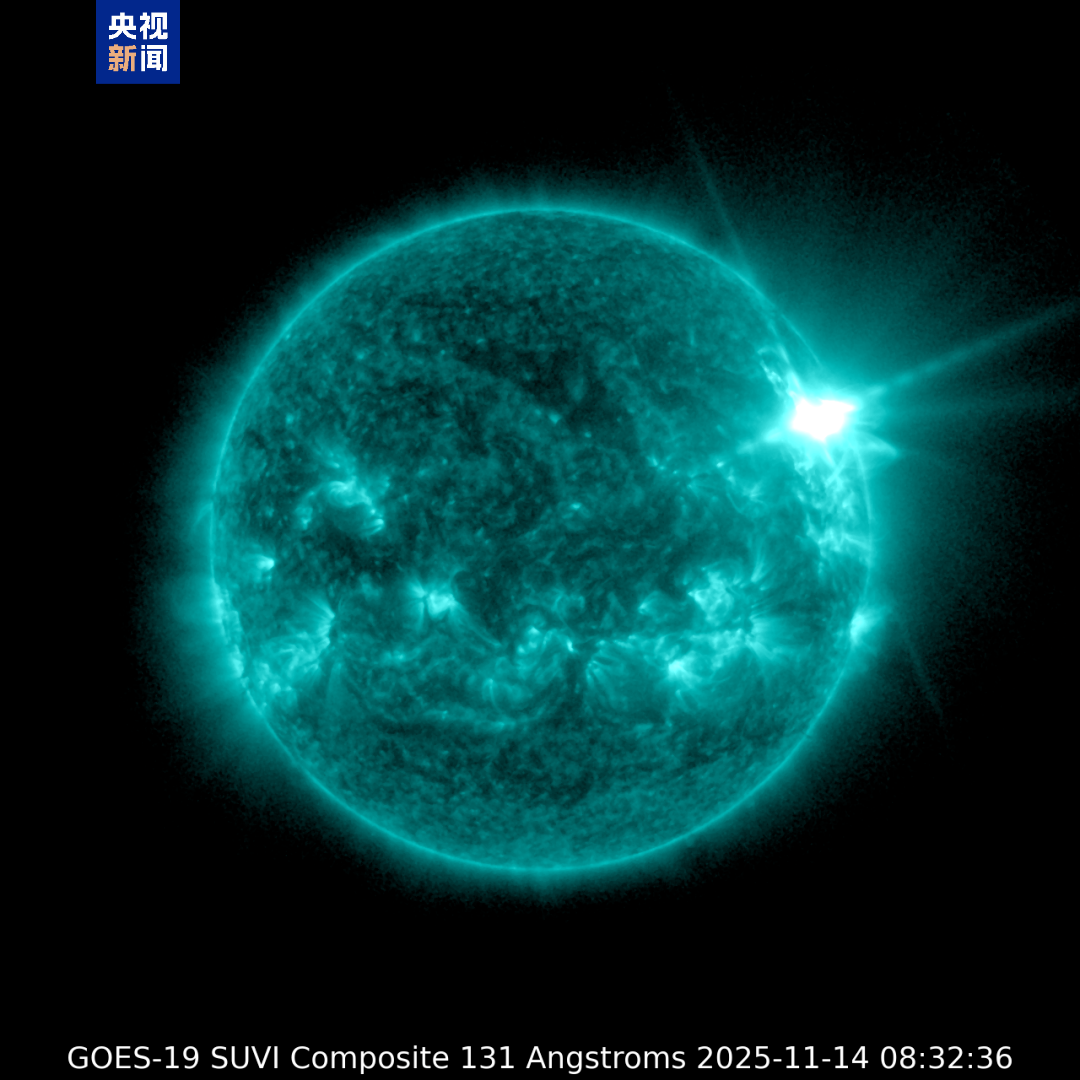
Core Points - The solar activity region 14274 erupted an X4.0 class flare on November 14, marking the fifth X-class flare during its current rotation cycle [1] - The timing of the flare coincided with daytime in most parts of China, potentially affecting shortwave radio communications due to changes in the ionosphere [3] - A coronal mass ejection occurred, but its trajectory is relatively away from Earth, minimizing direct impact [3] Summary by Sections - **Solar Activity**: The X4.0 class flare is significant as it is the fifth occurrence in the current solar rotation cycle [1] - **Impact on Communications**: The flare's occurrence during daytime may lead to disruptions in shortwave radio communications due to ionospheric changes [3] - **Future Predictions**: There is an expectation of minor geomagnetic storms in the coming days, with a low likelihood of M-class or higher flares. The solar activity level is predicted to be low, with geomagnetic activity remaining mostly calm to mildly disturbed [5]
强烈地磁暴来袭,我国北方多地有望邂逅极光
Ke Ji Ri Bao· 2025-11-14 06:35
Core Points - A significant geomagnetic storm began on November 12, 2023, with the real-time geomagnetic activity index reaching a maximum level of 9, indicating intense space weather activity [1] - The storm is attributed to recent strong solar activities, including multiple high-intensity solar flares classified as X1.8 and X1.1 on November 5, followed by M7.4 and M8.6 flares [1] - The geomagnetic storm is expected to allow for aurora observations in northern regions of China, particularly for observers north of the 40-degree latitude line [2] Group 1 - The geomagnetic storm is a result of a large, complex active region on the sun's surface that has produced multiple medium to high-intensity flares and significant coronal mass ejections [1] - High-energy particles from the storm collide with atmospheric molecules, creating auroras, with colors depending on the altitude and type of gas involved [2] - The auroras are considered a "byproduct" of geomagnetic storms, with the potential for observation extending to lower latitudes during periods of intense solar activity [2] Group 2 - While geomagnetic storms may affect shortwave communication and satellite navigation systems, their impact on human health is negligible [3] - The ongoing solar activity suggests that there may be further opportunities for aurora observations in various locations, providing more chances for astronomy enthusiasts [3]
科技日报:地球遭遇强烈地磁暴 我国北方多地有望邂逅极光
Ke Ji Ri Bao· 2025-11-14 02:21
Core Points - The Earth is currently experiencing a significant geomagnetic storm, with the real-time geomagnetic activity index reaching a maximum level of 9, indicating intense space weather activity [1] - The geomagnetic storm is a result of recent strong solar activities, including multiple high-intensity solar flares classified as X and M levels, which have caused disturbances in the Earth's magnetic field [1][2] - The ongoing solar activity is expected to allow for aurora observations in northern regions of China, particularly for observers located north of the 40th parallel [2][3] Group 1 - The geomagnetic storm began on November 12, with the potential for auroras to be visible in northern China over the next three days [1] - Solar flares on November 5 reached intensities of X1.8 and X1.1, followed by additional flares of M7.4 and M8.6, contributing to the geomagnetic disturbances [1] - The solar activity is characterized by a large, complex magnetic region on the sun's surface, which has been responsible for multiple medium to high-intensity flares and significant coronal mass ejections [1][2] Group 2 - Auroras are formed when high-energy particles from space collide with atmospheric molecules, resulting in light emissions, with colors depending on the type of gas and altitude [2] - The observation range for auroras expands during periods of intense solar activity, allowing for potential sightings in lower latitude regions, including parts of northern China [2] - Public recommendations include finding areas with minimal light pollution and facing north at night to capture the auroras using cameras or smartphones [2][3] Group 3 - While geomagnetic storms may affect shortwave communication and satellite navigation systems, their impact on human health is negligible [3] - The ongoing solar activity suggests that there may be further opportunities for aurora sightings in various locations around the world, particularly for astronomy enthusiasts [3]
一大波美图来了,他们在我国北方多地拍到了极光!
Xin Hua She· 2025-11-13 08:59
Core Points - The article discusses the recent aurora phenomenon observed in various northern regions of China, attributed to solar activity and geomagnetic storms [2][4][8] - The auroras displayed vibrant colors and varied shapes, captivating sky photography enthusiasts [6][10] - This event marks a significant opportunity for aurora observation, especially given the recent decline in aurora frequency this year compared to last year [10][12] Summary by Sections - **Aurora Observation**: Auroras were prominently visible in regions such as Heilongjiang, Jilin, Liaoning, Inner Mongolia, Xinjiang, and Beijing, showcasing stunning light displays [8][10] - **Solar Activity Impact**: The occurrence of geomagnetic storms, influenced by multiple coronal mass ejections, led to the auroras, with predictions of varying storm intensities [4][12] - **Comparison to Previous Events**: The scale of this aurora event is comparable to a notable occurrence in May 2022, which also reached mid-latitude areas like Beijing [12][13] - **Future Predictions**: The current solar cycle is expected to peak around 2025, suggesting continued opportunities for aurora sightings in northern China [13]
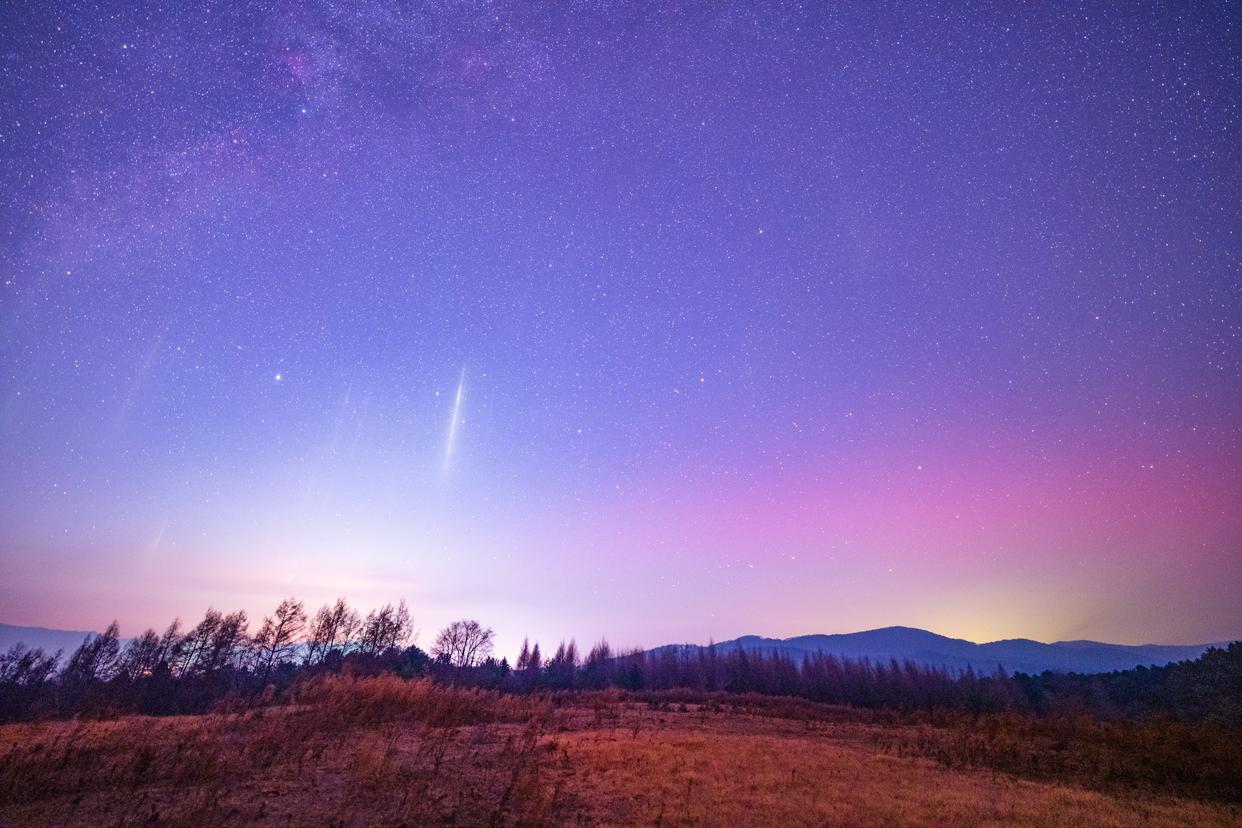
近期可能出现极光,各位极光爱好者,做好准备了吗
Huan Qiu Wang Zi Xun· 2025-11-11 07:16
Group 1 - The recent solar activity, particularly from active region 12474, has resulted in multiple X-class flares, with a notable X1.2 flare occurring on November 10 [1][4] - Following the X-ray flux decrease from this flare, a significant amount of solar magnetic energy is being released through Coronal Mass Ejections (CMEs), which can impact Earth depending on their intensity and relative position [4][6] - The National Space Weather Monitoring and Warning Center has forecasted that multiple CMEs will likely lead to moderate to strong geomagnetic storms on November 11-12, with a possibility of minor storms on November 13 [6]
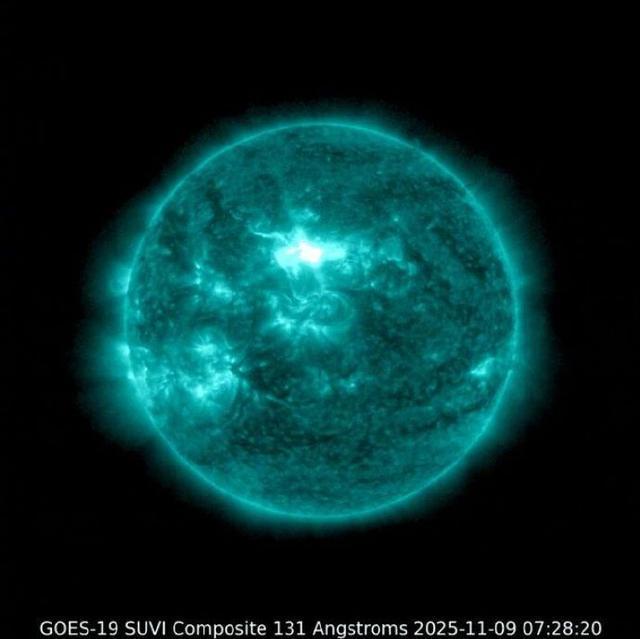
星空有约丨太阳“打喷嚏”,地球会“感冒”吗?
Xin Hua Wang· 2025-11-10 14:24
Core Points - Recent solar activity has seen multiple significant solar flares, including X1.8, X1.1, M7.4, M8.6, and X1.7 flares, indicating heightened solar activity [1][2] - Solar flares and coronal mass ejections (CMEs) can impact space weather, which affects high-tech fields such as aerospace, aviation, and communications, although ground-level human health is not at risk [2][5] - The current solar activity is reportedly weaker compared to last year, with solar flares categorized by intensity levels (C, M, X) and geomagnetic storms classified as weak, medium, or strong [2][5] Industry Developments - The "Xihe" satellite, China's first solar exploration satellite, is part of a broader initiative to enhance space weather monitoring capabilities [2][5] - The completion of the Meridian Project Phase II marks a significant advancement in China's ground-based monitoring of space weather across all layers of the sun-Earth system [5] - Plans for the "Xihe II" solar exploration project aim to position a satellite at the L5 Lagrange point, enabling advanced observation and tracking of solar activities directed towards Earth, enhancing predictive capabilities for space weather [5]
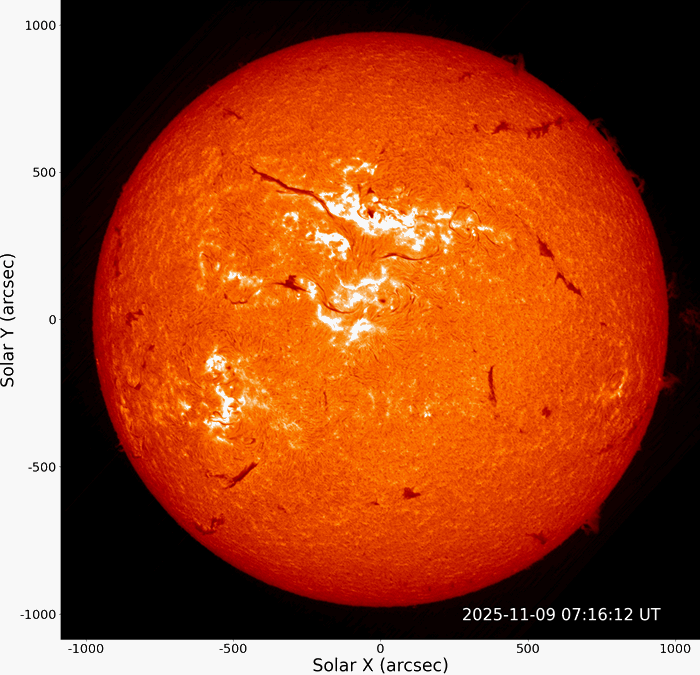
星空有约|太阳“打喷嚏”,地球会“感冒”吗?
Xin Hua She· 2025-11-10 11:14
Core Viewpoint - Recent solar activity has increased significantly, with multiple solar flares occurring in early November, which may impact space weather and technology on Earth [1][2] Group 1: Solar Activity - The sun has recently experienced several significant flares, including X1.8, X1.1, M7.4, M8.6, and X1.7 levels [1] - Solar flares and coronal mass ejections are part of solar activity, with flares likened to volcanic eruptions on the sun's surface, ejecting massive amounts of material at high speeds [1] Group 2: Space Weather Impact - Space weather refers to changes in the space environment caused by solar activity, with geomagnetic storms being one of the effects [1][2] - While humans on the ground are generally safe from geomagnetic storms, these events can disrupt high-tech sectors such as aerospace, aviation, and communications [1] Group 3: Monitoring and Forecasting - The National Space Weather Monitoring and Early Warning Center has issued warnings for potential geomagnetic activity, indicating possible small to moderate geomagnetic storms [2] - China has made advancements in space weather monitoring capabilities, including the completion of the Meridian Project Phase II and the launch of the "Fengyun Space" system [2] - The upcoming "Xihe II" solar probe is expected to enhance predictive capabilities for solar activity, providing timely warnings and data support for space weather forecasting [2]
未来三天可能出现地磁暴!有哪些影响?
Zhong Guo Xin Wen Wang· 2025-11-07 00:21
Core Points - The article discusses recent solar flares and their potential impact on Earth's geomagnetic activity, highlighting two significant solar flares on November 5 and 6, with magnitudes of M7.4 and M8.6 respectively [1][3] - It is expected that the geomagnetic activity will be moderate to high over the next three days, with a possibility of seeing auroras in northern China, particularly in regions like Heilongjiang, Xinjiang, and Inner Mongolia [3][4] Group 1: Solar Activity - On November 5, two solar flares occurred, reaching peak intensities of X1.8 and X1.1 [3] - These flares triggered a coronal mass ejection (CME), releasing solar plasma at speeds of hundreds of kilometers per second, which could interact with Earth's magnetic field [3] Group 2: Geomagnetic Impact - The National Space Weather Monitoring and Warning Center forecasts potential moderate to severe geomagnetic storms in the coming days due to the CME [3] - The geomagnetic storms may affect various activities, including aviation and navigation systems, but the overall impact on human health and daily life is minimal [4]