
日冕物质抛射(CME)

Search documents
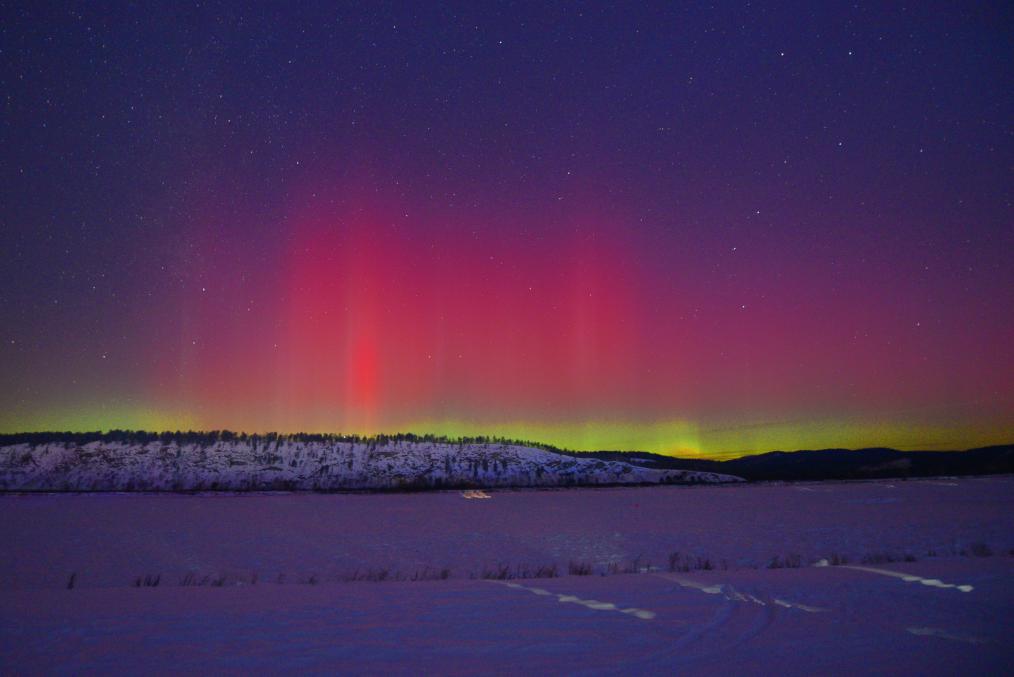
我国北方多地迎来新年首场“极光秀”
Xin Hua She· 2026-01-22 00:30
Core Viewpoint - The first aurora display of the new year was observed in several northern regions of China due to a geomagnetic storm that occurred on January 20, with significant intensity noted [1][2]. Group 1: Geomagnetic Storm and Aurora - A geomagnetic storm is caused by the interaction of charged particle flows from the sun with the Earth's magnetic field, primarily triggered by coronal mass ejections (CME) [2]. - The geomagnetic storm on January 20 was classified as a "super level," providing a great opportunity for aurora enthusiasts to witness vibrant auroras [2]. Group 2: Observations and Experiences - Aurora enthusiasts reported varying experiences; some, like Wang Junfeng in Beijing, were unable to see the aurora despite waiting for hours, while others in regions like Hami, Xinjiang, were able to observe colorful auroras [4][6]. - Observations indicated that the auroras featured colors such as red, orange, and green, although cloud cover affected visibility for some observers [6]. - The auroras were noted to be particularly beautiful in areas like the Eerguna Wetland, with reports of long-lasting displays due to the influence of two CMEs [6].

未来三天可能出现地磁暴!有哪些影响?
Zhong Guo Xin Wen Wang· 2025-11-07 00:21
Core Points - The article discusses recent solar flares and their potential impact on Earth's geomagnetic activity, highlighting two significant solar flares on November 5 and 6, with magnitudes of M7.4 and M8.6 respectively [1][3] - It is expected that the geomagnetic activity will be moderate to high over the next three days, with a possibility of seeing auroras in northern China, particularly in regions like Heilongjiang, Xinjiang, and Inner Mongolia [3][4] Group 1: Solar Activity - On November 5, two solar flares occurred, reaching peak intensities of X1.8 and X1.1 [3] - These flares triggered a coronal mass ejection (CME), releasing solar plasma at speeds of hundreds of kilometers per second, which could interact with Earth's magnetic field [3] Group 2: Geomagnetic Impact - The National Space Weather Monitoring and Warning Center forecasts potential moderate to severe geomagnetic storms in the coming days due to the CME [3] - The geomagnetic storms may affect various activities, including aviation and navigation systems, but the overall impact on human health and daily life is minimal [4]
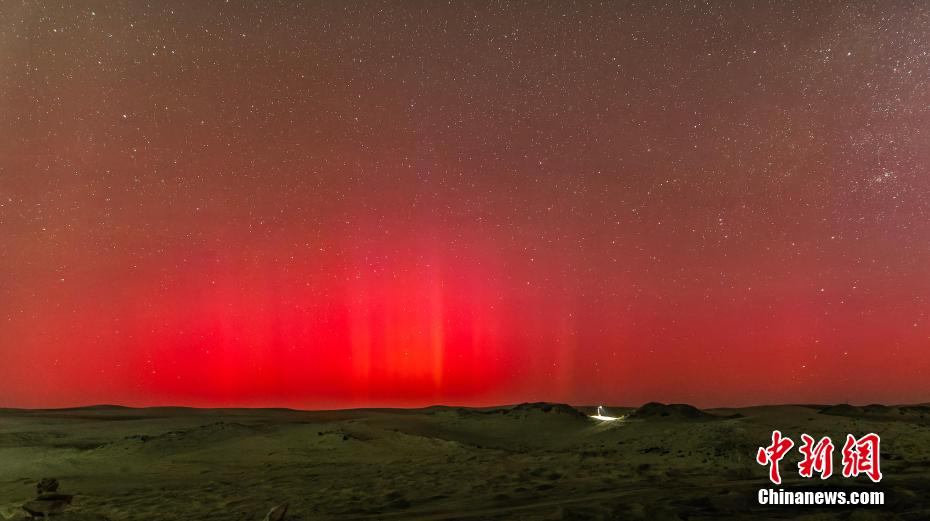
未来三天可能出现地磁暴!有哪些影响?
Zhong Guo Xin Wen Wang· 2025-11-06 10:59
Core Points - The article discusses the potential for geomagnetic storms in the coming days due to recent solar flares, with significant impacts expected on Earth's magnetic field [1][2][4] - The solar flares recorded were of M7.4 and M8.6 intensity, with previous flares reaching X1.8 and X1.1 levels, indicating a high level of solar activity [1][2] - The geomagnetic storms may allow for auroras to be visible in northern regions of China, including Heilongjiang, Xinjiang, and Inner Mongolia [3] Summary by Sections Solar Activity - Recent solar flares occurred on November 5, with intensities of M7.4 and M8.6, and earlier flares reaching X1.8 and X1.1 [1][2] - These flares have triggered coronal mass ejections (CME), which can lead to geomagnetic storms if Earth intersects with the ejected solar material [2] Geomagnetic Storms - The National Space Weather Monitoring and Warning Center predicts medium to high solar activity over the next three days, with a likelihood of M-class flares [2] - The forecast indicates the possibility of moderate to severe geomagnetic storms due to the CME effects [2] Impact on Daily Life - The article notes that while geomagnetic storms can affect satellite operations, navigation systems, and electrical infrastructure, their impact on human health and daily life is minimal [4] - Specific risks include communication issues for aircraft and navigation challenges for animals like homing pigeons [4] - The public is advised to remain calm and view these space weather events scientifically, as the overall impact on health is negligible [4]
未来三天可能发生较强地磁活动,我国北方大部有机会看到极光
Xin Jing Bao· 2025-11-06 04:00
Core Points - The article reports two significant solar flares occurring on November 5 and 6, with maximum intensities of M7.4 and M8.6, accompanied by coronal mass ejections (CME) [1][5] - The solar activity is expected to lead to strong geomagnetic activity over the next three days, with potential auroras visible in northern regions of China, including Heilongjiang, Xinjiang, and Inner Mongolia [5][6] Group 1: Solar Activity - The solar flares are characterized by high-energy releases and are associated with CME, which can impact Earth's magnetic field [5][6] - The magnetic field strength of the sun is significantly higher than that of Earth, which contributes to the geomagnetic effects observed during solar events [6][11] Group 2: Geomagnetic Effects - Geomagnetic storms can affect high-tech equipment, particularly satellites and navigation systems, due to atmospheric drag and ionospheric instability [11] - Wildlife that relies on magnetic fields for navigation, such as homing pigeons, may experience difficulties during geomagnetic storms [11] Group 3: Solar Activity Monitoring - The article highlights the importance of monitoring solar activity, particularly the sunspot group 14274, which has a complex magnetic structure and potential for further eruptions [13][14] - The presence of another sunspot group, 14275, is also noted, which could pose additional challenges if it becomes active [14]
太阳爆发活动持续,我国这些地方可能出现红绿极光
Yang Shi Wang· 2025-11-06 03:59
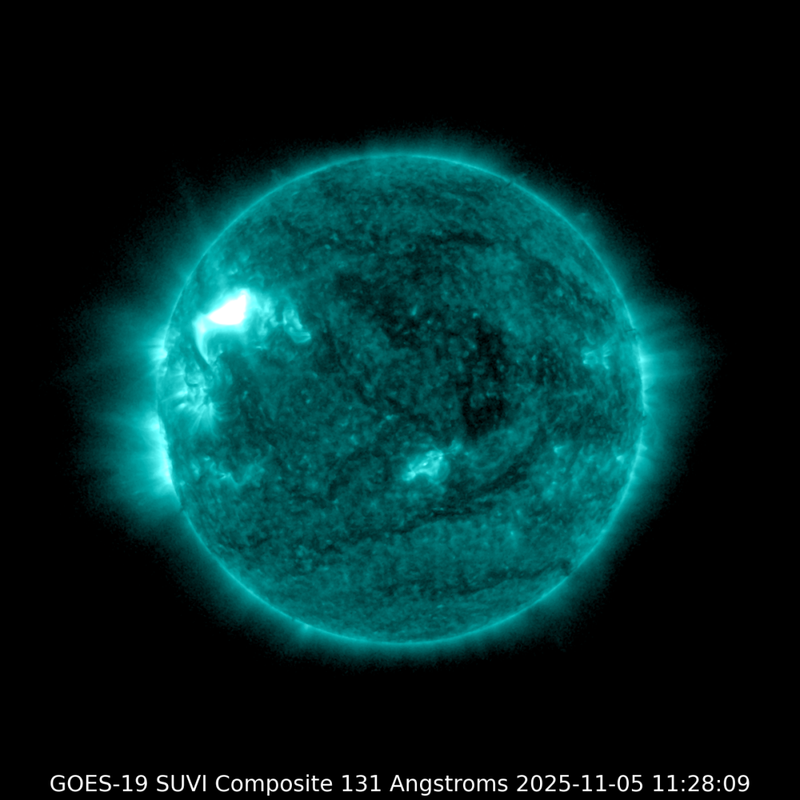
Core Viewpoint - The article reports on two significant solar flares that occurred on November 5, with intensities of X1.8 and X1.1, indicating heightened solar activity and potential impacts on space weather [1] Group 1: Solar Activity - Two solar flares occurred on November 5, peaking at 01:34 and 06:01, with intensities of X1.8 and X1.1 respectively [1] - The National Space Weather Monitoring and Warning Center of China forecasts medium to high solar activity over the next three days, with a significant likelihood of M-class flares or higher [1] Group 2: Geomagnetic Effects - The article warns of potential moderate to strong geomagnetic activity due to coronal mass ejections (CME) in the coming days [1] - There is a possibility for the northern regions of China to witness auroras, with specific locations like Mohe in Heilongjiang, Xinjiang, and Inner Mongolia having chances to see red-green composite auroras [1]
“帕克”探测器拍到距太阳最近的图像
Ke Ji Ri Bao· 2025-07-14 01:23
Core Insights - NASA's Parker Solar Probe has captured the closest images of the Sun to date, providing unprecedented details of the solar corona and solar wind, which aids in understanding the origins of space weather and enhances Earth’s warning capabilities [1][2] Group 1: Mission Overview - The Parker Solar Probe was launched in 2018 with the mission to study the Sun's outer atmosphere, the corona [1] - In December 2022, the probe flew within approximately 6.1 million kilometers of the Sun's surface, marking the first time a human-made object has entered the Sun's atmosphere [1] Group 2: Scientific Findings - The images captured reveal the structure of the solar corona and the release process of solar wind, which is a continuous flow of charged particles that affects the entire solar system [1] - The probe has provided high-resolution images of multiple coronal mass ejection (CME) events, showcasing their interactions and collisions for the first time [1][2] Group 3: Implications for Space Weather - The merging of multiple CMEs can significantly alter their trajectories and intensities, potentially accelerating charged particles and changing magnetic field structures, posing greater threats to astronauts, satellites, and ground-based technologies [2] - The close observations from the Parker Solar Probe enable researchers to better predict and respond to the effects of space weather [2]