外交政策

Search documents
白宫:特朗普谋划获取格陵兰岛的方案 美军开路是可行选项
Di Yi Cai Jing· 2026-01-06 23:08
美国白宫周二表示,美国总统特朗普及其团队正在探讨获取格陵兰岛的相关方案,并且利用美国军队来 推进这一目标"始终是一个可行的选择"。白宫表示:"特朗普总统已明确表示,获取格陵兰岛是美国的 国家安全优先事项,这对于威慑北极地区的对手至关重要。总统及其团队正在探讨一系列可行方案以实 现这一重要的外交政策目标,当然,动用美国军队始终是总统可选择的选项之一。"白宫还表示,特朗 普希望在其任期内获取格陵兰岛。 (文章来源:第一财经) ...
特朗普威胁:若伊朗研发核武器,将“狠狠打击”伊朗
Xin Lang Cai Jing· 2025-12-29 20:58
特朗普站在以色列总理内塔尼亚胡身旁表示:"我听闻伊朗正试图再度推进相关计划,若属实,我们将 不得不出手制止。我们会让他们付出代价,会狠狠打击他们。但我希望这样的情况不会发生。" 特朗普接着说道:"我听说伊朗有意达成协议。如果他们想谈判,那会是更为明智的选择。" 此次会晤前,特朗普在佛罗里达州海湖庄园接受记者采访。当前中东局势紧张,以伊两国关系更是剑拔 弩张,这次会面正是在这样的背景下展开。 本月早些时候报道称,内塔尼亚胡及以色列官员愈发担忧伊朗正加速弹道导弹的生产 —— 伊朗的相关 设施今年早些时候曾遭以色列空袭受损,同时伊朗还在试图重建于今年 6 月被美军轰炸的核浓缩设施。 美国总统唐纳德・特朗普于周一表态,若伊朗试图扩充弹道武器储备、重建核计划,美方或将对伊朗采 取进一步军事行动,但他同时敦促伊朗回到谈判桌前。 当被问及是否会支持以色列空袭伊朗时,特朗普回应:"如果他们继续推进导弹计划,答案是肯定的。 至于核计划,我们会立即采取行动。前者我们必然支持,后者我们会火速出手。" 特朗普表示,加沙问题同样会是两国领导人周一的会谈议题。目前白宫正致力于推动以色列与哈马斯达 成停火协议。 停火协议第一阶段于今年 1 ...


刚回国就不装了,马克龙放话:中企必须投资欧洲,否则将对华征税
Sou Hu Cai Jing· 2025-12-10 03:11
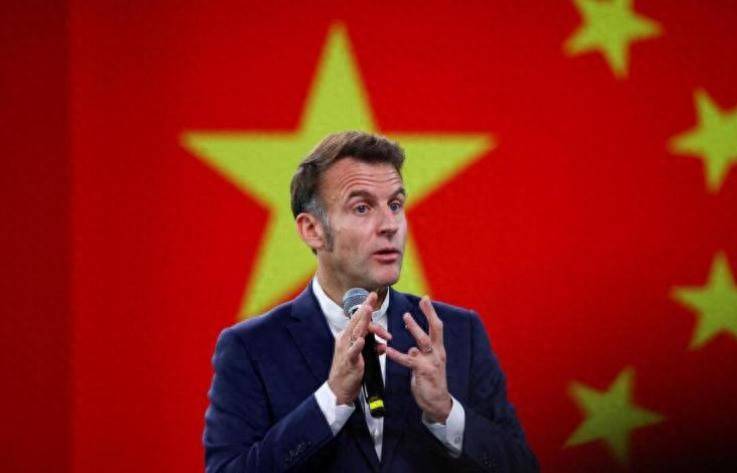
法国总统马克龙刚刚结束了为期三天的中国国事访问,在离开北京后,他的言辞却发生了明显变化。在面对媒体时,他突然表示,如果中国不解决与欧盟的 贸易不平衡问题,欧盟可能不得不采取强硬措施,并提到可能会加征关税。 法国自身也清楚,自己的制造业这些年发展不佳,尽管政府提出了许多振兴工业的计划,但高税负、高成本,以及劳动力市场的不灵活,导致许多企业无法 扩大生产,甚至很难与中国这些在全球市场上竞争力强的制造商竞争。因此,贸易逆差的问题,实际上是双方经济结构自然形成的结果。如果法国想减少逆 差,真正的办法不是责怪中国出口过多,而是提高自身的出口能力和产品竞争力。通过加税这种方式,短期内可能会为国内企业提供一些缓解,但从长远来 看,这并不能解决根本问题。 马克龙的这番话一出口,立刻引发了广泛关注。毕竟几天前他还在中国强调了合作、友谊与和平,怎么转眼间就变得如此强硬?不少人不禁疑惑,马克龙此 行到底是来与中国建立友谊,还是来试探中国的底线?事实上,马克龙在对华政策上一直表现出摇摆不定的态度,时而表示愿意合作,时而又摆出强硬的姿 态。在访问期间,他的态度相当热情,公开场合上讲了许多友好的话,还在社交媒体上用中文表示中法友好,并强 ...
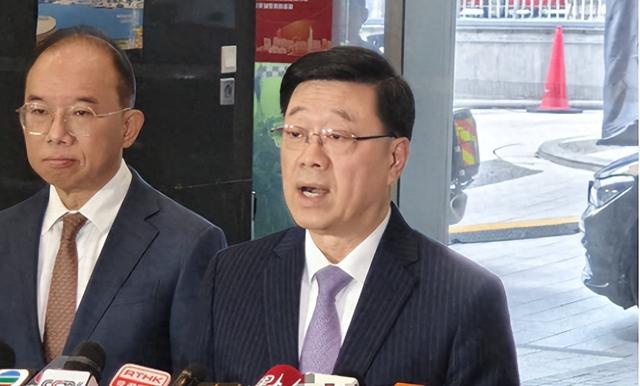
邓炳强表态
Xin Jing Bao· 2025-11-25 03:39
Core Viewpoint - The Hong Kong Special Administrative Region (SAR) government will align its measures towards Japan with national policies following recent diplomatic tensions [1] Group 1 - The Secretary for Security of the Hong Kong SAR, Tang Ping-keung, stated on November 25 that the government will follow the Chief Executive's guidance regarding Japan [1] - Chief Executive John Lee Ka-chiu expressed support for the national government's diplomatic stance towards Japan, citing the deterioration of Sino-Japanese relations due to inappropriate remarks from Japanese leaders [1] - The Hong Kong SAR government will closely monitor developments and make corresponding adjustments in response to the situation [1]
特朗普2.0开始减速,内政外交均误判
日经中文网· 2025-11-25 03:05
Core Viewpoint - The Trump administration has faced significant challenges in domestic and foreign policy, leading to a decline in support from independent voters, which is critical for upcoming elections [2][5][10]. Domestic Policy - Housing costs have maintained an increase of approximately 4% year-on-year, outpacing the Consumer Price Index (CPI) [5][6]. - Hospital service costs have risen by over 5%, putting pressure on household finances [6]. - Personal bankruptcies increased by 15% from January to September, indicating worsening economic conditions for individuals [5][6]. Foreign Policy - Trade negotiations with China have stalled, with no effective strategies to address the trade deficit [5][7]. - The situation in Ukraine remains unresolved, with a canceled summit between Trump and Putin due to lack of concessions from Russia [7]. - The Trump administration's aggressive tariff policies, including a 145% tariff on Chinese goods, have not yielded the desired results, leading to a reassessment of strategies [7][10]. Voter Sentiment - Support for Trump among independent voters has dropped from 46% to 33%, reflecting dissatisfaction with economic conditions [5][6]. - In the recent Virginia gubernatorial election, 59% of independent voters supported the Democratic candidate, a significant shift from previous elections [4][5]. Policy Adjustments - The Trump administration has begun to reverse some of its more extreme policies, including the cancellation of tariffs on over 220 food items, in an effort to regain support [7][10]. - There are indications of a shift towards attracting high-skilled foreign talent, contrasting with previous restrictive immigration policies [8][10].

爆料!香港取消多场涉日活动
Huan Qiu Shi Bao· 2025-11-24 13:09
Core Points - The Hong Kong government has begun to cease official communication activities with the Japanese Consulate in Hong Kong, reflecting a shift in diplomatic relations [1][3] - The Hong Kong Investment Promotion Agency postponed a scheduled business exchange event originally set for November 18, where the Japanese consulate was barred from attending [3] - The Hong Kong Chief Executive, John Lee, expressed support for the national diplomatic policy towards Japan, citing negative remarks from Japanese leaders that have worsened Sino-Japanese relations [3] Group 1 - The Hong Kong government has stopped official exchanges with the Japanese Consulate, indicating a significant diplomatic shift [1][3] - A planned business exchange event was postponed due to the exclusion of Japanese consulate personnel [3] - The Chief Executive emphasized the need for vigilance among Hong Kong residents in Japan, following a warning from the Ministry of Foreign Affairs regarding safety [3] Group 2 - The Hong Kong Education Bureau confirmed the cancellation of a youth exchange program to Japan, further illustrating the impact of deteriorating relations [3]
韩国政府宣布:中国排日本前面
券商中国· 2025-11-16 09:48
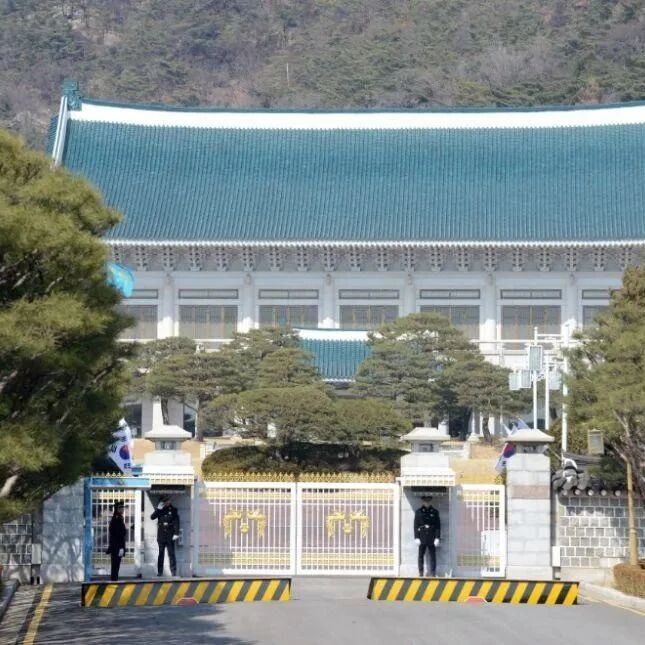
Group 1 - The South Korean government has officially changed the order of its official references to East Asian countries to "Korea-China-Japan" as part of efforts to improve relations with China [1][2] - This change reflects a shift in diplomatic stance, moving away from the previous order "Korea-Japan-China" used by the former administration, which was seen as favoring Japan [2] - Analysts suggest that the current administration under Lee Jae-myung is attempting to restore diplomatic balance and improve relations with China, contrasting with the previous government's pro-Japan approach [2] Group 2 - The new Japanese Prime Minister, Sanae Takaichi, has made controversial statements regarding Taiwan and territorial disputes, leading to diplomatic tensions with both China and South Korea [3] - South Korea's Ministry of Foreign Affairs has issued a strong protest against Japan's claims over the disputed territory of Dokdo, indicating rising tensions in the region [3] - Public protests in Japan against Prime Minister Takaichi's remarks highlight domestic discontent and the potential for increased political instability in Japan [3]
芦哲:备战中选,迎接双宽——2026年度展望海外政策
Sou Hu Cai Jing· 2025-11-11 03:40
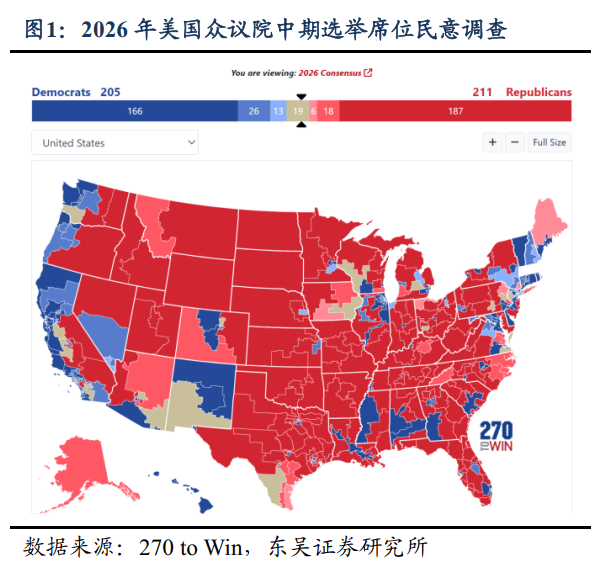
Core Viewpoint - The global market trading focus will shift from Trump's election victory to preparations for the midterm elections, with the outcome of the 2026 midterm elections directly impacting the political landscape for Trump and the Republican Party [2]. Group 1: Midterm Elections - Trump's 2026 Policy Line - The midterm elections are crucial for Trump, as they may represent the last significant electoral battle of his political career, with a high likelihood of increased political resistance if he loses [4][22]. - Historical data shows that the president's party typically loses seats in midterm elections, with an average loss of 25.7 seats in the House and 3.3 seats in the Senate over the last 20 elections [16][20]. - The significance of the midterm elections is heightened for Trump, as a defeat could severely limit his political ambitions during the final years of his presidency [21][22]. Group 2: Trade Policy - Continued Uncertainty and Conflict - Trump's trade policy is expected to remain unpredictable, with potential for renewed tariff conflicts as a means to rally voter support and shift internal political pressures outward [4][33]. - The Supreme Court's upcoming decision on Trump's use of the International Emergency Economic Powers Act (IEEPA) to impose tariffs may lead to alternative legal strategies for implementing tariffs if the ruling is unfavorable [34][38]. - The anticipated increase in tariff revenue could help alleviate fiscal pressures and support Trump's broader economic agenda leading up to the midterm elections [47]. Group 3: Monetary Policy - More Rate Cuts and Lower Credit Quality - The new Federal Reserve chair, expected to take office in May 2026, is likely to implement more aggressive rate cuts than the market anticipates, with projections of at least four rate cuts by the end of next year [5][61]. - Lower interest rates are seen as essential for stimulating economic growth and supporting stock markets, particularly in light of the negative impacts of tariffs [49][51]. - The anticipated shift in monetary policy could lead to a weaker dollar and increased credit challenges, impacting overall market sentiment [48][56]. Group 4: Fiscal Policy - Necessity and Feasibility of Expansion - There is a pressing need for expanded fiscal policies to stimulate demand and counteract the negative effects of tariffs as the midterm elections approach [66][68]. - Increased tariff revenues and reduced fiscal pressure from lower interest rates could provide the necessary funding for expanded fiscal measures without resorting to excessive borrowing [68]. - The experience from the 2018 midterm elections suggests that failure to maintain fiscal expansion could lead to adverse market reactions [68]. Group 5: Foreign Policy - Return to "America First" and Strong Geopolitical Stance - Trump's foreign policy is expected to focus on pragmatic interest exchanges, emphasizing "America First" while managing geopolitical conflicts with limited intervention [69][79]. - Efforts to mediate conflicts such as the Russia-Ukraine situation and the Middle East will continue, with a strong emphasis on leveraging economic and military pressure to achieve peace [70][73]. - The approach to foreign policy will likely involve a mix of negotiation and coercion, potentially increasing geopolitical tensions and impacting market risk appetite [79].
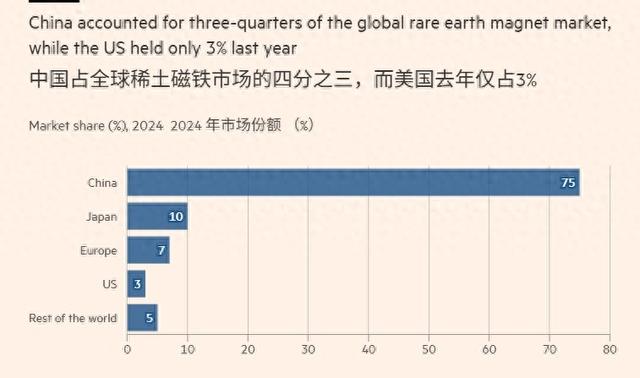
“特朗普外交政策,万变不离寻找中国稀土替代品”
Guan Cha Zhe Wang· 2025-11-09 04:46
Core Insights - The article discusses the significance of critical mineral resources in U.S. foreign policy during Trump's second presidential term, highlighting the urgency to reduce dependence on China for these resources [1][3]. Group 1: U.S. Dependency on Critical Minerals - The U.S. is heavily reliant on China for critical minerals, with eight out of nine minerals identified as crucial for the economy having China as their sole or primary source [1]. - Samarium is noted as the most critical mineral, essential for aircraft and missile magnets, with China dominating the entire supply chain from extraction to manufacturing [1][3]. Group 2: Diplomatic Efforts and Agreements - In response to China's export controls on rare earths, the U.S. has been actively seeking alternative sources and signed several agreements, including an $8.5 billion deal with Australia for critical minerals [3][5]. - The U.S. government announced a $1.2 billion investment in two rare earth startups and established a critical mineral agreement with Kazakhstan, which has recently discovered significant rare earth deposits [5]. Group 3: Long-term Challenges - Experts suggest that establishing a secure and independent supply chain for critical minerals in the U.S. could take 10 to 20 years due to underdeveloped production infrastructure in countries like Australia [3][5]. - Despite recent agreements and investments, the U.S. is unlikely to achieve self-sufficiency in critical minerals within a year, indicating a long-term challenge ahead [5]. Group 4: Broader Geopolitical Context - The article emphasizes that mineral resources have become a powerful bargaining chip in U.S. foreign policy, influencing negotiations with various countries, including those in Africa and Central Asia [5][6]. - The U.S. involvement in peace agreements, such as the one between Rwanda and the Democratic Republic of the Congo, is also seen as a strategic move to counter China's influence in resource-rich regions [6].