工业物联网

Search documents
东信和平:公司已制定并实施“优存量、拓增量”的核心战略
Zheng Quan Ri Bao Wang· 2026-01-08 14:09
Core Viewpoint - The company is transitioning from traditional SIM card markets to digital identity security, implementing a strategy focused on optimizing existing business while expanding into new areas [1] Group 1: Traditional SIM Card Market - The company has developed a core strategy of "optimizing existing business and expanding new business" to address the current state of the traditional SIM card market [1] - The company aims to consolidate and enhance its traditional business while fully transitioning to digital identity security [1] Group 2: Smart Card Business - The company continues to leverage its advantages in the smart card sector, focusing on high-value-added products [1] - There is an emphasis on deepening cooperation with core customers and actively expanding into emerging global markets to ensure stable operations and value enhancement of basic businesses [1] Group 3: Digital Identity Security Business - The company is strengthening its technology foundation centered on eSIM trusted security hardware, integrating software platforms, industry applications, and smart terminals [1] - Related products and solutions have been successfully applied in various scenarios, including the Internet of Vehicles, consumer electronics, and industrial IoT [1] - Revenue from these related businesses is steadily increasing as a proportion of total revenue, becoming a new growth driver for the company [1] Group 4: Future Outlook - The company is committed to achieving synergistic development between traditional and innovative businesses, continuously consolidating and enhancing its core competitiveness [1]

越南芯片,乘机崛起
半导体芯闻· 2026-01-07 07:46
Core Insights - Vietnam is shifting its semiconductor strategy from low-cost assembly and testing to higher-value chip design and advanced packaging, driven by global manufacturers seeking to diversify supply chains away from China [1] - The semiconductor market in Vietnam is projected to reach $10.16 billion by 2025, reflecting broader efforts by Southeast Asian economies to capture more value in the global chip industry amid geopolitical and supply chain risks [1] Group 1: Industry Transformation - Vietnam has historically played a backend role in the semiconductor industry but is undergoing a structural "upstream transformation" led by industrial giants and local leaders [1] - Companies like Nvidia and FPT are investing $200 million to build an AI chip factory, while Intel, Arm, Micron, and Samsung are expanding their substrate production and advanced packaging facilities [1] - Domestic firms such as Viettel and FPT Semiconductor are actively entering the 5G and power management chip design sectors, supported by a talent pool of over 6,000 design engineers cultivated over 20 years [1] Group 2: Challenges and Opportunities - There is a severe shortage of "chip architects," the senior engineers responsible for defining system architecture and making key IP decisions, with only a handful currently available in Vietnam [2] - Experts suggest that Vietnam should avoid direct competition with established companies like TSMC and Samsung in cutting-edge processes (3nm or 5nm) and instead focus on niche areas such as security cameras, 5G/6G communications, and ASIC/SoC for electric vehicles and industrial IoT [2] - The Vietnamese government has elevated the semiconductor industry as a national priority through the "1018 Strategy," aiming to train 50,000 to 100,000 engineers by 2030, with over 137,000 students already registered in related fields as of the 2025 enrollment cycle [2] Group 3: Policy and Infrastructure Development - The establishment of the Da Nang Free Trade Zone enhances policy support, designed as a "logistics-manufacturing hybrid" park to provide specialized warehousing and seismic storage facilities for the chip industry [3] - The government aims to establish the country's first semiconductor manufacturing plant by 2026, indicating a strong commitment to developing the sector [3] - Despite the early-stage nature of venture capital activity in Vietnam's tech industry, analysts believe that if the government can coordinate decision-making across sectors, Vietnam could transition from a manufacturing base to a trusted global technology partner [3]

毫米波射频屏蔽箱全球市场报告:主要企业、排名及2026-2032年增长预测
Sou Hu Cai Jing· 2026-01-06 14:44
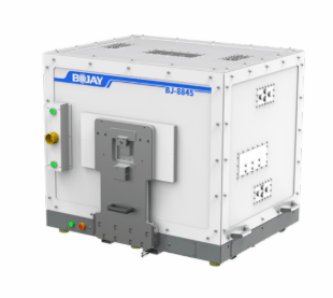
Core Insights - The global millimeter-wave RF shielding box market is projected to grow from approximately $220 million in 2024 to $226 million in 2025, with a compound annual growth rate (CAGR) of 3.3%, reaching an estimated $274 million by 2031 [3]. Market Overview - Millimeter-wave RF shielding boxes are designed to block electromagnetic waves in the millimeter-wave frequency range (30 GHz to 300 GHz), protecting internal devices from external electromagnetic interference (EMI) and preventing internal signal leakage [1]. Key Drivers - Acceleration of 5G and Beyond 5G communication technology development, with Japan's government prioritizing 5G/6G as a national strategy, increasing demand for RF shielding boxes in testing [7]. - Growth of the automotive radar and autonomous driving industry, particularly in Japan, necessitating the use of RF shielding boxes for precise testing of advanced driver-assistance systems (ADAS) [7]. - Strict national electromagnetic compatibility (EMC) regulations in Japan require high-performance RF shielding boxes for compliance testing of devices containing millimeter-wave circuits [8]. - Advancements in semiconductor and packaging technologies towards high frequencies increase the demand for RF shielding boxes capable of providing high shielding effectiveness (SE) [8]. - Ongoing research in frontier fields like terahertz (THz) imaging and communication by Japanese universities and research institutions drives the need for RF shielding boxes in controlled experimental environments [8]. Market Opportunities - Deployment of Open RAN creates testing scenarios that increase demand for standardized RF shielding boxes in independent testing laboratories [9]. - The ground equipment market for low Earth orbit (LEO) satellite internet constellations, such as SpaceX's Starlink, presents significant opportunities for RF shielding box manufacturers [9]. - The trend towards wireless and high-frequency medical devices necessitates high-reliability RF shielding boxes for testing, creating a high-value niche market [9]. - Factory automation and industrial IoT (IIoT) require robust RF shielding boxes for testing high-frequency wireless communication modules in smart factories [10]. - Transitioning to a "shielding box as a service (SaaS)" business model can lower initial investment barriers for small and startup companies, expanding the customer base [10]. Constraints on Expansion - Market demand is highly dependent on a few capital-intensive downstream industries, leading to significant volatility and uncertainty in demand for RF shielding boxes [11]. - The conflict between standardization and customization poses challenges for manufacturers, as Japanese clients often require tailored solutions, increasing costs and delivery times [12]. - Difficulty in validating the performance of RF shielding boxes at specific frequencies complicates the sales process, requiring substantial customer education and resource investment [12].
马斯克量产脑机接口背后:一场被误读的"工业物联网"人机交互变革
3 6 Ke· 2026-01-06 12:36
Core Insights - Neuralink has announced the mass production of "fully automated piercing" surgeries, aiming to significantly reduce costs, bringing science fiction closer to reality [1] - The underlying logic of this development is not just about medical rehabilitation but represents a shift in human-machine "bandwidth," addressing the inefficiencies in human interaction with machines [3][4] Industry Implications - The development of brain-computer interfaces (BCI) could lead to a new concept known as brain-machine IoT, focusing on industrial applications rather than just entertainment or healthcare [4] - Current human-machine interaction in industrial settings is limited, with operators relying on outdated input methods, which creates a mismatch in response times compared to machines [5] - BCI technology could transform human operators into "biological edge nodes" within the IoT framework, allowing for real-time cognitive adaptation in industrial processes [5][6] Technological Advancements - BCI could enable systems to read operators' brain signals, allowing for automatic adjustments in production processes based on the operator's cognitive state, thus enhancing safety and efficiency [6][7] - The introduction of BCI could facilitate a new operational model termed "intent operation," where workers can convey their intentions without needing to control every mechanical detail [11][12] Market Opportunities - BCI technology is seen as a low-cost solution for addressing complex, non-standard tasks in industrial environments, which current AI systems struggle to handle [8] - The potential for data collection from skilled operators using BCI could provide valuable training material for the next generation of humanoid robots [12] Future Directions - The industry may need to shift from invasive physical connections to non-invasive sensing technologies, such as near-infrared spectroscopy and quantum sensors, to capture brain signals without surgical procedures [13][18] - The successful integration of these technologies could lead to a new era of "intent IoT," where human intuition and perception become integral to industrial networks [19]

航天科技股价涨5.89%,国泰基金旗下1只基金位居十大流通股东,持有544.33万股浮盈赚取756.62万元
Xin Lang Cai Jing· 2025-12-19 02:05
Group 1 - Aerospace Science and Technology Co., Ltd. experienced a stock price increase of 5.89%, reaching 24.99 CNY per share, with a trading volume of 815 million CNY and a turnover rate of 4.26%, resulting in a total market capitalization of 19.947 billion CNY [1] - The company, established on January 27, 1999, and listed on April 1, 1999, is based in Fengtai District, Beijing, and its main business areas include vehicle networking, industrial IoT, aerospace application products, automotive electronics, oil instruments, and electrical equipment [1] - The revenue composition of the company is as follows: automotive electronics 84.98%, aerospace application products 9.36%, platform software and sensing devices 6.62%, and other businesses 0.31% [1] Group 2 - The top circulating shareholder of Aerospace Science and Technology is the Guotai Fund, which reduced its holdings in the Guotai Zhongzheng Military Industry ETF (512660) by 1.0258 million shares in the third quarter, now holding 5.4433 million shares, accounting for 0.68% of the circulating shares [2] - The Guotai Zhongzheng Military Industry ETF (512660) was established on July 26, 2016, with a current scale of 14.109 billion CNY, and has achieved a year-to-date return of 19.02%, ranking 2592 out of 4197 in its category [2] - The fund has a one-year return of 18.32%, ranking 2501 out of 4147, and a cumulative return since inception of 23.98% [2]

中国数智科技(01796.HK)与广州星伦共探工业物联网及智能制造机遇
Ge Long Hui· 2025-12-17 10:15
Core Viewpoint - China Smart Technology (01796.HK) has entered into a strategic cooperation memorandum with Guangzhou Xinglun Safety Industrial Co., Ltd. to explore collaboration opportunities in industrial IoT, software, and smart manufacturing by leveraging each other's strengths to enhance business diversity and create future profit growth points [1] Group 1: Strategic Cooperation - The memorandum outlines initial agreements to collaborate in areas such as the application of industrial computing power and artificial intelligence in China's transportation and energy sectors [1] - Both parties aim to jointly promote business development in international markets and develop new products and solutions in the "transportation + energy" sector [1] - The cooperation will also involve deeper collaboration in industrial IoT and software, utilizing the company's capital market advantages and brand effect for market promotion and project expansion [1] Group 2: Market Analysis and Research - Following the signing of the memorandum, both parties will conduct market analysis and industry research related to the promotion of industrial IoT and software across the country [1] - The companies plan to initiate personnel communication and on-site investigation work promptly [1]
日企在华布局的“进与退”
Jing Ji Guan Cha Wang· 2025-12-12 07:28
Core Insights - Japanese brands are strategically adjusting their presence in the Chinese market, with notable exits from various sectors while simultaneously increasing investments in high-tech industries [1][12]. Group 1: Market Exit and Shrinking Presence - Sony's Xperia mobile business announced its exit from the Chinese market in November 2025, while Sharp has removed several mobile products this year [1][2]. - Mitsubishi Motors officially ceased production and sales in China at the beginning of 2025, closing its joint venture factory in Changsha, Hunan [1][3]. - Japanese automotive brands have seen their market share in China drop to 10.8%, a decline of over 50% from peak levels, while Chinese brands surged to 58.3% [2]. - In the home appliance sector, Japanese brands collectively hold less than 8% of the market, with Haier and Midea dominating at 72% [2]. Group 2: Strategic Investment in High-Tech Industries - Despite the market exits, Japanese investment in China increased by 55.5% in the first nine months of 2025, with a focus on high-tech manufacturing and energy-saving sectors [1][12]. - Japanese companies are investing in digital AI, industrial IoT, and biomedicine, collaborating with Chinese firms to develop innovative solutions [12]. - Panasonic is shifting its focus from low-end consumer appliances to high-end care appliances and commercial equipment, closing several production lines for low-end products [4]. Group 3: Challenges and Market Dynamics - Japanese brands have struggled to adapt to changing consumer preferences in China, leading to a misalignment with local market demands [9][10]. - The perception of Japanese products has shifted, with consumers becoming more price-sensitive and less reliant on the "import halo" [9]. - Japanese companies face high labor costs and lengthy decision-making processes, putting them at a disadvantage in competitive price wars [11]. Group 4: Future Outlook and Strategic Realignment - Japanese firms are not entirely retreating but are instead selectively withdrawing from low-end manufacturing while investing in emerging industries [12][13]. - The focus on high-quality products and advanced manufacturing indicates a strategic realignment to maintain competitiveness in the evolving market landscape [12][13].
行业聚焦:全球环锭纺细纱机市场头部企业份额调研(附Top10 厂商名单)
QYResearch· 2025-12-10 03:21
Market Overview - The global ring spinning machine market is expected to grow steadily, reaching a market size of $2.04 billion by 2031, with a compound annual growth rate (CAGR) of approximately 8% over the next five years. This growth is driven by the ongoing demand for high-quality yarn, smart manufacturing upgrades, and green energy-efficient production in the downstream textile and apparel industry [2]. Policy Support - Governments, particularly in major textile-producing countries like China, India, and Vietnam, are promoting the textile machinery industry towards high-end and intelligent development through industrial upgrade plans and technology renovation subsidies. China's "smart manufacturing" and "green manufacturing" strategies support the elimination of outdated, high-energy-consuming equipment and the introduction of intelligent spinning machines with advanced features [4]. Market Expansion - The increasing global population and demand for clothing, along with the transfer of the textile industry to emerging markets (such as South Asia and Southeast Asia), are driving strong demand for new capacity and replacement of outdated capacity. Developed countries are also demanding customized yarns in small batches, requiring spinning machines to have more flexible process parameter adjustments and shorter changeover cycles [4]. Corporate Strategy - Major spinning machine manufacturers are transitioning from "single machine sales" to providing comprehensive solutions that include "spinning system integration + software platforms + preventive maintenance services." This transformation leverages industrial IoT, big data analytics, and AI technology to achieve digital monitoring and optimization throughout the spinning process, significantly improving yarn quality consistency and energy management efficiency [4]. Key Drivers - The demand for ring spinning machines is closely tied to the yarn industry's performance. The persistent demand for clothing and home textiles necessitates regular updates of old machines or capacity expansion by spinning mills. The rising demand for high-quality yarns (such as high-count yarns and compact yarns) ensures long-term resilience in the demand for high-end spinning machines [10]. - Automation and energy-saving upgrades are significant drivers for equipment iteration, as rising labor costs and the need for energy consumption control push spinning mills to invest in automated spinning machines that reduce labor intensity and improve yarn quality [11]. - Continuous advancements in domestic spinning machine technology enhance the domestic substitution rate, with Chinese spinning machines increasingly matching or exceeding the performance of imported equipment, thus promoting market expansion and accelerating the replacement of imported brands [12]. Major Obstacles - The volatility of downstream demand leads to cyclical investment periods, as the spinning industry is significantly affected by external trade environments, cotton price fluctuations, and inventory cycles. This results in spinning mills delaying expansion or investment decisions during downturns, leading to a decline in orders for spinning machines [13]. - The concentration of supply and cost fluctuations for key components, such as steel components and control chips, pose risks to the profitability and delivery timelines of machine manufacturers when supply tightens or costs rise [14]. - Intensified competition in the mid-to-low-end spinning machine market, characterized by frequent price wars and similar performance among devices, compresses profit margins and limits research and development investments [15]. Industry Development Opportunities - The demand for smart manufacturing and digital factory renovations is rapidly growing, with spinning machines becoming key equipment in the digital upgrade process, creating new growth points for spinning machine manufacturers [16]. - The ongoing transfer of textile production capacity to countries like India, Bangladesh, and Vietnam is expanding international market opportunities, with strong demand for cost-effective and stable-performing Chinese spinning machines [17]. - The increasing demand for high-quality and functional yarns is driving the upgrade of high-end equipment, as the growth in high-end yarn demand necessitates continuous iterations of high-end spinning machines [18]. Downstream Industry Focus - The high-end yarn manufacturing sector is one of the most stable and fastest-growing application areas for ring spinning machines, with a significant increase in demand for high-count yarns and high-quality cotton yarns in China and Southeast Asia. By the end of 2023, China's high-count yarn capacity accounted for over 35% of total capacity, up nearly 12 percentage points since 2018 [19]. - The market for functional and differentiated fibers is expanding, driven by the rapid development of sportswear and outdoor fabrics, which require spinning machines with precise control capabilities [20][21]. - The digitalization of spinning factories is becoming a strategic emerging market for ring spinning machines, with projections indicating that over 7,000 smart spinning workshops will be established or renovated globally by 2030, with China accounting for over 45% of this total [22].
研判2025!中国工业路由器行业产业链、发展现状、竞争格局及发展趋势分析:行业规模增速放缓,未来技术融合有望带来新的机遇[图]
Chan Ye Xin Xi Wang· 2025-12-06 02:40
Core Viewpoint - The industrial router industry is experiencing fluctuations in market size, with a growth to 5.2 billion in 2023, but a projected decline to 4.4 billion in 2024 due to various factors including slowed internet traffic growth and investment reductions in key sectors [1][11]. Industry Overview - Industrial routers are designed for harsh industrial environments, providing high reliability and strong anti-interference capabilities, essential for applications in industrial automation, smart grids, and intelligent transportation [3][11]. - The industry is characterized by a need for routers that can operate under extreme conditions, supporting various industrial communication protocols to ensure stable network performance [3][11]. Market Size and Trends - The industrial router market size has shown a decline since 2020, with a notable increase in 2023, but a forecasted decrease in 2024, influenced by budget adjustments and investment slowdowns in sectors like finance, government, and energy [1][11]. - The smart transportation sector is projected to grow significantly, with the market size expected to reach 246.7 billion by 2024, driving demand for industrial routers [8]. Competitive Landscape - Major players in the industry include Huawei and ZTE, leveraging their technological advantages and localized service capabilities to expand their market share in key industrial sectors [11]. - Smaller specialized companies are focusing on niche markets, developing products tailored to specific industry needs, thus complementing the offerings of larger firms [11]. Industry Development Trends - The integration of 5G and WiFi6 technologies is expected to enhance the performance of industrial routers, meeting the growing demand for high-speed and stable network connections in industrial applications [13]. - There is an increasing emphasis on security features in industrial routers, with advancements in end-to-end encryption and AI-driven threat detection becoming critical competitive factors [14]. - Customization and personalized service offerings are on the rise, as companies aim to meet diverse user needs and enhance customer satisfaction and loyalty [15].



德风科技港股IPO:递表前5天股东原价清仓离场 成立后连续5年盈利 为何2021年末累计亏损接近1亿?
Xin Lang Zheng Quan· 2025-11-18 08:22
Core Viewpoint - Defeng Technology has submitted its listing application to the Hong Kong Stock Exchange, but its financial performance raises concerns about its profitability and operational sustainability [1][2][3]. Group 1: Company Overview - Defeng Technology specializes in AI-enabled Industrial Internet of Things (AIoT) solutions, focusing on enhancing energy efficiency and operational excellence for Chinese state-owned enterprises [3]. - The company has completed over 600 projects and serves around 200 clients, including major players in the energy and manufacturing sectors [3]. - As of 2024, Defeng Technology is the fifth largest independent AIoT service provider in China, with a market share of approximately 1.8% [3]. Group 2: Financial Performance - Defeng Technology's revenue for the reporting periods was 313 million, 442 million, 525 million, and 159 million yuan, with a compound annual growth rate of about 29.7% [6]. - The adjusted net profits for the same periods were -42.36 million, -8.72 million, 5.52 million, and -28.58 million yuan, indicating a generally loss-making status [6]. - Employee costs have remained high, accounting for nearly 40% of total revenue despite a 57.7% reduction in workforce [2][6]. Group 3: Shareholder Activity - Prior to the listing application, major shareholder招商盈趣 sold its entire stake at the original investment price, raising questions about the fairness of the transaction [2][4]. - The founder, Wang Qingjie, controls 44.38% of the company, raising potential concerns about governance and shareholder interests [5]. Group 4: Cash Flow and Debt Concerns - The company has faced significant cash flow issues, with net cash outflows totaling approximately 467 million yuan over the reporting periods [12]. - High accounts receivable turnover days and increasing bad debt risks indicate potential liquidity challenges [12][13]. - As of mid-2025, the company had only 43.99 million yuan in cash and cash equivalents, a decrease of 51.31% from the beginning of the year [13].