
绿色智能

Search documents
告别“撒胡椒面”!2026 国补新变化:精准补贴 +全域同享
Sou Hu Cai Jing· 2026-01-04 12:08
Group 1 - The core change in the 2026 national subsidy policy is the shift from a broad distribution approach to a more targeted and precise "drip irrigation" method, focusing on high-efficiency products like "一级能效" appliances, promoting greener and smarter industry practices [3] - The activation of offline stores has been enhanced, allowing consumers in both urban and rural areas to access subsidies more easily, with simplified application processes and combined offers during shopping festivals, creating a truly integrated consumption experience [3][4] - The subsidy funding mechanism has been improved, with the government issuing 625 billion long-term special bonds in advance, allowing local governments to provide subsidies directly to enterprises, while preventing price manipulation by prohibiting pre-subsidy price hikes [5]


2025年浙江以旧换新销售额逾3000亿元
Xin Hua Wang· 2026-01-01 01:16
Core Insights - The province's consumer goods trade-in program is projected to achieve over 300 billion yuan in sales by 2025, benefiting approximately 19 million people and promoting green, intelligent, and low-carbon products [1][2] Group 1: Policy Implementation - In 2026, the province will continue and optimize the consumer goods trade-in policy, focusing on upgrading consumption and improving livelihoods [1] - The policy will target high-demand sectors such as automobiles, home appliances, and 3C digital products, with a specific emphasis on popular items like air conditioners, refrigerators, and televisions [1] Group 2: Green and Intelligent Products - The 2026 policy will expand subsidies to include emerging fields like smart terminals, including AI glasses, to foster new consumption growth points and accelerate the adoption of green and intelligent products [1] Group 3: Support for Rural Areas and Offline Entities - The policy will enhance support for offline entities and rural areas, promoting balanced development between online and offline channels [2] - Initiatives like "new energy vehicles to the countryside" and "home appliances to the countryside" will continue to ensure rural residents benefit equally from policy advantages [2] Group 4: Funding and Implementation Stability - National subsidy funds will be allocated on a monthly basis to ensure stable and orderly implementation of the policy, avoiding fluctuations [2]
湖北内河船舶产业竞逐绿色智能“新航道”
Ren Min Ri Bao· 2025-12-22 22:27
Core Viewpoint - The development of the inland shipbuilding industry in Hubei is focusing on green and intelligent technologies, with significant advancements in electric and smart navigation systems, aiming for a modernized industrial system by 2027 [1][5]. Group 1: Technological Advancements - The "Gezhouba" ship, a 13,740-ton pure electric bulk carrier, is set to be delivered in March 2026, showcasing breakthroughs in new energy power and intelligent navigation systems [1]. - The China Shipbuilding Group's 712 Research Institute is a leader in developing shipborne energy systems, having released multiple green intelligent equipment products this year [2][3]. - Hubei has launched several innovative ship types, including the world's largest pure electric cruise ship and the first domestic hydrogen fuel-powered vessel [3]. Group 2: Industry Ecosystem Optimization - Hubei is enhancing its shipbuilding ecosystem by integrating financial services, innovative financing methods, and supply chain platforms to support the construction of new energy vessels [4]. - The province is actively promoting green credit and leasing products to facilitate the financing of electric vessels, thereby improving the overall industry environment [4]. Group 3: Economic Performance and Future Goals - In the first three quarters of this year, Hubei's shipbuilding industry achieved an output value of 72.71 billion yuan, a year-on-year increase of 17.3%, with 75.8% of new orders being for green intelligent ships [5]. - The "Hubei Province Work Plan for Promoting the Transformation and High-Quality Development of the Inland Shipbuilding Industry" aims for the industry output to exceed 130 billion yuan by 2027, with an annual growth rate of over 15% [5].

天奇股份黄斌:锚定产业协同 掘金绿色智能新赛道
Shang Hai Zheng Quan Bao· 2025-12-21 18:13
Core Viewpoint - The company is confident in its future development, leveraging stable cash flow from intelligent equipment, capitalizing on the green low-carbon trend in lithium battery recycling, and positioning itself in future industrial scenarios with robotics, thereby advancing towards a new green and intelligent track [1][7]. Group 1: Business Strategy and Development - The company, founded in the 1980s, has evolved from a township enterprise to a well-known automated system equipment manufacturer listed on the Shenzhen Stock Exchange since 2004, focusing on automotive manufacturing equipment technology [2]. - The company has expanded its business model beyond automotive manufacturing to include lithium battery recycling and robotics, creating a synergistic ecosystem that enhances its core competitiveness [2][5]. - The lithium battery recycling business has developed a complete industrial chain from battery recovery to material manufacturing, significantly improving the company's market position [2][5]. Group 2: Technological Advancements and Market Position - The company is a pioneer in automated dismantling in the lithium battery recycling sector and has achieved a production capacity of 100,000 tons, with plans to reach full production by Q4 [4]. - The company has established long-term partnerships with major automotive manufacturers and battery producers, enhancing its channel development and market reach [5]. - The company has achieved a 95% recovery rate for battery-grade iron phosphate through technological improvements, positioning itself as a leader in the industry [5]. Group 3: Future Outlook and Market Opportunities - The company anticipates significant growth in its lithium battery recycling business, projecting substantial revenue increases by 2026, driven by the rising demand for recycled materials [5]. - The intelligent equipment business currently accounts for 70% of the company's revenue and is expected to grow further, with plans for international expansion, including a factory in Thailand [6]. - The robotics sector is projected to have a demand for over 100,000 units in automotive manufacturing alone, with potential market space exceeding 10 billion [6].

张翔:“十四五”时期,山西省能源重点办了四件事
中国能源报· 2025-12-18 00:05
Core Viewpoint - The article discusses the achievements and future plans of Shanxi Province in energy development during the "14th Five-Year Plan" period, emphasizing the transition towards a cleaner, safer, and more efficient energy system, while ensuring national energy security and supporting economic growth [4][10]. Group 1: Transition to Comprehensive Energy Province - Shanxi has shifted from being a "coal resource province" to a "comprehensive energy province," enhancing energy supply resilience and security through the development of coal, electricity, natural gas, and renewable energy [5]. - The province produced approximately 6.5 billion tons of coal, accounting for nearly 30% of the national output, and net electricity output exceeded 740 billion kWh, supporting the national "West-East Power Transmission" strategy [5][6]. Group 2: Green and Intelligent Coal Mining - The coal industry in Shanxi has advanced towards "green and intelligent" mining, with hundreds of mines adopting intelligent mining technologies, significantly reducing labor intensity and enhancing safety [6]. - The proportion of advanced coal production capacity reached 84%, an increase of 15 percentage points compared to five years ago [6]. Group 3: Clean Electricity Development - Shanxi has strengthened the role of coal power while significantly increasing the share of clean energy, with clean power generation capacity surpassing coal power for the first time in January 2023 [7]. - The province has closed over 4 million kW of outdated coal power units and established the first provincial-level electricity spot market in the country [7]. Group 4: Natural Gas Development - The province has developed a multi-gas extraction approach, establishing six gas fields with an annual output of 1 billion cubic meters, significantly enhancing natural gas supply [8]. - The total length of natural gas pipelines reached 9,259 kilometers, improving accessibility for residents [8]. Group 5: Energy Management and Efficiency - Shanxi has implemented a dual control system for energy consumption, achieving an average energy consumption growth rate of 2.3%, supporting an average GDP growth of 5.3% [10]. - The province has established energy management archives for 1,156 key energy-consuming enterprises, promoting precise energy management [24]. Group 6: Renewable Energy Growth - From 2021 to 2024, Shanxi's wind and solar power installed capacity has grown at an average annual rate of 16.8%, with renewable energy and clean energy installed capacity exceeding 50% [11]. - The province has launched multiple policies to support renewable energy development, achieving significant breakthroughs in energy structure optimization [13]. Group 7: Future Plans for Energy Development - Shanxi aims to achieve a 60% share of renewable and clean energy installed capacity by the end of the "15th Five-Year Plan" period, focusing on building a modern energy system that is clean, low-carbon, safe, and efficient [11][30]. - The province plans to double the production and value of unconventional natural gas by 2030, contributing to national energy security and carbon neutrality goals [29][35].

家电业创新驱动拓蓝海 绿色智能热潮涌动
Jing Ji Ri Bao· 2025-12-09 00:28
Core Insights - The article emphasizes the increasing technological sophistication and functionality of home appliances, highlighting the shift from traditional products to smart, interconnected devices that enhance consumer convenience and comfort [1][2]. Group 1: Innovation and Consumer Demand - The implementation of the "Plan" by six government departments aims to enhance innovation in the home appliance industry, focusing on aligning supply with consumer demand [1][2]. - AI technology is transforming home appliances, enabling features such as proactive service and energy efficiency, which are increasingly favored by consumers [2][4]. - The popularity of smart home products is evident, with over 55% of smart appliance sales during this year's "Double 11" shopping festival coming from younger consumers [1][2]. Group 2: Market Trends and Consumer Behavior - The trend towards green and intelligent appliances is accelerating, with over 12.84 million units of old appliances replaced this year, reflecting a strong consumer preference for energy-efficient products [2][6]. - The emergence of innovative products, such as a three-tub washing machine designed for different laundry needs, demonstrates the industry's responsiveness to consumer insights and demands [4][5]. - The sales of cleaning appliances have surged, with a 16.9% year-on-year increase, indicating a shift in consumer preferences towards specialized cleaning devices [5][6]. Group 3: Industry Standards and Development - The "Plan" and new national standards signify a transition to a high-quality development phase in the home appliance industry, focusing on smart and green technologies [3][7]. - The industry is encouraged to move from price competition to value competition, enhancing product functionality and performance to meet evolving consumer needs [6][8]. - Collaboration with educational and research institutions is essential for advancing original innovation and addressing key technological challenges in the home appliance sector [8].
家电业创新驱动拓蓝海
Jing Ji Ri Bao· 2025-12-08 22:13
Core Insights - The article emphasizes the increasing technological sophistication and functionality of home appliances, highlighting the shift from traditional products to smart, interconnected devices that enhance consumer convenience and comfort [1][2]. Group 1: Innovation in Home Appliances - The Ministry of Industry and Information Technology and five other departments have issued a plan to enhance the adaptability of consumer goods supply and demand, with a focus on innovation in the home appliance sector [1][2]. - AI technology is transforming home appliances, enabling features such as proactive service and enhanced user interaction, which are becoming increasingly popular among consumers [2][3]. - The market for smart home appliances is growing, with over 55% of sales during the "Double 11" shopping festival attributed to smart products, particularly favored by younger consumers [1][2]. Group 2: Consumer Trends and Preferences - There is a notable increase in consumer awareness regarding energy efficiency, with 90% of consumers opting for first-level energy efficiency products under the old-for-new policy [2][3]. - The demand for home appliances is becoming more refined and rational, with consumers willing to pay a premium for features such as sterilization and smart control [5][6]. - The success of innovative products, such as a three-tub washing machine designed for different laundry needs, illustrates the importance of understanding and responding to consumer demands [4][5]. Group 3: Industry Development and Standards - The implementation of new national standards for home appliances aims to guide the industry towards high-quality development, focusing on smart and green technologies [2][3]. - The industry is transitioning from a phase of rapid growth to a mature stage, necessitating a shift from price competition to value competition to meet evolving consumer needs [6][7]. - The plan outlines goals for the home appliance sector, including the creation of significant consumption areas and the establishment of a high-quality development framework by 2030 [7][8]. Group 4: Collaboration and Innovation - The home appliance industry is encouraged to strengthen original innovation and collaborate with academic and research institutions to tackle technological challenges [8]. - There is a call for the industry to enhance the cultivation of high-level technical talent and to foster a culture of continuous learning and innovation among employees [8].
多地力推工业领域设备更新
Jing Ji Ri Bao· 2025-11-30 03:12
Core Insights - The Chinese government has launched a large-scale equipment update and consumer goods replacement initiative, focusing on key industries such as steel, non-ferrous metals, petrochemicals, chemicals, building materials, electricity, machinery, aviation, shipping, textiles, and electronics [1] - Various provinces, including Inner Mongolia and Hunan, have developed specific implementation plans to promote industrial equipment updates and technological transformations [2][3] Group 1: Implementation Plans - Inner Mongolia has established a plan to enhance industrial equipment updates, with a focus on advanced equipment, digital transformation, and green upgrades, aiming for a 50% increase in equipment investment by 2027 compared to 2023 [7] - Hunan's plan targets over 2,000 industrial enterprises annually for technology upgrades, with a goal of achieving over 50% of large-scale industrial enterprises undergoing high-end, intelligent, and green transformations by 2027 [4][5] Group 2: Financial and Policy Support - Financial and tax policies are crucial for supporting equipment updates, with local governments optimizing tax processes and providing financial assistance to mining and manufacturing sectors [8][9] - In Inner Mongolia, a demand list for re-loans related to equipment updates has been created, involving 140 projects with a total investment of 634.6 billion yuan and a loan demand of 30.5 billion yuan [8] Group 3: Industry Focus and Goals - The focus on green and intelligent upgrades is emphasized, with Hunan aiming for a digital design tool usage rate of over 90% and a CNC rate of over 75% in key industrial sectors by 2027 [4][7] - Yunnan province is also pushing for digital equipment updates in the industrial sector to enhance production efficiency and promote advanced capacity [6]
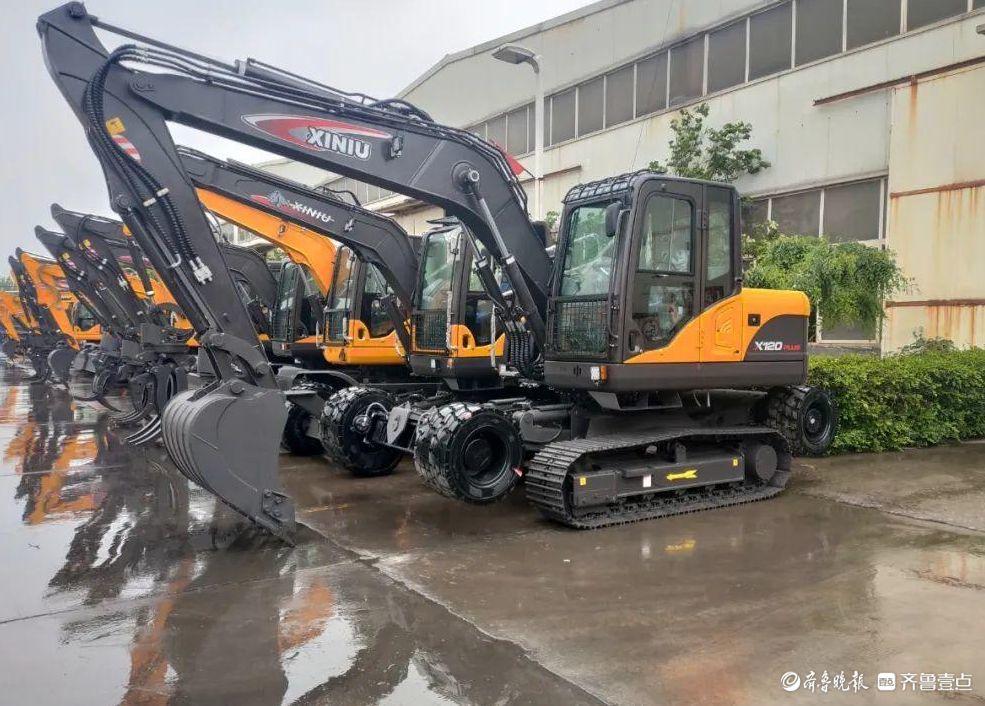
山东肯石重工小挖机撬动全球大市场
Qi Lu Wan Bao· 2025-11-26 04:06
Core Insights - Shandong Kenshi Heavy Industry Co., Ltd. has achieved a 14.9% share of the national micro-excavator export market, showcasing "Chinese manufacturing" in the global engineering machinery sector [1][5]. Company Performance - In 2023, Kenshi produced over 20,000 excavators with a sales revenue of 470 million yuan, and its micro-excavator exports accounted for 14.9% of the national total [5]. - The company has established a sales and service network in over 100 countries, with its products becoming a new symbol of "Made in China" in regions like Southeast Asia, Central Asia, and Europe [5][7]. Technological Advancements - Kenshi's unique model, which fills a domestic gap, features a hydraulic walking system that improves efficiency by 30% compared to traditional equipment, supported by 68 patents [3][5]. - The company has a robust technology reserve with 83 patents and 4 national standards, enhancing its competitive edge globally [5]. Strategic Initiatives - Kenshi employs a "dual-wheel drive" strategy, utilizing a digital workshop for customized production and a smart management system that integrates R&D, manufacturing, and after-sales service [7]. - The company aims to increase the export share of high-end products to 70% within three years, reflecting its commitment to innovation and quality [7]. Environmental Commitment - Kenshi's electric excavators have carbon emissions reduced by 42% compared to the industry average, with green intelligent products making up 65% of overseas orders [7].
对近期重要经济金融新闻、行业事件、公司公告等进行点评:晨会纪要-20251125
Xiangcai Securities· 2025-11-24 23:30
Industry and Company Overview - The e-commerce sales during the 2025 Double Eleven shopping festival reached 1,695 billion yuan, marking a year-on-year growth of 14.2% [2] - Comprehensive e-commerce sales totaled 1,619.1 billion yuan, with a year-on-year increase of 12.3%, while instant retail sales surged by 138.4% to 67 billion yuan [2] - Community group buying sales decreased by 35.3% to 9 billion yuan, indicating a shift in consumer preferences [2] - The top five categories in comprehensive e-commerce sales were home appliances (16.5%), mobile digital (14.6%), clothing (14.0%), personal care and beauty (8.2%), and footwear/bags (6.5%) [2] Consumer Trends - Consumers are becoming more rational, willing to pay for genuine value, reflecting a trend of "demand-based segmentation" [2] - The importance of brand resonance with consumers is increasing, with domestic and emerging original brands gaining favor through innovative design and content [2] Home Appliance and Beauty Industry Insights - The home appliance sector continues to show strong potential, supported by subsidy policies, but competition is evolving towards AI empowerment, green intelligence, and comprehensive solutions [4] - The beauty industry demonstrates resilience and structural upgrades, driven by rational consumer behavior, with a focus on high-end products and effectiveness [4] - High-end markets and fragrance categories are experiencing rapid growth, suggesting a need to focus on leading companies with strong R&D capabilities [4] Retail Data and Market Dynamics - In October, the total retail sales of consumer goods reached 46,291 billion yuan, growing by 2.9% year-on-year, with non-automotive retail sales increasing by 4.0% [5] - Online retail sales for the first ten months reached 127,916 billion yuan, up 9.6%, with physical goods online retail sales accounting for 25.2% of total retail sales [5] - The consumption market is showing stable growth, with significant structural characteristics, particularly in upgraded goods and new consumption trends [5] Investment Recommendations - The Z generation is driving a shift from physical to service and experience-oriented consumption, suggesting a focus on companies with strong IP, quality service, and user engagement capabilities [6][7] - The domestic beauty market is seeing increased recognition for high-quality domestic brands, particularly in the high-end segment, indicating potential for further market penetration [7] - Continued domestic demand stimulation policies are expected to enhance offline consumption capabilities and willingness [7]