石油石化

Search documents
粤开市场日报-20260401-20260401
Yuekai Securities· 2026-04-01 08:06
Market Overview - The A-share major indices closed higher today, with the Shanghai Composite Index rising by 1.46% to 3948.55 points, the Shenzhen Component Index increasing by 1.70% to 13706.52 points, the Sci-Tech 50 up by 3.33% to 1298.20 points, and the ChiNext Index gaining 1.96% to 3247.52 points [1][10] - Overall, 4492 stocks rose while 881 stocks fell, with a total trading volume of 20,125 billion yuan, an increase of 199 billion yuan compared to the previous trading day [1] Industry Performance - Most of the Shenwan first-level industries closed higher today, with notable gains in the pharmaceutical and biological sector (3.99%), communication (3.36%), media (2.94%), and electronics (2.93%). Conversely, public utilities, coal, and oil and petrochemicals experienced declines of 0.52%, 0.19%, and 0.13%, respectively [1][10] Concept Sector Performance - The leading concept sectors with significant gains today included CRO, innovative drugs, optical modules (CPO), selected medical services, weight loss drugs, biotechnology, optical chips, copper-clad laminates, antibiotics, selected shipping, glass fiber, generic drugs, selected air transport, medical supplies exports, and brain-computer interfaces [2]
2026年一季度A股大数据排行榜
Wind万得· 2026-04-01 05:45
Market Performance - In Q1 2026, A-share market showed significant style differentiation, with the CSI 1000 index being the only broad index to rise, up by 0.32%, while major indices generally declined [1][3] - The Shenzhen Component Index, ChiNext Index, and Wind All A Index saw slight declines of 0.35%, 0.57%, and 1.15% respectively, while the Shanghai Composite Index fell by 1.94% and the CSI 300 dropped by 3.89% [3] - The North Exchange 50 performed the weakest, with a substantial decline of 13.34% in Q1 2026 [3] Industry Performance - Among 35 industries classified by Wind, 9 recorded gains in Q1 2026, with the oil and petrochemical and coal industries leading, rising by 18.27% and 17.64% respectively [5] - Utilities, building materials, and electrical equipment also performed well, with increases of 8.78%, 8.26%, and 6.02% respectively [5] - Consumer and financial real estate sectors faced significant declines, with discretionary retail down by 14.90% and non-bank financials down by 14.84% [5] Style Performance - In Q1 2026, small and mid-cap value and growth styles outperformed, while large-cap styles faced pressure [8] - Mid-cap value style was the strongest, with a cumulative increase of 7.50%, while mid-cap growth rose by 5.73% [8] - Large-cap growth index fell by 2.77%, and large-cap value index declined by 4.53% [8] Concept Performance - Energy and power infrastructure concepts led the market in Q1 2026, with the ultra-high voltage concept rising by 32.39% [10] - Fiberglass and oil and gas extraction indices also saw significant gains, exceeding 30% [10] - Other concepts like optical communication, shipping selection, TOPcon batteries, and rare metals selection rose over 20% [10] Company Listings - As of the end of Q1 2026, there were 5,496 listed companies in the A-share market, an increase of 26 from the end of 2025 [13] - The Shanghai main board had the highest number of listed companies at 1,703, accounting for 30.98% of the total [15] Market Capitalization - The total market capitalization of A-shares was 118.81 trillion yuan at the end of Q1 2026, a slight decrease of 0.1% from the end of 2025 [17] - The Shanghai main board's market capitalization was 62.94 trillion yuan, representing 52.93% of the total [19] Trading Volume - A-share market trading remained active in Q1 2026, with total trading volume reaching 144.5 trillion yuan, a quarter-on-quarter increase of 22.15% and a year-on-year increase of 66.28% [21] - The average daily trading volume was 25.97 billion yuan, up 29.43% quarter-on-quarter and 69.04% year-on-year [21] Margin Financing - As of the end of Q1 2026, the margin financing balance was 26.17 billion yuan, an increase of 2.41% from the end of 2025 and a year-on-year increase of 36.12% [25] Top Gainers and Losers - In Q1 2026, Hangzhou Electric Co. led the gainers with a cumulative increase of 253%, followed by Xuelang Environment at 232% and Tianzhong Precision at 210% [27] - The biggest loser was Tianpu Co., which fell by 55%, with Rongke Technology and Jin Hao Medical both down by 49% [27] Market Valuation - As of the end of Q1 2026, the highest P/E ratio among A-share boards was on the Sci-Tech Innovation Board at 195.68 times [43] - The lowest P/E ratio was in the financial sector at 7.72 times [47] IPO Activity - In Q1 2026, the A-share market saw 35 IPOs, a year-on-year increase of 29.63% [50] - The total fundraising from IPOs was 29.78 billion yuan, up 79.61% year-on-year [52] - The automotive and parts industry led with 6 IPOs, while the medical devices and services sector had 5 [55]


中国石油(601857):经营业绩彰显韧性,分红派息维持高位
Bank of China Securities· 2026-03-31 14:11
Investment Rating - The investment rating for the company is "Buy" with a market price of RMB 12.44, and it is rated as outperforming the market [2][4]. Core Views - The company's operating performance demonstrates resilience, with a maintained high level of dividend payout. For 2025, the total revenue was RMB 2,864.47 billion, a decrease of 2.50% year-on-year, while the net profit attributable to shareholders was RMB 157.30 billion, down 4.48% year-on-year. The company continues to show long-term investment value, maintaining a "Buy" rating [4][6]. - The company is adjusting its profit forecast due to rising international oil prices, with expected net profits for 2026-2028 at RMB 182.16 billion, RMB 182.58 billion, and RMB 183.84 billion, respectively, corresponding to a price-to-earnings ratio of 12.2x, 12.2x, and 12.1x [6][9]. Summary by Sections Financial Performance - In 2025, the company achieved total revenue of RMB 2,864.47 billion, with a net profit of RMB 157.30 billion. The fourth quarter revenue was RMB 695.21 billion, showing a year-on-year growth of 1.98% [4][10]. - The company’s EBITDA for 2025 was RMB 290.90 billion, with a projected EBITDA of RMB 349.83 billion for 2026 [8][12]. Production and Operations - The company’s oil and gas equivalent production reached 1,841.9 million barrels in 2025, an increase of 2.5% year-on-year. Domestic marketable natural gas production was 5,201.2 billion cubic feet, up 4.9% [9][10]. - The refining business is transitioning positively, with the company processing 1,375.9 million barrels of crude oil in 2025, a slight decrease of 0.2% year-on-year. The company has also seen a significant increase in chemical new materials production, which rose by 62.7% [9][10]. Capital Expenditure and Dividends - The capital expenditure for 2025 was RMB 2,690.89 billion, a decrease of 2.5% year-on-year. The board proposed a final dividend of RMB 0.25 per share, maintaining a high payout ratio of 54.7% [9][10]. - The company emphasizes shareholder returns, with the dividend payout ratio reaching its highest level in five years [9][10].

金融工程日报:沪指冲高回落,科技股全线走低-20260331
Guoxin Securities· 2026-03-31 12:45
- The report does not contain any quantitative models or factors related to construction, testing, or evaluation[1][2][3]
北交所日报-20260331
Yin He Zheng Quan· 2026-03-31 11:28
Core Insights - The overall performance of the Beijing Stock Exchange (BSE) on March 31, 2026, showed a decline, with the BSE 50 index falling by 0.98% to 1,248.29 points, while the specialized and innovative index decreased by 0.68% to 2,052.75 points [1] - The total market capitalization of the BSE reached 799.33 billion, with a circulating market value of 484.19 billion [1] - The trading volume on this day was 134.73 billion, with a turnover rate of 2.39%, indicating a slight decrease compared to the previous week's average daily trading volume of 135.52 billion [1] Industry Performance - On March 31, 2026, most industries on the BSE experienced declines, with the media sector leading gains at +5.5%, followed by the automotive sector at +3.3% and social services at +1.5%. The largest declines were seen in the oil and petrochemical sector at -9.0%, utilities at -5.9%, and transportation at -3.5% [1] - The average price-to-earnings (P/E) ratio for BSE-listed companies was reported at 38.62 times, which is lower than that of companies listed on the Sci-Tech Innovation Board (68.66 times) and the ChiNext Board (41.77 times) [1][8] Stock Performance - Among the 303 listed companies on the BSE, 108 saw an increase in stock prices, while 186 experienced declines. The top gainers included Longyuan Co. (+53.04%), Huayang Racing (+18.08%), and Jiaoda Iron & Steel (+15.97%). Conversely, the largest declines were noted in Yuelong Technology (-16.26%), Keli Co. (-8.97%), and Kunkong Technology (-7.91%) [1][6][7] - The most actively traded stocks included Longyuan Co. with a turnover rate of 93.35%, Yuelong Technology at 58.04%, and Zuxing New Materials at 47.28% [1] Valuation Insights - The valuation of BSE-listed companies varied by industry, with the transportation sector having the highest average P/E ratio at 123.5 times, followed by oil and petrochemicals at 101.3 times and non-ferrous metals at 93.3 times [1][8] - The overall valuation of the BSE has seen a decline compared to previous trading days, indicating potential shifts in investor sentiment and market dynamics [1]
3月31日A股市场点评:市场调整
Zhongshan Securities· 2026-03-31 10:53
Market Performance - The Shanghai Composite Index decreased by 0.80%[3] - The Shenzhen Component Index fell by 1.81%[3] - The ChiNext Index dropped by 2.59%[3] Industry Analysis - The home appliance sector showed a gain of 1.57%[3] - The coal industry experienced a decline of 3.67%[3] - The automotive sector decreased by 0.22%[3] Economic Indicators - The manufacturing PMI rose to 50.4%, indicating expansion[6] - The non-manufacturing PMI increased to 50.1%[6] - The composite PMI output index reached 50.5%[6] Geopolitical Risks - Uncertainty in the Middle East may continue to affect market risk appetite[8] - The U.S. military actions against Iran are planned to last 4 to 6 weeks[5] Market Outlook - A-shares are expected to maintain a volatile pattern with structural opportunities[8] - Defensive sectors like healthcare and consumer goods may perform relatively strong[8]
股指二季度观点:地缘定价从混沌到清晰-20260331
Dong Zheng Qi Huo· 2026-03-31 08:44
1. Report Industry Investment Rating - Not provided in the given content 2. Core Viewpoints of the Report - The geopolitical pricing in the second quarter of the stock index has changed from chaos to clarity. The Middle - East situation is becoming more complex, and the war situation will affect the fundamentals of equity assets. It is expected that the US and Iran will go through a process of "war expansion - negotiation and compromise" in the second quarter. A - shares may experience a V - shaped trend in the second quarter. In the short term, the A - share bull market is tested, but in the medium term, the technology industry represented by artificial intelligence is still the main line of the A - share bull market. It is recommended to go long on the IM futures with higher technology content on dips [92] - High oil prices will lead to an increase in global energy and trade costs, and have an impact on China's imports and exports, inflation, and economic growth. The PPI and CPI are expected to rise, and the global economic growth is predicted to decline [21][53][67] - The Chinese government is taking measures to expand domestic demand and promote economic structural adjustment, such as increasing investment in infrastructure and adjusting policies on consumption and investment [79] 3. Summary by Related Catalogs 3.1 China - Iran and China - Persian Gulf Seven - Country Trade - Iran's direct trade volume with China is small, with a trade surplus of less than $4 billion. After the US sanctions in 2018, the direct trade between China and Iran decreased [5] - China's exports to the eight countries including Iran and the seven Persian - Gulf countries have been increasing in the past five years. In 2025, the total export amount to the eight countries was $169.27 billion, accounting for 4.3%. China's imports from the seven Persian - Gulf countries accounted for 6.1% of the total imports, and the trade deficit turned positive in 2025, reaching $5.7 billion [6][16] - If trade with the seven Persian - Gulf countries is interrupted, China's exports will decrease by 4.3% and imports by 6.1%. China's import dependence on these countries is mainly concentrated in crude oil, natural gas, chemical raw materials, and plastic products, and some products have a share of over 20%. The export of carpets, textiles, motor vehicles, steel products, and electromechanical products may be damaged [25][29] 3.2 Energy and Market Impact - The Strait of Hormuz is crucial for China. About 200 - 210 million barrels of crude oil pass through it every day, accounting for about 20% of the world's seaborne oil. The liquefied natural gas transportation accounts for about 20% of the world, and the methanol transportation accounts for about 35% of the world. The closure of the strait will lead to an increase in global energy and trade costs [21] - Crude oil accounts for 18.2% of China's total energy consumption, and the external dependence is about 72%. The crude oil imported from the seven Persian - Gulf countries accounts for about 40% of the total imported crude oil. China's oil reserves can support about 100 days. If the war persists and the strait is blocked, it will impact the economic growth [34] - Before the US - Iran war, the global equity assets were in a bull market. After the war, the global risk assets were under pressure, and the stock markets generally declined. In March, only the energy and mineral sectors rose, while the technology stocks and HALO assets fell significantly [38][46] 3.3 A - share Market Performance - In March, A - shares fell in line with the global stock markets. The rising sectors include energy (coal, power utilities, and new energy), defense (banks, public utilities), and AI infrastructure (communications). The falling sectors are mainly HALO heavy - hitters such as non - ferrous metals, steel, and building materials, concept stocks such as military industry, and technology stocks such as media and computer [49] - At the tertiary industry level, coal chemical industry, lithium batteries, new energy power generation, and optical communications performed well [50] 3.4 Inflation and Economic Growth - The increase in oil prices has led to an unexpected rise in PPI and CPI. In March, the PPI is expected to approach 0 year - on - year, turn positive in the second quarter, and the annual central level will rise to about 0.5%, 1.5% higher than the initial forecast. The CPI is expected to rise to about 1%, 1% higher than the initial forecast [60] - China's exports increased significantly in the first two months, but the impact of the US - Israel - Iran conflict on the global economy will be apparent from the second quarter. The OECD estimated in March that the GDP growth rate in the four quarters of this year will decline by 0.12, 0.23, 0.31, and 0.33 percentage points respectively compared with the February forecast [67] - China's economic growth is more dependent on foreign trade, and domestic demand is weak. The fiscal stimulus in 2026 is limited, and the incremental content is mainly in policy - based financial instruments and special funds for expanding domestic demand [72] 3.5 Policy and Industry Development - The government's work report in 2026 emphasizes building a strong domestic market, with a re - balance between consumption and investment, and an increase in support for fixed - asset investment. The positions of rural revitalization, new urbanization, and improving people's livelihood are advanced [79][80] - The National Development and Reform Commission will invest more than 7 trillion yuan in "six networks" and key areas this year, and the scale of artificial - intelligence - related industries will exceed 10 trillion yuan by the end of the 15th Five - Year Plan. The Ministry of Commerce focuses on service consumption, the central bank focuses on supporting domestic demand, innovation, and small and medium - sized enterprises, and the Ministry of Finance provides loan interest subsidies for individuals and enterprises [84] - Although the valuation of technology stocks is still high, their structure is relatively healthy after the profit upward revision and valuation downward revision in the fourth quarter of last year. The non - technology stocks have relatively mild changes in valuation and profit. The policy support for the technology industry is obvious [91]
2026年4月A股及港股月度金股组合:把握布局机遇-20260331
EBSCN· 2026-03-31 05:46
Overall Research - In March, both A-shares and Hong Kong stocks experienced a general pullback, with significant differentiation across sectors. The A-share market saw the ChiNext index decline by 0.4%, while the Sci-Tech 50 index fell by 12.6%. In Hong Kong, the Hang Seng China Enterprises Index dropped by 4.6%, and the Hang Seng Index fell by 6.3% [1][2]. A-share Insights - Chinese assets are expected to show internal stability and potential for mid-term upward movement. Despite facing short-term risks from oil price fluctuations and declining risk appetite, the domestic market's high energy self-sufficiency provides some resistance to rising external energy prices. Historically, domestic exports tend to benefit from increased external uncertainties, indicating a stable supply chain [1]. Sector Recommendations - Focus on sectors that have previously experienced significant declines, those benefiting from rising commodity prices, and industries with potential for exceeding performance expectations. The report highlights resource products, essential consumption, hard technology, and government investment-related sectors as key areas of interest [2]. Hong Kong Market Insights - The Hong Kong market is positioned for resilience, with the OpenClaw framework redefining the AI industry narrative. The performance of leading AI companies in the US, such as Nvidia and Google, supports a robust fundamental backdrop for a rebound in Hong Kong stocks. The market is experiencing a convergence of three favorable factors: clear industry prosperity, improving sentiment as geopolitical concerns ease, and strong capital support, with net inflows of 63.2 billion HKD as of March 27 [3]. Investment Focus - The report recommends prioritizing investments in the technology sector, particularly through Hong Kong technology ETFs, to capitalize on the overall rebound. Specific focus should be on companies that are rapidly commercializing AI and have stable cash flows and low valuations [3]. A-share Stock Recommendations - The recommended A-share stocks for April 2026 include: - Zhongji Xuchuang (中际旭创) - Communication - Teruid (特锐德) - Power Equipment - Jereh (杰瑞股份) - Machinery - Nanjing Bank (南京银行) - Banking - Zijin Mining (紫金矿业) - Non-ferrous Metals - China Petroleum (中国石油) - Oil and Petrochemicals - China National Offshore Oil Corporation (中国海油) - Oil and Petrochemicals - Jinjiang Hotels (锦江酒店) - Social Services - Huaneng International (华能国际) - Utilities - Haier Smart Home (海尔智家) - Home Appliances [4][6]. Hong Kong Stock Recommendations - The recommended Hong Kong stocks for April 2026 include: - Hon Teng Precision (鸿腾精密) - Communication - Huiju Technology (汇聚科技) - Power Equipment - Alibaba (阿里巴巴-W) - Retail [4][7].




全球化工装置不可抗力增加,能化产品价格陆续跳涨
Huaan Securities· 2026-03-31 05:45
Investment Rating - The industry investment rating is "Overweight" [2] Core Insights - The increase in geopolitical tensions in the Middle East has led to damage to energy facilities, resulting in rising prices for energy products [4] - The chemical sector has shown resilience, with a 2.31% increase in performance, outperforming the Shanghai Composite Index by 3.41 percentage points [5] - The report highlights that domestic chemical leaders are expected to maintain profitability due to integrated supply chains and diversified raw material sources [5] - The chemical industry is anticipated to experience a recovery driven by both cyclical and growth factors, with specific focus on sectors such as oil, refining, agriculture chemicals, and dyeing [6] Summary by Sections Industry Performance - The chemical sector ranked third in overall performance for the week of March 23-27, 2026, with a gain of 2.31% [5][23] - The top three performing sub-sectors included other chemical raw materials (5.94%), other petrochemicals (5.57%), and civil explosives (4.50%) [26] Supply-Side Tracking - A total of 157 companies in the chemical industry reported capacity impacts, with 7 new repairs and 3 restarts [16] Key Industry Dynamics - The report emphasizes the importance of geopolitical risks in the oil and gas sector, suggesting that domestic refining chains are better positioned to withstand these risks compared to international counterparts [6] - The report also notes that the demand for electronic chemicals is increasing due to the rapid growth of the semiconductor industry, particularly in China [8] - The organic silicon industry is entering a recovery phase, driven by demand from new applications such as electric vehicles and photovoltaics [10] - The PTA and polyester filament industry is expected to enter a new growth cycle as capacity expansion slows and demand continues to rise [12] Price Trends - The report lists significant price increases for various chemical products, including ammonium nitrate (35.14%) and epoxy propane (22.75%) [14] - Conversely, some products like naphtha and PX saw price declines of -6.25% and -4.90%, respectively [14] Recommendations - The report suggests focusing on companies with strong positions in the oil, refining, agriculture chemicals, and electronic chemicals sectors, as they are expected to benefit from rising prices and demand [6][8][10]

价量一致性和RSI信号本周同步转空,市场情绪指标进一步回落——量化择时周报20260329
申万宏源金工· 2026-03-31 01:02
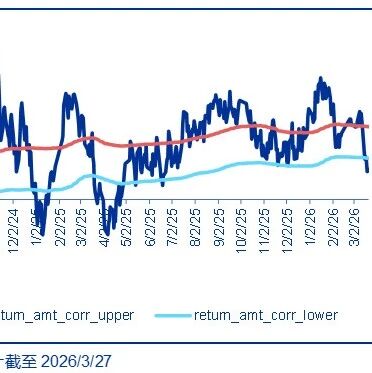
Market Sentiment - The market sentiment indicator as of March 27 is 1.2, down from 1.7 the previous week, indicating a bearish outlook as sentiment continues to decline throughout the week [1][6]. - The price-volume consistency indicator and RSI have both turned negative this week, reflecting a shift from previous oscillation to a sustained bearish view, indicating a weakening market [1][8]. Trading Volume - The total trading volume for the A-share market decreased by 0.65% week-on-week, with an average daily trading volume of 1,394.17 billion yuan, suggesting a slight decline in market activity compared to the previous week [1][10]. Industry Performance - As of March 27, the short-term score rankings for industries show that utilities, coal, power equipment, telecommunications, and oil and petrochemicals are leading, with utilities scoring 91.53, the highest among industries, and coal scoring 84.75, second [1][34]. - The industry crowding indicator shows a low correlation of 0.17 with the weekly price changes, indicating that the crowding level is not significantly impacting price movements [1][37]. Risk Appetite - The relative trading volume of the Sci-Tech 50 index remains low, indicating that market risk appetite is also low, with a slight fluctuation observed [1][13]. - The financing balance ratio has slightly increased this week, suggesting a minor rise in market sentiment and trading activity in the financing market [1][21]. Technical Indicators - The RSI indicator has penetrated the lower boundary and continues to decline rapidly, indicating a weakening short-term momentum [1][25]. - The main buying power indicator has shown a downward trend, reflecting reduced willingness from institutional investors to actively allocate capital in the market [1][28].