
美国移民政策

Search documents
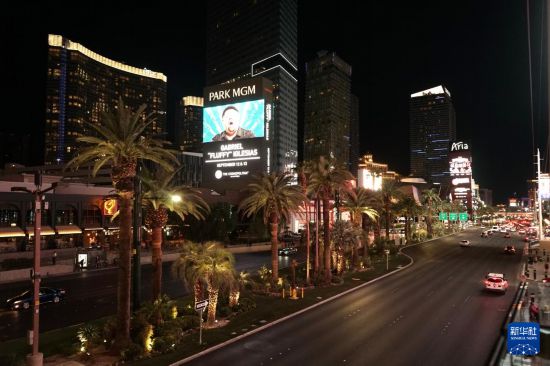
记者手记|旅游业持续下滑 美国“娱乐之都”乐不起来了
Xin Hua She· 2025-09-25 01:31
Core Insights - The tourism industry in Las Vegas is experiencing a significant decline, with a noticeable drop in visitor numbers and hotel occupancy rates, indicating a broader economic downturn [5][11][12] Visitor Trends - Las Vegas has seen a continuous decline in tourist numbers for seven consecutive months, with June and July experiencing year-on-year decreases of 11.3% and 12% respectively [5] - Hotel occupancy rates have also fallen, with declines of 6.5% and 7.6% in June and July [5] - International visitors, particularly from Canada and Mexico, have decreased significantly, with reports indicating a 13% drop in international tourists in June [7][12] Economic Impact - Local businesses reliant on tourism are feeling the pressure, with some reporting a 60% drop in business volume, leading to workforce reductions [10] - The rising cost of living in Las Vegas has led to complaints on social media, prompting hotels to offer incentives such as free parking and room upgrades to attract guests [10] Broader Implications - The decline in Las Vegas tourism is seen as a reflection of national trends, with concerns about U.S. government policies affecting international tourism [11] - Increased visa fees and stricter entry regulations are contributing to the decline in international visitors, with tariffs also impacting visitor numbers from Canada [11][12]

H1-B签证新政引发巨震,在美打工人计划“留后路”
Di Yi Cai Jing· 2025-09-24 14:21
Core Points - The recent executive order by President Trump regarding H-1B visa holders has raised significant concerns and is likely to face legal challenges [1][13][14] - The new policy introduces a $100,000 fee for H-1B visa holders who are currently outside the U.S., which has led to a surge in flight prices and urgent returns by employees of major corporations [1][3] - The U.S. Department of Homeland Security plans to adjust the H-1B visa application process to prioritize higher-skilled applicants and those with better salaries, reflecting a shift towards a more elite immigration system [3][4] Industry Impact - The technology sector is at the center of this visa policy change, with 64% of H-1B visas issued to individuals in the computer industry, affecting major companies like Amazon, Google, and Microsoft [6][5] - Small and startup companies are expected to face greater challenges due to the increased costs associated with the new visa fees, potentially stifling their ability to hire foreign talent [8][9] - The new regulations may deter venture capital and private equity investments in startups that heavily rely on H-1B employees, as the financial burden increases [8][9] Economic Implications - If the number of H-1B applications remains constant, U.S. companies could incur over $14 billion in fees annually under the new rules [6] - The tightening of H-1B visa regulations is likely to impact the Indian IT and outsourcing industry significantly, as 71% of H-1B visas were issued to Indian nationals last year [9][10] - The overall venture capital market in the U.S. is already showing signs of contraction, with a 12.9% decrease in funding for startups compared to the previous year [9] Talent Attraction - The changes to the H-1B visa program may lead to a reassessment of the U.S.'s attractiveness to global talent, with some tech executives suggesting that cities in Canada may become more appealing [11][12] - Major U.S. companies are already expanding their operations in countries like Canada, which could further shift talent away from the U.S. [11][12]
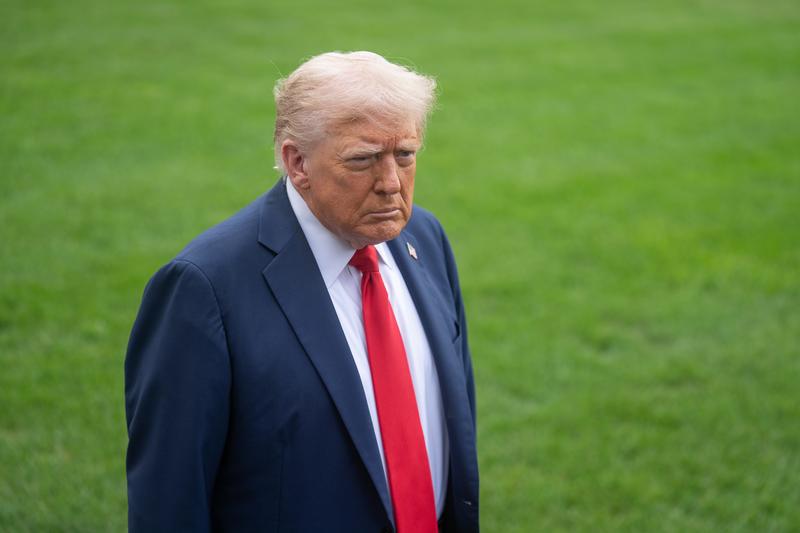
伦敦市中心数千民众游行抗议美国多项政策
Xin Hua Wang· 2025-09-18 00:53
Group 1 - Thousands of protesters demonstrated in central London on September 17 against U.S. policies, expressing dissatisfaction with issues such as immigration, the Gaza situation, and climate change [1][1][1] - The London police estimated around 5,000 participants in the protest, with over 1,600 officers deployed to maintain order and enforce temporary traffic restrictions [1][1][1] - The protest was organized by a group called "Stop Trump Coalition," which had previously held a gathering near Windsor Castle to oppose Trump's visit [1][1][1] Group 2 - This marks Trump's second state visit to the UK as President, with his first visit occurring in 2019 [2][2] - Trump is scheduled to meet with Prime Minister Starmer on September 18 [2][2]
重压之下 美国劳动力市场流失逾120万移民
Sou Hu Cai Jing· 2025-09-04 05:46
Core Insights - The report from the Pew Research Center indicates a concerning trend in the U.S. labor market, with over 1.2 million immigrant workers disappearing from the job market between January and July 2020, closely linked to the strict immigration policies of the Trump administration [1][3][5] Labor Market Impact - Immigrant workers, including those with legal work visas and undocumented individuals, play an essential role in various key industries in the U.S. [3] - Immigrants account for approximately 20% of the U.S. labor market, with significant representation in specific sectors: 45% in agriculture, forestry, fishing, and livestock; 30% in construction; and 24% in the service industry [3][5] Employment Contribution - Over the past decade, immigrants have contributed to more than 50% of new job creation in the U.S. However, the recent halt in immigration at the U.S.-Mexico border has caused a "systemic shock" to the country's job creation capacity [5][6] Sector-Specific Challenges - The agricultural sector is facing a labor shortage crisis due to increased immigration enforcement, leading to significant losses, such as tons of ripe fruit left unharvested in Florida [5][6] - The construction industry is experiencing job losses in nearly 50% of metropolitan areas, with California being particularly affected, losing 7,200 jobs in the Riverside-San Bernardino-Ontario area and 6,200 in the Los Angeles-Long Beach-Glendale area [5][6] Future Concerns - The healthcare sector may become the next area severely impacted, as 43% of home care workers are immigrants, raising concerns about the availability of caregivers for hospitals and nursing homes [6]

印度三哥也开始“占领”美国了?
Hu Xiu· 2025-09-02 07:03
Core Insights - The article discusses the significant shortage of truck drivers in the United States, attributing it to both labor shortages and immigration policy failures [1] - It questions whether the recent interest rate cuts by the Federal Reserve are exacerbating economic issues rather than alleviating them [1] Industry Analysis - The trucking industry is facing a critical labor shortage, with companies struggling to fill positions due to a combination of factors including low wages and challenging working conditions [1] - Immigration policies have contributed to the driver shortage, as restrictions have limited the influx of foreign workers who could potentially fill these roles [1] Economic Implications - The article raises concerns about the impact of interest rate cuts on the economy, suggesting that such measures may not effectively address the underlying issues in the labor market [1] - It highlights the potential for these economic policies to create further instability in an already strained logistics sector [1]
消防员执行任务时被捕 美边境巡逻队:他们涉嫌为非法移民
Xin Hua She· 2025-08-29 08:39
Core Viewpoint - The arrest of two firefighters in Washington state by the U.S. Border Patrol for allegedly being illegal immigrants has sparked widespread condemnation and raised concerns about the implications of immigration policies on public safety and emergency response efforts [1][4]. Group 1: Incident Details - Two firefighters were arrested while responding to a wildfire in a remote area, with a total of 44 firefighters present at the scene [1]. - The U.S. Border Patrol was requested to verify the identities of the firefighters, leading to the arrest of two individuals deemed to be illegally residing in the U.S. [1][3]. - The firefighters were detained for approximately three hours, during which they were questioned and not allowed to document the situation [1]. Group 2: Reactions and Implications - Washington state Senator Patty Murray expressed strong outrage, criticizing the Trump administration for budget cuts to the forestry service that weakened wildfire response capabilities and labeling the immigration policy as "morbid" [4]. - Washington Governor Jay Inslee voiced deep concern, emphasizing the importance of firefighters for community safety and questioning the extension of harsh immigration policies to those fighting wildfires [4]. - Oregon Senator Ron Wyden condemned the arrests, stating that such actions would undermine community safety [4]. Group 3: Policy Context - The Border Patrol defended its actions by stating its commitment to enforcing U.S. immigration laws [5]. - During Trump's first term, the Department of Homeland Security had previously stated that protecting life and safety was a top priority, indicating that immigration enforcement would not typically occur during wildfire evacuations [5].
美国正恢复对移民申请人进行“邻里调查”
Yang Shi Xin Wen Ke Hu Duan· 2025-08-28 20:02
Core Point - The U.S. government is reinstating "neighborhood investigations" for citizenship applicants, which may involve field investigations and interviews with neighbors and colleagues to verify eligibility for U.S. citizenship [1] Group 1 - The U.S. Citizenship and Immigration Services has released a policy memorandum indicating the revival of neighborhood investigations [1] - The investigations may include interviews with individuals in the applicant's community to assess their qualifications for citizenship [1]
美民众和被拘留者家属抗议 要求关闭“鳄鱼恶魔岛”
Yang Shi Xin Wen Ke Hu Duan· 2025-08-11 17:23
Core Viewpoint - The article highlights the protests against the inhumane conditions at the "Crocodile Devil Island," a detention center for immigrants in the United States, with calls for its closure and criticism of U.S. immigration policies [1] Group 1 - The "Crocodile Devil Island" is known as a detention center for immigrants in the U.S. [1] - On the 10th, many American citizens and families of detainees gathered outside the facility to demand its closure [1] - Protesters held signs stating "Crocodile Devil Island is inhumane" and wore T-shirts with "Abolish ICE" [1] Group 2 - Currently, hundreds of immigrants are detained at "Crocodile Devil Island" [1]
没能让中国让步,36万亿美债填不上,特朗普“枪口”瞄准自己人
Sou Hu Cai Jing· 2025-08-07 05:48
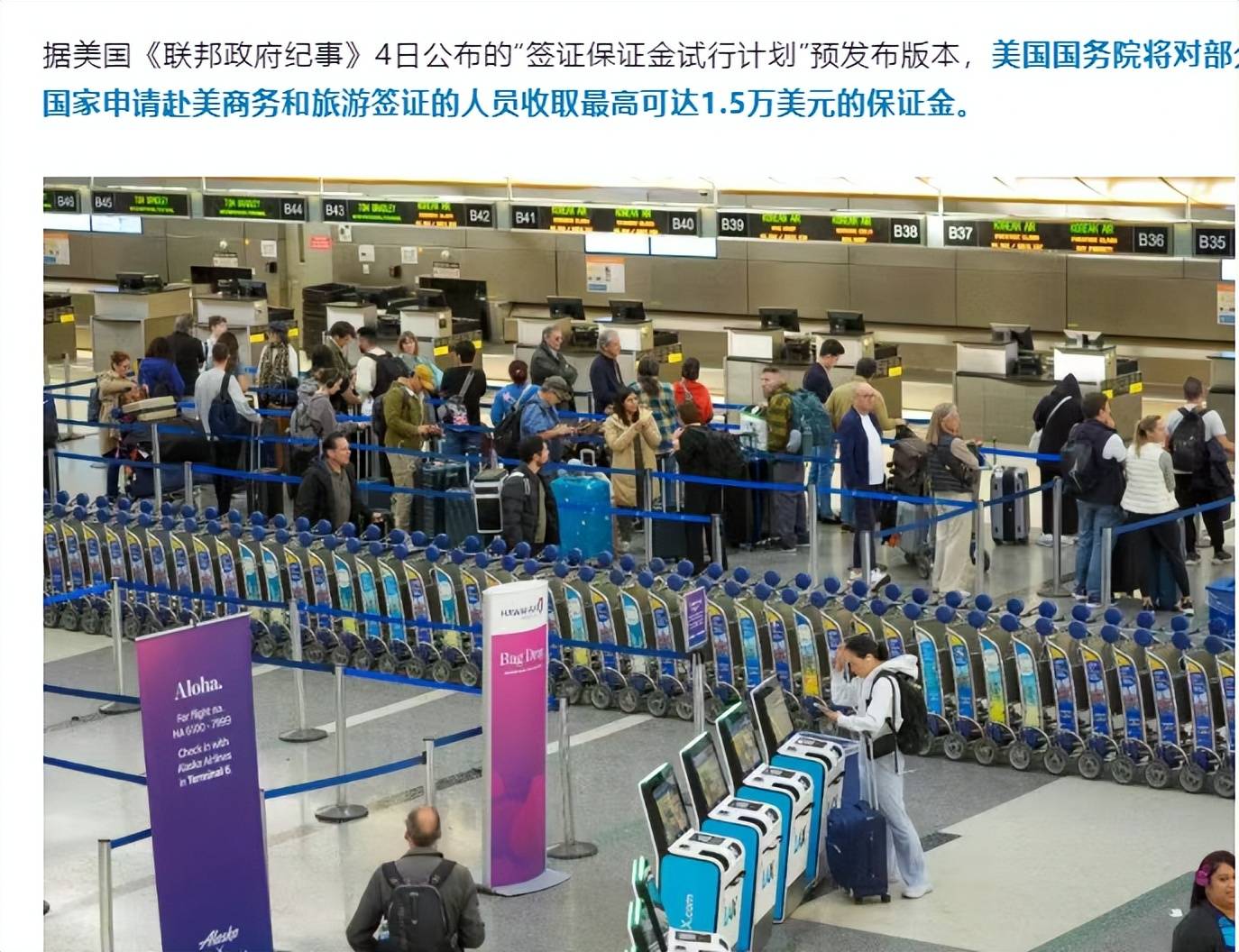
Core Viewpoint - The article discusses how Trump's policies have shifted from targeting illegal immigration to imposing financial burdens on both American citizens and foreign nationals, indicating a desperate attempt to generate revenue amid a fiscal crisis [1][5][10]. Group 1: Policy Changes - Trump's introduction of the "Gold Card" program, priced at $5 million, aimed to provide benefits similar to those of U.S. citizens, but was soon followed by a more direct requirement for all entrants to pay a security deposit ranging from $15,000 to $50,000 [1][3]. - The rationale behind these fees is framed as a matter of "national security," particularly targeting individuals from economically disadvantaged countries, which raises questions about the legitimacy of this justification [3][5]. Group 2: Economic Context - The article highlights the current fiscal challenges faced by the U.S., with a national debt nearing $40 trillion and interest payments on this debt surpassing defense spending at $1.3 trillion [10]. - It notes that the U.S. economy is no longer able to attract global capital as it once did, leading to a decline in tax revenues while national debt continues to rise [7][10]. Group 3: Future Implications - The article suggests that the "security deposit" policy is a form of taxation aimed at filling fiscal gaps, which may become increasingly stringent over time [8][10]. - It warns that if the current trend continues, the U.S. could face a severe economic crisis, as the interest on national debt may soon exceed total fiscal revenues [10].
特朗普:不会赦免农场的非法移民
news flash· 2025-07-08 17:48
Core Viewpoint - The U.S. government, under President Trump, will not grant amnesty to illegal immigrants working on farms, while continuing strategic deportation efforts to ensure the agricultural sector has the necessary labor [1] Group 1: Immigration Policy - President Trump emphasized that large-scale deportation actions are ongoing but will be conducted strategically to maintain labor supply in agriculture [1] - Trump expressed willingness to allow immigrant workers on U.S. farms to stay if their employers provide "guarantees" for them [1]