航天育种

Search documents
种子遨游太空 未来绽放田间
Ren Min Ri Bao Hai Wai Ban· 2025-06-23 23:02
Core Points - The article discusses the advancements in space breeding technology in China, highlighting various crops and their benefits derived from space exposure [6][8][17] - It emphasizes the potential of space-bred varieties to improve agricultural productivity and sustainability, showcasing specific examples of crops like wheat, rice, and vegetables [9][10][14] Group 1: Space Breeding Technology - Space breeding combines space-induced mutations with traditional breeding techniques to create high-yield, disease-resistant crop varieties [8][17] - The unique space environment accelerates genetic evolution, allowing for the rapid development of superior traits in crops [17] Group 2: Crop Examples and Benefits - "Huangmai 802," a wheat variety, shows exceptional performance in saline-alkali soil, with yields reaching over 470 kg per mu, attracting interest from local farmers [6][9] - "Huahang Xiangyin Zhen," a rice variety, has an average yield exceeding 720 kg per mu and is recognized as a super rice variety, balancing taste and productivity [8][10] - Space-bred vegetables, such as "space cucumbers" and "space watermelons," exhibit enhanced flavor and market potential, with reports of high customer satisfaction [14][15] Group 3: Research and Development - Research teams are rigorously selecting and monitoring seeds that have undergone space travel to ensure the best traits are cultivated [7][12] - The integration of space breeding into traditional agricultural practices is seen as a pathway to modernize agriculture and enhance food security [9][17] Group 4: Economic Impact - The introduction of space-bred crops is expected to generate significant economic benefits for farmers, with improved yields and product quality leading to higher market demand [14][15] - The article highlights the potential for creating unique agricultural brands, such as "space tea," to promote local heritage and boost rural economies [13][14]


种小米的多了,火出圈的为何是米脂?|新京智库
Xin Jing Bao· 2025-06-10 08:05
Core Insights - The article highlights the unique qualities of 米脂小米 (Mizhi millet) and its successful branding and marketing strategies that have positioned it as a premium product in the market [1][10][12] Group 1: Product Quality and Unique Characteristics - 米脂小米 is recognized for its superior taste and quality, attributed to its long growth period and favorable climatic conditions in 米脂 County, which contribute to its rich flavor and high oil content [2][4][5] - The cultivation of 米脂小米 involves a focus on traditional farming methods combined with modern agricultural techniques, including the development of new seed varieties through space breeding and other scientific methods [3][4][11] Group 2: Market Development and Sales Strategies - The establishment of e-commerce platforms, such as the 淘米易购 platform, has significantly enhanced the market reach of 米脂小米, allowing it to penetrate both domestic and international markets [6][8][12] - The company has implemented a direct purchasing model that ensures farmers receive higher prices for their crops, thereby promoting sustainable farming practices and improving local economies [6][11] Group 3: Government and Institutional Support - 米脂 County's government has played a crucial role in promoting the 米脂小米 brand through various initiatives, including participation in national branding programs and the establishment of quality standards [10][12] - Collaborative efforts between local government, agricultural universities, and businesses have created a comprehensive support system for the 米脂小米 industry, facilitating its growth and development [10][12] Group 4: Future Prospects and Innovations - The 米脂小米 industry is poised for further growth with ongoing efforts to enhance product quality, expand market presence, and develop new processing techniques [11][12] - The introduction of deep processing products has diversified the offerings of 米脂小米, increasing its appeal and marketability [9][12]
陕西举办“太空农业·未来田园”主题科普活动
Shan Xi Ri Bao· 2025-06-07 23:42
Group 1 - The event "Space Agriculture · Future Farm" was held on June 7 at the Shaanxi Aerospace Breeding Engineering Technology Research Center, aimed at popularizing aerospace agricultural technology and inspiring public interest in modern agricultural innovation [1][2] - The Shaanxi Aerospace Breeding Engineering Technology Research Center has conducted over 100 aerospace breeding experiments and obtained 11 patents in the agricultural field, developing high-yield and high-quality plant varieties with independent intellectual property rights [2] - The center's achievements include the development of varieties such as Shaanbei small grains, Dahongpao pepper, and the interstellar Shennong series of forage, which have been industrially promoted through partnerships with seed companies, generating significant socio-economic benefits [2] Group 2 - The event featured interactive experiences and demonstrations of cutting-edge technology, aiming to bridge the gap between science and public understanding, and to contribute to the promotion of high-tech agriculture and the cultivation of future scientific talent [2]
中国经济样本观察·“镇”了不起|地中海舶来的“金果果”,榨出40亿元“油产业”
Xin Hua She· 2025-05-20 00:54
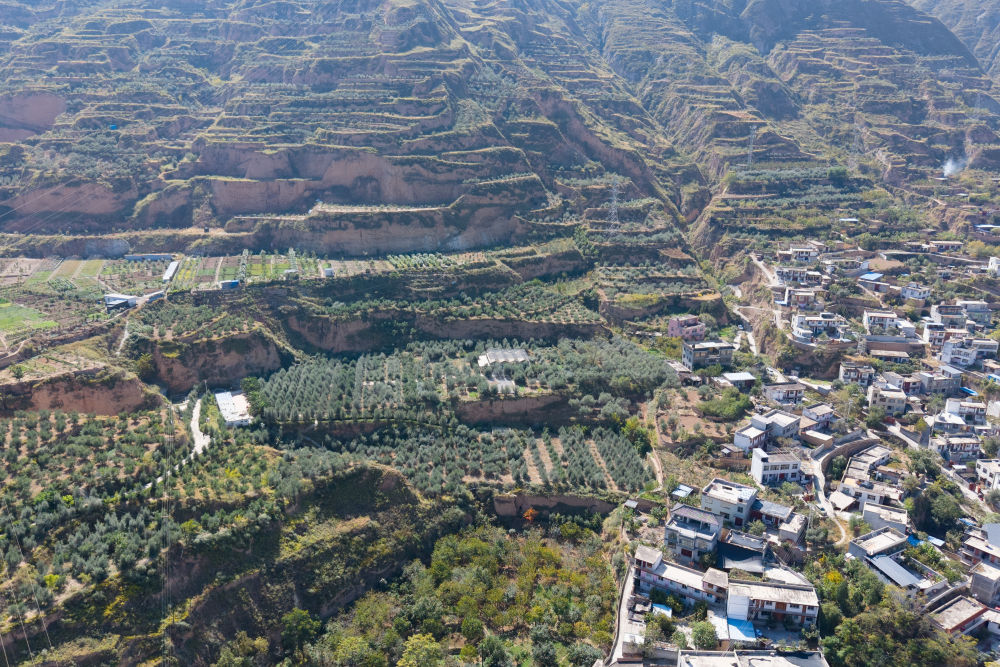
Core Viewpoint - The olive oil industry in Wudu District, Gansu Province, has transformed from barren hills to a thriving agricultural sector, significantly contributing to local economic development and poverty alleviation through the cultivation of olive trees originally from the Mediterranean region [1][4][6]. Industry Development - The olive oil industry in Wudu District has developed a complete industrial chain, including breeding, planting, processing, and sales, with a comprehensive output value exceeding 4 billion yuan [1][9]. - The area has become known as "China's Olive Oil Hometown," with over 100 international awards for its products, which are exported to countries such as Singapore, South Korea, and Spain [1][9]. Economic Impact - The olive cultivation area has expanded from less than 100 acres to over 45,000 acres, with an annual fruit production of nearly 10,000 tons [6][9]. - The average annual income from olive oil for farmers in the main production area is over 4,000 yuan, with the region leading the country in planting area, fresh fruit yield, and initial oil production [9][12]. Technological Advancements - The industry has adopted advanced low-temperature cold-pressing technology and has established a gene bank for olive varieties, making it a leader in initial oil production capacity in China [12][14]. - Research and development efforts have led to the creation of six product series, including extra virgin olive oil, olive tea, health products, and skincare items [12][14]. Community Engagement - The local cooperative has grown from 20 households to over 300, demonstrating strong community involvement in the olive oil industry [6][9]. - The industry has positively impacted over 200,000 farmers across 28 townships and 320 administrative villages [9][12].