航天育种

Search documents
山东龙口:用航天育种与智慧电力解锁“致富密码”
Xin Hua Wang· 2026-02-22 11:48
Group 1 - The company Shenzhou Maoyuan Agricultural Technology Co., Ltd. has established over 20 high-standard greenhouses for space-bred crops, with a planting area of 15,000 square meters, producing hundreds of thousands of kilograms of "Hangfen High-Sugar Tomatoes" annually [1] - The company collaborates with China Aerospace Science and Technology Corporation to introduce over 20 space-bred varieties, which are characterized by high yield, sweet taste, and strong disease resistance [1] - The company utilizes advanced technology for greenhouse management, including automatic ventilation, intelligent temperature control, precise drip irrigation, and supplementary lighting, all powered by electricity [1] Group 2 - The fruit and vegetable industry chain in Longkou is expanding, covering cold chain logistics, deep processing, and e-commerce sales, leading to a growing economic scale [2] - The company Nancun Orchard Fruit Industry Co., Ltd. operates a modern controlled atmosphere storage facility, ensuring optimal temperature and humidity for apples and pears, enhancing the industry's profitability [2] - Longkou's fruit and vegetable brand matrix is continuously expanding, with increased brand value contributing to farmers' income, showcasing a transformation from traditional products to high-end brands [2]
中国是如何实现“果蔬自由”的?(外国网友“趣”问中国)
Ren Min Ri Bao· 2026-02-02 19:29
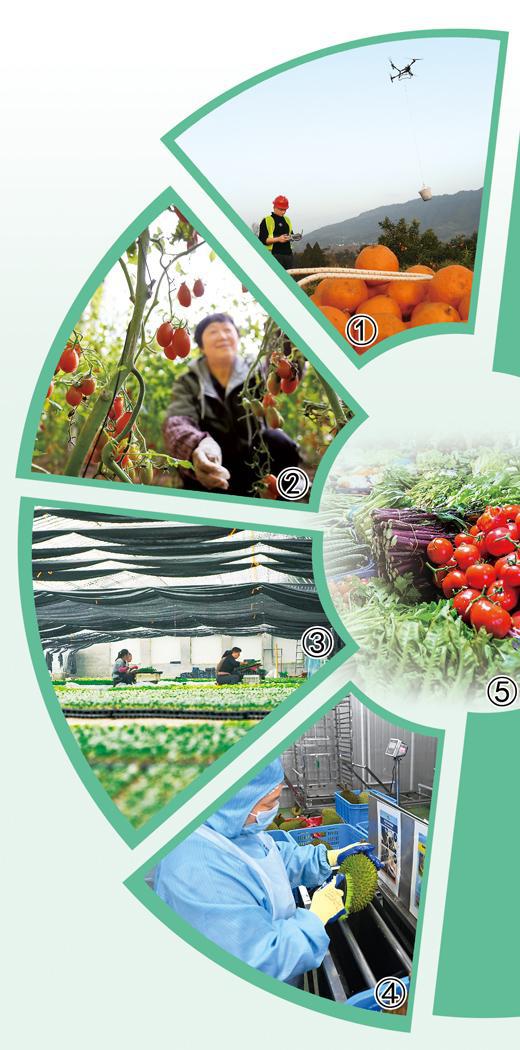
Core Viewpoint - The article highlights the increasing curiosity of foreign netizens about China, particularly regarding its agricultural advancements, specifically the diversity and stability of fruit and vegetable supply in the country [2][3]. Group 1: Agricultural Supply and Diversity - In 2023, the per capita vegetable consumption in China reached 588 kilograms, achieving year-round balanced supply, while per capita fruit consumption was 232 kilograms, significantly exceeding the global average [3]. - The "vegetable basket" project, initiated in 1988, aims to alleviate the supply tension of vegetables, meat, eggs, and dairy products, with a detailed assessment system established in 2017 to ensure accountability [4][6]. - China's agricultural strategy has led to the establishment of six major vegetable production areas, ensuring that at least three regions can supply vegetables in every season [7]. Group 2: Technological Advancements in Agriculture - Facility agriculture now accounts for one-third of China's total vegetable production, utilizing advanced technologies such as smart systems for real-time monitoring and control of growing conditions [8]. - The domestic seed market has over 91% market share, with significant advancements in breeding new vegetable varieties, including those developed through space breeding techniques [8]. Group 3: Transportation and Consumption Trends - The transportation strategy of "south vegetables north transport" and "north vegetables south transport" helps stabilize agricultural product supply across regions [8]. - The optimization of customs regulations has facilitated faster import of foreign fruits, enriching the variety available to Chinese consumers [9].

新农开发:公司无航天育种相关业务
Zheng Quan Ri Bao Wang· 2026-01-30 11:42
Group 1 - The core point of the article is that Xinong Development (600359) clarified on an interactive platform that the company does not have any business related to aerospace breeding [1] Group 2 - The company responded to investor inquiries regarding its business operations [1]

满怀豪情赴盛会 履职尽责献良策
Hai Nan Ri Bao· 2026-01-26 01:16
Group 1 - The representatives and committee members attending the provincial two sessions in Haikou are filled with enthusiasm and a sense of responsibility, bringing high-quality proposals and suggestions to the conference [2] - The focus of the discussions includes the development of the modern service industry as a key component of Hainan's free trade port, emphasizing the need for enhanced professional services to meet the demands of incoming foreign trade enterprises [3] - A total of 682 proposals have been received by the proposal group of the Political Consultative Conference, covering various aspects such as economic, political, cultural, social, and ecological development [3] Group 2 - The representatives are particularly interested in topics such as the promotion of traditional medicine, improvements in public welfare, and the development of high-efficiency tropical agriculture [2] - There is a call for the integration of legal, tax, and accounting services to provide comprehensive support for businesses in Hainan's free trade port [3] - The emphasis on cultural development aims to leverage Hainan's unique historical and cultural elements to enhance the competitiveness of the cultural and tourism industries [3]
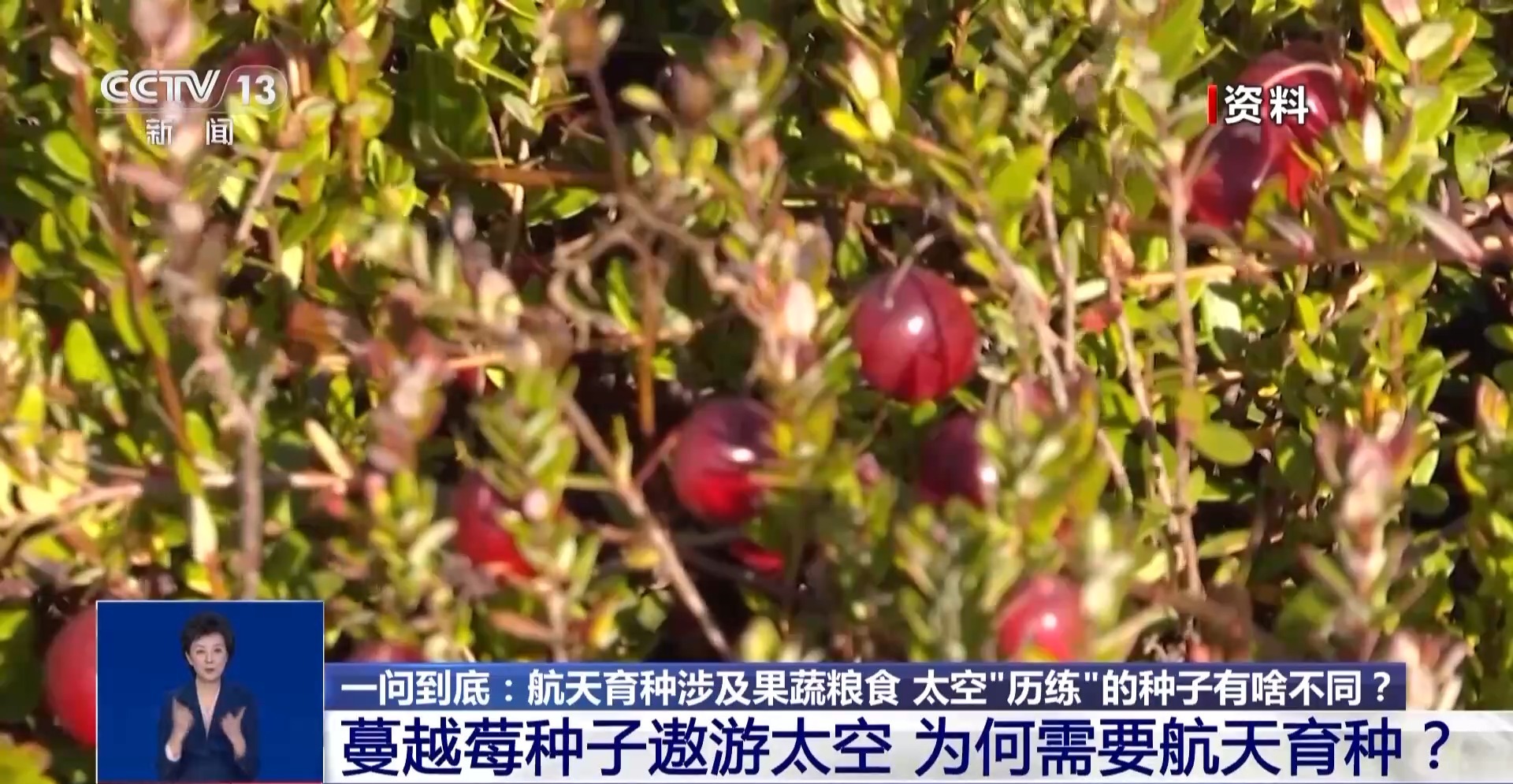
一问到底丨蔓越莓种子遨游太空 为何要航天育种?
Yang Shi Wang· 2026-01-24 14:54
Group 1 - The core idea of the news is the successful delivery of the space-bred rose variety by the Zhongke Aerospace Li Hong No. 1 spacecraft, highlighting the significance of space breeding in agriculture, particularly for crops like cranberries [1] - Space breeding aims to develop high-quality cranberry varieties with independent intellectual property rights, addressing the reliance on imported North American varieties [5] - The process of space breeding can significantly shorten the breeding cycle from the traditional 8-10 years to approximately 5 years, allowing for greater genetic variation and the potential for new traits [3] Group 2 - From 2022 to 2024, a total of 400,000 cranberry seeds have been sent into space aboard various missions, marking a significant step in agricultural breeding technology and the upgrade of the domestic cranberry industry [7] - The challenges faced by the domestic cranberry industry include late development, low adaptability, and low yield, which space breeding aims to overcome by enhancing the competitiveness of domestic varieties in both domestic and international markets [5]
敦煌种业(600354.SH):公司未开展航天育种相关业务
Ge Long Hui· 2026-01-21 09:49
Group 1 - The core viewpoint of the article is that Dunhuang Seed Industry (600354.SH) has clarified that it is not engaged in aerospace breeding-related business [1] Group 2 - The company has communicated this information through an investor interaction platform [1]

寿仙谷:截至2025年12月30日,公司已先后七次与国家级航天项目合作
Zheng Quan Ri Bao Zhi Sheng· 2025-12-30 13:10
Core Viewpoint - The company, Shouxiangu, is a pioneer in applying aerospace breeding technology to the cultivation of rare Chinese medicinal materials, with over 20 years of practical experience [1] Group 1: Company Achievements - As of December 30, 2025, the company has collaborated with national-level aerospace projects seven times, successfully sending seeds or strains of rare medicinal materials such as Ganoderma and Dendrobium into space [1] - The company has developed excellent new varieties, including "XianZhi No. 2" and "XianHua No. 3" of Ganoderma and Dendrobium [1] Group 2: Strategic Focus - The company adheres to a "research-driven enterprise" strategy, establishing a comprehensive research and innovation platform across the entire industry chain [1] - The integration of aerospace technology with traditional Chinese medicine wisdom is a key focus for the company [1] Group 3: Future Outlook - The company aims to continue leveraging technological innovation as a driving force to explore more possibilities for commercial aerospace technology in the traditional Chinese medicine industry [1] - The goal is to provide higher quality health products for consumers and create long-term value for investors [1]

大北农:公司参与太空航天育种实验
Xin Lang Cai Jing· 2025-12-05 08:13
Group 1 - The company, Dabeinong, is participating in space breeding experiments to provide high-quality germplasm resources for these experiments [1]

探秘航天育种基地:“太空蔬菜”如何诞生
Huan Qiu Wang Zi Xun· 2025-10-13 23:09
Core Viewpoint - The article highlights the advancements and potential of space breeding technology in agriculture, particularly through the efforts of the Shaanxi Aerospace Breeding Engineering Technology Research Center, which utilizes space-induced mutations to develop high-yield, resilient crop varieties [2][3][11]. Group 1: Space Breeding Technology - The Shaanxi Aerospace Breeding Engineering Technology Research Center focuses on breeding high-quality, resilient, and high-yield plant varieties using space mutation techniques combined with molecular and traditional methods [2][3]. - The center has sent over 600 plant materials into space, successfully developing multiple high-yield and nutrient-enhanced crop varieties, such as "Mi Gu 1" millet and "space grass" [2][11]. - Space breeding offers significant advantages, including a mutation rate 3-4 times higher than traditional methods and a breeding cycle reduced from approximately 8 years to about 4 years [7][14]. Group 2: Crop Varieties and Benefits - Notable crop varieties developed include "Mi Gu 1," which has improved disease resistance and drought tolerance by 30% and 25%, respectively, and has increased yield by over 150 jin per mu [3][10]. - The center is also working on new varieties like "Mi Gu 2" and "Mi Gu 3," expected to complete testing and demonstration by 2026 [3]. - The article mentions the nutritional benefits of crops like "protein grass," which can help lower blood sugar levels, and other varieties rich in anthocyanins and resistant starch, which have significant health benefits [2][10][12]. Group 3: International Collaboration and Future Plans - The center is establishing international partnerships, including a collaboration with Canadian enterprises and plans to build a breeding base in Pakistan [3][5]. - Future plans include a focus on technology sharing and a comprehensive solution that combines seeds, technology, and standards to benefit partners along the Belt and Road Initiative [5][14]. - The center aims to expand its breeding efforts to include a wider range of crops and to enhance the global reach of its developed varieties [14].
渭南实施数字化监测,保护复壮仓颉手植柏
Ren Min Ri Bao· 2025-10-13 05:41
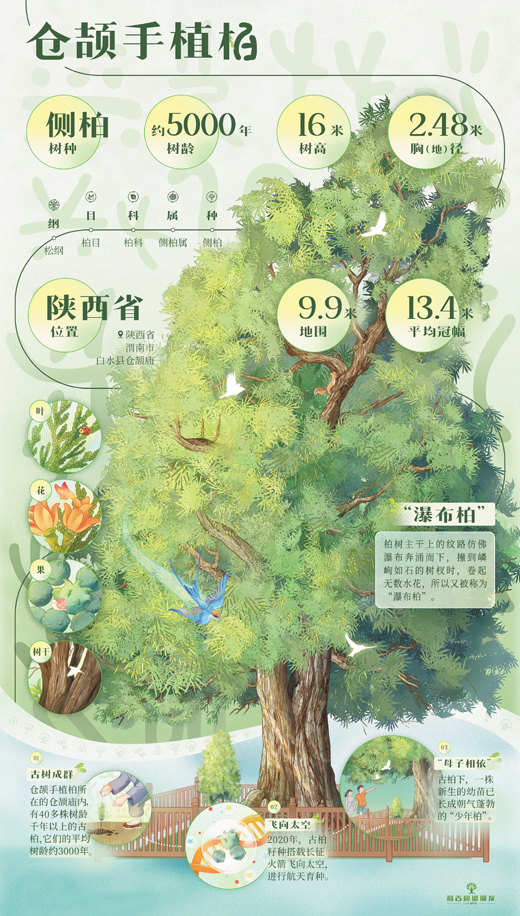
Core Points - The article emphasizes the importance of protecting ancient trees, referred to as "green national treasures" and "living cultural relics," highlighting the implementation of the "Ancient Tree and Famous Tree Protection Regulations" starting March 15 this year, marking the first time such protection is formalized in administrative law [2][6]. Group 1: Protection Initiatives - The article discusses the establishment of a comprehensive protection network for ancient trees, including the introduction of local regulations and the national "Ancient Tree and Famous Tree Protection Regulations" to enhance protection efforts [6][7]. - A digital monitoring system has been implemented to track the growth and health of ancient trees, allowing for real-time diagnostics and timely interventions by expert teams [7][8]. Group 2: Cultural Significance - The article highlights the cultural activities held at the site of the ancient trees, particularly during the Grain Rain festival, which coincides with the United Nations' Chinese Language Day, promoting traditional culture among youth [7][8]. - The ancient trees serve as a living testament to Chinese history and culture, with educational initiatives aimed at teaching visitors about the origins and development of Chinese characters [7][8]. Group 3: Scientific Advancements - The article mentions the collaboration with the Shaanxi Province Aerospace Breeding Engineering Technology Research Center to explore space breeding techniques for the ancient trees, aiming to enhance their genetic resilience and vitality [8]. - Seeds from the ancient tree were sent into space as part of this initiative, with successful germination observed in the resulting seedlings, which are now being cultivated to continue the lineage of the ancient tree [8].