
金融主权

Search documents
英媒:德国与意大利政界人士呼吁将存放在美国的黄金储备运回本国,以保障金融主权与资产安全
Huan Qiu Wang· 2025-06-27 00:11
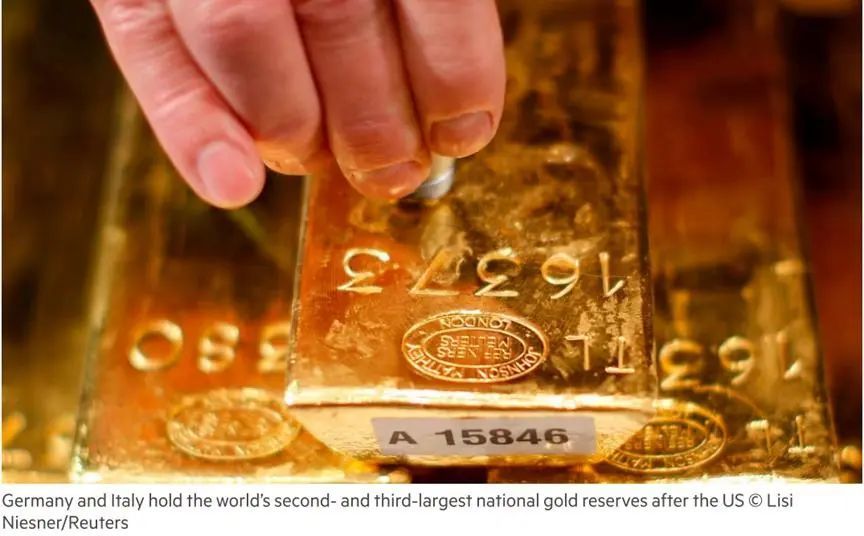
Group 1 - The article discusses the calls from German and Italian politicians to repatriate their gold reserves stored in the United States, citing concerns over financial sovereignty and asset security amid geopolitical tensions and criticism of the Federal Reserve by President Trump [1][3]. - According to the World Gold Council, Germany and Italy hold the second and third largest gold reserves globally, with 3,352 tons and 2,452 tons respectively, and approximately one-third of their gold is stored in the U.S., valued at around $245 billion [3]. - German politicians express that the current geopolitical instability provides "sufficient reason" to bring more gold back to Europe, emphasizing the need for the German central bank to ensure the safety of national gold reserves [3]. Group 2 - The European Taxpayers Association has urged German and Italian authorities to reconsider their reliance on the Federal Reserve for gold storage, expressing concerns over Trump's interference with the Fed's independence and advocating for the European Central Bank to have absolute control over these reserves [3]. - Despite New York's status as a global gold trading hub, there are increasing signs of skepticism from Europe, with a survey indicating that more countries are considering domestic gold storage to ensure accessibility during crises [3]. - Germany's central bank initiated a "gold repatriation" plan in 2010, moving half of its reserves back domestically, and as of now, 37% of Germany's gold reserves remain stored in New York [3]. Group 3 - In Italy, the Brothers of Italy party, led by Meloni, previously advocated for repatriating gold reserves, but Meloni has not publicly addressed this since becoming Prime Minister in 2022, likely to maintain relations with Trump and avoid economic friction with the U.S. [4]. - Some Italian politicians express caution regarding the repatriation of gold, suggesting that having reserves managed by "historical allies" is of relative importance, while a senior German investment figure warns that a large-scale repatriation could signal deteriorating German-American relations [4].

港元保卫战:从1998到2025,一场永不落幕的金融暗战
Feng Huang Wang Cai Jing· 2025-05-07 10:33
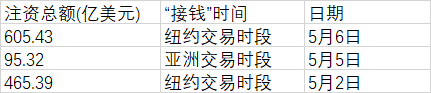
Core Viewpoint - The establishment of the Hong Kong Monetary Authority's (HKMA) liquidity injection measures reflects the ongoing challenges faced by the Hong Kong dollar's peg to the US dollar, highlighting the historical significance of the linked exchange rate system in maintaining financial stability amid global economic shifts [2][3][19]. Group 1: Liquidity Injection Measures - The HKMA injected a total of 1166.14 billion HKD over four days to stabilize the market, with significant injections occurring on May 2 (465.39 billion HKD), May 5 (95.32 billion HKD), and May 6 (605.43 billion HKD) [2][3]. - The liquidity measures were triggered when the Hong Kong dollar exchange rate hit the strong-side convertibility threshold of 7.75, necessitating intervention to prevent further appreciation [3][19]. Group 2: Historical Context and Comparison - The current situation draws parallels to the 1998 Asian financial crisis, where the linked exchange rate system was also under attack, emphasizing the resilience and importance of this mechanism in times of financial stress [5][18]. - The HKMA's actions in 2025 echo the strategies employed during the 1998 crisis, where significant financial resources were mobilized to defend the currency and maintain market confidence [19][20]. Group 3: Economic Implications - The recent capital inflows and the strengthening of the Hong Kong dollar against the US dollar indicate a shift in global economic dynamics, with investors increasingly favoring Asian currencies amid concerns over the US economy [4][18]. - The HKMA's robust foreign exchange reserves, which have grown from 92.8 billion USD in 1998 to 420 billion USD in 2024, enhance its capacity to manage financial crises effectively [19][20].
金价屡创新高,多国为何不想再把黄金放在美英?专家解析背后三个因素
Sou Hu Cai Jing· 2025-04-21 12:25
Core Viewpoint - The global demand for gold is increasing as geopolitical uncertainties rise, leading to a historical peak in gold prices and prompting many countries to repatriate their gold reserves from abroad [1][4][9]. Group 1: Gold Price and Market Dynamics - On April 21, the Shanghai Futures Exchange saw gold futures surpass 800 yuan per gram, marking a new historical high [1]. - The international gold price has reached new heights due to the U.S. government's imposition of tariffs, which has heightened gold's appeal as a safe-haven asset amid global trade disruptions [1]. Group 2: Global Gold Reserves Management - Many central banks are accelerating the repatriation of gold reserves stored in the U.S. and U.K. due to rising geopolitical uncertainties and concerns over the safety of overseas assets [4][9]. - The World Gold Council reported that the U.S. holds the largest gold reserves at 8,133.46 tons, significantly more than Germany, which ranks second [5][9]. - As of March 2024, China's gold reserves stand at 2,279.56 tons, with a continuous increase noted this year [5]. Group 3: Trends in Gold Storage - Different countries have varying strategies for gold storage, with the U.S., France, and Russia primarily keeping their gold reserves domestically [6]. - As of March 2023, the U.S. and U.K. together stored approximately 53% of the world's gold reserves, with significant portions of other countries' reserves also held in these nations [6]. Group 4: Shift in Financial Sovereignty - The rise in geopolitical uncertainties has led to a heightened awareness of "financial sovereignty," prompting countries to view gold reserves as strategic assets rather than mere reserve assets [10]. - The trend of diversifying international reserves is becoming more pronounced, with many emerging economies adjusting their foreign exchange reserve structures to include more gold and non-U.S. dollar assets [10]. Group 5: U.S. Gold Reserve Scrutiny - There is ongoing scrutiny regarding the actual gold reserves held by the U.S., particularly at Fort Knox, with public figures questioning the transparency and security of these reserves [11][13]. - Despite calls for an audit of the U.S. gold reserves, no significant progress has been made in this regard over the past two months [13][14].

【环时深度】美国还能留住他国黄金储备吗?
Huan Qiu Shi Bao· 2025-04-20 22:48
【环球时报驻德国、法国特约记者 青木 岳雯 环球时报记者 陆泽楠 徐嘉彤】编者的话:"随着德国官员 要求在纽约联邦储备银行清点金条,美国黄金储备现状受到质疑。"数字经济新闻网站The Daily Hodl日 前这样报道称。数十年来,德国在美国金库内存放了1200多吨的黄金,而面对美国政府变化无常的经济 政策,关于撤回黄金储备的呼声再次出现。近些年来,斯洛伐克、波兰、匈牙利、印度、沙特、埃及以 及多个非洲国家都撤回了或宣布撤回本国存放在美国和英国的黄金储备。有专家对《环球时报》记者表 示,随着地缘政治不确定性上升,国际储备多元化等趋势越发明显,各国的"金融主权"意识正在加强, 随着美、英等黄金保管国的金融影响力逐渐减弱,其作为国际黄金交易枢纽的地位也可能受到影响。 美英是全球最大的两个黄金保管国 第三类国家则出于各自的原因并未公布其黄金储备的存放地点和数量,包括日本、哈萨克斯坦、乌兹别 克斯坦、泰国等国。上文提到的比利时以及欧洲中央银行也只公布其黄金的存放地点,而没有公布存放 数量。 虽然并非所有国家都详细披露了本国黄金储备存放地点及具体数量,但根据Bunker Group的估算,美国 和英国是全球最大的两个黄 ...