
铁死亡

Search documents
Cell子刊:姜学军团队揭示铁死亡新路线
生物世界· 2025-09-01 08:30
Core Viewpoint - The research reveals the critical role of endocytosis in cysteine-deprivation-induced ferroptosis, challenging previous understandings of lysosomal inhibitor mechanisms and suggesting different execution pathways for ferroptosis [3][7]. Group 1: Key Findings - Lysosomal inhibitors can independently suppress cysteine-deprivation-induced (CDI) ferroptosis, regardless of autophagy [5]. - Endocytosis is essential for CDI ferroptosis but is not required for ferroptosis induced by GPX4 depletion [5]. - Endocytic defects reduce intracellular iron levels and prevent CDI ferroptosis [5]. Group 2: Mechanisms and Implications - Transferrin's clathrin-mediated endocytosis (CME) is crucial for driving CDI ferroptosis [4][5]. - Inhibition of lysosomal proteolytic activity does not prevent ferroptosis, while disrupting endosomal acidification and removing endocytic protein AP2M1 can block ferroptosis [4]. - Supplementing iron through ammonium iron citrate, independent of endocytosis, can restore CDI ferroptosis in cells with endocytic defects [4].


男性为何容易肾损伤?最新Nature论文证实,雌激素可抵抗铁死亡及其所致的急性肾损伤
生物世界· 2025-08-15 04:21
Core Viewpoint - The study published in Nature reveals that estrogen can inhibit ferroptosis and acute kidney injury (AKI), providing insights into the gender differences observed in AKI susceptibility, with men and postmenopausal women being more prone to this condition compared to premenopausal women [2][4][6]. Summary by Sections Gender Differences in AKI - Research indicates that men have a higher incidence and mortality rate from AKI compared to women, particularly when comparing to premenopausal women [4]. - The study suggests that this gender difference may be linked to the sensitivity of acute tubular necrosis (ATN) to ferroptosis, a major type of cell death in AKI [4]. Role of Estrogen - The research focuses on the protective role of estrogen against ferroptosis, demonstrating that estrogen can significantly inhibit cell death mediated by ferroptosis in female renal tubules [4][6]. - Estrogen, specifically 17β-estradiol, establishes an anti-ferroptotic state through both genomic and non-genomic mechanisms, including: - Direct inhibition of ferroptosis by hydroxylated estrogen derivatives, which act as free radical scavengers [4]. - The FSP1-mediated regeneration of oxidized hydroxylated estrogen, indicating a complex interplay in the protective mechanisms [4]. - Regulation by estrogen receptor ESR1, which enhances the anti-ferroptotic capacity of renal tubules [4][6]. Implications for Kidney Protection - The findings elucidate the mechanisms by which female renal tubules resist ferroptosis, explaining the increased susceptibility to AKI in men and postmenopausal women due to decreased estrogen levels [6]. - This research suggests potential therapeutic approaches for kidney protection in males and postmenopausal females, such as the use of estrogen metabolites or ferroptosis inhibitors [6]. - The study emphasizes the importance of gender as a biological variable in the regulation of ferroptosis, with broader implications beyond kidney diseases, potentially affecting conditions like heart disease and stroke [6].

Cell子刊:姜学军团队揭示缺氧通过表观遗传调控铁死亡
生物世界· 2025-07-28 08:02
Core Viewpoint - The study reveals that hypoxia inhibits ferroptosis through a HIF-independent mechanism by suppressing KDM6A, a key player in lipid metabolism and ferroptosis resistance [2][5]. Group 1: Mechanism of Ferroptosis Regulation - Long-term hypoxia can inhibit ferroptosis in a HIF-independent manner [5]. - Hypoxia suppresses KDM6A, reshaping the lipid profile to confer resistance to ferroptosis [3][5]. - KDM6A acts as a non-classical oxygen sensor in the ferroptosis process, indicating a novel regulatory pathway [2][5]. Group 2: Implications for Cancer - The loss of KDM6A, a tumor suppressor, is commonly observed in bladder cancer, leading to resistance to ferroptosis [5]. - Pharmacological inhibition of EZH2, which opposes KDM6A activity, restores sensitivity to ferroptosis in bladder tumors carrying KDM6A mutations [4][5].

铁死亡再登顶刊:裴华东/韩苏夏团队等揭示铁死亡调控与癌症耐药新机制
生物世界· 2025-07-20 03:11
Core Viewpoint - Ferroptosis is a newly discovered iron-dependent form of programmed cell death that plays a significant role in the development of various diseases, including cancer [2][4]. Group 1: Mechanism of Ferroptosis - Reactive oxygen species (ROS) are crucial in initiating lipid peroxidation and ferroptosis, significantly affecting chemotherapy resistance in cancer [3][10]. - The study published in Nature Cell Biology reveals that O-GlcNAc transferase (OGT) acts as a ROS sensor in hepatocellular carcinoma (HCC) [4][10]. - ROS-induced oxidation activates OGT, which then modifies the transcription factor FOXK2, promoting its nuclear translocation and upregulating the expression of the key gene SLC7A11, thereby inhibiting ferroptosis and enhancing chemotherapy resistance in liver cancer cells [4][8]. Group 2: Implications for Cancer Treatment - The research elucidates a ROS-mediated oxidation-O-GlcNAcylation cascade that integrates ROS signaling, O-GlcNAc modification, and FOXK2-mediated transcriptional regulation of SLC7A11, contributing to resistance against ferroptosis and chemotherapy [10]. - Targeting this mechanism may provide a novel approach to reactivate ferroptosis, offering new strategies to overcome cancer resistance [10].

江南大学发表最新Cell子刊论文
生物世界· 2025-07-09 07:24
Core Viewpoint - Ferroptosis is a newly regulated form of programmed cell death closely related to various liver diseases, with a lack of specific covalent inhibitors targeting ferroptosis [2][3]. Group 1: Research Findings - The research team identified Rociletinib (ROC), an EGFR inhibitor in clinical trials, as a potent ferroptosis inhibitor through virtual screening and mechanistic studies [4]. - ROC covalently binds to the 170th cysteine of the ACSL4 protein, inhibiting its enzymatic activity, thereby suppressing lipid peroxidation and subsequent ferroptosis [5][8]. - ROC effectively alleviates acute liver injury mediated by ferroptosis in mouse models, establishing it as a promising therapeutic strategy for ferroptosis-related diseases [7][8]. Group 2: Target and Mechanism - ACSL4 is a key enzyme in lipid metabolism and its abnormal activation leads to ferroptosis, making it an important therapeutic target for ferroptosis-related diseases [3]. - The study highlights ROC as a direct covalent inhibitor targeting ACSL4, providing a new avenue for treatment [7].

STTT:我国学者从中药材中发现新型铁死亡诱导剂,为癌症治疗带来新思路
生物世界· 2025-07-07 07:24
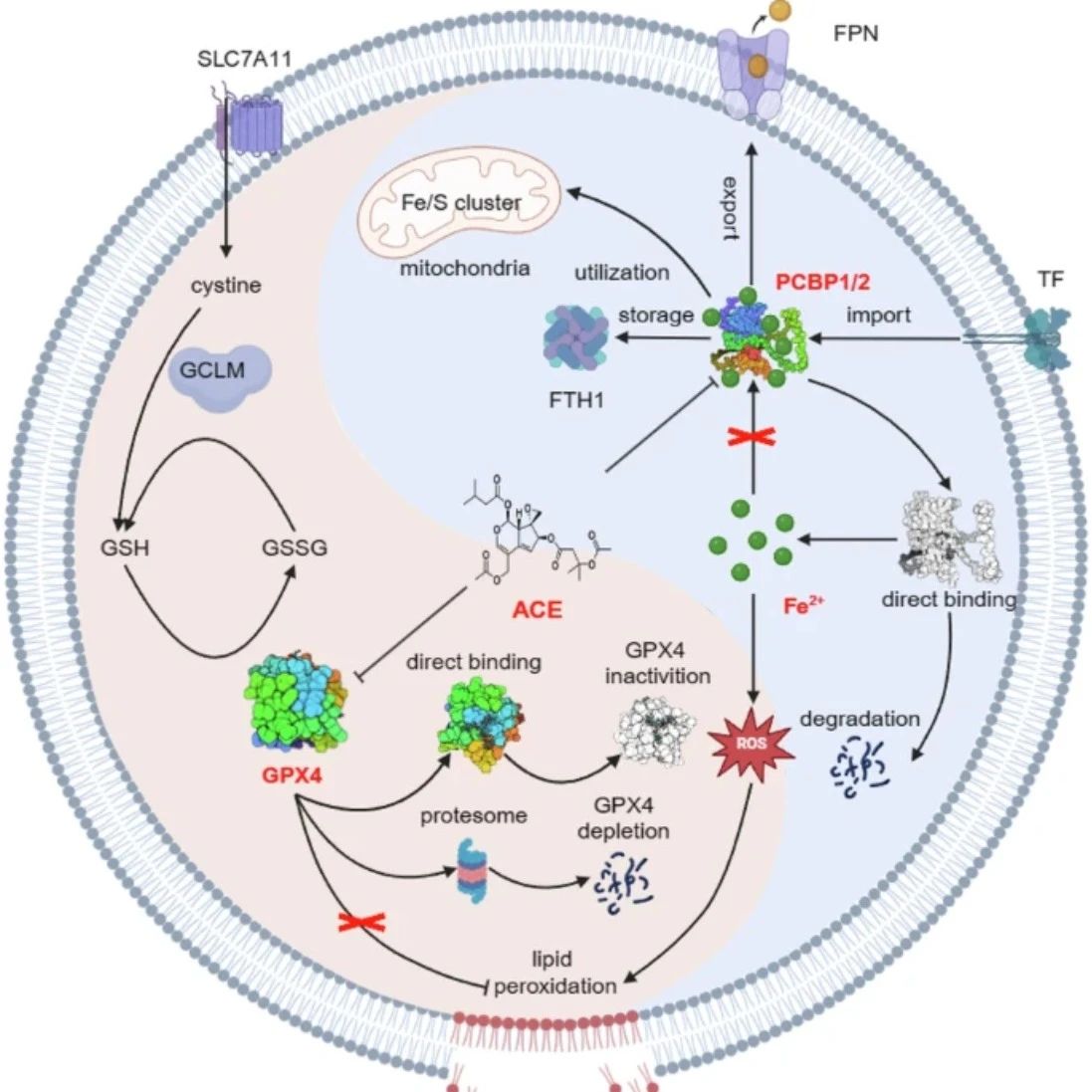
Core Viewpoint - Ferroptosis has emerged as a promising anti-tumor treatment strategy, distinct from apoptosis and necroptosis, characterized by uncontrolled lipid peroxidation and high levels of ferrous ions (Fe2+) and reactive oxygen species (ROS) [2][3][7]. Group 1: Mechanism and Inducers of Ferroptosis - GPX4 utilizes glutathione (GSH) to reduce lipid peroxides to lipid alcohols, making targeting GPX4 or GSH a potential strategy for cancer therapy [3]. - Lipid peroxidation may serve as a "find me" signal, enhancing tumor immunotherapy effectiveness [3]. - Inducers of ferroptosis, such as RSL3 and erastin, have shown efficacy in inducing ferroptosis in mouse tumor models and human tumor cell lines [3][4]. Group 2: Research Findings on Acevaltrate - A recent study identified acevaltrate (ACE) as a novel ferroptosis inducer that targets both PCBP1/2 and GPX4 in colorectal cancer cells, leading to rapid and strong induction of ferroptosis [4][8]. - ACE increases intracellular Fe2+ levels by targeting and reducing the expression of iron chaperone proteins PCBP1/2, while also inhibiting GPX4 activity, disrupting the antioxidant system in colorectal cancer cells [9][12]. - Animal experiments indicate that ACE demonstrates superior therapeutic effects compared to known ferroptosis inducers and first-line clinical cancer drugs like capecitabine and TAS-102 [10][12]. Group 3: Implications for Clinical Treatment - The dual mechanism of ACE not only enhances the induction of ferroptosis but also addresses the compensatory resistance issues associated with single-target ferroptosis inducers [12]. - ACE's multi-target characteristics suggest a potential for high efficacy and low toxicity in selectively killing tumor cells, providing a new strategy for clinical treatment of colorectal cancer [12].
Nature Aging:炎症诱导表观遗传侵蚀,促进衰老干细胞铁死亡
生物世界· 2025-07-02 03:35
Core Viewpoint - The article discusses the impact of systemic inflammation on the aging of muscle stem cells (MuSC) and highlights a mechanism linking chronic inflammation to stem cell aging and ferroptosis, suggesting potential therapeutic strategies to combat age-related muscle degeneration [4][11][13]. Group 1: Mechanism of Aging and Inflammation - Systemic inflammation induces epigenetic erosion, promoting ferroptosis in muscle stem cells, while long-term suppression of systemic inflammation can effectively prevent ferroptosis and maintain muscle stem cell numbers [4][11]. - The study reveals that age-related inflammation decreases H4K20 monomethylation levels in MuSCs, disrupting their quiescent state and leading to ferroptosis [11]. - Inflammation signals downregulate the enzyme Kmt5a, which is responsible for H4K20me1 accumulation, resulting in the epigenetic silencing of genes that counteract ferroptosis [11]. Group 2: Impact on Muscle Regeneration - Aging is characterized by a decline in muscle mass, strength, and regenerative capacity, leading to decreased quality of life in the elderly [7]. - Muscle stem cells play a crucial role in muscle repair and maintenance, but their function significantly declines with age due to both intrinsic changes and external factors like inflammation [7][8]. - Chronic systemic inflammation is one of the most important external factors leading to stem cell aging, as it inhibits muscle regeneration [8][9]. Group 3: Research Findings and Implications - The research emphasizes that aging cells are a major contributor to age-related inflammation in the muscle stem cell microenvironment, impairing their regenerative capacity [9]. - Long-term suppression of inflammation starting at middle age (12 months in mice) can restore muscle vitality and promote functional recovery [11][13]. - These findings reveal an epigenetic switch linking chronic inflammation to muscle stem cell aging and ferroptosis, providing potential therapeutic strategies against age-related muscle degeneration [13].

Nature Aging:倪振洪/周思儒/陈林/连继勤团队发现,心脏药物辅酶Q10可通过抑制铁死亡,改善骨关节炎相关肌肉萎缩
生物世界· 2025-06-30 03:59
Core Viewpoint - The study highlights the role of senescent macrophages in inducing ferroptosis in skeletal muscle, which accelerates muscle atrophy related to osteoarthritis (OA) [3][8][10]. Group 1: Osteoarthritis and Muscle Atrophy - Osteoarthritis (OA) is characterized by pathological changes including cartilage damage, subchondral bone remodeling, and synovial inflammation, with muscle atrophy being a common manifestation [2]. - Muscle atrophy associated with OA is strongly correlated with knee joint symptoms and the deterioration of joint pathology [2]. Group 2: Mechanisms of Muscle Atrophy - Senescent macrophages induce ferroptosis in skeletal muscle, leading to quadriceps atrophy associated with OA [3][8]. - The mechanism involves iron overload in senescent macrophages causing mitochondrial damage in muscle cells, which reduces aspartate metabolites and inhibits the mTORC1-HMGCR signaling pathway, ultimately decreasing endogenous coenzyme Q10 (CoQ10) synthesis [3][10]. Group 3: Role of CoQ10 - CoQ10 is crucial for maintaining muscle integrity and quality, with its levels positively correlating with antioxidant capacity, muscle mass, strength, and endurance in OA patients [6]. - Exogenous supplementation of CoQ10 has been shown to alleviate muscle atrophy by inhibiting ferroptosis, significantly increasing quadriceps mass and reducing pathological damage to OA joints [10].

浙大校友一作Nature论文:揭开癌细胞抵抗铁死亡的关键机制
生物世界· 2025-06-12 03:36
Core Viewpoint - Ferroptosis is a newly discovered iron-dependent form of programmed cell death that plays a significant role in tumor development and resistance to cancer therapies, highlighting the need for further research into its mechanisms to enhance cancer treatment strategies [1][2]. Group 1: Mechanism of Ferroptosis - Ferroptosis is characterized by the accumulation of peroxidized lipids, and it differs significantly from other forms of programmed cell death [1]. - Cells have various defense mechanisms against ferroptosis, such as GPX4, which inhibits ferroptosis by catalyzing peroxidized lipids using glutathione [1]. - FSP1 promotes cancer cell resistance to ferroptosis by generating the antioxidant form of coenzyme Q10 [1]. Group 2: Role in Cancer Treatment - Recent studies indicate that ferroptosis plays a crucial role in the efficacy of immunotherapy and radiotherapy, suggesting that understanding tumor resistance mechanisms could expand current cancer treatment options [2]. - The research published in Nature identifies glycosaminoglycan-driven lipoprotein uptake as a key mechanism for cancer cells to resist ferroptosis, indicating a potential new target for cancer therapy [3]. Group 3: Lipoprotein Uptake and Cancer Growth - The study reveals that lipoprotein uptake is a critical determinant of cancer cell sensitivity to ferroptosis, with supplementation of lipoproteins effectively inhibiting ferroptosis across various cancer types [6]. - Cancer cells utilize a pathway dependent on sulfated glycosaminoglycans to uptake lipoproteins, and disrupting this pathway increases sensitivity to ferroptosis and inhibits tumor growth in mice [7][11]. - Elevated levels of sulfated glycosaminoglycans and lipoprotein-derived α-tocopherol were observed in clear cell renal carcinoma compared to normal kidney tissue, further supporting the role of lipoprotein uptake in cancer progression [10].

新型合成小分子可“精准杀伤”癌细胞
Xin Hua She· 2025-05-14 01:27
Core Insights - A new small molecule called "phospholipid degrading agent" has been successfully designed and synthesized by the French National Center for Scientific Research, which can induce the death of cancer cells that lead to tumor recurrence and are resistant to standard treatments [1][2] - Current cancer therapies primarily target rapidly proliferating primary tumor cells, but struggle to eliminate metastatic cancer cells that adapt to existing treatments, which account for 70% of cancer-related deaths [1] - The research focuses on "persistent cancer cells" that express a protein called CD44, enhancing their iron uptake and making them more aggressive and adaptable to conventional therapies [1] Research Findings - The research team has developed a small molecule that activates iron death, which triggers oxidative degradation of cell membrane lipids, ultimately leading to cell death [1] - One of the designed molecules possesses fluorescent properties, allowing researchers to track its localization within cells and confirm its accumulation in lysosomes [2] - In preclinical models of metastatic breast cancer, the injection of this molecule resulted in a significant slowdown of tumor growth, and notable cytotoxic responses were observed in biopsy samples from patients with pancreatic cancer and sarcoma [2] Future Directions - The research paper has been published in the journal Nature, and further clinical studies are needed to validate whether this treatment can serve as a supplementary therapy to current conventional chemotherapy, particularly targeting metastatic cancer cells resistant to standard treatments [2]