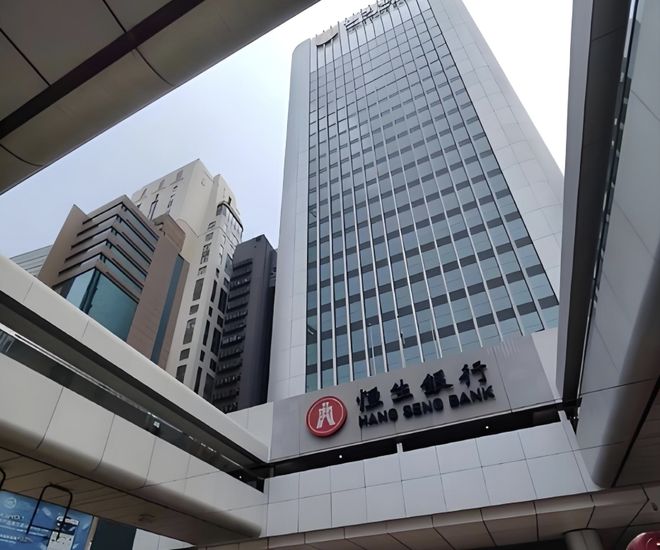
银行私有化

Search documents
小摩:料恒生银行(00011)私有化对汇丰控股(00005)盈利影响正面 维持“增持”评级 目标价122港元
智通财经网· 2025-10-14 08:31
Core Viewpoint - Morgan Stanley anticipates that HSBC's privatization of Hang Seng will have a positive impact on profitability, maintaining an "overweight" rating with a target price of HKD 122 [1] Group 1: Financial Impact - The privatization is expected to increase HSBC's net profit after tax (NPAT) by 3.7% by 2027, with earnings per share rising by 0.1% [1] - The average return on tangible equity (ROTE) is projected to improve by 38 basis points due to the privatization [1] - HSBC's common equity tier 1 capital ratio (CET1) is estimated to be enhanced by approximately 40 basis points as a result of the privatization [1] Group 2: Market Outlook - Morgan Stanley believes that the recent decline in exchange rates has already accounted for the downside risks associated with the transaction, predicting that the stock price will remain range-bound in the short term [1] - Despite a lack of positive catalysts and no share buyback support in the near term, HSBC's long-term yield is still expected to reach 5%, with tariff-related downside risks already factored in [1]


大行评级丨巴克莱:汇丰拟私有化恒生银行带来每股盈利上行潜力 重申“增持”评级
Ge Long Hui· 2025-10-13 06:54
Core Viewpoint - Barclays expresses optimism regarding HSBC's plan to privatize Hang Seng Bank, highlighting the potential for significant earnings per share upside despite the need for patience to realize synergies [1] Group 1: Transaction Insights - The transaction is expected to create ideal value over time, with a shift in group capital increasingly directed towards Hong Kong [1] - HSBC's earnings have significant upside potential due to stronger net interest income and fee income, along with improved cost efficiency [1] Group 2: Valuation Metrics - Following a recent decline in share price, HSBC is trading at a forward price-to-earnings ratio of 7.5 times for 2027 or 1.4 times tangible net asset value for 2025, corresponding to an approximate 18% return on tangible equity (RoTE) [1]
恒生银行受地产信贷拖累不良率6.69% 汇丰拟溢价30%耗资千亿港元私有化
Chang Jiang Shang Bao· 2025-10-12 23:34
Core Viewpoint - Hang Seng Bank, a long-established bank in Hong Kong, is set to be privatized by HSBC at a price of HKD 155 per share, leading to its delisting from the Hong Kong Stock Exchange after over 53 years of being publicly traded [1][3][4]. Group 1: Privatization Details - HSBC Asia, as the offeror, will pay a total of approximately HKD 1,061.56 million for the privatization, valuing Hang Seng Bank at HKD 2,903.05 million [1][4]. - The privatization price represents a significant premium of about 30.3% over Hang Seng Bank's last trading price of HKD 119 per share [4]. - Following the privatization, HSBC aims to enhance collaboration between HSBC Asia and Hang Seng Bank in the Hong Kong banking sector [1][6]. Group 2: Financial Performance - For the first half of 2025, Hang Seng Bank reported a profit attributable to shareholders of HKD 6.88 billion, a decrease of 31.5% year-on-year, indicating revenue growth without corresponding profit increase [1][7]. - The bank's non-performing loan ratio reached 6.69% by the end of June 2025, with total impaired loans amounting to HKD 55 billion, an increase of HKD 4 billion from the end of 2024 [2][7]. - Hang Seng Bank's net interest income fell by 7% to HKD 14.34 billion, with the net interest margin declining from 1.83% to 1.67% [7][8]. Group 3: Strategic Implications - HSBC's strategy focuses on expanding its business in Hong Kong, leveraging the strengths of both HSBC Asia and Hang Seng Bank to enhance operational efficiency and customer service [6][8]. - The bank plans to maintain Hang Seng Bank's brand identity and operational independence while integrating resources to improve competitiveness [6][8].
汇丰拟溢价三成私有化恒生银行
Jing Ji Wang· 2025-10-11 02:06
Core Viewpoint - HSBC Holdings announced a proposal to privatize Hang Seng Bank through an agreement arrangement, aiming to acquire all remaining shares held by minority shareholders and delist Hang Seng shares from the Hong Kong Stock Exchange [1][5]. Group 1: Proposal Details - The proposed cash consideration for each share of Hang Seng Bank is HKD 155, which represents a significant premium over past trading prices and market levels [5][6]. - The proposal offers a real-time cash realization opportunity for minority shareholders, allowing them to benefit from HSBC's investment in Hang Seng without waiting for future dividends [5][6]. - The valuation of Hang Seng Bank under this proposal is approximately HKD 290 billion, equating to 1.8 times its book value as of mid-2025, which is notably higher than the valuations of peers in Hong Kong [6]. Group 2: Brand and Operational Continuity - HSBC plans to retain Hang Seng's brand, traditions, and unique market positioning, ensuring that the bank's operations and customer interactions remain unchanged post-privatization [7][8]. - The privatization will not alter the daily interactions between Hang Seng Bank and its customers, and clients will continue to enjoy the benefits of HSBC's global network and financial products [7][8]. Group 3: Strategic Rationale - The privatization is seen as a strategic move to enhance HSBC's ability to capitalize on growth opportunities in the Hong Kong market, which is a key focus area for the company [9]. - HSBC aims to streamline its business structure in Hong Kong, improving decision-making flexibility and operational efficiency through the privatization of Hang Seng Bank [9][10]. - The proposal aligns with HSBC's strategy to strengthen collaboration between HSBC Asia Pacific and Hang Seng Bank, leveraging their complementary strengths and competitive advantages [9]. Group 4: Financial Impact - HSBC anticipates that the proposal will enhance earnings per share by eliminating non-controlling interest earnings deductions from Hang Seng Bank [10]. - The company plans to maintain a dividend payout ratio of 50% of earnings per share (excluding significant items) for 2025 [10]. - Following the proposal's implementation, Hang Seng Bank will become a wholly-owned subsidiary of HSBC Holdings, and its shares will be delisted from the Hong Kong Stock Exchange [10].

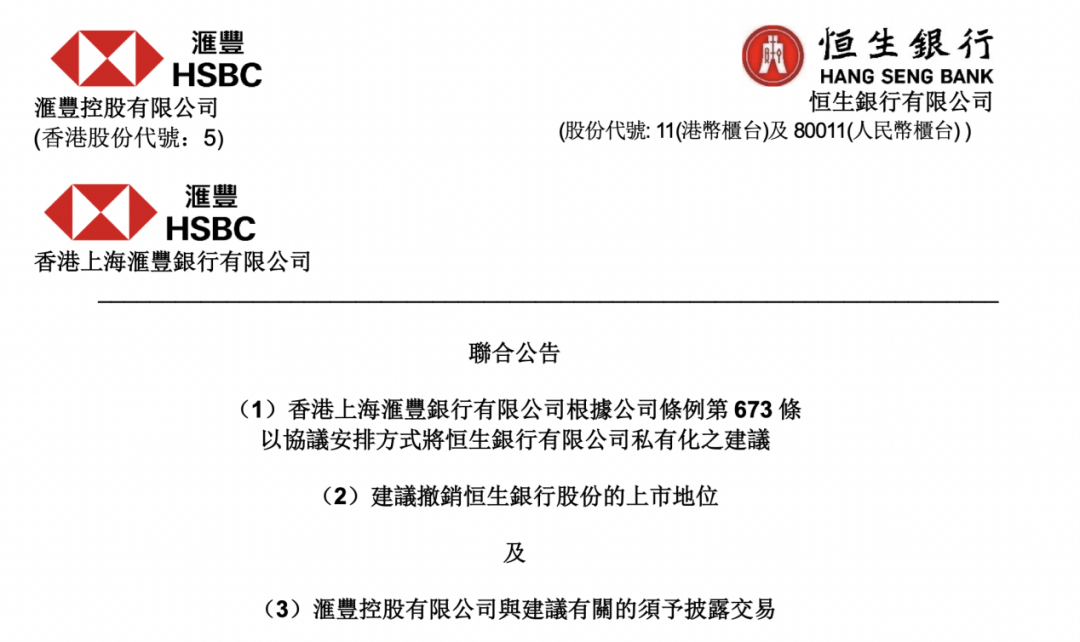
恒生银行,拟被汇丰私有化退市
Xin Lang Cai Jing· 2025-10-11 00:37
Core Viewpoint - HSBC Holdings and its subsidiaries are planning to privatize Hang Seng Bank at a cash offer of HKD 155 per share, representing a premium of approximately 30.3% over the last trading price, reflecting confidence in the bank's future potential and providing shareholders with an opportunity for immediate liquidity [1][2][3]. Group 1: Privatization Details - HSBC Asia, as the offeror, intends to privatize Hang Seng Bank through a scheme of arrangement, with the cash offer set at HKD 155 per share, which is a premium of about 30.3% compared to the last closing price of HKD 119 [1][2]. - The proposal, if approved, will lead to the cancellation of shares held by minority shareholders and the delisting of Hang Seng Bank from the Hong Kong Stock Exchange [1][2]. - The offer price also represents a premium of approximately 33% over the average closing price of HKD 116.5 over the last 30 trading days prior to the announcement [2]. Group 2: Business Continuity and Brand Preservation - HSBC has stated that after the privatization, Hang Seng Bank will retain its identity as an independent licensed bank, maintaining its corporate governance, brand, market positioning, and branch network [4][5]. - The bank's ongoing community involvement and support for various local projects will continue post-privatization, ensuring that customer interactions remain unchanged [5]. Group 3: Financial Performance and Market Conditions - For the first half of 2025, Hang Seng Bank reported a net operating income of HKD 20.975 billion, a year-on-year increase of 3%, while profit attributable to shareholders decreased by 30.46% to HKD 6.88 billion [5]. - The bank's non-performing loan ratio rose to 6.69%, an increase of 1.37 percentage points compared to the same period in 2024, primarily due to pressures in the commercial real estate sector [6]. - HSBC anticipates that the privatization will enhance earnings per share by eliminating non-controlling interest earnings deductions, while maintaining a target dividend payout ratio of 50% of earnings per share [8]. Group 4: Strategic Importance of Hong Kong - HSBC views the expansion of its business in Hong Kong as a strategic priority, emphasizing the importance of collaboration between HSBC Asia and Hang Seng Bank to leverage their complementary strengths [7]. - The privatization is seen as a significant investment in Hong Kong, reinforcing HSBC's long-term commitment to the region as a leading international financial center [7].
溢价超30% 汇丰私有化恒生的深意何在 | 中环观察
2 1 Shi Ji Jing Ji Bao Dao· 2025-10-10 13:01
Core Viewpoint - HSBC Holdings announced a plan to privatize Hang Seng Bank at a cash price of HKD 155 per share, representing a premium of approximately 30% over the previous closing price, with a total transaction value of HKD 106.1 billion [1][9] Group 1: Transaction Details - The privatization is expected to be completed in the first half of 2026, pending regulatory and shareholder approvals [1] - On the announcement day, Hang Seng Bank's stock price surged by over 25%, while HSBC's stock fell by 5.97% [1] - The privatization will result in Hang Seng Bank becoming a wholly-owned subsidiary of HSBC, retaining its independent brand and branch network [3][4] Group 2: Market Reactions and Analysis - Market analysts view this transaction as one of the largest mergers in Hong Kong in recent years, reflecting HSBC's commitment to address existing risks and adjust Hang Seng Bank's operations [3][4] - The privatization is seen as a more effective option than continuous share buybacks, allowing for more significant reforms within Hang Seng Bank [2][4] - HSBC's stock may face short-term pressure due to the high premium paid for the privatization and the suspension of share buybacks for three months [9][10] Group 3: Financial Performance and Risks - Hang Seng Bank's non-performing loan ratio rose to 6.69% as of June 2025, the highest in a decade, primarily due to challenges in the commercial real estate sector [5][6] - The bank's loans to the Hong Kong real estate sector accounted for 15% of its total loans, with a significant portion being unsecured [6][7] - HSBC's CEO expressed confidence in the stabilization of the commercial real estate market in Hong Kong, indicating a proactive approach to managing related debt issues [6][10]
汇丰拟千亿港元私有化恒生银行,高溢价背后如何权衡?
Huan Qiu Wang· 2025-10-10 10:10
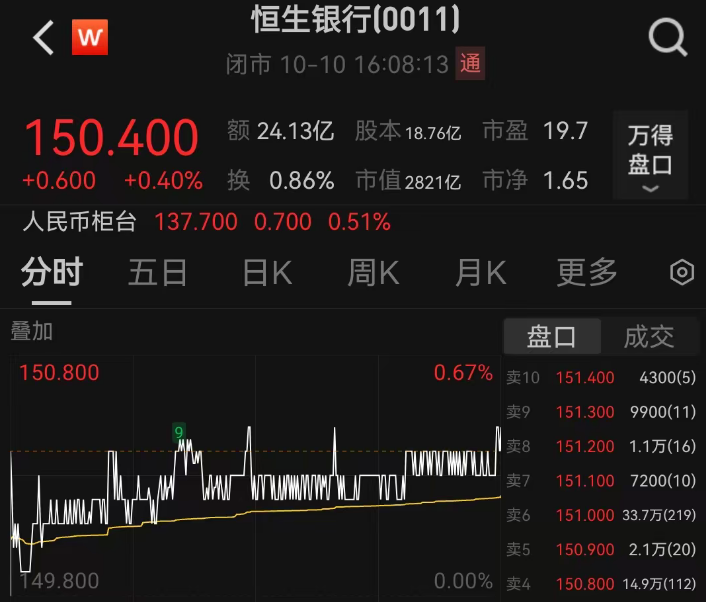
Core Viewpoint - HSBC Holdings announced a privatization plan for Hang Seng Bank, proposing to acquire the remaining 36.65% of shares at HKD 155 per share, totaling HKD 106.16 billion, which represents a premium of over 30% compared to recent trading prices [1][4] Group 1: Transaction Details - The proposed acquisition price of HKD 155 per share is approximately 33.1% higher than the average closing price of HKD 116.49 over the past 30 trading days [4] - Following the announcement, Hang Seng Bank's stock price surged over 25% within two days, closing at HKD 150.4 per share [1] - If the plan is executed, Hang Seng Bank will delist from the Hong Kong Stock Exchange, ending its 53-year listing history [3] Group 2: Regulatory and Market Reactions - The Hong Kong Monetary Authority acknowledged the plan and stated that it would continue to communicate with relevant banks regarding regulatory approvals [3] - Analysts from various institutions have expressed mixed views on the high premium, with some suggesting that HSBC is paying a high cost for the acquisition [4][5] Group 3: Financial Implications - HSBC estimates that the cash transaction will impact its CET1 capital ratio by approximately 125 basis points, leading to a temporary suspension of share buybacks for three quarters to maintain its capital ratio within the target range of 14.0% to 14.5% [4][5] - Morgan Stanley predicts that this will reduce the buyback scale by about USD 7 billion, with the CET1 capital ratio expected to reach 14% by the end of Q2 2026 [5] Group 4: Strategic Intent - HSBC views the privatization as a key move to strengthen its Asian strategy, aiming to enhance its position and market share in Hong Kong [8][10] - The acquisition is expected to allow for more efficient capital management and operational flexibility for Hang Seng Bank under HSBC's ownership [10] Group 5: Long-term Outlook - Analysts suggest that the long-term value of the privatization will depend on cost synergies, capital allocation efficiency, risk management capabilities, and improvements in customer service and market share [11] - The integration is anticipated to enhance product offerings and operational efficiencies, potentially leading to increased shareholder value over time [12]
标普:预计汇丰银行私有化恒生银行(00011)资本压力可控 两间银行关系将进一步加强
智通财经网· 2025-10-10 07:36
Group 1 - S&P Global Ratings indicates that HSBC Holdings' plan to privatize Hang Seng Bank will strengthen the relationship between the two banks [1][2] - The privatization is expected to enhance governance consistency and promote closer business and operational cooperation, benefiting Hang Seng Bank through broader resource sharing [1] - S&P anticipates that the capital pressure from repurchasing Hang Seng Bank's shares will be manageable, with HSBC's overall capital strength remaining robust [1] Group 2 - The privatization transaction is projected to be completed in the first half of 2026, leading to a reduction in HSBC's risk-adjusted capital (RAC) ratio by approximately 2% [1] - S&P estimates that HSBC's RAC ratio will decline from 12.6% at the end of 2024 to between 11% and 12% by the end of 2026, still above the 10% threshold for strong capital assessment [1] - S&P will continue to view Hang Seng Bank as a core subsidiary of HSBC, reflecting HSBC's long-term commitment to the Hong Kong market [2]
标普:汇丰控股私有化恒生银行将强化两者联系,预计资本影响可控
Ge Long Hui A P P· 2025-10-10 02:33
Core Viewpoint - S&P Global Ratings anticipates that HSBC's acquisition of Hang Seng Bank at a 30.3% premium will strengthen the ties between the two banks, enhance governance consistency, and promote closer operational collaboration [1] Group 1: HSBC and Hang Seng Bank Relationship - The privatization is expected to reinforce the relationship between HSBC and Hang Seng Bank, facilitating tighter cooperation in business and operations [1] - S&P believes that Hang Seng Bank will continue to operate under its independent brand post-privatization, reflecting HSBC's long-term commitment to the Hong Kong market [1] Group 2: Financial Implications - S&P estimates that the capital pressure faced by HSBC due to the buyback of all outstanding shares of Hang Seng Bank will remain manageable [1] - The transaction is projected to be completed in the first half of 2026, which will lead to a decrease in HSBC's risk-adjusted capital (RAC) ratio by approximately 2%, bringing it to around 11% to 12% by the end of 2026, still above S&P's strong capital threshold of 10% [1]
恒生指数“亲妈”要退市?汇丰1062亿私有化恒生银行背后的逻辑
Xin Lang Cai Jing· 2025-10-10 02:22
来源:市场资讯 汇丰集团行政总裁艾桥智直言,此次交易是"对香港作为国际金融中心地位的重大投资"。 作者|周叙 就在昨日,香港金融市场被一则重磅公告搅动:汇丰控股及恒生银行联合宣布,汇丰亚太拟以每股155 港元现金对价私有化恒生银行,交易涉及资金约1062亿港元,预计2026年上半年完成。 这意味着自1972年上市、运营近百年的恒生银行或将终结53年的公开交易历史,彻底成为汇丰控股的全 资子公司。 更值得关注的是,恒生银行全资附属的恒生指数有限公司编算管理着香港股市核心指标——恒生指数, 这场私有化不仅关乎两家金融巨头的命运,更牵动着香港金融市场的神经。 (来源:明见局) 交易全貌:溢价33%的"诚意"与125基点的资本代价 此次私有化交易的核心条款清晰勾勒出汇丰的投入与恒生的估值定位。 这一设计被市场解读为吸引中小股东投票支持的关键举措,尤其在恒生业绩承压背景下更具说服力。 2025年上半年财报数据显示,恒生银行营业收入209.75亿港元,同比仅增长3%,但股东应得溢利下跌 30.46%至68.80亿港元,每股盈利下降34%至3.34港元。 汇丰方面则需承担显著的资本压力,官方公告显示,交易将使汇丰普通股一级 ...