
高溢价收购

Search documents
博众精工4.2亿高溢价收购将新增3.6亿商誉 一季亏损扩大45%基金减仓千万股
Chang Jiang Shang Bao· 2025-06-17 23:40
Core Viewpoint - Company BZJG is making a significant acquisition by purchasing 70% of Shanghai Wodian for 420 million yuan, indicating a high premium transaction with a valuation of 600 million yuan, representing a 352.35% increase over the company's net assets [1][4] Group 1: Acquisition Details - The acquisition price of 420 million yuan is set to acquire 70% of Shanghai Wodian, which specializes in industrial automation solutions [4] - Shanghai Wodian's net assets are approximately 133 million yuan, leading to a substantial goodwill of about 360 million yuan for BZJG post-acquisition [1][4] - The seller has committed to a minimum net profit of 185 million yuan over the next three years, with a projected net profit of 38.57 million yuan for 2024 [1][6] Group 2: Company Performance - BZJG has faced a growth bottleneck, with revenue and net profit showing minimal growth in 2023 and 2024 compared to 2022 [1][9] - In Q1 2023, BZJG reported a revenue decline of 0.80% and a net loss of approximately 30.98 million yuan, marking a 45.59% decrease year-on-year [9] - The company has invested over 10% of its revenue into R&D annually, with R&D expenditures increasing from 371 million yuan in 2020 to 514 million yuan in 2024 [8] Group 3: Market Context - The acquisition is seen as a strategic move to overcome operational challenges and expand into high-margin overseas markets, particularly in Europe and the U.S. [5] - Shanghai Wodian's revenue for 2023 and 2024 is projected at 237 million yuan and 249 million yuan, respectively, with a year-on-year growth of 5.16% and 21.53% [5] - The market response to BZJG's acquisition has been lukewarm, with stock performance remaining flat following the announcement [2][3]

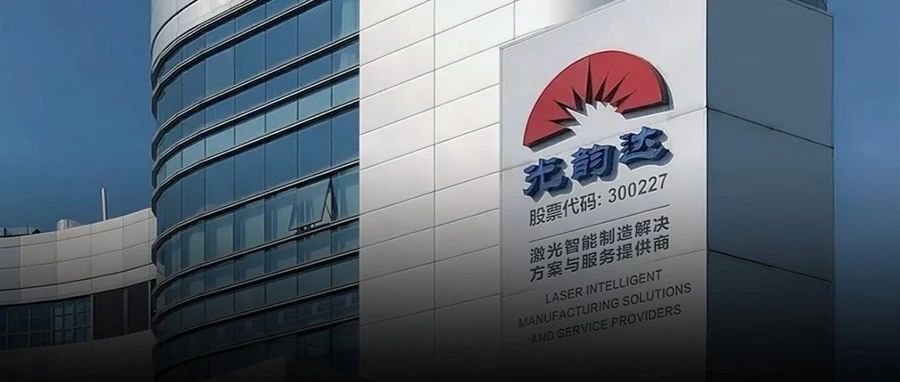
光韵达重组:双向奔赴的病人
市值风云· 2025-06-09 10:05
Core Viewpoint - The article discusses the recent changes in the management and ownership of Guangyun Da, highlighting the company's financial struggles and the implications of its capital operations, including high-premium acquisitions and low-priced private placements [1][6][7]. Company Overview - Guangyun Da (300227.SZ) is the first listed company in China's laser application industry, focusing on products and services in electronic and aerospace manufacturing, including 3D printing and precision laser drilling [3]. - The company has experienced a continuous decline in performance since 2020, with a projected loss of 48 million in net profit for 2024 [4][5]. Financial Performance - The company's net profit has shown a significant downward trend, with a 352% year-on-year decline in the first quarter of 2025 [5][10]. - From 2019 to 2024, the company's net profit decreased from 72.1 million to -27.4 million, indicating a severe financial downturn [10]. Ownership Change - In September 2024, the original controlling shareholders transferred 5.2% of their shares to Junfei Investment for 230 million, representing a 62.5% premium over the previous day's closing price [11][14]. - Following the ownership change, the new management team, led by Zeng Sanlin and Cheng Fei, lacks experience in the laser industry, raising concerns about their ability to navigate the company's challenges [21][24]. Capital Operations - The company is planning to acquire Yilian Unlimited for up to 650 million, despite its own financial difficulties, which raises questions about the rationale behind such a high-value acquisition [36][71]. - Yilian Unlimited's previous IPO attempt failed, and the acquisition is seen as a way for Guangyun Da to quickly gain market presence in the network communication equipment sector [40][64]. Market Position and Risks - Yilian Unlimited has shown significant revenue growth, but its market share remains low at 2%, and it heavily relies on a few major clients, which poses risks [52][57]. - The article suggests that Guangyun Da's strategy appears to prioritize capital expansion over strengthening its core business, which could lead to increased financial strain and operational challenges [70][71].


高价收购终酿退市结局,揭秘玉龙股份两次金矿买卖背后的交易
Di Yi Cai Jing· 2025-04-30 12:50
Core Viewpoint - Yulong Co., Ltd. is facing delisting from the A-share market after submitting an application for termination of listing, primarily due to the short remaining lifespan and limited processing capacity of its gold mining assets, particularly the recently acquired Pajingo Gold Mine [2][4][23] Group 1: Company Background and Acquisition History - Yulong Co., Ltd. was once a gold stock with a market value exceeding 10 billion, but is now on the verge of delisting [2] - The company entered the gold mining sector through two acquisitions between 2020 and 2022, with the first acquisition of Barto Resources being canceled and the second acquisition of NQM Gold being completed [5][6][7] - The Pajingo Gold Mine, acquired in December 2022, has a limited remaining lifespan and was previously owned by a company with a history of financial fraud [2][8][17] Group 2: Shareholder Dynamics and Related Transactions - Jinan High-tech Holding Group, which became Yulong's largest shareholder, conducted due diligence on the Pajingo Gold Mine as early as 2018, before any formal association with Yulong [2][13] - Following a series of financial difficulties faced by its predecessor, Tianye Group, Jinan High-tech and its affiliates provided significant financial support to Yulong and its subsidiaries [17][19][20] - The acquisition of Pajingo involved complex related-party transactions, with Jinan High-tech and its affiliates being both the buyer and seller in the transaction [10][12][11] Group 3: Financial Performance and Future Outlook - Despite initial improvements in financial performance following debt restructuring, Yulong has reported cumulative losses of nearly 920 million from 2020 to 2023 [21][22] - The company’s net asset value is projected to be negative by the end of 2024, which could trigger further delisting risks [22] - Jinan High-tech's financial troubles have also escalated, with numerous legal disputes and frozen shares impacting its financial stability [22][23]
