
Aging

Search documents
Aging is a privilege — here’s why | Melody Martinez | TEDxInglewood
TEDx Talks· 2025-10-31 15:11
[Music] [Applause] Everyone knows what it's like to age. I can't relate yet, but even whenever I was younger, even whenever I was younger, I would always hear my parents or other older adults talk about what it's like to age. I actually found out that you can hurt yourself while taking a nap.That's wild to hear. [Music] But I know now that this is common is a natural event that everyone will come across. But even if it is natural, for thousands of years, we as a society have tried to fight back against this ...


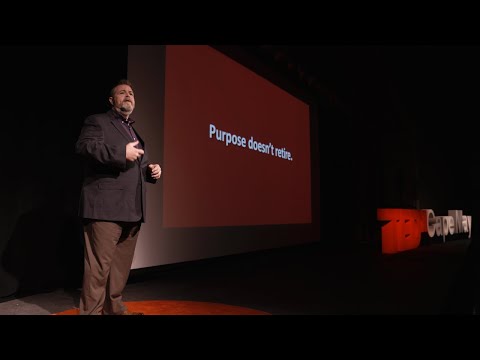
Re-envisioning Aging Successfully | Mark Lenhard | TEDxCapeMay
TEDx Talks· 2025-10-30 16:09
[Music] Well, thank you for this opportunity to be here today. And I was thinking, what better way for us to get connected with each other than to start with a pop quiz, right. Who doesn't like those.So, by show of hands, how many of you are aging. Okay. Okay.I'm going to try to not be nervous about the fact some of you did not respond. But, you know, that really kind of underscores the message that I have to share with you um today. But for a little more context, let me introduce you to two people, Theodor ...
New stories for longer lives | Dr. Joseph F. Coughlin | TEDxAthens Salon
TEDx Talks· 2025-10-29 15:41
Longevity Economy Overview - The longevity economy is about translating 20-40 years of added life into a longevity dividend, focusing on living longer and better [1] - The 60+ age group worldwide controls 30% of the world's spending power, making it the third-largest economy after the US and China [2] - The new generation gap is about expectations, with people believing in products, policies, or solutions to improve older age compared to previous generations [2] Shifting Perceptions of Aging - The traditional view of old age is a made-up story that frames aging as a problem rather than an opportunity [1] - Products and services often fail to cater to the fun, fashion, friends, and sex aspects of older adults' lives, limiting creativity and innovation [1] - Older adults today have more education than ever before, challenging the stereotype of them disliking technology [2] Evolving Life Stages and Demographics - Half of the children born in the 1990s and early 2000s in the industrialized world are forecasted to live 100 years, necessitating a reevaluation of life stages [4] - Adulthood is being pushed out, with some suggesting it starts in the mid-30s, impacting various life events and societal norms [5] - There's an increase in women over 40 having children, often resulting in only one child [7] Infrastructure and Institutional Changes - Social infrastructure needs to change, including transitioning out of work through mentorship and flexibility [16] - Institutions like education need to adapt to lifetime learning, considering the rapid pace of knowledge doubling [17][18] - The built environment should be redesigned to be age-ready, exciting, and delightful across the lifespan [21] The Future is Female - Women over 50 are the second-largest group starting new businesses in the United States and represent 35% of new high-tech businesses in China [10] - In the UK, women now outpace men in earnings and starting new businesses [11]
The Key to Reclaiming Your Time | Solana Lewis | TEDxStamford
TEDx Talks· 2025-10-29 15:10
Health & Wellness - Strength training improves mobility, confidence, and self-sufficiency in older adults [9] - Strength training can improve memory, boost blood flow, and help fight dementia and Alzheimer's [9] - A study showed that strength training twice a week for 6 months reversed mild cognitive decline in senior citizens [11][12] - Strength training can replace the physical activity found in blue zones, such as gardening and farming [7] - Blue zones, regions where people commonly live to be between 80 and 100 years old, have 50% lower heart disease rates [5][7] Aging & Longevity - 165% of senior citizens aged 65 and older in America need physical help with daily activities [4] - National Geographic study in 2018 showed that people in blue zones live up to 97% of their lives free of disabilities [7] - A Canadian Longitudinal Study on Aging in 2018 involving 9100 people aged 60 and older showed that strength training at least three times a week for over 9 months resulted in 17% better balance, 32% better mobility, 58% lower odds of high body fat, 34% improved self-perceived health, and 26% greater likelihood of perceiving themselves as aging healthy [8] Time Perception & Experience - New experiences make time feel slower and more abundant [19] - Routine can make life feel mundane, so it's important to make new experiences [20] - Strength training can provide new experiences on a weekly basis, such as hitting a personal best or mastering a new technique [22][23]
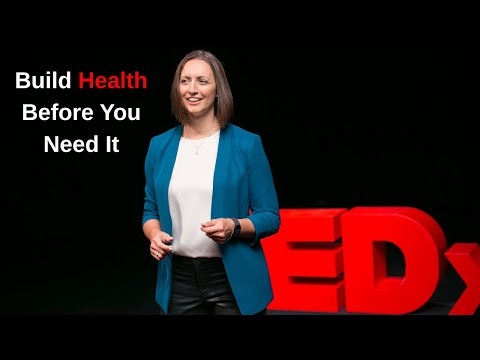
The hidden power of your daily choices | Dr. Heather Dwyer | TEDxCincinnati
TEDx Talks· 2025-10-28 15:44
Health & Lifestyle Choices - Daily choices significantly impact aging, determining whether individuals age with freedom or limitation [8] - Years of unhealthy choices, such as ultra-processed foods and lack of movement, accumulate and weaken the body's ability to fight crises [5] - Intentional choices regarding movement, diet, social connections, and continuous learning contribute to a better quality of life in later years [6][7][12] - Protecting health proactively is easier than rebuilding it after it's lost [11] Health Condition Progression - A small diabetic wound can escalate, leading to infection and potential loss of limbs and independence [3][4] - The progression from initial wound to amputation can occur over several years, highlighting the long-term consequences of neglecting health [3][4] - Chronic health challenges like diabetes and neuropathy are often lifestyle-driven [3] Future Trajectories - Individuals face two potential futures: one of freedom and one of decline, determined by their choices [1][9][13] - Some individuals experience decline due to neglect, while others maintain strength and energy into their later years through intentional health choices [9][10] - Building health through consistent, small choices over time leads to strength, energy, and freedom in the long run [9][13]
What If Our Approach to Aging Is All Wrong? | Heather Durenberger | TEDxMinneapolis
TEDx Talks· 2025-10-17 16:39
Core Concept - The presentation introduces the "adolescence of aging" as a distinct and challenging life stage where aging parents require increasing support while resisting assistance, mirroring teenage rebellion [1][3] - This stage is characterized by defiance, denial, and decline, leading to disempowerment for both aging parents and their adult children [3][4] Challenges Faced by Adult Children - Adult children often find themselves in a "squeeze," balancing career, family, and caregiving responsibilities, a situation affecting 37 million (百万) in the United States [1] - They experience emotional turmoil, including frustration, fear, and powerlessness, while navigating the changing roles and needs of their aging parents [1] Psychological and Neurological Basis - The "adolescence of aging" has roots in psychology, referencing Erikson's ninth stage of development and Franco's five stages of aging, which describe the shift from independence to end-of-life [1] - Neuroscience suggests that the prefrontal cortex, responsible for risk assessment and self-regulation, may decline with age, leading to behaviors similar to those seen in teenagers [1] The 3Ds: Defiance, Denial, and Decline - Defiance manifests as resistance to losing independence, such as refusing to give up driving, leading to conflicts over safety and control [1] - Denial serves as a defense mechanism against the uncomfortable truth of declining capabilities, with aging parents downplaying incidents like falls or health issues [1][2] - Decline involves physical, cognitive, and emotional changes that can be gradual or sudden, requiring significant caregiving efforts from adult children [3] Disempowerment and Control - Aging parents may experience disempowerment when they lose control over decisions and routines, leading to emotions like shame and anger [3][4] - Adult children, in their efforts to ensure safety, risk stripping away the autonomy of their parents, creating tension between control and freedom [4] Solutions and Support - The presentation introduces the PACE model (Pause, Assess, Choose, Embrace) as a tool for adult children to manage stress and respond with compassion [4] - It emphasizes the importance of normalizing the challenges of aging, building support systems, and having open conversations [10][11] Impact and Legacy - The journey of caring for aging parents shapes relationships with siblings and leaves a lasting impression on children, highlighting the importance of how one shows up during difficult times [7] - The presentation advocates for shifting the narrative around aging, creating language, tools, and supports to better navigate this life stage [11][13]
A New Age of Old: Redefining How We Age | Daniel Cottmeyer | TEDxGeorgiaStateU
TEDx Talks· 2025-10-10 14:34
[Music] So, I'll start with a show of hands. How many of you out in the crowd are actually excited to get old. So, like I thought, that's not many of you.A lot of people will say they're not excited to get old or even that they don't want to get old. And to that, I always ask, what's the other option. Right.Because we're not going to stay the same age and we're certainly not getting getting any younger. So, if we're not getting older, then we're right. And I can't imagine that all of you out in the crowd th ...
X @The Wall Street Journal
The Wall Street Journal· 2025-10-10 00:00
From @WSJopinion: Aging, once an inevitability, is becoming a frontier. And for the first time, science offers reason to hope that the future might be younger than it looks, writes @DavidAgus. https://t.co/IJGYEUfZXh ...
How long should we live? | Margo Grigoryants | TEDxFrancisHollandSchoolSloaneSquare
TEDx Talks· 2025-09-30 15:15
How long should we live. I know for a lot of you this question has never come across your mind because we don't think we can change how long we live. But what if we can.Would we even want to. What impact would this have on our world. Let's imagine two people, person A and person B.Person A is a woman in her 50s. She's taking a mix of some life extending drugs and hormone therapies such as vagiferm, estradorm, and limeocycline. These maintain her bone density, hormone levels, and even her skin.She's physical ...
X @The Wall Street Journal
The Wall Street Journal· 2025-09-11 11:01
At the MIT AgeLab, which works on finding ways to improve life for the elderly, researchers let WSJ’s Amy Dockser Marcus spend a day in their age-simulation suit. She hoped the experience might bring greater insight into what it’s really like to age. 🔗 https://t.co/OeS8AgO8de https://t.co/gLCqM95Lzz ...