
Business Cycle

Search documents
Three Things We Learned From Black Monday (1987)
Yahoo Finance· 2025-10-20 09:52
Core Insights - The interrelation of market sectors and predictable cycles is emphasized, referencing John J. Murphy's analysis from 1991, particularly in relation to the 1987 stock market crash [1] - The Federal Reserve's role as an independent body in stabilizing the economy during crises is highlighted, contrasting it with potential political influences [2][4] - The significant drop of the Dow Jones Industrial Average on Black Monday (October 19, 1987) is noted as the largest one-day percentage selloff in its history [3] - The ongoing trend towards autocracy in the U.S. is discussed, particularly regarding the current president's influence over interest rate decisions and the implications for the Federal Reserve's independence [4] - The long-term upward trend of stock markets is reiterated, with a reminder of the volatility that can occur, including events termed "Flash Crashes" [5]
Target: Why A Leadership Change Won't Likely Be Enough (NYSE:TGT)
Seeking Alpha· 2025-10-14 10:51
Group 1 - The hardest challenges businesses face are often structural rather than short-term cyclical issues [1] - While the business cycle affects most companies, they can typically manage normal fluctuations in performance [1]



The Impact of Debt on Market Cycles Explained
Digital Asset News· 2025-09-29 20:26
I know people have been DMing me about Ro Pal and talking about the business cycle and how he's explained that now we are in a fiveyear cycle instead of a four-year cycle. So just Jerry just to get your opinion. ...

亚洲经济: 与美国投资者的讨论要点-Asia Economics_ The Viewpoint_ What we debated with US investors
2025-09-28 14:57
Summary of Key Points from the Conference Call Industry Overview - **Industry**: Asia Pacific Economics - **Key Focus**: Discussions with US investors regarding the economic outlook for Asia, particularly China, India, and Japan Core Insights 1. **Business Cycle Outlook for Asia**: - Investors are generally optimistic about growth, particularly equity investors compared to fixed income investors who anticipate a modest slowdown. - There is a strong IT capital expenditure in the US, which is expected to support Asia's exports [6][5][5] 2. **China's Macro vs. Market Divergence**: - Investors recognize the weakness in China's macroeconomic landscape but expect markets to diverge from macro trends. - The anti-involution policy is seen as insufficient to address deflationary pressures [22][22][5] 3. **India's Domestic Demand Recovery**: - Investor sentiment is bearish on India due to recent deceleration in corporate revenue and profit growth. - However, a recovery is anticipated from Q4 2025 driven by fiscal and monetary easing measures [26][27][28] 4. **Japan's Policy Rate Path**: - Most investors expect the Bank of Japan (BoJ) to hike rates sooner rather than later, contrary to the base case which does not foresee rate hikes even in 2026. - The current inflation dynamics are largely influenced by supply factors rather than demand [29][30][32] Additional Important Insights 1. **Impact of Tariffs**: - The weighted average tariff on imports from Asia has risen to 25%, significantly impacting growth expectations. - The US-Korea trade deal remains unresolved, with auto tariffs still at 27.5% [7][5][5] 2. **Korea's Trade Cycle**: - Recent data indicates a slowdown in Korea's exports, with daily exports contracting by 10.6% after adjusting for working days, highlighting broad-based weakness [8][8][8] 3. **Rate Cuts in Asia**: - More rate cuts are expected across Asian economies, particularly in India, Korea, Indonesia, and Taiwan, as growth and inflation pressures persist [16][19][19] 4. **China's Deflationary Pressures**: - For a sustainable exit from deflation, significant shifts in the growth model are necessary, including reducing excess capacity and boosting domestic consumption [23][24][24] 5. **Investor Focus on Micro Themes**: - Investors are increasingly interested in micro themes such as emerging frontiers and sectors benefiting from anti-involution policies, rather than macroeconomic recovery [25][25][25] 6. **US-India Trade Relations**: - Ongoing trade tensions pose risks to India's growth outlook, particularly concerning services exports which constitute a significant portion of GDP [28][28][28] 7. **Japan's Corporate Profit Outlook**: - The slowdown in global trade is expected to adversely affect corporate profits, especially in the manufacturing sector [34][34][34] This summary encapsulates the key discussions and insights from the conference call, providing a comprehensive overview of the current economic landscape in Asia and the sentiments of investors regarding future growth and risks.

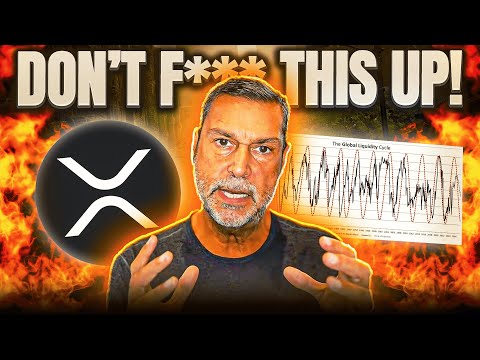
"If You Hold XRP DON'T F**K THIS UP!" - Raoul Pal
NCashOfficial - Daily Crypto & Finance News· 2025-09-28 04:00
Market Sentiment and Analysis - The crypto market is currently experiencing uncertainty, with concerns about a potential alt season, market topping, or the start of a bear market [1][2][3] - The market is showing signs of capitulation, with fear levels approaching extreme levels, which historically can indicate a market bottom [6][7][8] - Many altcoins are in oversold territory, aligning with the high fear levels in the market [9][10] - XRP is showing relative strength compared to Ethereum, but could still see further price declines [3][4][10] - The market has been selling off for approximately 72 days, leading to time and price action capitulation [11][12] Cycle Analysis and Future Outlook - The analysis suggests the four-year crypto cycle may be extending to a five-year cycle, with a potential peak in early 2026 [13][19][20] - This aligns with the liquidity cycle, which is expected to peak around the first quarter of 2026 [16][17][29] - The market has changed significantly with institutional adoption, regulations, and the potential for altcoin ETFs [30][31][39] - Despite these changes, a bear market is still anticipated, likely marking the last typical cycle before utility becomes the primary driver [36] - The Federal Reserve's expected rate cuts and increasing adoption are expected to drive further market expansion [35][38]
🚨 5 YEAR CYCLE CONFIRMED!!! RAOUL PAL #bitcoin #solana #sui
Altcoin Daily· 2025-09-27 15:49
Market Cycle Analysis - The global macro investor Raul Pal suggests Bitcoin's 4-year cycle has shifted to a 5-year cycle, potentially peaking in 2026 [1] - The extension of debt maturity from four to five years in 2021-22 has pushed out the business cycle by a year [2] - The ISM (Institute for Supply Management) is expected to peak by Q2 2026, indicating that any dips in Bitcoin price should be considered buying opportunities [2] Investment Strategy - Historically, buying Bitcoin or other cryptocurrencies when the ISM was below 50 in 2015-16 and 2019-20 proved to be profitable [3]

Is The Bitcoin 4-Year Cycle OVER?
From The Desk Of Anthony Pompliano· 2025-09-26 15:01
whether the four-year cycle is actually going to be extended or not. Raul Paul, global macro investor. He has come out and said he doesn't think that the four-year cycle will last any longer.He thinks it's now a 5year cycle. Take a listen to his logic. >> Why is Bitcoin sort of not wildly off to the races yet, and it's this chart, which is the business cycle.Remember, we've always said it's the business cycle stupid. It is always the business cycle stupid. And all of these people who claim it's the four-ear ...
Raoul Pal: The ACTUAL Reason Bitcoin & Crypto Are Crashing!
Altcoin Daily· 2025-09-25 22:45
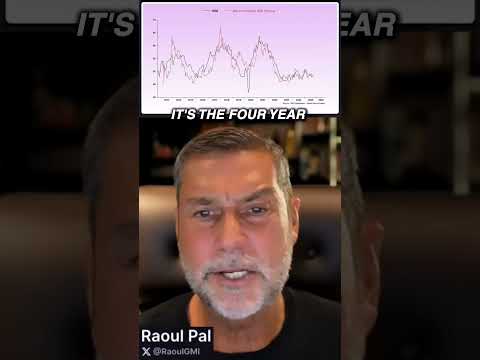
Market Analysis and Bitcoin Cycle - Bitcoin continues to trade within a range, with the lower end of the support range presenting buying opportunities [1] - The traditional four-year Bitcoin cycle, driven by the halving, may now be a five-year cycle, potentially peaking in Q2 2026 [2] - The Bitcoin cycle is correlated with the ISM (Institute for Supply Management) business cycle, a key indicator of US economic activity [3][4][5] - The current elongated business cycle, unlike previous cycles, is attributed to the extension of debt maturity from four to five years in 2021-2022 [8][9] - The average weighted maturity of the debt is 5.4 years, suggesting the ISM should peak by 2026 [10] - Despite the ISM remaining below 50, indicating economic contraction, any dips in Bitcoin price are considered buying opportunities, similar to patterns observed in 2015-16 and 2019-20 [11][12] Altcoin and AI Investment Opportunities - A new BitTensor fund has been launched, focusing on TOAO and BitTensor subnet alpha tokens, highlighting the potential of AI-related altcoins [12][13] - BitTensor subnets are providing AI models and companion apps at significantly reduced costs compared to traditional services like AWS [14] - SUI is positioned to dominate agentic commerce, particularly in AI-driven transactions, and has partnered with Google on AP2, an agentic payments framework [16][17] Swissborg (Borg) Token Buyback Program - Swissborg is using 50% of trading fees to buy back the Borg token, creating buy pressure [20][21] - Based on the previous week's stats, this equates to $400,000 weekly, $1.6 million monthly, and $20 million annually in buy pressure [21] - The buyback program could potentially pump Borg by 50% in a single week, given current liquidity and price impact [22]

The Stock Market Rally Isn't Over Yet
Seeking Alpha· 2025-09-23 17:16
Group 1 - The outlook for equities and risk assets is assessed through the lens of US and global business cycles, corporate earnings, monetary policy, liquidity, and positioning [1] - The investment research approach focuses on leveraging the business cycle and incorporates macro, fundamentals, technicals, sentiment, and market structure [2]
X @Raoul Pal
Raoul Pal· 2025-09-18 19:13
RT Julien Bittel, CFA (@BittelJulien)Wanted to share a few thoughts tonight...This is from the September 11th MIT publication that dropped on @RealVision:For starters, unemployment keeps grinding higher, exactly as our lead indicators and GMI/MIT work flagged back in Q1.That keeps the Fed engaged and is why, as I noted in last week’s video update, the market has started pricing in a higher probability of cuts at the September, October, and December meetings...US unemployment is now at 4.3%, right on the Fed ...