Climate change

Search documents
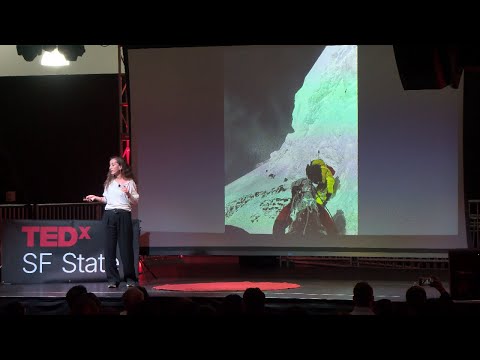
What I learned from climbing the Seven Summits | Gülnur Tumbat Ph.D. | TEDxSF State
TEDx Talks· 2026-01-30 16:19
Thank you. When I first started college, I remember noticing this person walking around uh with a big backpack on, the straps floating in the air. It was my first month on campus.And I approached him and asked what that was all about. And he told me he was a mountaineer. I was super curious about it.and he told me about this student club on campus again the mountaineering club and I started learning and climbing years later when I decided to pursue my PhD even before I became an academic I made a promise to ...

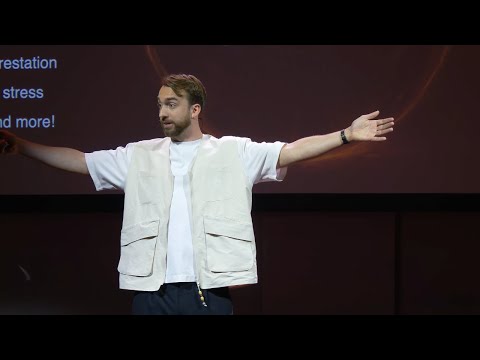
The vertical revolution: how green walls can heal our cities | Naud van der Padt | TEDxAmsterdam
TEDx Talks· 2026-01-29 16:08
[music] [music] Hi, my name is N and our world is burning. Okay. Okay.Sorry for starting off like DJ Villo over here. Not really the kind of inspirational learning moment you might expect from a TED talk, right. Well, because my mom told me not to be a total bummer and especially not on the 750th birthday of Amsterdam, I brought you a present.And my present is a solution. A solution to the world's biggest problems. And no, it is not a techsavvy supercomputer with the latest AI technology, nor is it a rocket ...
Bea Kim: Snowboarding's thrifting queen champions sustainability
NBC News· 2026-01-29 11:01
I'm very lucky to say that I've created an environment or and a career for myself where I get to be outdoors most of the time and most of my days. >> It's the International Day of Sport in [music] April 2024. BAM, just 17 years old at the time, is on the floor of the United Nations in New [music] York, and she's there to deliver an impassion speech.Through my travels as a professional snowboarder, I've gone around the world to Europe and New Zealand training and competing [music] and I've seen one common th ...

LA Fire Survivors Got a Rude Surprise That Could Hit More Americans
Insurance Journal· 2026-01-20 06:00
Core Insights - Many survivors of the Los Angeles wildfires are facing inadequate insurance payouts for rebuilding, highlighting a systemic issue of underinsurance in American homes since the 1990s [1][4] - Climate change is exacerbating the problem of underinsurance, as it leads to more frequent and severe wildfires, revealing the inadequacies of existing insurance policies [2][3] Insurance Coverage Issues - A significant number of homeowners are underinsured, with studies indicating that two-thirds of American homeowners lack sufficient coverage for wildfires, typically by about 20% to 60% [5][6] - The shift from guaranteed replacement cost coverage to replacement-cost-value coverage has left many homeowners vulnerable, as the latter sets an upper limit on payouts [7][8] Rising Costs and Market Dynamics - Rising construction costs and natural disasters have made it challenging for insurers to align dwelling coverage with actual replacement costs, particularly after catastrophic events [6][8] - The use of third-party estimator tools by insurers has been criticized for often underestimating rebuilding costs, which helps keep premiums low but may leave homeowners inadequately covered [8][10] Legislative and Regulatory Responses - Advocacy groups are pushing for reforms, including the introduction of guaranteed replacement cost policies, to ensure homeowners are fully covered for rebuilding after disasters [11][12] - Some state regulators express concerns that mandating guaranteed replacement cost coverage could destabilize the insurance market and exacerbate affordability issues [13][14] Economic Factors Influencing Insurance - Home insurance prices are rising due to inflation, increased development, and climate change-related disasters, leading homeowners to either reduce coverage or accept higher deductibles [14][15] - There are suggestions for insurers to provide credits for homeowners who take steps to mitigate wildfire risks as a way to help reduce insurance costs [15]


How activist investors plan to take on Big Oil at the 2026 AGM season
CNBC· 2026-01-14 12:08
Core Viewpoint - The Dutch group Follow This is launching a revised strategy to increase shareholder pressure on the financial sustainability of fossil fuel business models, particularly targeting major oil companies like Shell and BP during the upcoming proxy season [1][2]. Group 1: Strategy and Focus - Follow This aims to shift its focus from requesting emission reduction targets to highlighting the financial risks associated with declining oil and gas demand [2][3]. - The group has co-filed new shareholder resolutions for the Annual General Meetings of Shell and BP, requesting disclosures on strategies for creating shareholder value amid falling oil and gas demand [3][11]. Group 2: Investor Support and Concerns - Follow This has partnered with 23 institutional investors managing €1.5 trillion ($1.75 trillion) in assets to bolster its resolutions [3]. - Support for climate-related resolutions has plateaued at around 20% in recent years, partly due to legal risk concerns, especially in the U.S. [6]. Group 3: Company Responses and Market Dynamics - Shell and BP have recently scaled back their green energy investments, focusing instead on their core hydrocarbon businesses [14][17]. - Shell plans to become a net-zero company by 2050, while BP has also committed to this goal but has faced scrutiny over its strategy amid declining oil and gas demand projections [11][17]. Group 4: Future Projections and Strategic Changes - Analysts project a significant decline in oil and gas demand, which raises concerns about BP's current growth assumptions in its strategy [17]. - BP has announced plans to reach $20 billion in divestments by the end of 2027, including a recent $6 billion sale of a 65% stake in its lubricants business [18].
长期策略:全球展望-Long-term Strategy_ Global Outlook
2026-01-13 11:56
Summary of Key Points from the Conference Call Industry Overview - The analysis covers long-term challenges and opportunities in the investment landscape, particularly focusing on expected returns across various asset classes and the implications of demographic changes, AI, governance, climate change, and globalization on market dynamics [6][7][19][31]. Core Insights and Arguments 1. **Expected Returns**: - US Aggregate Bond Index is expected to yield 4.6% per annum over the next decade, while the S&P 500 is projected at 3.5% per annum [7][19]. - The forecast for US High Grade Corporate bonds is 4.8% per annum, and for Euro Aggregate Bond Index, it is 3.4% per annum [7][19]. 2. **Market Conditions**: - Current markets are considered expensive, leading to low long-term returns. Equity and credit returns are expected to be similar, with a depreciation of the USD projected at -1.4% per annum against the average G10 currencies [7][19]. - Demographic trends indicate an aging population, falling fertility rates, and a shrinking working-age population, which are expected to raise bond yields and lower long-term equity returns [54][64]. 3. **Impact of AI**: - AI is anticipated to provide a moderate productivity boost, with long-term productivity growth supported by 0.5-1.0% per annum. However, this may not be sufficient to counteract the negative effects of working-age population decline [69][75]. - The US is likely to benefit the most from AI advancements due to its technological leadership and sector composition [81][88]. 4. **Governance and Political Climate**: - Increasing polarization and populism are noted as significant risks, potentially leading to lower long-term equity returns and higher volatility in investment [89][128]. - The report highlights a trend of declining democratic ratings, particularly in the US, which has historically preceded long-term equity underperformance [128]. 5. **Climate Change**: - Climate risk is identified as a critical factor affecting asset pricing, particularly in emerging markets (EM), where geographical vulnerabilities may lead to increased capital demand and macroeconomic volatility [160][169]. - The report suggests that climate change could raise real interest rates due to increased demand for capital and adverse supply shocks [160]. 6. **Globalization and Industrial Policy**: - A slight trend towards deglobalization is observed, with geopolitical tensions leading to a decline in foreign direct investment (FDI) and portfolio flows [174]. - The resurgence of industrial policy, particularly in large developed markets (DM), is expected to focus on strategic sectors, potentially benefiting small corporates more than large ones [180]. 7. **Debt Sustainability**: - Concerns about sovereign debt sustainability are raised, with higher debt levels and interest rates expected to create a feedback loop that could lead to crises similar to past events [149][150]. - The US is highlighted as facing significant challenges regarding its debt levels, particularly with the impending exhaustion of Social Security Trust Fund assets [156]. Other Important Insights - The report emphasizes the importance of immigration as a key factor in mitigating working-age population decline in certain countries [68]. - It also discusses the potential for the US dollar to face long-term depreciation due to gradual de-dollarization trends influenced by geopolitical factors [185]. - The analysis concludes with a strategic country scorecard, comparing long-term signals across various countries, indicating that the US maintains some favorable economic fundamentals despite risks [197]. This summary encapsulates the critical insights and arguments presented in the conference call, providing a comprehensive overview of the current investment landscape and future expectations.
My Biggest Concerns As We Enter 2026
Seeking Alpha· 2026-01-06 07:25
Group 1: US Monetary Policy - Concerns exist that a potential replacement of Jerome Powell as Fed Chair by a more dovish candidate could lead to significant rate cuts for political reasons, potentially steepening the yield curve and causing inflation to spike [5][8] - The current Fed Funds target range is 3.50-3.75%, with an Effective Fed Funds Rate of 3.64%, and there are expectations for further cuts, possibly down to 1% [7][8] - The average maturity of US government debt is about six years, and significant rate cuts could provoke negative reactions from bond investors, complicating the situation [12] Group 2: AI Bubble - There are concerns that the AI bubble may burst, leading to a widespread selloff similar to the dotcom bust, with the combined market cap of the ten largest US stocks exceeding the GDP of several major economies [15][16] - US equities, even excluding Big Tech, are trading at high valuations compared to other regions, raising concerns about a potential global impact if a selloff occurs [19][20] - The performance of stocks with no revenues and unprofitable companies indicates a trend of hyped investor behavior, which could signal an impending correction [21] Group 3: Climate Change - There is a worry that increased political control over climate change agendas could lead to irrational government policies that may harm the economy [25][26] - The rising average temperature is expected to exacerbate economic damage, prompting political leaders to make decisions that may not be economically sound [25][30] - The concept of Energy Return On Investment (EROI) is highlighted as crucial for understanding the economic viability of energy sources, with current political narratives potentially misrepresenting the costs and benefits of renewable energy [27][28]


US lawmakers launch probe into insurance rating firm in Florida
Digital Insurance· 2025-12-30 19:34
Core Viewpoint - An inquiry has been initiated by three US senators into Demotech, an insurance ratings firm, regarding its ratings and the potential risks they pose to Fannie Mae, Freddie Mac, and taxpayers due to climate-related insurer failures [1][2]. Group 1: Inquiry Details - The senators questioned the rationale behind Fannie Mae and Freddie Mac's acceptance of Demotech ratings as proof of insurer financial strength, especially given the high failure rates of insurers with these ratings [2][3]. - They have requested detailed disclosures from both Fannie Mae and Freddie Mac about their reliance on Demotech-rated insurers, including the number of mortgages involved and the geographic concentration of these loans [10]. Group 2: Demotech's Role and Market Impact - Demotech has a significant presence in the Florida insurance market, where it was established to rate smaller insurance companies that struggle to meet the standards of larger rating agencies [6]. - A study indicated that over 60% of Florida insurers are rated by Demotech, but nearly 20% of these rated insurers became insolvent while holding an A rating from 2009 to 2022 [8]. Group 3: Climate Change Concerns - The inquiry is set against the backdrop of increasing climate change impacts, which are intensifying natural disasters and straining the property insurance market across the US [4]. - The senators warned that reliance on Demotech could lead to systemic risks in the mortgage market, reminiscent of the 2008 financial crisis, if a collapse occurs in the homeowners' insurance market [9][11].

How We Fight the Deadliest Animal on Earth | Hajira Syed | TEDxPaul Laurence Dunbar HS Youth
TEDx Talks· 2025-12-22 15:56
This is your This is a real image of an electron microscope of an animal. It's magnified around 100 times and it's an animal that I'm confident that you all have seen before. I'm going to play a guessing game with you all.Hopefully by the end of this you guys will have some idea as to what it is. I'll give you three hints. Hopefully you can guess.This animal is the size of a grain of rice. It weighs just less than 2.5% mg. And it is the most dangerous animal in the world.Not really something scary, right. B ...

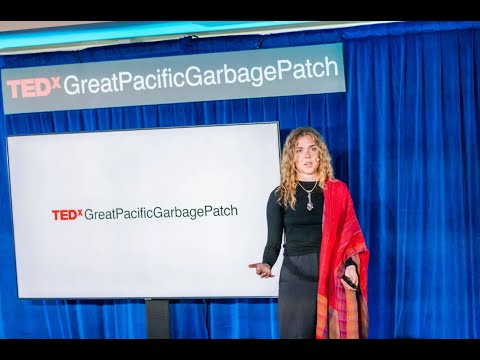
Meditation on building a plastic-free world | Vasser Seydel | TEDxGreatPacificGarbagePatch
TEDx Talks· 2025-12-19 16:20
Environmental Impact of Plastics - Plastic pollution is pervasive, with micro and nanoplastics found in various environments, including Antarctica [1][2] - The Great Pacific Garbage Patch is three times the size of California [3] - Plastics are found in crops, blood, brains, reproductive organs, and breast milk, indicating widespread human exposure [4] Plastic Production and Projections - Plastic production has increased dramatically from 2 million tons annually in the 1950s to a projected 460 million tons in 2025 [4][5] - The fossil fuel industry is investing heavily in plastic production as clean energy alternatives scale [4] Call to Action and Solutions - Stopping plastic production at the source is crucial, as cleanup efforts alone are insufficient [5] - Increased awareness and conscious consumer choices are essential to reduce plastic consumption [6] - Aligning personal actions with the desire for a regenerative world can lead to positive change [11]