
Credit

Search documents
X @Anthony Pompliano 🌪
Anthony Pompliano 🌪· 2025-11-04 19:23
I sat down with @MarediaShehzan to discuss how wealthy Bitcoiners are using innovative lending and credit solutions to buy homes, cars, and experiences — all while keeping their Bitcoin.Shahzad shares real stories, insights, and the broader vision behind enabling financial freedom without liquidation.Enjoy!YouTube: https://t.co/GKukweAOKCApple: https://t.co/51IsdFMZPrSpotify: https://t.co/nWMXPfQyC1TIMESTAMPS:0:00 - Intro2:36 - Who are high-net-worth bitcoiners?8:24 – “Buy, borrow, die” wealth strategy12:35 ...
X @Anthony Pompliano 🌪
Anthony Pompliano 🌪· 2025-11-04 18:08
I sat down with @MarediaShehzan to discuss how wealthy Bitcoiners are using innovative lending and credit solutions to buy homes, cars, and experiences — all while keeping their Bitcoin.Shahzad shares real stories, insights, and the broader vision behind enabling financial freedom without liquidation.Enjoy!YouTube: https://t.co/GKukweAgV4Apple: https://t.co/51IsdFMrZTSpotify: https://t.co/nWMXPfQ0MtTIMESTAMPS:0:00 - Intro2:36 - Who are high-net-worth bitcoiners?8:24 – “Buy, borrow, die” wealth strategy12:35 ...
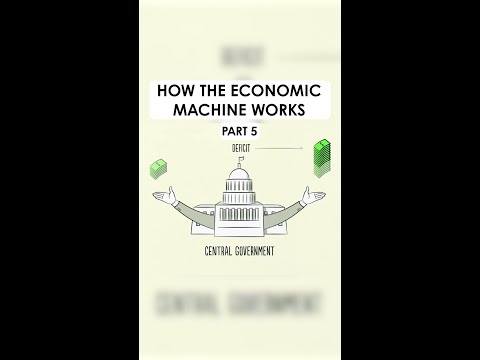
How the Economic Machine Works Part 5
Principles by Ray Dalio· 2025-10-31 13:01
Economic Impact of Deleveraging - Lower incomes and increased unemployment reduce government tax revenue while simultaneously increasing the need for government spending on unemployment benefits [1] - Governments often implement stimulus plans and increase spending, leading to budget deficits as they spend more than they earn in taxes [2] - Governments may raise taxes on the wealthy to redistribute wealth, potentially causing resentment between different socioeconomic groups [3] - Continued economic depression can lead to social disorder and political instability, both within and between countries [4] Monetary Policy Response - Central banks, having lowered interest rates to near zero, may resort to printing money to stimulate the economy [5] - Central banks print money to buy financial assets and government bonds, as the Federal Reserve printed over $2 trillion during the 2008 crisis [6] - This action increases asset prices, benefiting those who own financial assets, but the central bank can only buy financial assets [7] - Central banks cooperate with the central government, which can buy goods and services, by buying government bonds, effectively lending money to fund stimulus programs [8] Risks and Policy Considerations - Policymakers must balance deflationary and inflationary measures to manage debt burdens and maintain stability during deleveraging [9]

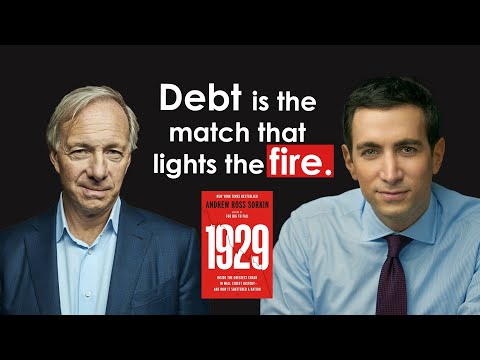
Ray Dalio & Andrew Ross Sorkin on His New Book "1929" and How Debt Drives Every Crash
Principles by Ray Dalio· 2025-10-30 13:42
Market Bubbles & Historical Parallels - The discussion highlights the analogous nature of historical financial crises, particularly the parallels between 1929, 2008, and the present day, emphasizing recurring patterns and potential lessons to be learned [2][3][4][5][25][29][89][90] - Easy credit, public excitement, and new technological miracles are identified as key ingredients that contribute to the formation of market bubbles [10][20][23][24][25][26][40][59] - The conversation draws comparisons between historical figures and contemporary counterparts, such as Charlie Mitchell (National City Bank) being likened to Jaime Diamond, Carter Glass to Elizabeth Warren, and John Rascob (General Motors) to Elon Musk, to illustrate recurring character types and roles in financial history [6][7][8][13][14] - The discussion points out that from 1928 to September 1929, the stock market rose by 90%, creating a "free money" environment for those buying stocks on margin [24] Regulatory Environment & Policy - The report emphasizes the importance of regulatory guardrails, such as the SEC and bank capital requirements, established post-1929, while expressing concern over the potential risks associated with new market products like SPACs, NFTs, and crypto, especially when private companies enter public markets with less disclosure [70][71][72][73][74][75][84][85] - The discussion highlights the cyclical nature of regulation, with restraints often being perceived as problems until after a crisis occurs, and the tendency to democratize finance by providing public access to opportunities previously limited to elites [75][76][77] - The conversation notes the difference between private and public markets, particularly regarding insider trading and disclosure requirements, raising concerns about the potential risks of public investment in private markets without adequate protections [73][74][84][85] Debt & Monetary Policy - The report identifies the growth of debt relative to money as a key factor in financial crises, with credit (debt) being used to fuel buying power beyond available money [62][63][64][65] - The discussion emphasizes the role of easy money policies as a "cure-all" for economic problems, while also acknowledging the potential for these policies to create new problems and lead to market pops when brakes are applied [39][40][41] - The conversation highlights the shift in debt burden from the private sector to the government sector, noting that while the debt has moved, it still exists and can lead to monetization [44][45] - The report mentions that in 2008, interest rates hit zero for the first time since 1933, leading the Fed to monetize debt, a similar action to 1933, but quicker [35]
Morgan Stanley Lowers PT on Apollo Global Management (APO) Stock
Yahoo Finance· 2025-10-30 13:08
Core Insights - Apollo Global Management, Inc. (NYSE:APO) is identified as one of the best bargain stocks to buy in November, despite a recent price target reduction by Morgan Stanley from $154 to $151 while maintaining an "Equal Weight" rating [1] - The company is planning to sell its Hispanic grocery chain, Heritage Grocers Group, which could generate approximately $1.5 billion, amid declining consumer demand in Latino communities due to fears of immigration raids [2] - Baron Funds noted that shares of Apollo detracted in Q1 2025 due to a reversal in economic sentiment and capital market activity, although they continue to hold the stock due to Apollo's focus on credit and strong management [3] Group 1: Stock Performance and Analyst Ratings - Morgan Stanley reduced the price target on Apollo's stock to $151 from $154, citing updated price targets for Alternative Asset Managers in North America [1] - The performance of alternative asset manager stocks, including Apollo, has been affected by uncertainty and volatility surrounding economic policies, leading to a reversal of gains from the previous year [3] Group 2: Business Developments - Apollo Global Management is planning to divest its Heritage Grocers Group, potentially raising around $1.5 billion, as the grocery chain has faced challenges due to weak consumer spending [2] - The grocery chain's performance has been negatively impacted this year, particularly in Latino communities, due to concerns over immigration raids affecting consumer demand [2]

X @Ethereum
Ethereum· 2025-10-29 15:47
Crypto Economy & Credit - The cryptoeconomy fundamentally lacks credit, despite it being a foundation of major capitalist financial systems [1] - 3Jane is launching general-purpose uncollateralized lines of credit on Ethereum mainnet [1]
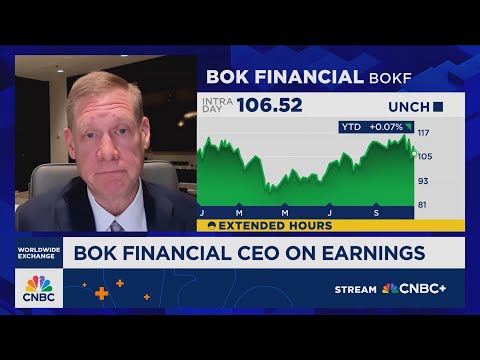
Kymes: Credit is still very benign despite recent headlines
CNBC Television· 2025-10-22 11:37
Financial Performance - The company experienced strong topline revenue growth, driven by net interest income and loan growth [1][2] - Loan growth reached approximately $1.2 billion, representing an annualized growth rate of about 10% over the last six months [1] - Assets under management in the wealth division totaled $123 billion, contributing to strong fiduciary fee income growth [2] Credit and Risk Management - The company maintains conservative reserves and anticipates credit normalization, expecting a reversion to the mean over time [3][4] - The company emphasizes its strong credit underwriting history, citing its performance during the great financial crisis [4] - The company's net charge-offs for the last 12 months are less than five basis points, significantly lower than the typical range of 20 to 25 basis points [5][6] - Criticized levels are slightly more than half of what they were pre-COVID, which were already considered very good numbers [6] - The industry is well-positioned to absorb increased credit losses due to the current low levels [9] Mergers and Acquisitions - M&A activity is seen as a tailwind for the company, creating opportunities due to disruption [12] - The company aims to capitalize on the disruption caused by M&A to attract talent, new customers, and prospects within its eight-state region [13]
X @Investopedia
Investopedia· 2025-10-22 11:30
Accounting Fundamentals - Accounting abbreviations for debit (DR) and credit (CR) have Latin roots [1] - DR and CR can appear on a company's balance sheet [1]
Earnings are more important to markets than the Fed, says Citi's Stuart Kaiser
CNBC Television· 2025-10-20 21:42
Market Sentiment & Earnings Expectations - The market anticipates the Federal Reserve will cut rates twice by year-end, reducing uncertainty related to Fed policy [1] - High valuations and expectations for the "Magnificent Seven" companies raise the bar for earnings results [2] - The market is approaching a point where earnings numbers are "priced to perfection," but not quite there yet [3][4] Regional Bank Credit Concerns - The market is showing discomfort with the concentration of idiosyncratic issues within regional banks, despite hedging activity [6] - Macro investors have been hedging against potential risks in high-yield credit for 3-6 months, mitigating the impact [6] - Concerns exist that regional bank issues may be systemic, reflecting broader, lighter underwriting standards [8][9] - The market is more concerned about consumer credit issues than industrial-side lending problems [10] AI & Power Generation Investment - High-quality stocks and AI power generation companies are attractive investment opportunities [10] - Grid issues in the US make the power sector an attractive part of the market [13] - Companies like Meta and Google may be willing to overpay for power to secure the chips needed to build their competitive advantage [13]
X @The Economist
The Economist· 2025-10-20 13:40
Industry Debate - Private-markets lenders(私募信贷机构)和 bank bosses(银行负责人)就美国信贷体系中哪个部分最危险展开争论 [1] - 对于更广泛的投资者来说,这种指责在学术上没有太大意义 [1]