
Federal Reserve policy

Search documents
Why Newmont Is My Fed Insurance Policy (NYSE:NEM)
Seeking Alpha· 2025-12-16 14:19
Core Thesis - Newmont Corporation (NEM) is positioned as an insurance policy against Federal Reserve policies, fiscal dominance, and currency debasement [1] Federal Reserve Policy - The Federal Reserve has made its position clear regarding liquidity and balance-sheet expansion [1]



New neutral rate is 100 bps below where it is today, says Hayman Capital's Kyle Bass
Youtube· 2025-12-15 20:41
Federal Reserve - The Federal Reserve is seen as both a potential cause of inflation and a means to control it, with concerns about maintaining high interest rates for too long [2][3] - A significant increase in money supply, approximately 40% from 2020 to 2023, has led to a corresponding rise in prices [3][4] - Predictions indicate that the Federal Reserve may need to cut interest rates by 100 basis points, with expectations of four to five cuts in the coming year [5][6] Economic Impact - The Federal Reserve's balance sheet expanded dramatically from under $1 trillion in 2008 to approximately $9 trillion, and is now expected to stabilize around $6 trillion [8][9] - The ongoing adjustments in the mortgage bond portfolio may not significantly impact the broader economy, but liquidity support is anticipated to benefit both the economy and stock market [10] China’s Economic Situation - China's economy is facing severe challenges, with a banking system described as insolvent and a real estate market down 40% to 50% [12] - Despite these issues, China has managed to achieve a trillion in exports, although this is viewed as the only positive aspect of its economy [11][12] - The reliance on coal for electricity production (64%) is highlighted as a key factor in China's competitive advantage, despite the negative implications for sustainability [13][14]
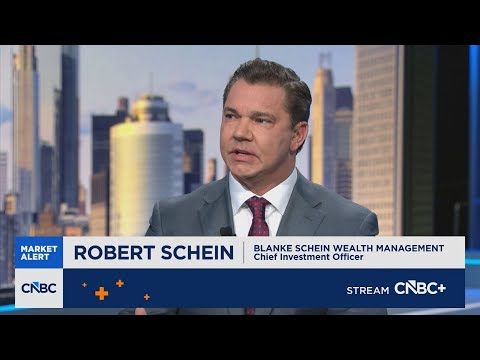
Schein: We are bullish for next year
CNBC Television· 2025-12-15 13:37
So Steve and I were just both talking about it, the potential market moving reports we're getting. The jobs one seems to be the one with the most potential at least coming up on Tuesday. Uh how are you viewing it. What do you see it. What do you see it potentially impacting.>> Well, we're finally getting the government data back and that's most important for just guidance. I we're talking about the Fed and oh by the way, there's a 100% chance that it's going to be a Kevin for the Fed chairmanship moving for ...
美国利率 2026 年展望:紧张与转型-US Rates Outlook 2026_ Tensions and transitions
2025-12-08 00:41
Summary of US Rates Outlook 2026 Fixed Income Industry Overview - The report focuses on the US rates market and the economic backdrop as it enters 2026, characterized by stalled inflation progress, uneven growth, and signs of labor market weakness [2][7][8]. Key Points and Arguments Economic Conditions - Economic growth in the US is more resilient than expected, potentially boosted by the One Big Beautiful Bill Act (OBBBA) and AI-driven capital expenditures [7]. - Consumer spending is mixed; higher-income consumers are driving spending while lower-income households face affordability challenges [7]. - Labor market indicators show a modest increase in unemployment and slowing nonfarm payroll growth, but the labor market has not collapsed [7][22]. Inflation and Interest Rates - Disinflation towards the Federal Open Market Committee's (FOMC) 2% inflation target has stalled, with both headline and core inflation measures remaining around 3% [7][29]. - The report forecasts 10-year Treasury yields at 4.30% by the end of 2026, higher than the Bloomberg consensus of 4.06% [2][8]. - The Fed is expected to maintain a neutral duration conviction, with potential for yields to rise due to dual-sided risks to policy [6][8]. Federal Reserve Dynamics - The conclusion of Jerome Powell's term as Fed Chair is a focal point, with potential personnel changes at the FOMC that could influence policy views [4][51]. - The Fed is likely to commence net asset purchases, particularly in T-bills, starting in Q1 2026 to mitigate funding pressures [4][65]. Treasury Supply and Demand - The Treasury's strategy of holding coupon issuance sizes steady is expected to continue through H1 2026, with maturity extension anticipated due to persistent deficit pressures [5][71]. - The report highlights that long-dated Treasuries may underperform swaps in the coming months due to supply and demand dynamics [5][89]. Yield Curve Scenarios - Four policy paths are outlined to frame potential rates outcomes: resilient growth with sticky inflation, inflation resurgence, moderate slowdown, and severe slowdown [3][35]. - The baseline scenario anticipates bear steepening of the yield curve, while an inflation resurgence could push 10-year yields to test 5% [10][39]. Risks and Market Positioning - The balance of risks skews towards further curve steepening, with optimal positioning suggested in the belly of the curve where structural risks are lower [3][46]. - The report cautions against long positions in the front-end due to negative carry and labor market concerns limiting hawkish repricing [9][46]. Additional Important Content - The report discusses the potential impact of the IEEPA tariff decision on fiscal deficits and the Treasury's reliance on T-bills for funding [81][84]. - It notes that the relative value of T-bills may decline as policy rates decrease, potentially shifting demand towards higher-returning risk assets [80][81]. - The report emphasizes the importance of monitoring repo market pressures and their implications for Treasury supply absorption [100]. This comprehensive analysis provides insights into the US rates outlook for 2026, highlighting key economic indicators, Federal Reserve dynamics, and potential investment strategies within the Treasury market.
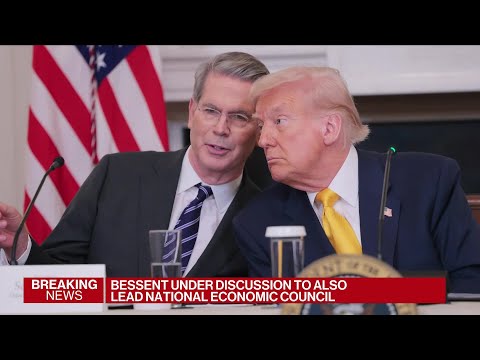
Bessent May Be Tapped to Lead National Economic Council
Bloomberg Television· 2025-12-03 22:56
Its balance of power on Bloomberg TV and radio alongside Omara Omeokwe I'm Joe Mathieu with breaking news in Washington that just crossed the terminal after we took air this evening on Bloomberg. That could be a new help wanted sign going up at the White House. Of course, if Donald Trump chooses Kevin Hassett to be the next chair of the Federal Reserve.That's the expectation. And if he does. Donald Trump's aides and allies are now discussing the possibility of making Treasury Secretary Scott Bessant, the to ...
Fed Could Boost Case for This Bitcoin ETF
Etftrends· 2025-12-01 20:09
Core Viewpoint - Bitcoin experienced a relief rally during Thanksgiving Week, rising approximately 7%, potentially signaling the start of a more substantial rebound supported by the Federal Reserve's possible interest rate cuts in December [1][4]. Group 1: Bitcoin Market Dynamics - The NEOS Bitcoin High Income ETF (BTCI), valued at $820.5 million, offers a significant income stream with a 30-day SEC yield of 28.36%, making it an attractive option for investors [2]. - The recent liquidation of tens of billions in long bitcoin positions has put pressure on the market, but a potential rate cut by the Fed could improve the situation [3][4]. - The current market pullback is attributed to uncertainty regarding the Federal Reserve's actions rather than a decline in underlying demand for bitcoin [4][5]. Group 2: Investment Implications - BTCI's income stream is not heavily reliant on Federal Reserve policy, but bitcoin's price movements are influenced by factors such as dollar weakening and lower real yields [5]. - As interest rates fall, traditional cash investments like CDs and money markets may become less attractive, prompting risk-tolerant investors to consider BTCI [6]. - The structural demand for bitcoin, combined with improving liquidity, suggests that the cryptocurrency may still be in a bull market despite recent drawdowns [6].

2 big things to watch in the economy: AI & Trump's Fed pick
Youtube· 2025-11-26 20:38
Economic Growth Outlook - The economy is expected to see a slight pickup in growth, with GDP growth projected to be around 4.2% for Q3 and 4% for Q2 [25] - Job growth is anticipated to average around 80,000 for 2026, an increase from the recent average of 70,000 to 60,000 [19] AI's Impact on the Economy - AI spending currently represents about 1.5% of GDP, contributing approximately 25% to the overall GDP growth [6][7] - While AI is a significant driver of growth, it is not in bubble territory, and companies are expected to continue investing in AI [10][11] Federal Reserve Policy and Leadership - The potential nomination of Kevin Hasset as the next Fed chair may lead to a more dovish approach, but consensus among committee members will still be necessary [12][14] - The Fed is expected to implement two more rate cuts, but challenges remain in achieving a dovish policy due to elevated inflation [15][14] Labor Market Dynamics - The labor market is showing signs of strength, with a notable increase in construction employment and a rise in labor force participation [21][28] - The recent jobs report indicated a payroll increase of 119,000, although the unemployment rate rose to 4.4% [21]

3 Key US Economic Reports Could Move Bitcoin Before Thanksgiving
Yahoo Finance· 2025-11-24 09:00
Core Insights - Bitcoin is facing a critical week as three delayed US economic reports are set to be released, which could reshape expectations for Federal Reserve policy and influence crypto markets [1] - The convergence of these economic indicators is significant due to the current lack of up-to-date consumer spending and inflation metrics [4] Economic Reports Overview - The US economic reports include September retail sales and the Producer Price Index (PPI) scheduled for November 25, followed by initial jobless claims data on November 26 [3] - The previous retail sales report indicated a strong 0.6% monthly gain, while the PPI fell by 0.1% in August, with a year-over-year core PPI of 2.8% [4] Retail Sales Expectations - The consensus for September retail sales predicts a 0.3% month-over-month increase, with any miss below this mark potentially signaling economic cooling and fostering dovish sentiment among Federal Reserve policymakers [5] - Weaker consumer spending is often associated with rising speculation about rate cuts, which could weaken the dollar and support crypto prices [5] PPI Data Significance - The PPI release is crucial as it is the last significant inflation data before the October Personal Consumption Expenditures report [6] - Markets currently price in a 67.3% chance of a December Federal Reserve rate cut, which may shift based on new data [7] Inflation Impact on Market Expectations - A higher-than-expected PPI, especially in core measures excluding food and energy, could reduce December cut odds below 60%, strengthening the dollar and putting pressure on crypto [8] - September's consensus calls for a 0.3% monthly PPI increase, with any number significantly above this challenging the view of moderating price pressures [9]
FTSE 100 Down 1.25%; Bank, Miners Among Major Losers
RTTNews· 2025-11-18 11:55
Market Overview - The U.K. stock market's benchmark FTSE 100 is experiencing a significant decline, down 120.72 points or 1.25% at 9,554.71, marking the fourth consecutive session of losses [2] - Concerns regarding the global economic outlook, particularly related to the AI bubble, U.S. tariffs, and the Federal Reserve's policy decisions, are negatively impacting investor sentiment [1] Sector Performance - Major bank stocks such as Standard Chartered, HSBC Holdings, and Barclays have seen declines ranging from 3.2% to 3.5% [2] - Other notable declines include Anglo American Plc down 3.7%, Convatec down 3.6%, and IAG down 3.1%, with Fresnillo and Antofagasta also down nearly 3% [2] Company-Specific Movements - Companies like Schroders, WPP, Prudential, Rio Tinto, Diageo, 3i Group, Mondi, Airtel Africa, Glencore, and Rolls-Royce Holdings are also experiencing sharp declines [3] - In contrast, ICG is gaining nearly 6% due to stronger than expected earnings, while Imperial Brands is up 2.7% following a nearly 5% increase in annual adjusted operating profit [3] - Other companies such as Rightmove, BAE Systems, Sainsbury (J), AstraZeneca, British American Tobacco, and Centrica are showing modest gains [3]

Stock market today: Dow, S&P 500, Nasdaq futures make up lost ground after bitcoin bounces off lows
Yahoo Finance· 2025-11-18 01:20
Market Overview - US stock futures showed signs of recovery after initial losses, influenced by a recent slump in bitcoin and upcoming earnings reports from Nvidia and delayed jobs data [1][2] - The S&P 500 futures were down 0.2%, recovering from a 0.8% drop earlier, while Dow Jones and Nasdaq futures also improved slightly from their premarket lows [2] Cryptocurrency Impact - Bitcoin fell below $90,000 for the first time in seven months, erasing all gains for the year, which caused significant alarm in Asian markets, leading to the worst loss for Japanese stocks since April [3][10] - The sell-off in bitcoin has raised concerns about potential negative selling pressure from leveraged investors, contributing to a broader risk-off sentiment in the markets [9][12] Economic Indicators - The upcoming Nvidia earnings report is critical as investors reassess the sustainability of the AI-driven market rally, with increased scrutiny on Big Tech's debt issuance related to AI infrastructure [5] - The September jobs report, delayed due to a US government shutdown, is expected to influence Federal Reserve policy expectations, with current market pricing indicating a 46% chance of rate cuts [6] Retail Sector Insights - Retail earnings reports are anticipated to provide insights into consumer strength ahead of the holiday season, with Home Depot lowering its full-year profit guidance after missing earnings estimates [7] - PDD Holdings reported a 9% revenue increase, although its stock fell 2% due to aggressive pricing strategies, while Amer Sports saw a 6% rise in stock after raising its full-year guidance [8][13]
