Margin Pressure

Search documents
Tractor Supply Rides on Rural Resilience Amid Looming Margin Pressure
ZACKS· 2025-10-02 16:11
Core Insights - Tractor Supply Company (TSCO) excels in the rural lifestyle and essential retail sector, catering to a customer base often neglected by larger competitors, with a focus on need-based categories like pet, livestock, and land care, which provides resilience in volatile economic conditions [1][2] Financial Performance - TSCO reported record second-quarter fiscal 2025 results, driven by sales growth in core consumable, usable, and edible categories, alongside a strong seasonal recovery following a slow spring [2][10] - Customer engagement is a significant strength, with loyalty membership reaching new highs, contributing positively to traffic and ticket growth [2][10] Growth Initiatives - The company is investing in long-term growth strategies, including the Final Mile delivery initiative, which enhances its logistics capabilities in rural areas, allowing it to compete effectively against larger rivals [3] - Additional growth drivers include PetRx, digital channels, and retail media, which are expected to expand customer engagement and revenue streams [3] Margin Pressures - Despite strong fundamentals, TSCO faces margin pressures due to inflation, tariff-driven cost increases, and ongoing SG&A investments, which are anticipated to impact performance in the second half of 2025 [4][10] - The company acknowledges that gross margin expansion will slow, with operating margins trending at the lower end of its estimated range [4] Investment Appeal - TSCO's robust fundamentals, loyal customer base, and strategic growth pipeline present long-term investment appeal, although near-term performance will depend on balancing rural demand resilience with cost challenges [5]



Can PVH Overcome Margin Pressures Amid Tariffs and Promotions?
ZACKS· 2025-09-26 17:16
Core Insights - PVH Corporation is facing challenges in a promotional retail environment, particularly in the U.S. and China, leading to a decline in consumer demand and a gross margin drop of 240 basis points to 57.7% in Q2 FY2025 [1][7] - The company is experiencing increased tariff pressures, with tariffs expected to reduce EBIT by $70 million in FY2025, which is a revision from earlier estimates [2][7] - Despite these challenges, PVH is focusing on cost discipline and operational efficiencies, aiming for a 200 basis point improvement in operating margin by year-end [3][7] - PVH's brand strength in Calvin Klein and Tommy Hilfiger, along with digital growth, is expected to provide resilience against margin pressures [4] Financial Performance - In Q2 FY2025, PVH's gross margin decreased by 240 basis points to 57.7% due to heightened promotional activities [1][7] - Tariffs are projected to impact EBIT by approximately $70 million in FY2025, indicating a significant increase in cost pressures [2][7] - The company anticipates that cost-saving measures will contribute an additional 200 basis points to operating margin by the end of the fiscal year [3][7] Market Position - PVH's stock has outperformed the broader Consumer Discretionary sector, gaining 30.4% over the past three months, while the sector fell by 3.3% [5] - The current forward P/E ratio for PVH is 7.55X, which is below the industry average of 11.58X and the sector average of 19.94X, indicating a modest discount relative to peers [8]


Dell Technologies shares drop as margin pressure, profit outlook overshadow Q2 results
Proactiveinvestors NA· 2025-08-29 15:14
Group 1 - Proactive provides fast, accessible, informative, and actionable business and finance news content to a global investment audience [2] - The news team covers medium and small-cap markets, as well as blue-chip companies, commodities, and broader investment stories [3] - Proactive's content includes insights across various sectors such as biotech, pharma, mining, natural resources, battery metals, oil and gas, crypto, and emerging technologies [3] Group 2 - Proactive is committed to adopting technology to enhance workflows and content production [4] - The company utilizes automation and software tools, including generative AI, while ensuring all content is edited and authored by humans [5]


Can Best Buy Overcome Margin Pressures? Analyst Anticipates Q2 Earnings
Benzinga· 2025-08-20 19:11
Core Insights - Best Buy faces challenges in maintaining profitability amid a competitive landscape and shifting consumer preferences [1] - Analyst Robert F. Ohmes from BofA Securities has reiterated an Underperform rating on Best Buy shares with a price forecast of $63 [2] - The company is set to report second-quarter earnings on August 28, with expected EPS of $1.23 and enterprise comps at -0.3% [2] Financial Performance - The projected gross margin for the second quarter is 23.5%, unchanged from the previous year [3] - Selling Current Health is expected to alleviate margin pressure related to the slow adoption of hospital-at-home solutions [4] - Online sales are outpacing in-store purchases, which may negatively impact margins due to lower warranty attachment rates in online sales [4] Market Conditions - Appliance and consumer electronics sales are highly promotional, with average discounts of 13% in the second quarter [5] - The upcoming marketplace launch is expected to expand to approximately 500 vendors, which should contribute to incremental profit and be margin-accretive in FY26 [5] - Best Buy shares were down 2.16% at $72.50 at the time of publication [5]


Can Deckers Maintain Its Growth Trajectory Despite Margin Pressures?
ZACKS· 2025-08-18 14:42
Core Insights - Deckers Outdoor Corporation (DECK) reported a strong start to fiscal 2026 with a 17% year-over-year revenue increase, driven by record sales from HOKA and UGG [1][10] - However, profitability faced challenges as gross margin declined by 110 basis points to 55.8% due to increased wholesale growth, promotions, and freight costs [2][10] - Management anticipates that the operating margin for fiscal 2026 will be below the previous year's record of 23.6% due to rising tariffs and elevated costs [3][10] Revenue Performance - Fiscal first-quarter revenues increased by 17%, with HOKA achieving $653.1 million (up 19.8%) and UGG reaching $265.1 million (up 18.9%) [1][10] - The strong performance of core brands in both domestic and international markets highlights their continued strength [1] Profitability Analysis - Gross margin decreased to 55.8%, impacted by wholesale growth outpacing direct-to-consumer sales, increased promotions, and rising freight costs [2][10] - Operating margin contracted despite improved SG&A leverage, which increased by 230 basis points due to disciplined expense management and one-time currency gains [2] Future Outlook - For the fiscal second quarter, gross margin is projected to be between 53.5% and 54%, lower than the previous year [4] - Management indicated that tariff increases on products sourced from Vietnam could add approximately $185 million in costs this year, which will only be partially offset by pricing actions and operational adjustments [4] Strategic Initiatives - Deckers is implementing proactive measures such as price increases, tighter expense controls, and continued investment in brand strength to navigate short-term margin pressures [5] - The company’s strong brand equity and international growth are expected to provide a foundation for long-term resilience [5] Competitive Landscape - In comparison, Steven Madden reported a significant decline in adjusted operating income, while Urban Outfitters saw a substantial increase in operating income and margin [6][7][8] Valuation Metrics - Deckers shares have declined by 49.3% year-to-date, contrasting with the industry’s decline of 13% [9] - The company trades at a forward price-to-earnings ratio of 15.88X, below the industry average of 17.54X, and holds a Value Score of A [11] Earnings Estimates - The Zacks Consensus Estimate for DECK's fiscal 2026 earnings suggests a slight year-over-year decline of 0.6%, while fiscal 2027 estimates indicate an 8.3% increase [12]


MercadoLibre Faces Ongoing Margin Strain: Is Profit Growth Slowing?
ZACKS· 2025-08-13 15:36
Core Insights - MercadoLibre (MELI) operates the largest e-commerce and fintech ecosystem in Latin America, focusing on marketplace services, logistics, digital payments, and credit solutions across key markets like Brazil, Mexico, and Argentina [1] - The company is experiencing sustained margin pressure as it prioritizes market expansion over short-term profitability, with the operating margin contracting 210 basis points year-over-year to 12.2% in Q2 2025 [1][10] - Significant investments in user acquisition and engagement, particularly in fintech, are expected to keep spending elevated, impacting margins until operational efficiencies are realized [2] Financial Performance - The credit operations portfolio has grown 91% year-over-year to $9.3 billion, leading to higher provisioning and funding costs [3] - The Zacks Consensus Estimate for Q3 2025 earnings is $9.88 per share, revised downward by 16.6% over the past 30 days, indicating a year-over-year growth of 26.18% [14] - The consensus for 2025 earnings is $44.63 per share, also revised downward by 6.5%, suggesting an 18.41% year-over-year growth [15] Competitive Landscape - Mercado Pago competes with NU and StoneCo in the rapidly growing digital finance sector in Latin America [6] - Both competitors are expanding their product portfolios and increasing customer engagement, intensifying competition in the fintech space [7] Market Trends - E-commerce penetration in core markets remains low, indicating significant growth potential, but the heavy investments required may restrain short-term profitability [5] - Logistics costs are rising due to Brazil's expanded free shipping threshold, adding further pressure on margins [4][10] Stock Performance and Valuation - MELI shares have increased by 38.3% year-to-date, outperforming the Zacks Internet – Commerce industry and the Zacks Retail-Wholesale sector [8] - The stock is currently trading at a forward 12-month Price/Sales ratio of 3.68X, compared to the industry's 2.27X, indicating a relatively high valuation [12]


SMCI stock just collapsed; Here's why
Finbold· 2025-08-06 20:06
Group 1 - Super Micro Computer (SMCI) shares fell 18% on Wednesday, reaching $46.88, marking a total decline of 24% for the week, although the stock is still up 56% year-to-date [1][4] - The decline was triggered by disappointing fiscal fourth-quarter results, with adjusted earnings of $0.41 per share, missing the Wall Street estimate of $0.45, and down from $0.63 a year ago. Revenue increased by 8% year-over-year to $5.8 billion but fell short of the expected $6 billion [4] - The adjusted gross margin decreased to 9.6%, below the anticipated 10%, raising concerns among analysts [4] Group 2 - CEO Charles Liang mentioned production scaling challenges due to limited working capital, which the company is addressing through a $2.3 billion convertible bond offering initiated in June, following a $700 million raise in February [5] - Super Micro provided weaker-than-expected guidance for its fiscal first-quarter revenue and earnings but projected a more optimistic long-term revenue of $33 billion for fiscal 2026, significantly higher than analysts' $20 billion estimate [6] Group 3 - Analysts have mixed views on SMCI stock; Bank of America maintained an 'Underperform' rating with a $37 price target, citing ongoing margin pressure and potential delays in customer purchases due to upcoming Nvidia GPUs [7] - Conversely, Needham maintained a 'Buy' rating and raised its price target from $39 to $60, highlighting potential for margin recovery and growth opportunities in new markets, particularly in Direct Liquid Cooling and Building Block Solutions [8]

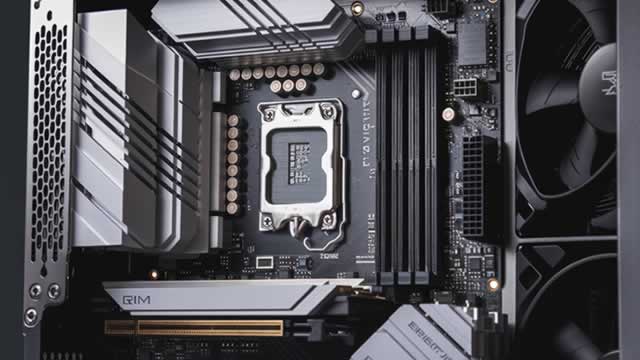
Avantor Q2 Feels The Impact From Bioprocessing Shortfalls, Customer Headwinds, Continued Margin Pressure
Benzinga· 2025-08-01 18:35
Core Viewpoint - Avantor Inc. reported worse-than-expected second-quarter 2025 adjusted EPS, leading to a decline in stock price, with shares nearing their 52-week low [1]. Financial Performance - The company reported adjusted EPS of 24 cents, slightly below the consensus estimate of 25 cents [1]. - Sales for the quarter were $1.68 billion, nearly in line with the consensus of $1.675 billion, but fell 1% compared to the second quarter of 2024 [1][2]. - Net income decreased to $64.7 million from $92.9 million a year ago, while adjusted net income was $161.2 million compared to $168 million [5]. - Adjusted EBITDA was $279.8 million, down from $305.6 million, with a margin of 16.6% [5]. - Adjusted operating income fell from $277.2 million to $252.2 million, with a margin of 15.0% [6]. Segment Performance - Laboratory Solutions sales were $1.12 billion, a reported decrease of 3%, with a 1% organic decline [2]. - Bioscience Production sales were $561.3 million, also a reported decrease of 3%, but showed a 2% increase on an organic basis [3]. - The bioprocessing performance did not meet expectations due to planned maintenance at a manufacturing facility, despite strong demand for the monoclonal antibody platform [4]. Strategic Developments - The company announced significant actions to accelerate growth and enhance its cost structure, targeting $400 million in gross run-rate savings by the end of 2027 [6]. - A five-year contract extension with BIO Business Solutions was executed, positioning the company to benefit from future funding levels in the biotech industry [7]. Market Position - Avantor stock trades at approximately 10.8 times the 2025 EBITDA estimate, compared to peers at 15.4 times and its own average of 15.9 times as a public company [8]. - The company's growth and margin profile are considered below peer levels, justifying the current discount to peers [8].


Is NIKE's Margin Pressure a Temporary Setback or a Red Flag?
ZACKS· 2025-06-24 15:46
Core Insights - NIKE, Inc. is facing ongoing margin pressures due to aggressive discounting, rising costs, and other external factors [1][9] - In Q3 fiscal 2025, NIKE's gross profit decreased by 16% year-over-year, with gross margin contracting by 330 basis points to 41.5% [2] - Management anticipates further gross margin decline of 400-500 basis points in Q4 fiscal 2025, influenced by restructuring charges and tariff impacts [3] Financial Performance - NIKE's gross margin decline is attributed to higher markdowns, wholesale discounts, inventory obsolescence, and elevated product costs [2] - The Zacks Consensus Estimate indicates a significant year-over-year earnings drop of 45.8% for fiscal 2025 and 12.1% for fiscal 2026 [11] - Current earnings estimates for fiscal 2025 are stable, while those for fiscal 2026 have decreased over the past month [11] Competitive Landscape - Competitors like lululemon and adidas are experiencing improved margin trends through strategic pricing and operational efficiencies [5][6][7] - lululemon has achieved gross margin expansions of 60 basis points and 100 basis points in recent quarters, while adidas reported a 0.9 percentage point increase in Q1 2025 [6][7] Valuation Metrics - NIKE's shares have declined by 17.6% year-to-date, slightly better than the industry's decline of 18.1% [8] - The company trades at a forward price-to-earnings ratio of 31.28X, compared to the industry average of 24.76X [10]

Booz Allen Hamilton Downgraded: Analyst Flags Flat Revenue Growth, Margin Pressure
Benzinga· 2025-05-28 20:25
Core Viewpoint - Goldman Sachs analyst Noah Poponak downgraded Booz Allen Hamilton from Neutral to Sell, lowering the price forecast from $108 to $94, citing limited revenue and earnings growth in the medium term and ongoing valuation risks [1]. Group 1: Revenue and Earnings Outlook - Medium-term revenue growth is now expected to be closer to flat due to pressure on federal civilian spending and shifting priorities within the U.S. Department of Defense [2]. - Organic revenue growth for Booz Allen Hamilton is anticipated to be flat for the next few years, which may take time for the stock to absorb after its previous strong growth [4]. Group 2: Contracting and Margins - The analyst highlights a shift toward more outcomes-based and fixed-price contracting in the sector, raising concerns about increased risk for contractors and potential pressure on margins [4]. - Federal civilian agency budgets are under pressure, with other government spending areas taking priority, which may impact Booz Allen Hamilton's performance [3]. Group 3: Market Reaction - Booz Allen Hamilton shares closed down by 4.70% to $104.66 following the downgrade [5].