Trade Tariffs

Search documents
West Fraser Announces Third Quarter 2025 Results
Prnewswire· 2025-10-22 21:01
Core Viewpoint - West Fraser Timber Co. Ltd. reported significant challenges in the third quarter of 2025, including supply and demand imbalances for wood-based products, elevated mortgage rates affecting housing affordability, and new tariffs on Canadian softwood lumber. The company remains committed to its strategy of maintaining operational flexibility and controlling costs while seeking long-term shareholder value [1][2]. Financial Performance - Third quarter sales were $1.307 billion, down from $1.532 billion in the second quarter of 2025. - The company reported a loss of $204 million, or $(2.63) per diluted share, compared to a loss of $24 million, or $(0.38) per diluted share in the previous quarter. - Adjusted EBITDA for the third quarter was $(144) million, a decline from $84 million in Q2-25 [2][12]. Tariffs and Trade - The U.S. administration imposed a 10% Section 232 tariff on imported softwood timber and lumber effective October 14, 2025, in addition to existing duties on Canadian lumber [3]. - Canadian softwood lumber exports to the U.S. have faced trade disputes and tariffs since April 2017, impacting the company's operations [2]. Liquidity and Capital Allocation - Cash and short-term investments decreased to $546 million as of September 26, 2025, from $641 million at the end of 2024. - Capital expenditures in Q3-25 were $90 million, and the company paid $25 million in dividends, maintaining a dividend of $0.32 per share for the fourth quarter [5][6]. Market Outlook - The company anticipates medium to long-term demand for new home construction in North America due to factors such as improved housing affordability, a large population cohort entering home-buying age, and an aging housing stock [7][8]. - The seasonally adjusted annualized rate of U.S. housing starts was 1.31 million units in August 2025, with permits issued for the same number, indicating stable construction activity despite near-term uncertainties [9]. Operational Insights - The Lumber segment faced muted demand in Q3-25, leading to a reduction in shipment targets for both SPF and SYP products [11]. - Adjusted EBITDA for the Lumber segment was $(123) million, which included $67 million in export duty expenses [12][34]. Regional Demand - In Europe and the U.K., demand is expected to improve but remain challenging in the near term, with long-term growth anticipated due to the increasing use of OSB as an alternative to plywood [10]. - The global pulp market is experiencing disruptions due to U.S. tariffs, creating demand uncertainty in Chinese markets, although NBSK pricing is expected to remain stable [15].



Kinross Gold Soars 190% YTD: Is This the Right Time to Buy the Stock?
ZACKS· 2025-10-16 13:20
Core Insights - Kinross Gold Corporation (KGC) shares have increased by 190.2% year to date, significantly outperforming the Zacks Mining – Gold industry's growth of 123.6% and the S&P 500's rise of 14% [1][7] - The surge in KGC's stock price is attributed to better-than-expected earnings, higher realized gold prices, and strong operational performance, alongside external factors such as the Federal Reserve's dovish stance and trade uncertainties [1][7] Performance Comparison - KGC's peers, including Barrick Mining Corporation, Newmont Corporation, and Agnico Eagle Mines Limited, have also seen substantial gains, with increases of 123.8%, 151.5%, and 128.6% respectively [2] Technical Indicators - KGC has been trading above its 200-day simple moving average (SMA) since March 6, 2024, indicating a bullish trend, with the stock also above its 50-day SMA [5] Development Projects - KGC has a strong production profile supported by key development projects such as Great Bear in Ontario and Round Mountain Phase X in Nevada, which are expected to enhance production and cash flow [10] - Progress is being made on the Great Bear Advanced Exploration program and Round Mountain Phase X, with positive drilling results indicating high-margin production potential [11] Financial Health - KGC ended the second quarter of 2025 with robust liquidity of approximately $2.8 billion, including over $1.1 billion in cash and cash equivalents [13] - The company repaid $800 million of debt in 2024, improving its net debt position to around $100 million by the end of the second quarter [14] Gold Price Dynamics - Gold prices have surged approximately 60% this year, driven by factors such as trade tensions and central bank purchases, with current prices hovering near $4,200 per ounce [16] - The Federal Reserve's interest rate cuts and concerns over the labor market have further fueled this rally [16] Dividend and Analyst Sentiment - KGC offers a dividend yield of 0.5% with a payout ratio of 10%, indicating a sustainable dividend backed by strong cash flows [17] - Analysts have raised earnings estimates for KGC, with the Zacks Consensus Estimate for 2025 earnings at $1.44, reflecting a year-over-year growth of 111.8% [18] Valuation - KGC is currently trading at a forward price/earnings ratio of 17.69X, which is a 9.4% premium compared to the industry average of 16.17X [19] Investment Outlook - KGC presents an attractive investment opportunity due to its robust development pipeline, strong financial foundation, and favorable market conditions for gold prices [23]

钢铁行业 - 一线观察第 26 期:需求疲软,但价格下行空间有限-Steel-Views From the Trenches #26 Soft Demand Yet Little Downside to Prices
2025-10-16 01:48
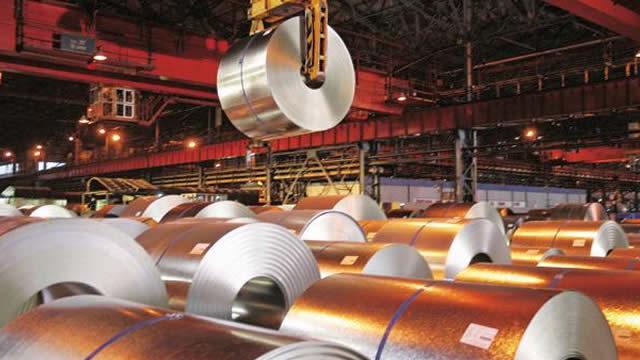
Summary of Steel Industry Conference Call Industry Overview - **Industry**: Steel - **Region**: North America - **Current Market View**: Prices are expected to remain relatively muted over the next six months due to soft demand, despite an anticipated fall in imports [1][2] Key Points Demand Dynamics - **Soft Demand**: Steel demand has been subdued since April 2024, with expectations of a muted six months before any significant improvement [3][4] - **Bifurcated Market**: Industrial sectors like heavy equipment, energy, and infrastructure are performing relatively well, while consumer-oriented segments are sluggish [3][4] - **Strong Segments**: Oilfield and OCTG steel volumes are strong, and solar and wind markets are benefiting from residual IRA-driven spending, although long-term visibility is limited [3][4] - **Weak Segments**: Truck and trailer demand has collapsed post-COVID, with recovery not expected until 2029. Consumer goods like garden equipment remain pressured by high interest rates and reduced discretionary spending [3][4] Import and Tariff Impact - **Declining Imports**: Import flows are expected to decline sharply due to a 50% tariff, which eliminates nearly all profit margins for foreign suppliers [4][7] - **Economic Incentive**: An Asian producer selling at $500/t would incur $250/t in duties and $35/t in freight, leading to a landed cost of approximately $785/t, making domestic prices more attractive [4][7] - **Potential "Steel Island"**: A self-contained steel market could emerge if Mexico and Canada adopt similar tariffs without exceptions [4][7] Price Stability - **Current Price Levels**: Steel prices are expected to remain stable around $800/t, with transaction levels around $750/t [7][8] - **Limited Catalysts**: There are limited near-term catalysts to break current price levels, with healthy inventory levels and excess capacity limiting upside [7][8] - **Potential Upside**: Accelerated interest rate cuts or reduced trade escalation rhetoric with China could provide a bullish case [7][8] - **Downside Risks**: An unexpected relaxing of tariffs on Mexico and Canada could trigger downside risks, with base prices potentially around $600/t without the current tariffs [7][8] Company Insights - **Nucor**: Continues to hold its weekly listed HRC price stable at $875/t for eight consecutive weeks, focusing on vertical integration [8] - **Nippon's Strategy**: Ownership of U.S. Steel has led to a strategic shift towards integrated customer solutions rather than individual product sales [8] - **Cleveland-Cliffs**: Has been quicker to offer discounts to secure sales volumes and benefit from fixed-cost dilution [8] Additional Considerations - **Cautious Outlook**: The overall tone remains cautious with near-term stagnation expected until mid-2Q26 when inventories normalize and policy clarity improves [3][4] - **Bipartisan Support for Tariffs**: U.S. tariff policy on steel continues to receive bipartisan support, which is crucial for the industry's stability in the current demand environment [4][7]
中国股票策略-中美贸易紧张局势重现,10 月股市或现波动-China Equity Strategy Stock- Market Volatility Likely in October Amid Reemerging US-China Trade Tensions
2025-10-13 15:12
Summary of Key Points from the Conference Call Industry Overview - **Industry**: China Equity Strategy - **Context**: The call discusses the impact of reemerging US-China trade tensions on the Chinese stock market, particularly in October 2025, highlighting potential volatility in major indexes such as HSI, CSI300, and MSCI China [1][2][3]. Core Insights and Arguments - **Trade Tensions**: Recent announcements of significant new trade restrictions by both China and the US have raised concerns about market volatility [1][2]. - **Sector Vulnerability**: Sectors heavily reliant on US exports, including communications infrastructure, tech hardware, solar equipment, and semiconductors, are identified as particularly vulnerable to these trade tensions [1][3]. - **Defensive Sectors**: In contrast, domestic yield plays are viewed as more defensive and less exposed to trade risks [1][2]. - **Valuation Outlook**: Despite current tensions, the outlook for PRC/HK markets remains constructive over a 12-month horizon due to undemanding valuations [1][7]. Specific Data Points - **Rare Earths Policy**: China's new export controls on rare earth-related items require exporters to obtain licenses, affecting industries such as semiconductors and electric vehicles. China produces nearly 70% of global rare earths and controls over 90% of refining capacity [2][3]. - **US Tariff Impact**: The US has announced a 100% tariff on all products from China, which could escalate if China does not retract its rare earth restrictions [2][3]. - **Profit Exposure**: - Communications infrastructure companies like Innolight and Eoptolink derive 90-95% of their earnings from US exports [3][6]. - Tech hardware firms such as T&S Comm and WUS have 40-85% of their earnings from US exports [3][6]. - Solar equipment companies like Jinko and JA Solar generate 60-70% of their profits from US markets [3][6]. - Semiconductor firms TFME, JCET, and TSHT have 20-70% of their profits from US exports [3][6]. Additional Important Information - **Market Valuations**: Current valuations for major indexes are slightly above historical means, with HSI at a forward PER of 11.3x and PB of 1.3x, CSI300 at 14.6x PER and 1.6x PB, and MSCI China at 12.8x PER and 1.5x PB [7]. - **Target Index Levels**: The HSI Index targets are set at 26,800 by the end of 2025, 27,500 by mid-2026, and 28,800 by the end of 2026 [7]. - **Company Strategies**: Companies are adapting to potential tariff increases by relocating production to countries like Vietnam and Malaysia, and some are passing on tariff costs to consumers [8]. This summary encapsulates the critical insights and data points discussed in the conference call, providing a comprehensive overview of the current state and outlook of the Chinese equity market amidst ongoing trade tensions.
Fed's Collins notes openness to cutting rates again, depending on data
Yahoo Finance· 2025-09-30 13:01
Group 1 - The Federal Reserve Bank of Boston President Susan Collins is open to further interest rate cuts, anticipating a decline in price pressures next year [1][2] - Collins supported the recent interest rate cut to a range of 4% to 4.25%, aimed at balancing risks to job and employment goals while addressing inflation above the Fed's target [2][3] - Recent discussions among Fed officials indicate that while inflation risks remain due to tariffs, price increases have been less than expected, leading to considerations of additional rate cuts by the end of the year and into 2026 [3] Group 2 - Collins described her economic outlook as "relatively benign," expecting hiring to improve as companies adapt to the new tariff environment, despite inflation remaining elevated [4] - The environment is characterized as "highly uncertain," with potential for both persistent inflation and negative job market developments, although concerns about upside inflation risks have diminished [4]
Oil inches up as tension flares in Europe, Middle East
Reuters· 2025-09-22 01:22
Core Viewpoint - Oil prices experienced a slight increase due to geopolitical tensions in Europe and the Middle East, despite concerns regarding potential increases in oil supply and the impact of trade tariffs on global fuel demand [1] Group 1: Geopolitical Factors - Geopolitical tensions in Europe and the Middle East are contributing to the upward pressure on oil prices [1] Group 2: Supply and Demand Concerns - There are concerns about the prospect of increased oil supply which may counterbalance the price increase [1] - Trade tariffs are raising concerns about their potential impact on global fuel demand [1]

Trump, Modi Speak in Bid to Ease Clash Over Tariffs, Oil
Youtube· 2025-09-17 15:20
Trade Relations - President Trump has communicated with Indian Prime Minister Narendra Modi, which may help ease trade tensions between the U.S. and India [1] - Despite the positive tone of the call, India faces high tariffs imposed by the Trump administration, particularly related to a trade deficit and penalties for purchasing Russian energy [3][4] - The U.S. is also engaging with China, with Trump set to discuss trade and energy issues with Xi Jinping, as part of broader efforts to address the Russia-Ukraine situation [5] Critical Minerals Investment - The U.S. is in discussions to establish a $5 billion fund aimed at boosting critical minerals, which is essential for supply chain independence from China [7] - This fund is intended to support projects both domestically and globally, focusing on critical supply chain components, particularly rare earth elements [8] - The initiative reflects a strategic move by the U.S. to onshore manufacturing and processing of critical minerals, reducing reliance on Chinese supply chains [9][10]

India, US to hold trade talks in New Delhi on Tuesday, negotiator says
Yahoo Finance· 2025-09-15 11:07
Trade Talks - India and the United States will hold trade talks in New Delhi, following the imposition of punitive tariffs by the U.S. on Indian exports [1][2] - The trade talks are described as a "fast-track" initiative by India's chief negotiator, Rajesh Agarwal [1] Export Data - India's overall exports decreased to $35.10 billion in August from $37.24 billion in July, marking a significant decline [2] - Exports to the United States specifically fell to $6.86 billion in August from $8.01 billion in July [3] - The total shipments from India to the U.S. from April to August amounted to $40.39 billion [3] Trade Gap - India's trade gap narrowed to $26.49 billion in August, down from $27.35 billion in July [2] Tariff Impact - The U.S. imposed an additional 25% tariff on Indian goods starting August 27, raising the total tariff on Indian exports to 50% [2] - The full impact of these higher tariffs on Indian goods imports is expected to be felt in the following month [3]
Nordea Bank (NBNK.F) Update / Briefing Transcript
2025-09-03 10:02
Summary of Nordea Economic Outlook Webinar Industry Overview - The webinar discusses the **Nordea Economic Outlook**, focusing on global economic trends, particularly in the U.S. and Europe, and their implications for the Nordic countries [2][32]. Key Points and Arguments Global Economic Trends - **U.S. Trade Agreements**: The uncertainty regarding the global economy has decreased as the U.S. has reached trade agreements with major countries, with the effective U.S. tariff rate expected to stabilize between **15% and 20%** [2][3]. - **Economic Slowdown**: The U.S. economy is anticipated to slow down, while Europe may experience better economic conditions, especially if a peace agreement in Ukraine is reached [3][10]. - **Inflation Control**: Inflation is under control in most countries, but it is expected to rise in the U.S. due to tariff policies, potentially impacting monetary policy [4][11]. Nordic Economic Outlook - **Diverging Growth**: The Nordic countries are experiencing diverging economic paths, with strong growth in Norway and Denmark, while Sweden and Finland are lagging [3][14]. - **Domestic Demand Recovery**: There are good opportunities for a strong recovery in domestic demand across the Nordic countries, despite uncertainties in global trade [4][19]. - **Consumer Confidence**: Consumer confidence in the U.S. is declining, which poses risks to economic growth, while Europe shows signs of stabilization [13][14]. Trade and Exports - **Impact of Tariffs**: The new U.S. tariff regime is expected to have a limited impact on Nordic growth, as these countries are not heavily reliant on the U.S. as an export market [17][18]. - **Export Performance**: Nordic exports to the U.S. have not significantly declined, with Denmark's trade surplus with the U.S. increasing recently [18][19]. Monetary Policy and Financial Markets - **Interest Rate Expectations**: The Federal Reserve is expected to cut rates once, while the European Central Bank is anticipated to halt cuts and may consider hikes in the future [27][28]. - **Bond Yields**: Long-term bond yields are expected to rise, reflecting increasing pressure on financial markets [29][33]. Economic Forecasts - **Global Growth Projections**: The global economy is projected to grow by **3.1%** this year, with the U.S. economy slowing to around **2%** [22][23]. - **Nordic Growth Rates**: Denmark is forecasted to grow by **2.3%** next year, while Sweden is expected to see growth of **2.5%** in 2024 [24][25]. Additional Important Insights - **Fiscal Expansion in Europe**: Fiscal expansion in Europe, particularly in defense and infrastructure, is expected to stimulate growth [10][24]. - **Housing Market Trends**: Rising house prices in Denmark and Norway may boost consumer confidence, while Finland's housing market remains weak [21][22]. - **Volatility in Financial Markets**: Financial markets have shown a significant decrease in volatility since earlier in the year, indicating a more stable outlook [5][32]. This summary encapsulates the key insights from the Nordea Economic Outlook webinar, highlighting the current economic landscape and future expectations for both global and Nordic economies.
Time for Cleveland-Cliffs Stock to Break Out? Markets Say Yes
MarketBeat· 2025-08-25 19:12
Core Viewpoint - The U.S. technology sector has dominated market attention, leading to an overconcentration of capital, while other industries, including Cleveland-Cliffs Inc., present undervalued investment opportunities [1][2]. Group 1: Investment Opportunity - Cleveland-Cliffs Inc. is positioned for potential growth, with a forecasted earnings per share (EPS) of 13 cents by Q1 2026, a significant increase from the current net loss of 68 cents [4]. - The stock currently trades at 73% of its 52-week high, indicating a potential for recovery and growth [3]. - The price-to-earnings-growth (PEG) ratio for Cleveland-Cliffs is at 0.5x, suggesting that the stock is undervalued and has room for growth to reflect future EPS increases [5][6]. Group 2: Institutional Support - State Street Corp. increased its holdings in Cleveland-Cliffs by 20.2%, totaling $208.6 million, which reflects confidence in the company's future earnings potential [7]. - The Wall Street consensus currently rates Cleveland-Cliffs as a Hold, with a target price of $10.9 per share, indicating a 4.5% upside [8][10]. - There is a significant short position in Cleveland-Cliffs, amounting to $853.9 million or 16.7% of the float, which could lead to a short squeeze if the stock rallies [11]. Group 3: Market Dynamics - The demand for raw materials, particularly steel, driven by the development of EPS growth centers and semiconductor manufacturing, positions Cleveland-Cliffs favorably [12]. - Current tariffs on steel imports may enhance the appeal of domestic steel, benefiting Cleveland-Cliffs in the context of rising domestic project demands [13].