
全球文明倡议

Search documents
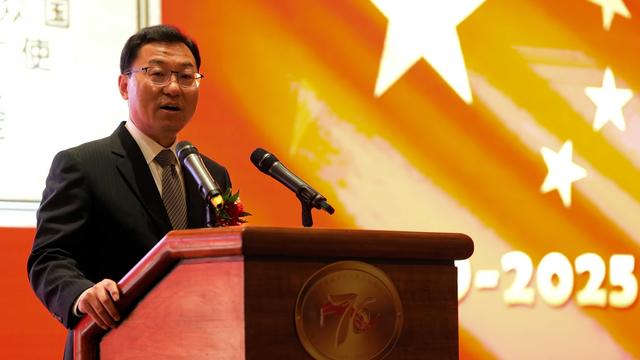
谢锋大使致辞:希望美方采取实际行动,与中方相向而行
Bei Jing Ri Bao Ke Hu Duan· 2025-09-29 05:15
Core Points - The speech celebrates the 76th anniversary of the founding of the People's Republic of China, highlighting the achievements of the Chinese Communist Party in leading the nation towards economic development and social stability [3][4] - China is advancing towards modernization and national rejuvenation through innovation-driven development, achieving significant milestones in various technological fields [3][4] - The country has maintained its position as the world's second-largest economy, with a GDP growth of 5.3% year-on-year in the first half of the year, and has made strides in poverty alleviation and social welfare [4] - China is committed to expanding its openness and creating win-win opportunities for global trade, with ongoing reforms to reduce restrictions on foreign investment [4] - The speech emphasizes China's role in promoting world peace and stability, advocating for mutual respect and cooperation in international relations, particularly with the United States [5][6] Group 1 - The speech acknowledges the contributions of overseas Chinese in the development of both China and the United States, highlighting their historical significance [7] - It calls for unity among Chinese people globally to support national rejuvenation and cultural exchange, emphasizing the importance of telling China's story [7] - The Chinese Embassy in the U.S. has been actively providing services to overseas Chinese, handling over 83,000 various certificates and addressing numerous consular cases this year [8]

展现跨越时空的魅力(权威论坛)
Ren Min Ri Bao· 2025-09-28 22:28
Core Viewpoint - The concept of "common values for all humanity" is gaining international recognition and serves as a guiding principle for building a community with a shared future for mankind, emphasizing peace, development, fairness, justice, democracy, and freedom as universal aspirations [8][10][12]. Group 1: Theoretical Foundation - The "common values for all humanity" is rooted in the inclusive nature of Chinese civilization, breaking away from the Western-centric view of global civilization and addressing issues like global governance deficits and underrepresentation of the Global South [8][9]. - It emphasizes a logical and organic integration of six key elements: peace, development, fairness, justice, democracy, and freedom, which are interdependent and essential for global governance [9][10]. Group 2: Practical Implications - The promotion of "common values for all humanity" is seen as a framework for dialogue and cooperation, transcending ideological and cultural differences, and is crucial in addressing global challenges such as climate change and public health crises [10][14]. - China's commitment to these values is reflected in its initiatives like the Belt and Road Initiative, which aims to foster global connectivity and mutual prosperity among developing countries [16][17]. Group 3: Global Governance - The "common values for all humanity" align with China's global governance initiatives, advocating for a more just, balanced, and inclusive international order, countering unilateralism and protectionism [18]. - The framework encourages multilateral cooperation to tackle global issues, providing a platform for countries to engage in dialogue and collaboration based on mutual respect and shared interests [11][12].

王毅同崔善姬会谈
券商中国· 2025-09-28 15:09
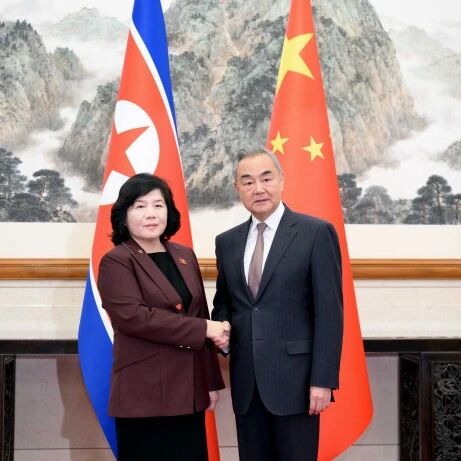
Core Viewpoint - The meeting between Chinese Foreign Minister Wang Yi and North Korean Foreign Minister Choe Son-hui emphasizes the importance of strengthening the traditional friendship and cooperation between China and North Korea, highlighting the strategic direction set by the recent meeting between Xi Jinping and Kim Jong-un [1][2]. Group 1: Bilateral Relations - Wang Yi stated that the traditional friendship between China and North Korea, cultivated by their leaders, is a valuable asset for both nations [1]. - Both countries aim to enhance strategic communication and cooperation to promote regional peace and development [1]. - Choe Son-hui expressed North Korea's commitment to deepening relations with China, emphasizing the importance of implementing the consensus reached by their leaders [2]. Group 2: Shared Ideals and Goals - Both nations share common ideals and goals as socialist countries, which can facilitate the exchange of governance experiences [1]. - The two countries support the concept of a community with a shared future for mankind and various global initiatives proposed by China [1][2]. Group 3: International Context - Wang Yi highlighted the current international situation characterized by chaos and hegemonic behavior, stressing the need for cooperation against unilateralism and power politics [1]. - Choe Son-hui acknowledged China's historical achievements and its rising international status, supporting China's contributions to building a multipolar world [2].
王毅同朝鲜外相崔善姬会谈
Xin Hua Wang· 2025-09-28 15:07
Core Points - The meeting between Wang Yi and Choe Son-hui emphasizes the importance of the traditional friendship between China and North Korea, which is seen as a valuable asset for both nations [1] - The recent historic meeting between Xi Jinping and Kim Jong-un has provided direction and a blueprint for the development of China-North Korea relations [1] - Both countries aim to enhance strategic communication and cooperation to promote regional peace and development [1] Summary by Sections China-North Korea Relations - Wang Yi highlighted the commitment of the Chinese government to maintain, consolidate, and develop relations with North Korea as a strategic policy [1] - The two countries share common ideals and goals as socialist states, which can facilitate the exchange of governance experiences [1] International Cooperation - Wang Yi noted the current international situation marked by chaos and the dangers of hegemonic behavior, expressing appreciation for North Korea's support of China's core interests [2] - Both nations are willing to strengthen coordination in international and regional affairs to oppose all forms of hegemony and maintain mutual interests [2] Strategic Alignment - Choe Son-hui acknowledged China's historical achievements and international status, emphasizing the strategic guidance provided by the recent leadership meeting [3] - North Korea is committed to deepening relations with China and supports the concept of a community with a shared future for mankind, as well as various global initiatives proposed by China [3]
王毅同朝鲜外相崔善姬会谈
中国基金报· 2025-09-28 14:17
Group 1 - The core viewpoint of the article emphasizes the importance of strengthening and developing the traditional friendship between China and North Korea, which is seen as a valuable asset for both nations [4][5]. - The meeting between Wang Yi and North Korean Foreign Minister Choe Son-hui is framed as a continuation of the strategic direction set by the historic meeting between Xi Jinping and Kim Jong-un, aiming to enhance cooperation and mutual benefits for both countries [4][5]. - Wang Yi highlighted the need for both countries to exchange governance experiences to support their socialist development, especially in the context of current international challenges and the need to counteract hegemonic behaviors [7]. Group 2 - Choe Son-hui expressed North Korea's commitment to deepening relations with China, emphasizing the importance of the recent historic meeting between the two leaders as a driving force for cooperation [9]. - North Korea supports China's initiatives for a multipolar world and is willing to collaborate closely with China to resist unilateralism and hegemonic politics, aiming for a fairer global order [9]. - Both parties engaged in in-depth discussions on issues of mutual concern, indicating a strong desire for continued dialogue and cooperation [10].
第三届中国-文莱文化艺术节举行
Xin Hua She· 2025-09-28 08:44
Core Points - The third China-Brunei Cultural and Arts Festival opened on September 27 in Brunei's capital, Bandar Seri Begawan, with around 200 attendees including diplomats, local Chinese communities, and artists from both countries [1] - Chinese Ambassador to Brunei, Xiao Jianguo, highlighted the historical friendly exchanges between China and Brunei, emphasizing the importance of cultural exchanges in enhancing mutual friendship and understanding [1] - The festival aims to strengthen cultural communication and mutual learning between the two nations, using the event as a platform to build a bridge of connection in the hearts of the people [1] Event Highlights - The opening ceremony featured performances by the Nanjing Little Red Flower Art Troupe and local artists, showcasing dances, songs, and martial arts, along with calligraphy to express good wishes for China-Brunei relations [1] - A Chinese film exhibition and a seminar themed "China and Brunei's Maritime Silk Road: History and Future Prospects" were held, attracting active participation from various sectors in Brunei [1] - The festival lasts for two days and focuses on the Maritime Silk Road, displaying dozens of artworks created by artists from both countries, including paintings and calligraphy [1]
新华时评:以多边主义之光照亮全球治理新未来
Xin Hua She· 2025-09-28 05:29
Core Points - The 80th United Nations General Assembly is addressing the challenges facing the international order and the erosion of multilateralism [1] - Geopolitical conflicts, such as the Israel-Palestine conflict and the Ukraine crisis, highlight the inadequacies of the global governance system [1] - The need for a return to genuine multilateralism and the strengthening of the UN's authority is emphasized [1][3] Group 1 - The international community must enhance the representation and voice of developing countries in global governance [2] - Despite accounting for over 40% of the global economy, developing countries lack sufficient representation in international systems [2] - The concept of "selective multilateralism" undermines true multilateralism and contributes to the current challenges in the global governance system [2] Group 2 - China has made significant contributions to global southern development and governance reform through initiatives like the Belt and Road Initiative [3] - The concept of a community with a shared future for mankind has gained international consensus, reflecting China's commitment to global cooperation [3] - China's announcement of comprehensive national contributions to address climate change demonstrates its role as a responsible major power [3] Group 3 - The deep integration of multilateralism into the fabric of international society over the past 80 years is irreversible [4] - The international community is urged to uphold the principles of the UN Charter and defend multilateral mechanisms for a better future in global governance [4]
新华时评丨以多边主义之光照亮全球治理新未来
Xin Hua Wang· 2025-09-28 00:50
Group 1 - The article emphasizes the need for a return to genuine multilateralism to address global challenges and maintain the authority of the United Nations [2][3] - It highlights the erosion of multilateralism due to geopolitical conflicts and unilateral actions, which have led to a weakened global governance system [1][2] - The article calls for increased representation and voice for developing countries in international affairs, acknowledging their significant contribution to global economic output [2][3] Group 2 - The concept of "pseudo-multilateralism" is criticized, as it serves specific geopolitical goals and undermines the fairness and effectiveness of international rules [3] - China's initiatives, such as the Belt and Road Initiative and various global governance proposals, are presented as efforts to enhance collective voice and development opportunities for the Global South [4] - The article asserts that multilateralism is deeply embedded in international relations and calls for a collective commitment to uphold the principles of the UN Charter [4]
用行动促进南南合作,反霸权引起多国共鸣,中方在联大捍卫多边主义
Huan Qiu Shi Bao· 2025-09-27 22:39
Core Points - Chinese Premier Li Qiang emphasized the need for unity, peace, and common prosperity during his speech at the 80th United Nations General Assembly, calling for the defense of multilateralism and cooperation amid global turmoil [1][2] - The Chinese government reiterated its support for the United Nations' central role in global affairs and advocated for "true multilateralism," aiming to reduce U.S.-centric global policy-making [2][4] - A new China-UN South-South Development Support Mechanism was announced, with an initial funding of $10 million to promote sustainable development goals through practical South-South cooperation [3] Group 1 - The speech marked the first time in a decade that a high-ranking Chinese official addressed the UN General Assembly in person, highlighting China's commitment to global governance [2] - The Chinese leadership criticized unilateralism and protectionist measures, implicitly targeting the U.S. while positioning China as a defender of global order [3][4] - The call for multilateralism resonated with leaders from developing countries, indicating a growing alignment against unilateral actions and sanctions [4][5] Group 2 - The global governance initiative proposed by China emphasizes sovereign equality, adherence to international law, and a people-centered approach, aiming to create a fairer global governance system [2][3] - The remarks from various leaders at the UN, including those from Brazil and Kazakhstan, underscored a collective demand for a credible multilateral system to address pressing global issues [5]
新华时评|以多边主义之光照亮全球治理新未来
Xin Hua She· 2025-09-27 12:21
Core Points - The article discusses the challenges facing the international order, emphasizing the erosion of multilateralism and the impact of geopolitical conflicts such as the Israel-Palestine conflict and the Ukraine crisis [2][3] - It highlights the need for the international community to return to genuine multilateralism and strengthen the authority of the United Nations, which is seen as the cornerstone of post-World War II international order [2][4] - The article calls for increased representation and voice for developing countries in international affairs, noting that despite accounting for over 40% of the global economy, their influence remains insufficient [3][4] Group 1 - The current international order is facing severe challenges, with unilateralism and protectionism on the rise, leading to a sluggish global economy [2][3] - The authority and effectiveness of the United Nations are under multiple pressures, hindering its ability to play a core role in international affairs [2][4] - The article stresses the importance of recognizing the equal rights of all countries and providing institutional platforms for developing nations to participate in global governance [3] Group 2 - China is portrayed as a key player in promoting the development of the Global South and advocating for reforms in the global governance system [4] - Initiatives proposed by China, such as the concept of a community with a shared future for mankind and various global initiatives, are highlighted as contributions to addressing global challenges [4] - The article concludes by emphasizing the deep integration of multilateralism into the fabric of international society and the need for collective adherence to the principles of the UN Charter [4]