Autonomous Driving

Search documents
Investor letter reveals skyrocketing growth of Waymo's robotaxi rides
TechCrunch· 2025-12-08 21:58
Core Insights - Waymo has increased its weekly robotaxi rides to 450,000, nearly double the 250,000 rides reported six months ago [1][2] - The company is planning to expand its service to 12 additional cities by 2026, including Dallas, Denver, Houston, Nashville, and San Diego [3] Company Performance - Waymo's current weekly ride count reflects significant growth and operational scaling [2] - The increase in rides is part of an aggressive rollout strategy, indicating strong demand and operational capacity [3] Future Expansion - Waymo is set to expand its commercial robotaxi services from five cities to a total of 17 cities by 2026 [3] - The expansion plan highlights the company's commitment to increasing its market presence and service availability [3]


Reasoning VLA Models for Autonomous Driving
NVIDIA· 2025-12-08 18:26
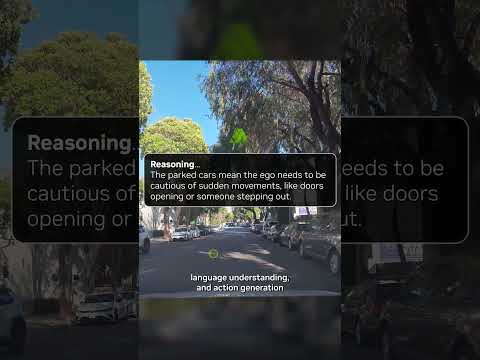
Technology & Innovation - Nvidia is developing reasoning vision language action models (reasoning GLA) for vehicles [1] - Reasoning GLA integrates visual perception, language understanding, and action generation [1] - The model aims to mimic human-like step-by-step reasoning for decision-making in complex situations [1]

Waymo to issue software recall over how robotaxis behave around school buses
TechCrunch· 2025-12-05 23:11
Core Viewpoint - Waymo plans to voluntarily issue a software recall to address concerns regarding its robotaxis' operation around school buses, following scrutiny from federal regulators and local officials [1][6]. Group 1: Incident Overview - The National Highway Traffic Safety Administration (NHTSA) initiated an investigation into Waymo after observing footage of its robotaxi maneuvering around a stopped school bus with its stop sign extended and lights flashing in Atlanta [2]. - Reports from the Austin School District indicated that Waymo's robotaxis illegally passed school buses 19 times in the current year, prompting further inquiries from regulators [4]. Group 2: Company Response - Waymo updated its software on November 17, claiming that the update significantly improved performance in scenarios involving school buses, asserting that it now performs better than human drivers [3][6]. - The company emphasizes its commitment to safety, stating that no injuries have occurred related to the behavior addressed by this recall, and it will continue to analyze and improve vehicle performance [6][7]. Group 3: Industry Context - Software recalls are increasingly common in modern vehicles, including robotaxis, where operations are primarily managed by software. These updates often occur before an official recall is filed with the federal government [8].

X @Tesla Owners Silicon Valley
Tesla Owners Silicon Valley· 2025-12-05 09:26
RT Esther Rebers (@EstherRebers)FSD Supervised in Europe:Another movie of us driving with FSD supervised last Monday in Dusseldorf.Here you see how the @Tesla drives itself back to Tesla Dusseldorf.Again in a chaotic and busy area.What we see so clearly in this video (even though irl you see and feel it much better) is that the Tesla moves very often to the left because of parked vehicles that are sticking out on our lane. The car did it in a very human-like way, smoothly and in control. It felt very safe, ...

Cathie Wood Dumps Tesla And Meta Shares, Here Is What Ark Invest Purchased Instead - Tesla (NASDAQ:TSLA)
Benzinga· 2025-12-05 01:44
Core Insights - Ark Invest, led by Cathie Wood, made notable trades including selling shares of Tesla and Meta while acquiring shares of ARK 21Shares Bitcoin ETF amid changing market conditions in tech and crypto sectors [1] Tesla Trade - Ark Invest sold 7,478 shares of Tesla, valued at approximately $3.4 million, with Tesla's stock closing at $454.53, reflecting a 1.74% increase [2] - Despite recent gains, Tesla has underperformed against major indices like the S&P 500 and NASDAQ 100, although advancements in autonomous driving may drive future growth, particularly in the Robotaxi sector [3] - Tesla remains Ark's top holding, with a stake valued at $949.82 million, representing 12.36% of the portfolio [3] Meta Trade - Ark Invest reduced its holdings in Meta Platforms by selling 11,056 shares through ARK Innovation ETF and 3,155 shares through ARKW ETF, totaling approximately $2.08 million, with Meta's stock closing at $661.53, up 3.43% [4] - This sale follows reports of significant budget cuts in Meta's metaverse division, with potential reductions of up to 30% and layoffs anticipated as early as January, amid weak adoption and losses exceeding $70 billion since 2021 [5] ARK 21Shares Bitcoin ETF Trade - Ark Blockchain & Fintech Innovation ETF and ARKW funds acquired a total of 52,200 shares of ARK 21Shares Bitcoin ETF, valued at around $1.6 million, with the ETF closing at $30.73 [6] - This acquisition aligns with Ark's ongoing interest in the cryptocurrency sector, despite Bitcoin's price volatility, which has seen significant fluctuations recently [7] Other Key Trades - Ark Invest purchased 158,981 shares of Trade Desk Inc. and 45,373 shares through ARKW, while selling 176,353 shares of Iridium Communications Inc. and 42,971 shares through ARKQ [9]

The 3 Stocks I’m Watching for Clues About a Potential Sentiment Shift in the Market in 2026
Yahoo Finance· 2025-12-04 16:26
分组1 - Tesla's sales are primarily driven by its electric vehicles (EVs), indicating that the company may take years or decades to evolve into a leader in autonomous driving, AI, and robotics as many investors currently anticipate [1] - Tesla's stock has experienced significant volatility but is currently trading near its all-time high, with a market capitalization of nearly $1.5 trillion, positioning it as a mega-cap company perceived by many investors as a technology firm [2] - The company's growth drivers include its advancements in autonomous driving, AI initiatives led by CEO Elon Musk, and developments in robotics, contributing to a valuation that surpasses most peers [2] 分组2 - Tesla is characterized as one of the most polarizing stocks in the market, reflecting a wide range of investor sentiment [3] - The stock's price movements will be crucial for investors to monitor in 2026, as they may indicate broader market trends [5]
Kodiak AI (KDK) Earns Strong Buy Consensus as Analysts See Up to 140% Upside
Yahoo Finance· 2025-12-04 04:31
Company Overview - Kodiak AI, Inc. (NASDAQ:KDK) specializes in autonomous driving technology and related services for the trucking industry, offering solutions like the Kodiak Driver for fleet automation and Kodiak OnTime for technology management [5]. Analyst Ratings - Kodiak AI, Inc. has a Strong Buy consensus from five analysts, all issuing Buy ratings, with an average twelve-month price target of $14.38, indicating a potential gain of 139.67% from a recent share price of $6.00 [1]. Market Performance - The company has logged over three million autonomous miles and delivered over ten thousand commercial loads by the third quarter, showcasing its growing momentum in the autonomous trucking space [3]. Future Projections - Cantor Fitzgerald anticipates 15 driverless truck deployments in 2025 and 70 in 2026, supported by regulatory clearance in twenty-four states for self-driving vehicles [4]. Recent Developments - Kodiak achieved a significant milestone in fiscal year 2024 by becoming the first company to roll out customer-owned driverless trucks through a partnership with Atlas, deploying 100 trucks equipped with its autonomous system in the Permian Basin [3]. Analyst Confidence - Analysts from TD Cowen and Cantor Fitzgerald have reiterated their positive outlook on Kodiak, with TD Cowen maintaining a $14 target and Cantor Fitzgerald an Overweight rating with a $13 target, reflecting steady confidence in the company's future [2].
Mobileye Global (NasdaqGS:MBLY) Conference Transcript
2025-12-03 19:52
Summary of Mobileye Global Conference Call (December 03, 2025) Company Overview - **Company**: Mobileye Global (NasdaqGS:MBLY) - **Industry**: Autonomous Driving Technology and Advanced Driver Assistance Systems (ADAS) Key Points Business Focus and Product Development - Mobileye is evolving its core competencies in ADAS, with a focus on next-generation systems for mass-market vehicles that enhance safety and meet stringent future test criteria [3][5][6] - The company is prioritizing the execution of existing design wins, particularly with Volkswagen Group, rather than seeking new design wins at this time [7][8] - There is significant market pull for cost-effective surround ADAS solutions, which are expected to be implemented broadly across various vehicle models [4][6][10] Robotaxi Business - The robotaxi segment is generating enthusiasm from investors and demand from ride-hailing companies like Uber and Lyft, as well as public transit operators [6][15] - Mobileye is exploring the potential of operating its own small fleet of vehicles to demonstrate technology capabilities and drive partnerships [16][27] - The company aims to remove safety drivers from its vehicles by mid-2026 in specific environments, with plans for scaled commercialization by the end of 2026 [22][23] Competitive Landscape - Mobileye acknowledges Waymo as a leader in the robotaxi space, but believes it has scaling advantages and is well-positioned to compete [25][32] - The company is cautious about relying on a few partners for scaling and is considering alternative partnerships to mitigate risks [27][63] Financial Outlook and Market Position - Mobileye expects to ship below demand in Q4 2025, leading to a tight inventory situation at the start of 2026 [38] - The company anticipates growth in market share, particularly in emerging markets like India, with significant vehicle launches planned for 2027 [40][42] - The SuperVision product line is stabilizing, with quarterly unit sales increasing from 12,000 to approximately 15,000-16,000 [43] Technology and Supply Chain Considerations - Mobileye is not directly responsible for sourcing memory components used in its systems, as this is managed by Tier 1 suppliers [56][57] - The company is monitoring potential memory shortages but does not foresee production impacts in the near term [60][61] Strategic Partnerships and Collaborations - Mobileye is not seeing significant interest from customers in committing to large-scale programs with competitors or startups, focusing instead on scaling its own products [63][64] Additional Insights - The company is leveraging lessons learned from competitors like Waymo to navigate regulatory environments and consumer expectations [31][32] - Mobileye's technology is positioned to provide cost savings for OEMs while generating revenue for itself, creating a mutually beneficial dynamic [11][14] This summary encapsulates the key discussions and insights from the Mobileye Global conference call, highlighting the company's strategic focus, competitive positioning, and market outlook.

Waymo Adds 4 New Cities to Its Roster. Everything to Know About the Robotaxi Service
CNET· 2025-12-03 16:46
Core Insights - Waymo is expanding its self-driving car operations into four new cities: Baltimore, Pittsburgh, St. Louis, and Philadelphia, with plans for both manual and autonomous driving [1][2][24][25][45]. Expansion and Operations - Waymo is starting manual driving in Baltimore, Pittsburgh, and St. Louis, while operating autonomously in Philadelphia with a human specialist monitoring [2][24][25][45]. - The company currently provides fully autonomous rides in Phoenix, San Francisco, Los Angeles, Atlanta, and Austin, utilizing the all-electric Jaguar I-Pace [2][6]. - Waymo has announced plans to expand its service to additional cities, including New Orleans, Minneapolis, Las Vegas, San Diego, Detroit, Nashville, Denver, Seattle, Dallas, Houston, and San Antonio, with expected public launches in 2026 [26][29][31][33][36][38][40]. Technology and Manufacturing - Waymo is opening a new 239,000-square-foot autonomous vehicle factory in Phoenix to increase its fleet from 1,500 to 3,500 vehicles, integrating sixth-generation self-driving technology [4]. - The company has partnered with Hyundai to incorporate its technology into the Ioniq 5 SUVs and is exploring collaboration with Toyota for future autonomous driving tech [5][54]. Safety and Performance - Waymo has driven over 100 million fully autonomous miles and provided more than 10 million paid rides, reporting significantly fewer crashes compared to average human drivers [6][7]. - The company's safety report indicates an 88% reduction in serious injury crashes and a 93% reduction in pedestrian injuries over 71 million autonomous miles driven [7]. Future Developments - Waymo's sixth-generation self-driving technology aims to enhance vehicle capabilities, particularly in extreme weather conditions, and will debut in the all-electric Zeekr RT [53]. - The company is also working on expanding its autonomous driving technology into trucking, although it is currently focusing on ride-hailing services [55][56].
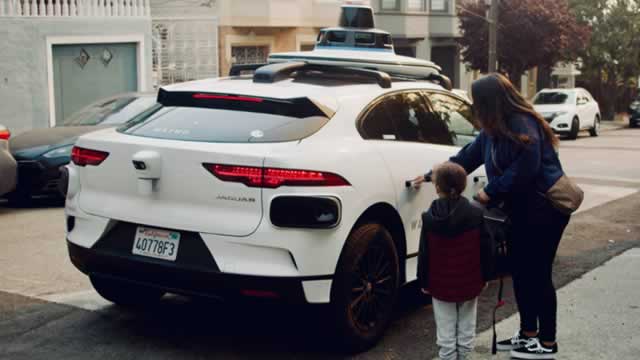
Waymo starts autonomous testing in Philadelphia
TechCrunch· 2025-12-03 14:00
Waymo is adding another four cities to its growing list of robotaxi rollouts. The company announced Wednesday it has begun testing its autonomous vehicles (with a safety monitor) in Philadelphia, and that it will start manual driving to collect data in Baltimore, St. Louis, and Pittsburgh.Waymo did not offer a timeline for when it plans to launch commercial services in those locations, nor do we know whether the Alphabet-owned company will partner with other companies to operate robotaxis in each one. That ...