Autonomous driving

Search documents
Why Pony AI Stock Surged More Than 7% Higher Today
The Motley Fool· 2025-07-23 21:13
The Chinese company takes a large step toward its goal of eventual commercial rollout.Autonomous driving technology specialist Pony AI (PONY 7.72%) had a fine Wednesday on the stock exchange, following news of the launch of an important pilot project in its native China. With that, investors turbocharged the stock, sending it more than 7% higher in value. That was more than good enough to top the 0.8% rise of the bellwether S&P 500 index.Big news in BeijingThat morning, Pony AI reported that vehicles powere ...


AI News: Sam Altman's Predictions, Talent Wars Continue, Project Stargate, Thinking Machines
Matthew Berman· 2025-07-23 15:37
This video is sponsored by Augment Code. More on them later. All right, first we have an update from Thinking Machines.They just raised a massive amount of capital for what I actually don't quite know. There is very little public information about what they're actually doing. What we do know is that they're going to be training models for enterprise.They just raised $2 billion led by A16Z who basically funds every single investment on the planet at this point with participation from Nvidia, Excel, Service N ...

'Google is at a crossroads' with AI, says T. Rowe Price's Tony Wang ahead of Big Tech earnings
CNBC Television· 2025-07-21 21:40
Generative AI & Technology Disruption - Google faces disruption risk from generative AI like ChatGPT, impacting search revenue as it transitions to an AI-driven model [1][2] - The market is watching Google's capex spend and the resulting innovation in AI [2] - IBM leverages its consulting arm as "customer zero" to implement and teach AI to clients, improving business returns through M&A [3][4] Autonomous Driving & Innovation - Tesla's autonomous driving, particularly its AI-first, camera-first approach, is a key differentiator, with potential for robo-taxi success [4] - Tesla's innovation pipeline and its potential to expand the Total Addressable Market (TAM) in AI and robotics are more critical than short-term car sales figures [4][5] Semiconductor Industry - The semiconductor sector has experienced a significant run-up, leading to higher expectations in the near term [6] - While TI and XBI are guiding to improving industrial fundamentals, the market is questioning whether valuations have outpaced fundamentals [6][7] - China, previously a tailwind, could become a headwind or a flat market for industrial semiconductors [7] Intel Turnaround - Intel's turnaround is idiosyncratic, requiring fixing the architecture versus node issue [8] - The market is eager to hear about the new CEO's priorities for getting the product roadmap back on track, attacking AI, and stabilizing the balance sheet [8]


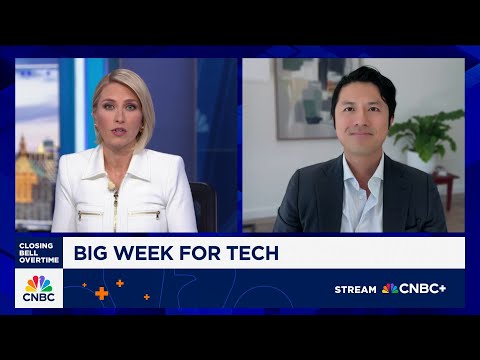
Lucid Soars on Multimillion Uber Deal -- Can It Go Higher Still?
The Motley Fool· 2025-07-20 22:05
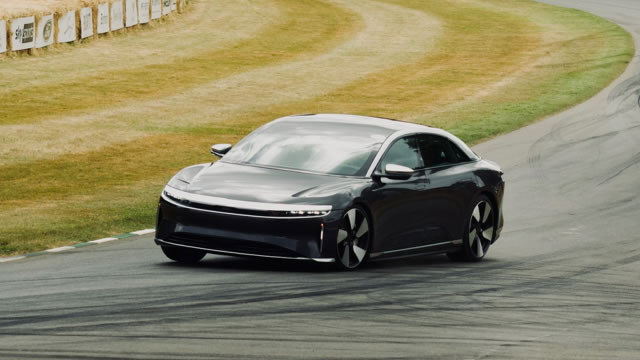
Core Viewpoint - Uber Technologies announced a partnership to deploy over 20,000 robotaxis in collaboration with Lucid Motors and Nuro, signaling a significant shift in Uber's strategy towards autonomous vehicle technology [3][7][10] Group 1: Partnership Details - Uber will invest $300 million in Lucid Motors, while Nuro will develop the self-driving technology for the robotaxis [3] - The deployment of the 20,000 robotaxis will occur over the next six years, with manufacturing likely starting late next year [5][6] Group 2: Impact on Lucid Motors - Lucid Motors' stock surged over 40% following the announcement, reflecting strong market sentiment towards the partnership [1] - The order for 20,000 vehicles is significant, especially considering Lucid's recent quarterly delivery record of 3,309 vehicles [5][10] - Lucid aims to leverage this partnership to enhance its market presence and capitalize on the growing demand for autonomous vehicles [5][10] Group 3: Uber's Strategic Shift - This partnership marks a new era for Uber, which had previously exited the robotaxi space in 2020, indicating a shift towards collaboration with multiple technology developers [7] - Uber is also pursuing other partnerships, such as with Volkswagen for commercial service in Los Angeles [7] Group 4: Industry Context - The autonomous vehicle sector faces challenges, including regulatory hurdles and high costs, which have led to the closure of several start-ups [8] - Competitors like Tesla and Waymo are advancing their driverless capabilities, with Tesla launching a pilot program and Waymo achieving significant milestones in autonomous driving [9]


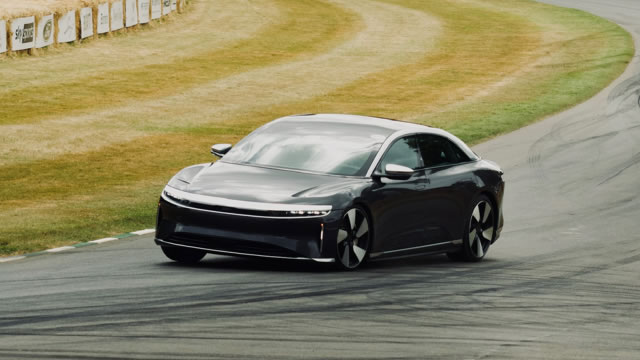
Is Lucid Stock a Screaming Buy After Uber's $300 Million Robotaxi Bet?
The Motley Fool· 2025-07-20 05:14
Core Viewpoint - Uber is partnering with Lucid Group to develop a fleet of robotaxis, marking a shift in the autonomous driving conversation away from Tesla and Waymo [1][2] Group 1: Partnership Details - Uber will invest $300 million into Lucid to support the production of at least 20,000 vehicles over the next six years, which will be equipped with autonomous driving software from Nuro [6] - Lucid joins other companies like Waymo and WeRide in Uber's autonomous vehicle ecosystem, indicating a strategic approach by Uber to collaborate with various manufacturers rather than developing its own vehicles [4] Group 2: Lucid's Financial Performance - Lucid's production and delivery figures have shown inconsistency, with production numbers ranging from 1,728 to 3,386 vehicles across different quarters, and deliveries fluctuating between 1,967 and 3,109 [8] - The gross margin for Lucid has been negative, with figures such as -134% in Q1 2024 and -89% in Q4 2024, indicating significant financial challenges [8] Group 3: Market Position and Risks - The deal may not be sufficient for Lucid to compete with established players like Waymo and Tesla, as the timeline for producing 20,000 vehicles lacks urgency amid increasing competition [11] - There are concerns regarding execution risks for Lucid, as the partnership appears to be more of a public relations move rather than a solid foundation for growth [12][13]
特斯拉-汽车文化、人才争夺战、政府持股、摒弃激光雷达-Tesla Inc-Car Culture, Talent War, Govt Stakes, No LiDAR
2025-07-19 14:57
Summary of Key Points from the Conference Call Company and Industry Overview - **Company**: Tesla Inc (TSLA.O) - **Industry**: Autos & Shared Mobility Core Insights and Arguments 1. **Car Culture Shift**: There is a notable decline in interest among younger generations towards cars, as evidenced by a 67% drop in attendance at the North American Auto Show from its peak in 2003, which had 838,000 attendees, to 275,000 attendees in the current year [4][5][5] 2. **Talent Acquisition Challenges**: As the automotive industry transitions towards AI-driven vehicles, legacy automakers face challenges in attracting top talent due to competitive offers from tech firms, which can reach multi-hundred-million-dollar contracts [1][4][5] 3. **Government Involvement**: The U.S. government is increasingly involved in the automotive sector, particularly in securing critical materials and rare earths, as seen in a recent partnership with MP Materials, which includes a 10-year price floor for NdPr and a 15% ownership stake [4][5][5] 4. **Tesla's Unique Approach**: Tesla continues to focus on a camera-only approach for its robotaxi fleet, which contrasts with the sensor fusion methods (camera, radar, LiDAR) used by competitors. This strategy is seen as a way to accelerate learning and improvement in autonomous driving technology [5][7][7] 5. **AI Day Anticipation**: The company is expected to host an 'AI Day' soon, primarily to attract talent in the competitive AI and robotics landscape [4][5][5] Financial Metrics and Projections 1. **Stock Rating**: Morgan Stanley rates Tesla as "Overweight" with a price target of $410.00, while the stock closed at $319.41 on July 17, 2025 [2][2][2] 2. **Market Capitalization**: Tesla's current market cap is approximately $1,124,643 million [2][2][2] 3. **Earnings Per Share (EPS) Estimates**: EPS projections are as follows: - FY 2024: $2.41 - FY 2025: $1.58 (estimated) - FY 2026: $2.88 (estimated) - FY 2027: $4.46 (estimated) [2][2][2] Additional Important Insights 1. **Long-term Valuation Components**: The price target of $410 is derived from various components, including $75/share for the core auto business, $160 for network services, $90 for Tesla Mobility, $67 for energy, and $17 for third-party supply [10][10][10] 2. **Risks Identified**: Potential risks include increased competition from legacy OEMs and tech companies, execution risks related to factory ramp-ups, and geopolitical risks, particularly concerning China [13][13][13] 3. **Cultural Shift in Engineering Inspiration**: The decline in car culture raises concerns about future inspiration for engineers, as fewer young people are motivated by automobiles compared to previous generations [4][4][4] This summary encapsulates the key points discussed in the conference call, highlighting Tesla's strategic positioning, market challenges, and financial outlook.
Uber drivers aren't worried about the company's driverless car plans. Who's going to handle tune-ups?
Business Insider· 2025-07-19 09:41
Core Viewpoint - Uber is investing $300 million in electric vehicle maker Lucid to develop driverless cars, aiming to deploy robotaxis in a major US city by 2026, while also partnering with Nuro for autonomous driving technology [1][11]. Investment and Partnerships - The investment in Lucid is part of Uber's strategy to introduce autonomous vehicles, with plans to have at least 20,000 driverless vehicles within six years [11]. - Uber's autonomous vehicles will be owned and operated by Uber or its third-party fleet partners, indicating a shift in operational costs from drivers to the company [10][11]. Competitive Landscape - Competitors like Waymo and Tesla are already operating driverless cars in cities, which presents challenges for Uber as it seeks to catch up [2]. - Uber drivers express skepticism about the immediate impact of autonomous vehicles on their jobs, suggesting that human drivers will still be needed for the foreseeable future [3][4]. Operational Challenges - The transition to robotaxis may create new operational headaches for Uber, particularly in managing the costs associated with owning and maintaining vehicles, which are currently borne by drivers [5][10]. - Uber plans to focus its autonomous vehicles on ride-hailing services rather than food deliveries, which may affect drivers who currently split their time between both services [11][12]. Future Outlook - Analysts expect that third-party fleet managers and financial partners will play a significant role in owning the autonomous vehicles as Uber expands its fleet [11]. - The integration of autonomous vehicles is seen as a long-term goal, with drivers indicating that it may take several years before such technology becomes commonplace [3][4].

Wall Street sets Lucid stock 12 month price target
Finbold· 2025-07-18 13:35
Core Viewpoint - Lucid's shares surged over 36% following a partnership announcement with Uber and Nuro, indicating a potential turnaround for the company [1] Group 1: Stock Performance - Lucid's stock rose from $2.28 on July 16 to $3.12 by market close on July 17, increasing its market cap to approximately $7.1 billion [2] - The stock had previously experienced a 24% decline year-to-date and reached a 52-week low of $1.93 [2] - In pre-market trading, Lucid was at $3.05, down 2.25% [2] Group 2: Partnership Details - The partnership involves integrating at least 20,000 Lucid Gravity SUVs with Nuro's Level 4 autonomous technology for deployment on the Uber platform over the next six years, with testing already underway [5] - A formal rollout is expected in a major U.S. city in 2026 [5] Group 3: Financial Aspects - Uber will invest $300 million directly into Lucid, providing a modest financial cushion as Lucid scales up Gravity production [6] - Benchmark analysts reaffirmed a Buy rating, citing strong Q2 deliveries of 3,309 vehicles and sufficient liquidity for growth [6] Group 4: Strategic Implications - Lucid's largest shareholder, who controls a 64% stake, also owns about 4% of Uber, which may enhance strategic alignment between the two companies [7] - The deal could lead to further opportunities, including autonomy-focused partnerships and licensing Lucid's EV technology to traditional automakers [7] - Lucid may also position itself as a gateway for Chinese EVs entering the U.S. market [7] Group 5: Market Outlook - Morgan Stanley maintains an Equalweight rating on Lucid with a 12-month price target of $3.00, noting the partnership offers strategic upside as Lucid expands in the autonomous driving space [3][8]
Why is Lucid stock surging?
Finbold· 2025-07-17 13:12
Group 1 - Lucid's stock increased by 46.72% in premarket trading following Uber's announcement of a $300 million investment in the electric vehicle maker as part of a six-year robotaxi partnership [1][4] - Under the agreement, Uber will deploy at least 20,000 Lucid vehicles equipped with Nuro's self-driving technology over a six-year period, with the first robotaxis expected to launch in a major U.S. city next year [3][4] - The partnership marks a significant shift for Lucid from focusing on luxury consumer vehicles to entering the commercial robotaxi market [5] Group 2 - Lucid's first robotaxi prototype is currently being tested at Nuro's Las Vegas proving grounds, with the vehicles set to be owned and operated by Uber or its fleet partners [6] - Lucid filed a preliminary proxy statement with the SEC regarding a special stockholders' meeting to authorize a 1-for-10 reverse stock split, which the company believes will make its common stock more attractive to investors [7] - The reverse stock split will not affect stockholders' ownership interests or voting power, except for potential cash payments for fractional shares, and requires majority approval from votes cast at the special stockholders' meeting [8]
After Years of Lagging, Can Uber Save Baidu's Stock?
Forbes· 2025-07-17 09:00
Group 1: Core Insights - Baidu's stock surged nearly 9% following a collaboration with Uber to introduce autonomous vehicles on Uber's platform outside of China and the U.S. [2] - The partnership marks a significant step in Baidu's efforts to internationalize its autonomous driving initiatives, with initial launches expected in Asia and the Middle East by the end of 2025 [3] - Baidu's Apollo Go division reported over 1.4 million rides in Q1 2025, a 75% increase year-over-year, and operates over 1,000 fully driverless vehicles across 15 cities [4] Group 2: Market Potential - Uber's human-driven rides generated a $375 billion annual revenue pool, indicating a substantial opportunity for the autonomous sector, which could potentially double the existing ride-hailing market to a $750 billion opportunity [4] - The demand for autonomous ride-hailing is expected to increase as users experience the benefits, with Robotaxis like Waymo showing higher customer retention and fewer accidents [4] Group 3: Challenges and Valuation - Baidu's stock has faced challenges due to a slower-than-expected post-Covid economic recovery in China, leading to reduced advertising revenue in its core search business [5] - The emergence of generative AI has created uncertainty for traditional search models, with competition from other Chinese tech giants like Alibaba and Tencent [5] - Baidu is currently valued at around $90 per share, trading at approximately 10x projected 2025 earnings, significantly lower than its nearly 40x multiple during the pandemic, with nearly $22 billion in net cash [6]