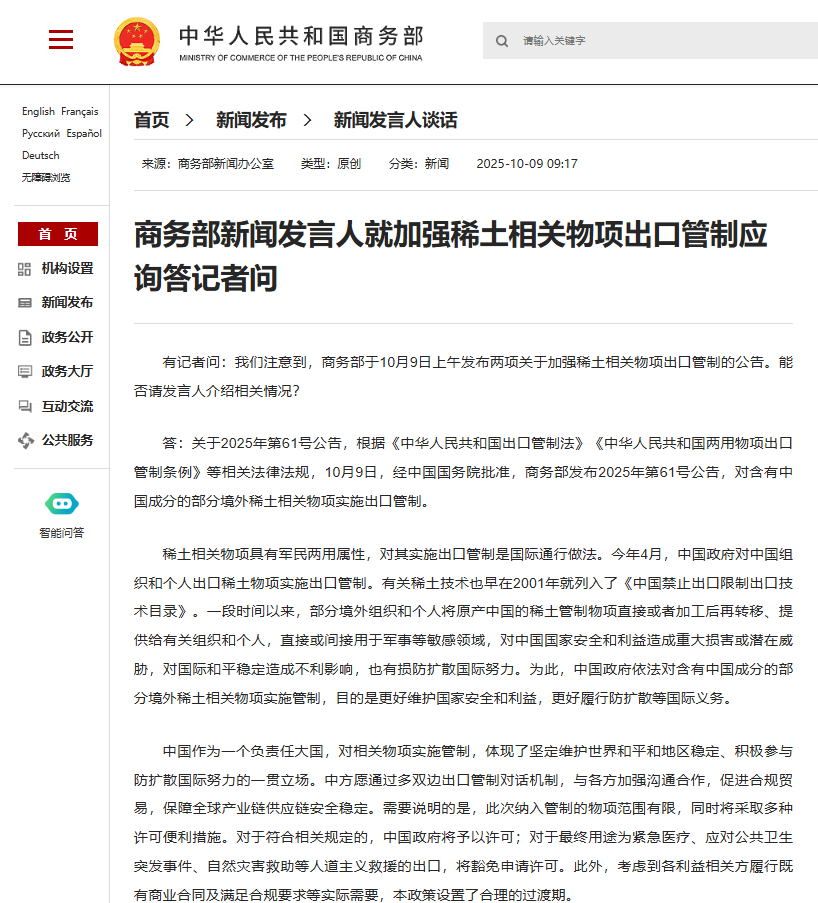
稀土出口管制

Search documents
加强稀土相关物项出口管制!商务部回应
Xin Hua She· 2025-10-09 08:55
Core Viewpoint - The Chinese government has implemented export controls on certain rare earth-related items containing Chinese components to better safeguard national security and fulfill international non-proliferation obligations [1][2][4] Group 1: Export Control Announcements - On October 9, the Ministry of Commerce announced two notices regarding the strengthening of export controls on rare earth-related items, approved by the State Council [1] - The export controls are based on the Export Control Law of the People's Republic of China and the Regulations on the Export Control of Dual-Use Items [1][3] Group 2: Rationale for Export Controls - Rare earth-related items possess dual-use attributes, and implementing export controls is a common international practice [2][3] - There have been instances where foreign organizations and individuals have illegally obtained rare earth technologies from China, posing significant threats to national security and international stability [2][4] Group 3: Compliance and Exemptions - The scope of the controlled items is limited, and various licensing facilitation measures will be implemented [3] - Exports for humanitarian purposes, such as emergency medical responses and disaster relief, will be exempt from licensing requirements [3] - A reasonable transition period has been established to accommodate existing commercial contracts and compliance needs [3]
中国加强稀土出口管制,金力永磁、北方稀土等稀土概念股集体拉升
Feng Huang Wang· 2025-10-09 08:19
Core Viewpoint - The recent announcement by the Ministry of Commerce regarding export controls on rare earth materials and technologies has led to a significant surge in the stock prices of rare earth permanent magnet companies in China, indicating a strong market reaction to regulatory changes [1][2][3]. Group 1: Market Reaction - On October 9, rare earth permanent magnet stocks collectively surged, with companies like Antai Technology (涨停), Jinli Permanent Magnet (up 12.48%), and others seeing increases of over 8% [1]. - The announcement of export controls has triggered a positive market sentiment towards companies involved in rare earth production and technology [1]. Group 2: Export Control Details - The Ministry of Commerce issued announcements on October 9, detailing export controls on specific rare earth items and related technologies, requiring exporters to obtain licenses for certain transactions [2][3]. - Export applications to military users and those on control lists will generally not be approved, emphasizing the strategic importance of rare earth materials [2][3]. Group 3: Strategic Importance of Rare Earths - Rare earths, comprising 17 metal elements, are critical for various strategic industries, including advanced weaponry, aerospace, renewable energy, and smart manufacturing [5]. - China holds approximately 49% of the world's rare earth reserves, with a production share of nearly 70%, underscoring its dominance in the global rare earth market [5]. Group 4: Regulatory Context - The Ministry of Commerce highlighted that the export controls align with international practices and are aimed at safeguarding national security and interests [4]. - The controls are part of a broader strategy to prevent illegal acquisition of rare earth technologies by foreign entities, particularly for military applications [4].




稀土产业政策点评:稀土出口管控持续强化,二次资源回收正式进入管控范畴
Western Securities· 2025-10-09 08:13
Investment Rating - The industry investment rating is "Overweight" [5][10] Core Viewpoints - The recent announcements from the Ministry of Commerce regarding export controls on rare earth materials and technologies are aimed at protecting national security and interests, particularly against military applications [2][3] - The new regulations include strict controls on the export of rare earth materials with Chinese components and related technologies, which are expected to significantly impact the supply chain and market dynamics [4] - The report anticipates that by 2025, the contribution of secondary resource recycling to rare earth supply will reach 27%, indicating a new high and a complete control over the supply side [4] Summary by Sections Export Control Policies - The export control measures target specific rare earth materials and technologies, requiring exporters to obtain licenses for items containing at least 0.1% Chinese-origin components [2] - The controlled materials primarily include heavy and medium rare earth metals such as samarium, dysprosium, gadolinium, and others [2] Impact on Industry - The report suggests that the comprehensive control over the supply side will limit the potential for sudden increases in supply, thereby supporting long-term bullish sentiment on the rare earth and magnetic materials sectors [4] - Recommended companies in the upstream rare earth materials include Northern Rare Earth, China Rare Earth, and Shenghe Resources, while midstream magnetic material companies include Jinli Permanent Magnet and Zhenghai Magnetic Materials [4]


商务部重磅发布两条稀土出口管制公告,稀土ETF(159713)大涨超5.7%!
Mei Ri Jing Ji Xin Wen· 2025-10-09 06:38
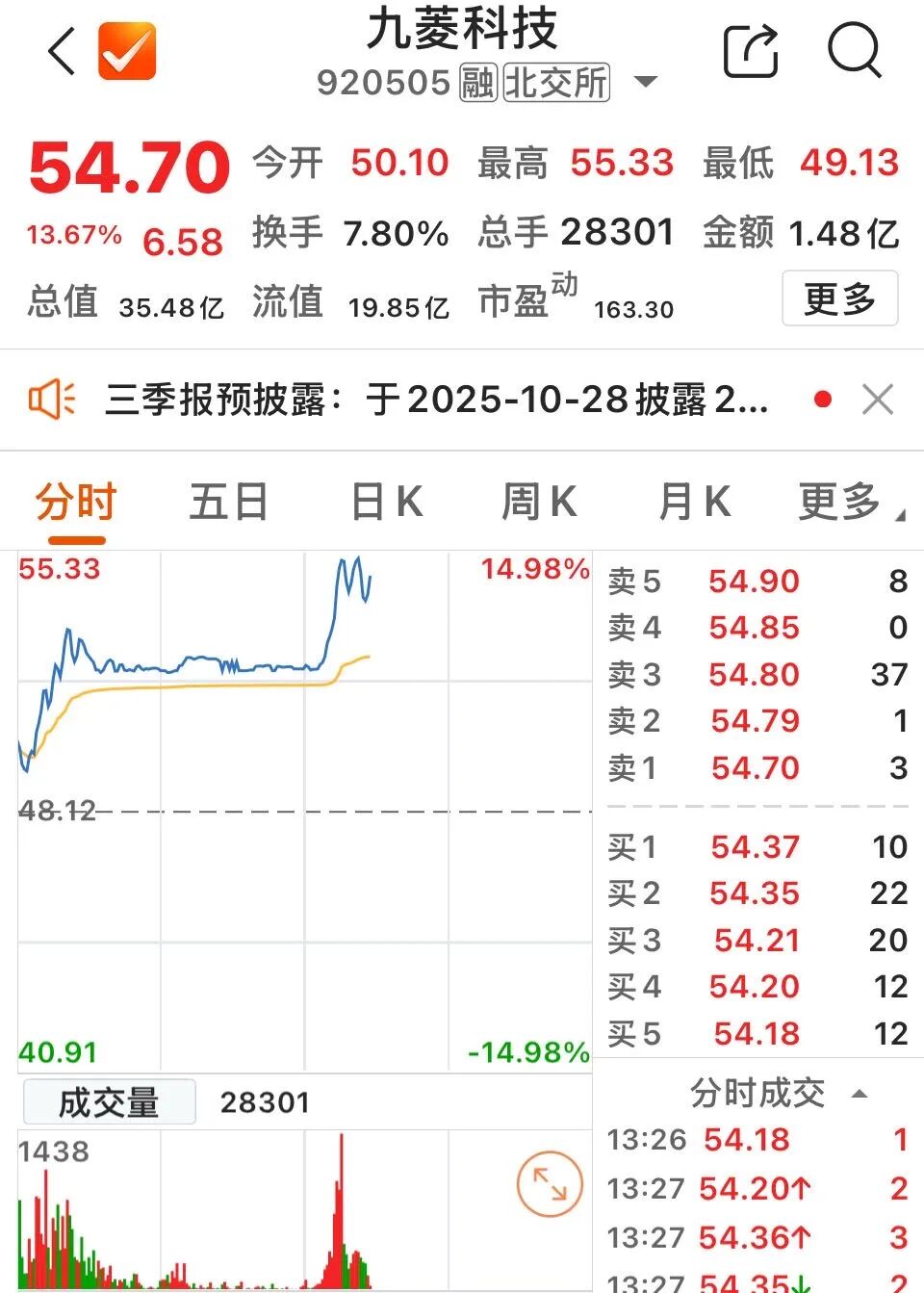
Core Viewpoint - The Ministry of Commerce announced export controls on certain rare earth items and technologies, leading to a significant rise in the rare earth and rare metal sectors, with the rare earth ETF (159713) experiencing a peak increase of 5.71% during trading [1] Group 1: Market Reaction - The rare earth ETF (159713) saw a trading volume of 155 million shares and a transaction value of 202 million yuan, reaching a record high since its listing [1] - Key stocks in the sector, such as Jiuling Technology and Jinli Permanent Magnet, surged over 13% and 10% respectively, while companies like Antai Technology and Goldwind Technology hit the 10% daily limit [1] Group 2: Strategic Importance - The strategic value of rare earths is expected to increase due to the government's strengthened control over production quotas and export management, reinforcing their role as a critical resource for high-end manufacturing and emerging industries [1] - The dual resonance of supply and demand is evident, with the government ensuring resources are directed towards high-end applications while global green transitions and carbon neutrality goals are driving demand for key elements like praseodymium and neodymium [1] Group 3: Long-term Drivers - The strategic position of the rare earth industry is likely to be further solidified amid rising supply concentration and demand structure upgrades, providing long-term momentum for high-end manufacturing development [1] - The rare earth ETF (159713) is positioned to help investors easily access the rare earth industry chain [1]
部分境外组织从中国非法获取稀土技术,商务部加强出口管制
Nan Fang Du Shi Bao· 2025-10-09 06:35
据商务部网站,稀土相关物项具有军民两用属性,对其实施出口管制是国际通行做法。今年4月,中国 政府对部分稀土物项实施出口管制。有关稀土技术早在2001年已经列入《中国禁止出口限制出口技术目 录》。相关出口需遵守法律程序要求。 新闻发言人介绍道,今年以来,国家出口管制工作协调机制办公室组织开展打击战略矿产走私出口专项 行动,取得积极成效。同时,有关部门也发现部分境外组织和个人从中国非法获取稀土技术,生产稀土 相关物项并提供给军事等敏感领域用户或者用于军事等敏感领域用途,对中国国家安全和利益造成重大 损害或潜在威胁,对国际和平稳定造成不利影响。为防范相关风险,中国政府经审慎评估后,决定对稀 土相关技术实施出口管制,同时对中国组织和个人从事相关活动作出明确规定,以更好维护国家安全和 利益,更好履行防扩散等国际义务,同时也保障全球稀土产业链供应链安全稳定。 南都讯 记者杨文君发自北京 10月9日上午,商务部发布两项关于加强稀土相关物项出口管制的公告,即 《商务部公告2025第61号公布对境外相关稀土物项实施出口管制的决定》和《商务部公告2025第62号公 布对稀土相关技术实施出口管制的决定》。商务部新闻发言人就公告相关 ...

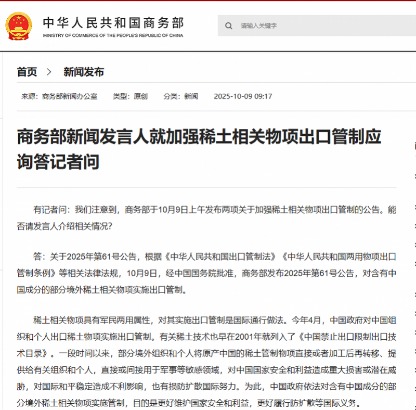
午后,稀土板块爆发
Shang Hai Zheng Quan Bao· 2025-10-09 06:01
Core Viewpoint - The rare earth permanent magnet sector in A-shares has seen significant gains, driven by new export control announcements from the Chinese Ministry of Commerce regarding rare earth-related items and technologies [1][5][8]. Group 1: Market Performance - As of 13:30, the rare earth permanent magnet concept index rose over 4%, with notable stock performances including Jiuling Technology up over 13%, Jieli Permanent Magnet up over 11%, and Antai Technology hitting the daily limit [1]. - Other companies in the sector, such as Northern Rare Earth, Zhongmin Resources, Baogang Co., and China Rare Earth, also experienced gains [1]. Group 2: Export Control Announcements - The Ministry of Commerce issued two announcements regarding the export control of certain rare earth-related items, with the first announcement (2025 No. 61) targeting items containing Chinese components and the second (2025 No. 62) focusing on rare earth-related technologies [5][8]. - The measures are aimed at protecting national security and interests, as well as fulfilling international obligations related to non-proliferation [8].

中国发布两项公告 加强稀土相关物项出口管制
Zhong Guo Xin Wen Wang· 2025-10-09 05:10
Core Points - China has announced two measures to strengthen export controls on rare earth-related items and technologies, citing national security and international obligations as primary reasons [1][2] - The measures aim to prevent the illegal acquisition of rare earth technologies by foreign organizations and individuals, which have been used in military applications, posing a threat to China's national interests [2] Group 1: Export Control Measures - The Ministry of Commerce has implemented export controls on certain rare earth-related items containing Chinese components, as these items have dual-use properties [1] - The scope of the controlled items is limited, and various licensing facilitation measures will be adopted to ease compliance for eligible exporters [1] - Exports for humanitarian purposes, such as emergency medical responses and disaster relief, will be exempt from licensing requirements [1] Group 2: National Security and Compliance - The Chinese government has identified risks associated with foreign entities illegally obtaining rare earth technologies, which could be used in sensitive military applications [2] - The new regulations are designed to better safeguard national security and fulfill international non-proliferation obligations while ensuring the stability of the global rare earth supply chain [2]
金力永磁涨超3% 商务部公布对稀土相关技术实施出口管制决定 国内稀土供给端优势凸显
Zhi Tong Cai Jing· 2025-10-09 03:53
消息面上,10月9日,商务部公布对稀土相关技术实施出口管制的决定。公告称,以下物项未经许可不 得出口:稀土开采、冶炼分离、金属冶炼、磁材制造、稀土二次资源回收利用相关技术及其载体。稀土 开采、冶炼分离、金属冶炼、磁材制造、稀土二次资源回收利用相关生产线装配、调试、维护、维修、 升级等技术。 金力永磁(300748)(06680)涨超3%,截至发稿,涨3.08%,报24.74港元,成交额3.43亿港元。 兴业证券此前指出,国内供给优化叠加海外放量缓慢,中国稀土(000831)供给端优势难以取代。中国 稀土储量和产量在全球范围内均占据主导地位,且中国稀土开发具有全产业链优势,在国内实行总量指 标控制背景下,中国稀土供给增速或将持续放缓。短期内中国在全球稀土供给格局中仍占据主导地位, 在中国实行稀土总量控制的背景下,全球稀土供给增速或将放缓。拥有稀缺资源端和冶炼端产能及配额 的企业或将收益。 商务部新闻发言人就加强稀土相关物项出口管制应询答记者问,今年4月,中国政府对部分稀土物项实 施出口管制。有关稀土技术早在2001年已经列入《中国禁止出口限制出口技术目录》。相关出口需遵守 法律程序要求。今年以来,国家出口管制工 ...
港股异动 | 金力永磁(06680)涨超3% 商务部公布对稀土相关技术实施出口管制决定 国内稀土供给端优势凸显
智通财经网· 2025-10-09 03:51
智通财经APP获悉,金力永磁(06680)涨超3%,截至发稿,涨3.08%,报24.74港元,成交额3.43亿港元。 商务部新闻发言人就加强稀土相关物项出口管制应询答记者问,今年4月,中国政府对部分稀土物项实 施出口管制。有关稀土技术早在2001年已经列入《中国禁止出口限制出口技术目录》。相关出口需遵守 法律程序要求。今年以来,国家出口管制工作协调机制办公室组织开展打击战略矿产走私出口专项行 动,取得积极成效。 消息面上,10月9日,商务部公布对稀土相关技术实施出口管制的决定。公告称,以下物项未经许可不 得出口:稀土开采、冶炼分离、金属冶炼、磁材制造、稀土二次资源回收利用相关技术及其载体。稀土 开采、冶炼分离、金属冶炼、磁材制造、稀土二次资源回收利用相关生产线装配、调试、维护、维修、 升级等技术。 兴业证券此前指出,国内供给优化叠加海外放量缓慢,中国稀土供给端优势难以取代。中国稀土储量和 产量在全球范围内均占据主导地位,且中国稀土开发具有全产业链优势,在国内实行总量指标控制背景 下,中国稀土供给增速或将持续放缓。短期内中国在全球稀土供给格局中仍占据主导地位,在中国实行 稀土总量控制的背景下,全球稀土供给增速或 ...
商务部发声!加强稀土相关物项出口管制
Zhong Guo Zheng Quan Bao· 2025-10-09 03:14
稀土相关物项具有军民两用属性,对其实施出口管制是国际通行做法。今年4月,中国政府对部分稀土物项实施出口 管制。有关稀土技术早在2001年已经列入《中国禁止出口限制出口技术目录》。相关出口需遵守法律程序要求。 稀土相关物项具有军民两用属性,对其实施出口管制是国际通行做法。今年4月,中国政府对中国组织和个人出口稀 土物项实施出口管制。有关稀土技术也早在2001年就列入了《中国禁止出口限制出口技术目录》。一段时间以来, 部分境外组织和个人将原产中国的稀土管制物项直接或者加工后再转移、提供给有关组织和个人,直接或间接用于 军事等敏感领域,对中国国家安全和利益造成重大损害或潜在威胁,对国际和平稳定造成不利影响,也有损防扩散 国际努力。为此,中国政府依法对含有中国成分的部分境外稀土相关物项实施管制,目的是更好维护国家安全和利 益,更好履行防扩散等国际义务。 中国作为一个负责任大国,对相关物项实施管制,体现了坚定维护世界和平和地区稳定、积极参与防扩散国际努力 的一贯立场。中方愿通过多双边出口管制对话机制,与各方加强沟通合作,促进合规贸易,保障全球产业链供应链 安全稳定。需要说明的是,此次纳入管制的物项范围有限,同时将采取多 ...