
Web3.0

Search documents
树图公链跻身世界第一梯队 与全球主流公链打通跨链桥 自主可控区块链“高速公路”再升级
Jie Fang Ri Bao· 2025-07-20 02:14
Group 1 - The Conflux Tree Graph Technology and Ecological Development Conference was held in Shanghai from July 18 to 20, focusing on the development and application trends of blockchain and Web 3.0 technology [1] - Conflux Tree Graph public chain 3.0 is set to launch in August, featuring a comprehensive technical upgrade to enhance Web 3.0 infrastructure for developers and users [1][2] - The Tree Graph blockchain has processed 170 million transactions and has over 25 million global users, establishing a full-category Web 3.0 ecosystem [2] Group 2 - The transaction confirmation time has been reduced from under 30 seconds in version 2.0 to under 26 seconds in version 3.0, with full compatibility with the Ethereum Virtual Machine ecosystem [3] - Strategic partnerships have been formed with institutions like Fudan University and Qingdao International Copyright Trading Center to promote offshore RMB stablecoin issuance and cross-border settlement in Belt and Road countries [3] - The new public chain aims to create a "digital highway" supporting 15,000 transactions per second and native AI capabilities for cross-border payments and RWA asset settlement [2]
隆重亮相!我月花 50 萬打造了全台最完整的幣圈新手投資營:從資產配置、技術分析、保本理財、還有更多!18 到 80 歲,所有你在幣圈需要的一切
腦哥 Chill塊鏈· 2025-07-19 10:45
🔔限時超早鳥優惠! 第一屆鏈習生 Web3.0 投資實戰營🔔 7/27(日)23:59 前報名完成,限時低於 52 折 ⏰名額有限,報滿為止! 購課填寫折扣碼 brain500 【再折抵 500 元】 ✅ https://chainee.pse.is/7wmf7a 7/20 更新:目前名額已滿。如果希望報名的學員敬請追蹤鏈習生IG粉專。期待後續消息🙏 如果你也有這些困擾: 想要進入幣圈,卻苦於沒真人親帶 想學技術分析,但網路上資訊太雜 想靠交易賺錢,但又擔心被甩下車 🏁Web3.0 投資實戰營,就是為你而開 我們用 45 天陪跑+2 天密集實戰課,幫你從觀念建立、資金配置、低風險理財,到技術面交易、工具操作,一次學會、即刻應用。 課程亮點一次帶走: 🟢 開營前先送:10 餘堂初階課程 + 實體、線上諮詢時段,讓你不用等到上營,不錯過任何行情開始入局! 🟢 實戰訓練營(8/16~8/17) 2 天密集衝刺:從配置買幣、買幣時機、保本工具、到高收益的技術分析兩天的時間一次入門 (備註:學員可線上錄播重看) 🟢 線上陪跑營(8/18~10/1)45 天內化功力:私人小群、線上解盤課、熱點教學、顧問式諮詢、盤勢分分析 ...

代币化基金,孤注一掷?
Hu Xiu· 2025-07-19 00:04
Core Viewpoint - Huaxia Fund (Hong Kong) has successfully issued tokenized funds in USD and RMB, completing its layout across three major currencies, amidst uncertainties in regulation, technology, and market perception [1][9]. Group 1: Tokenized Funds - Tokenized funds convert traditional currency fund shares into digital tokens that can circulate on the blockchain, maintaining the same underlying assets as traditional money market funds [1][2]. - The disruptive potential of tokenized funds lies not in returns or safety, but in the transformative possibilities brought about by their new form [1][2]. Group 2: Market Context - Over 95% of stablecoins are pegged to the US dollar, with over 80% of transactions occurring outside the US, indicating a significant global expansion of the dollar through digital means [5][6]. - China's passive avoidance of virtual currencies could lead to a loss of influence in the emerging global financial order, necessitating an active embrace of digital currencies and related innovations [6][8]. Group 3: Regulatory Developments - Recent legislative actions in Hong Kong, including the passage of the Stablecoin Ordinance and the release of the Hong Kong Digital Asset Development Policy Declaration 2.0, aim to position Hong Kong as a leading hub for digital assets and Web3 innovation [9]. Group 4: Industry Dynamics - The financial industry must adapt to avoid obsolescence, as traditional models face disruption from Web 3.0 technologies like blockchain and smart contracts [10][11]. - The transition from traditional fiat systems to blockchain-based stablecoins is expected to revolutionize the financial ecosystem within the next 5 to 10 years [11][12]. Group 5: Competitive Landscape - Huaxia Fund (Hong Kong) recognizes the urgency to innovate in a competitive landscape, where failure to adapt could lead to decline [13][21]. - The success of established players like BlackRock, which launched a tokenized fund that quickly grew to nearly $2.9 billion in assets, demonstrates the viability of this path [18][19]. Group 6: Strategic Intent - Huaxia Fund (Hong Kong) aims to capture the trillion-dollar offshore RMB asset management demand by establishing itself as a core player in the digital finance space [19][20]. - The company’s first-mover advantage in the tokenized fund market positions it favorably against potential competitors who may face significant entry barriers [20].
押注Web3.0,蔡文胜再度出手!标的公司大涨近700%
2 1 Shi Ji Jing Ji Bao Dao· 2025-07-18 08:03
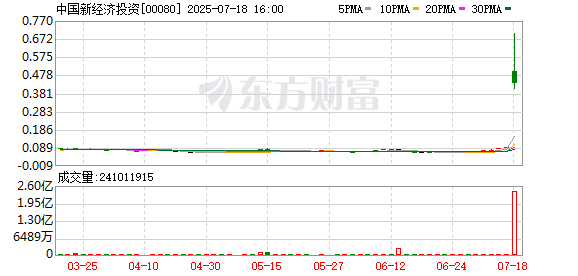
Core Viewpoint - Cai Wensheng has acquired controlling stakes in two Hong Kong-listed companies within a month, indicating a strategic move to expand his investment portfolio in the financial sector and technology industries [2][5]. Group 1: Acquisition Details - On July 18, China New Economy Investment (00080.HK) saw its stock price surge nearly 700% to a peak of HKD 0.70 per share, compared to HKD 0.089 before suspension [2]. - Cai Wensheng proposed to acquire over 669 million shares, approximately 50.71% of the equity, at HKD 0.106 per share, totaling over HKD 70 million [2]. - The acquisition price represents a premium of about 19.1% over the last closing price, triggering a mandatory general offer for the remaining shares at a cost of HKD 69.38 million [2]. Group 2: Future Investment Plans - China New Economy Investment plans to invest in licensed wealth management companies, focusing on regulated activities under the Securities and Futures Ordinance, including securities advice and asset management [3]. - The company aims to diversify its investment portfolio by engaging in global financial markets, bonds, and financial derivatives [3]. - Cai Wensheng intends to attract strategic investors to collaborate on investments in technology incubation enterprises in Hong Kong and mainland China, particularly in artificial intelligence and Web3 sectors [4]. Group 3: Background on Cai Wensheng - Cai Wensheng, a prominent figure born in the 1970s, gained initial wealth through domain trading and has made angel investments in various successful projects [5]. - He has been appointed as a non-official member of the Hong Kong government's task force to promote Web3 development, effective from July 1, 2025 [5].
港股概念追踪 | 加密行业里程碑!美国众议院通过三大加密货币法案 影响几何?(附概念股)
智通财经网· 2025-07-17 23:30
Group 1: Legislative Developments - The U.S. House of Representatives passed the GENIUS Act, a significant step for stablecoin regulation, with 308 votes in favor and 122 against, indicating strong bipartisan support [1] - The CLARITY Act, which aims to establish a regulatory framework for cryptocurrencies, has also been passed by the House and will be sent to the Senate for review [2] - The CBDC Anti-Surveillance State Act was approved with a narrow margin of 219 votes for and 217 against, aimed at preventing the Federal Reserve from issuing or testing central bank digital currencies without Congressional approval [2] Group 2: Market Reactions and Company Responses - Following the passage of the GENIUS Act, Circle's stock price remained stable, while Bitcoin experienced a slight increase from $118,500 to $119,300 [1] - Huobi Technology, now known as New Fire Technology Holdings, announced the issuance of 166 million subscription shares, representing a 22.08% increase in share capital, to fund operations and compliance upgrades in various jurisdictions [4] - China San San Media plans to apply for a stablecoin license in Hong Kong, viewing it as a strategic opportunity to enter the cryptocurrency sector and enhance its business [5] Group 3: Industry Initiatives - Huaxia Fund (Hong Kong) launched two tokenized money market funds, marking a significant development in the tokenization space, with the RMB tokenized fund being the first of its kind globally [3] - The establishment of LK Crypto by Blueport Interactive aims to integrate the group's crypto assets and Web3 resources, focusing on mainstream crypto asset management and real-world asset (RWA) sectors [5]
香港加速打造全球虚拟资产中心
Shen Zhen Shang Bao· 2025-07-17 18:06
Group 1 - The virtual asset market is rapidly developing, with Hong Kong accelerating its efforts to establish itself as an international virtual asset center, attracting Chinese brokerage firms to enter the market [1] - The Hong Kong government views Web3.0 and virtual assets as core strategies to reshape financial competitiveness, having released the "Virtual Asset Policy Declaration" in 2023 to support industry innovation [1] - The Hong Kong Securities and Futures Commission (SFC) has tightened regulations, implementing a "dual license" system for virtual asset trading platforms, with 11 institutions already obtaining formal licenses [1] Group 2 - Hong Kong is exploring the issuance of an official stablecoin, the "Digital Hong Kong Dollar," aimed at providing an anchor asset for the virtual economy and enhancing cross-border payment capabilities [2] - Companies listed in Hong Kong are accelerating their layout in the Web3.0 sector, covering various areas such as trading platforms, data analysis, and asset tokenization [2] - OSL Group, as Hong Kong's first licensed virtual asset trading platform, reported a 79% year-on-year revenue increase to HKD 375 million in 2024, with a trading volume exceeding HKD 100 billion [2] Group 3 - Other Hong Kong-listed companies, such as Boyaa Interactive, Victory Securities, and Blueport Interactive, have also made moves in the cryptocurrency space, with stock price increases of 97%, 176%, and 60% respectively this year [3]


誼礫控股 :通过一般授权发行可换股债券募资约 2000 万港元 开发 Web3.0 项目
Xin Lang Cai Jing· 2025-07-17 12:27
Group 1 - The company, Yili Holdings, announced a financing plan through the issuance of zero-coupon convertible bonds totaling HKD 19,950,000 (approximately HKD 20 million) [1] - The initial conversion price of the bonds is set at HKD 0.25, representing a premium of about 2.4% over the closing price of HKD 0.244 on July 17, 2025 [1] - Upon full conversion, the bonds will result in the issuance of 79,800,000 shares (approximately 8 million shares), which will account for about 18.4% of the existing issued share capital and approximately 15.6% of the enlarged share capital [1] Group 2 - The proceeds from the financing will be used for the development of Web 3.0 projects, with approximately HKD 20 million allocated for this purpose [1] - Yili Holdings' main business includes investment holding, global sales of graphite products, manufacturing and sales of electronic products, and the design and manufacturing in the UK [1]
多地提示稳定币风险!
券商中国· 2025-07-16 23:19
Core Viewpoint - The rise of "stablecoins" has led to an increase in illegal activities, with fraudulent entities using the concept to attract investments under the guise of financial innovation and high returns [1][2][3]. Regulatory Concerns - Financial regulatory bodies in multiple regions have observed that some illegal institutions are exploiting terms like "financial innovation," "digital currency," and "blockchain technology" to promote investment projects that promise high returns, thereby luring the public into trading and speculation [2][4]. - These activities are seen as potential illegal financial operations that can lead to illegal fundraising, fraud, and money laundering, which disrupts economic and financial order [3][4]. Risk Warnings - Regions such as Henan and Zhejiang have issued risk warnings regarding illegal fundraising under the guise of stablecoins, urging the public to avoid such financial activities [4][5]. - The Beijing Internet Finance Industry Association has identified characteristics of illegal fundraising projects involving "virtual currencies" and "stablecoin investment projects," including lack of qualifications, misleading promises, and risk overflow [4]. Legal Framework - The illegal institutions lack the necessary qualifications to publicly solicit deposits, as they operate without approval from national financial management departments [5]. - There are no legal venues for virtual currency trading within China, and engaging in overseas virtual currency transactions poses risks to investors, who bear the losses themselves [5][6]. Judicial Challenges - The prohibition of virtual currency financial transactions in China has led to exchanges relocating overseas, complicating law enforcement and evidence collection [7]. - Courts face challenges in executing cases involving virtual currencies due to insufficient legal frameworks, necessitating improved judicial collaboration and execution mechanisms [7]. Regulatory Developments - As the market value and circulation of stablecoins increase, discussions on their regulation are becoming more urgent, with countries like the U.S. and Hong Kong implementing relevant regulations [8]. - There is a pressing need to explore regulatory pathways for stablecoins that align with China's national context to ensure financial security and stability [8].

利好频发 稳定币概念牛股扎堆 港股加幂科技累计涨幅达1040% 成为“10倍大牛股”
Shen Zhen Shang Bao· 2025-07-16 16:38
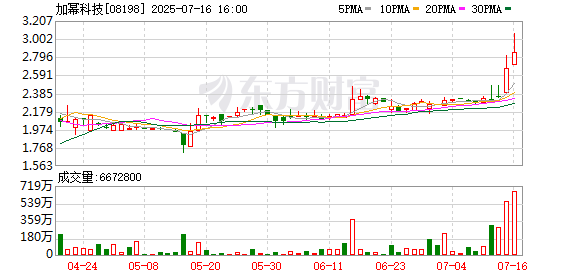
Core Viewpoint - The stablecoin concept has gained significant attention in the capital market due to favorable policies, leading to remarkable stock price increases for several companies in this sector [2][3]. Group 1: Company Performance - As of July 16, 2023, the stock of 加幂科技 has surged by 1040%, making it a "10x bull stock" [2]. - Other Hong Kong stocks related to stablecoins have also seen impressive gains, with 耀才证券金融 up 497.37%, 国泰君安国际 up 480.10%, and 金涌投资 up 351.93% [3]. - In the A-share market, 恒宝股份 has increased by 250.01%, while 四方精创 and 楚天龙 have risen by 163.11% and 115.10%, respectively [3]. Group 2: Industry Trends - The rise in stablecoin stocks is attributed to the increasing interest in Web3.0 and blockchain technologies, particularly as the cryptocurrency market recovers [2]. - 加幂科技 has been actively investing in Web3.0-related businesses, including the development of on-chain data analysis platforms and DEX aggregators [2]. - The current market sentiment is driven by future expectations rather than actual business performance, indicating that many companies are still in the early stages of stablecoin-related business development [4]. Group 3: Analyst Insights - Analysts caution that while the stablecoin concept is currently popular, many companies lack substantial business performance disclosures related to stablecoins, leading to speculative trading based on future expectations [4]. - There is a warning against blindly chasing high stock prices, as some companies may be experiencing inflated valuations without solid business foundations [4]. - Investors are advised to focus on companies with advanced technology, leading market shares, and strong management for sustainable investment opportunities [4].
警惕利用“稳定币”非法集资!多地发布风险提示
Zheng Quan Shi Bao· 2025-07-16 10:40
Group 1 - The concept of "stablecoins" has recently gained attention, leading to an increase in illegal activities using this term as a lure [1][2] - Financial regulatory authorities in multiple regions, including Henan and Zhejiang, have issued risk warnings regarding illegal fundraising activities disguised as stablecoin investments [2][3] - These illegal institutions often lack proper qualifications and use misleading concepts to attract public investment, promising high returns and creating information asymmetry [2][4] Group 2 - There are currently no legal virtual currency trading venues in China, and engaging in overseas virtual currency trading lacks consumer protection, leaving investors to bear their own losses [3] - The People's Bank of China and other departments have clarified that virtual currencies do not have the same legal status as fiat currencies and should not be circulated as money [4][6] - The exploration of regulatory pathways for stablecoins that align with China's national conditions is deemed urgent and necessary due to the increasing market value and circulation of stablecoins [6] Group 3 - A new channel for handling overseas virtual currencies has been established by the Beijing Municipal Public Security Bureau, allowing for the disposal of seized virtual currencies through the Beijing Stock Exchange [5] - This process involves professional service institutions for detection and transfer, followed by public sale through compliant overseas exchanges, ensuring adherence to foreign exchange management regulations [5]