
区块链

Search documents
区块链技术周报:分层协同,基础设施走向成熟
GUOTAI HAITONG SECURITIES· 2026-03-31 05:45
Investment Rating - The report does not explicitly state an investment rating for the industry Core Insights - The Ethereum Foundation has clarified the roles of Layer 1 (L1) and Layer 2 (L2) in the ecosystem, emphasizing that L1 serves as the core settlement layer while L2 focuses on differentiated expansion and services [9][12] - Starknet has launched the STRK20s testnet, aiming to provide a privacy token standard that allows for configurable privacy while remaining compliant with regulations, potentially positioning Starknet as a preferred issuance layer for institutional privacy assets [14][15] - The introduction of the Open Wallet Standard (OWS) by MoonPay aims to address the lack of a unified wallet standard for AI agents, enhancing security and interoperability across platforms [18][20] - The Vision Chain, launched by Bitpanda, is designed as a compliance-first Layer 2 blockchain for European financial institutions, facilitating the issuance and settlement of tokenized assets under regulatory frameworks [22][26] - The Solana Developer Platform (SDP) represents a shift from a public chain to a financial services platform, integrating various services into a unified API to lower barriers for traditional institutions [24][27] Summary by Sections 1. Ethereum Ecosystem L1 and L2 Differentiation - The Ethereum Foundation's recent update marks a significant shift in the understanding of L1 and L2 roles, with L1 focusing on global settlement and L2 extending Ethereum's core attributes to a broader user base [9][12] - The report highlights that L2's primary goal has shifted from merely scaling Ethereum to providing differentiated functionalities and customizable services [9][12] 2. Post-Quantum Security Research - The Ethereum Foundation has launched a dedicated portal for post-quantum security research, indicating a proactive approach to address potential future threats from quantum computing [16][17] 3. AI Agent Open Wallet Standard (OWS) - OWS aims to fill the gap in the AI agent economy by providing a secure, cross-chain wallet infrastructure that does not expose private keys, thus enhancing security and interoperability [18][20] 4. Emergence of Compliance Layer 2 - Vision Chain is positioned as a compliance-first infrastructure for European financial institutions, addressing the need for a regulatory-compliant blockchain for tokenized assets [22][26] - The Solana Developer Platform (SDP) integrates multiple services into a single API, facilitating the development of financial applications on the Solana blockchain [24][27]
区块链技术周报:分层协同,基础设施走向成熟-20260331
GUOTAI HAITONG SECURITIES· 2026-03-31 03:17
Investment Rating - The report does not explicitly provide an investment rating for the industry Core Insights - The Ethereum Foundation has clarified the roles of Layer 1 (L1) and Layer 2 (L2) in the ecosystem, emphasizing that L1 serves as the core settlement layer while L2 focuses on differentiated expansion and services [9][12] - Starknet has launched the STRK20s testnet, with the mainnet expected to go live by the end of April 2026, aiming to provide privacy features for assets on its platform [14][15] - The Ethereum Foundation has introduced a portal for post-quantum security research, indicating a proactive approach to future threats posed by quantum computing [16][17] - MoonPay has released the Open Wallet Standard (OWS), which aims to address the wallet standardization issue in the AI agent economy, allowing for secure and efficient cross-platform transactions [18][20] - Bitpanda has launched Vision Chain, a compliance-focused Layer 2 blockchain aimed at European financial institutions, facilitating the issuance and settlement of tokenized assets under regulatory frameworks [22][26] - The Solana Foundation has introduced the Solana Developer Platform (SDP), transitioning from a public chain to a financial services platform, integrating various infrastructure services for enterprises [24][27] Summary by Sections 1. Ethereum Ecosystem L1 and L2 Differentiation - The Ethereum Foundation's recent update marks a significant shift in the understanding of L1 and L2 roles, with L1 designated as a global settlement layer and L2 focusing on extending Ethereum's core attributes to a broader user base [9][12] - The report highlights that L2's primary goal has shifted from merely scaling Ethereum to providing customized services and functionalities [9][12] 2. Post-Quantum Security Research - The Ethereum Foundation has launched a dedicated portal for post-quantum security research, showcasing ongoing efforts to enhance the resilience of Ethereum's infrastructure against future quantum threats [16][17] 3. AI Agent Wallet Standard OWS - MoonPay's OWS aims to fill the gap in the AI agent economy by providing a standardized wallet infrastructure that allows for secure asset management and transactions without exposing private keys [18][20] 4. Compliance Layer 2 Initiatives - Vision Chain, launched by Bitpanda, is designed to support European financial institutions in issuing and settling tokenized assets while adhering to regulatory requirements [22][26] - The Solana Developer Platform (SDP) aims to lower the technical and compliance barriers for traditional institutions to build financial applications on the Solana blockchain [24][27]
财富链(00616) - 自愿公佈 - 有关订立谅解备忘录的最新资料
2026-03-27 10:30
香港交易及結算所有限公司及香港聯合交易所有限公司對本公佈的內容概不負 責,對其準確性或完整性亦不發表任何聲明,並明確表示,概不對因本公佈全部 或任何部份內容而產生或因倚賴該等內容而引致的任何損失承擔任何責任。 Asset Chain Limited 財富鏈有限公司 (於百慕達註冊成立之有限公司) (股份代號: 616) 自願公佈 有關訂立諒解備忘錄 的最新資料 本公佈乃由財富鏈有限公司(「本公司」,連同其附屬公司統稱「本集團」)自願作出, 以 就 本 集 團 業 務 發 展 向 本 公 司 股 東(「股 東」)及 潛 在 投 資 者 提 供 最 新 資 料。 謹提述日期為2025年12月24日 的 本 公 司 公 佈(「該公佈」),內 容 有 關 就 認 購 合 營 公 司 股 份 而 訂 立 諒 解 備 忘 錄。除 另 有 說 明 外,本 公 佈 所 用 詞 彙 與 該 公 佈 所 界 定 者 具有相同涵義。 誠 如 該 公 佈 所 載,根 據 諒 解 備 忘 錄,本 公 司 與 其 他 潛 在 認 購 方 擬 認 購 合 營 公 司 的股份,而預期該公司的主要業務為發展及╱或投資穩定幣及╱或其他區塊鏈相 ...
Cobo 的内部 AI 转型:从孵化尝试到“硅碳共治”
Xin Lang Cai Jing· 2026-02-25 09:41
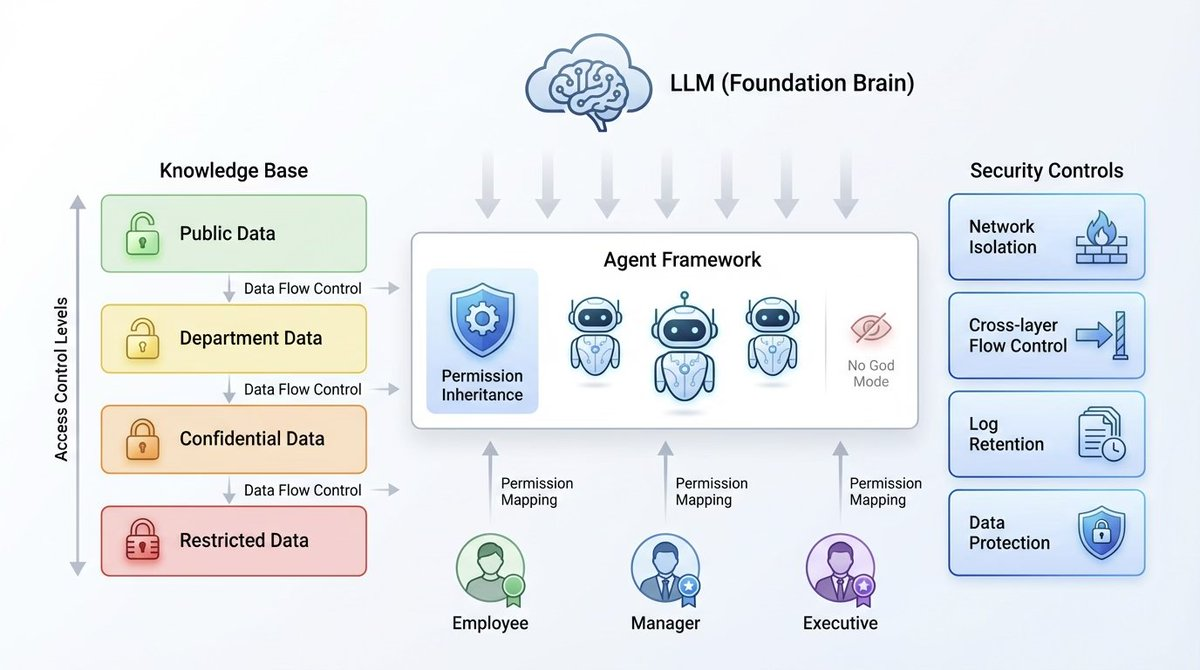
Core Insights - Cobo is exploring the integration of AI and blockchain, aiming to create a standardized skill potential through its MCP application store, although initial attempts faced challenges due to high technical barriers and costs [1][2] - The company has shifted focus from external client transformation to internal improvements, emphasizing data security and the development of an internal knowledge base and agent framework [2][4] - Cobo has implemented a top-down approach to encourage AI adoption within the organization, starting with the OKR Agent to enhance management processes and accountability [6][8] Internal Transformation - The company established a structured internal knowledge base that assigns data access based on employee permissions, ensuring security and preventing data leaks [4][5] - Initial resistance to AI from frontline employees was addressed by integrating AI into performance metrics, making it essential for employees to engage with the technology [8][12] - Over 100 specialized agents have been developed across various departments, promoting a culture of collaboration between humans and AI systems [10][12] Strategic Insights - Cobo emphasizes the importance of healthy cash flow to support the transition towards AI integration, viewing AI as a long-term structural upgrade rather than a cost-saving tool [14][15] - A strong push from management is deemed necessary for successful organizational change, as spontaneous transformation is unlikely [16][17] - Mandatory usage of AI tools is critical for achieving meaningful process changes, rather than mere encouragement [19][20] Future Outlook - The company is transitioning from a human-driven process to a goal-driven system, indicating a significant shift in operational dynamics [23] - Cobo has launched the Cobo WaaS Skill, designed for AI Coding Agents, which enhances the integration and operational capabilities of agents, reducing development cycles [24][25] - The ongoing transformation reflects a broader understanding of needs in the AI era, positioning Cobo as a more advanced entity compared to its state in 2024 [26]

嘉楠科技(Canaan)宣布以约 3975 万美元对价收购 Cipher Mining 的三个...
Xin Lang Cai Jing· 2026-02-24 01:37
Core Insights - Canaan announced the acquisition of a 49% stake in Cipher Mining's Alborz, Bear, and Chief Mountain projects for approximately $39.75 million [1] - The projects are located in West Texas and have a total power capacity of 120 MW, with current operational hash rate of about 4.4 EH/s [1] - Canaan also purchased 6,840 Avalon A15Pro mining machines as part of the deal [1]


孙宇晨现身2026香港共识大会,波场TRON深度赋能基建韧性
Sou Hu Cai Jing· 2026-02-23 21:32
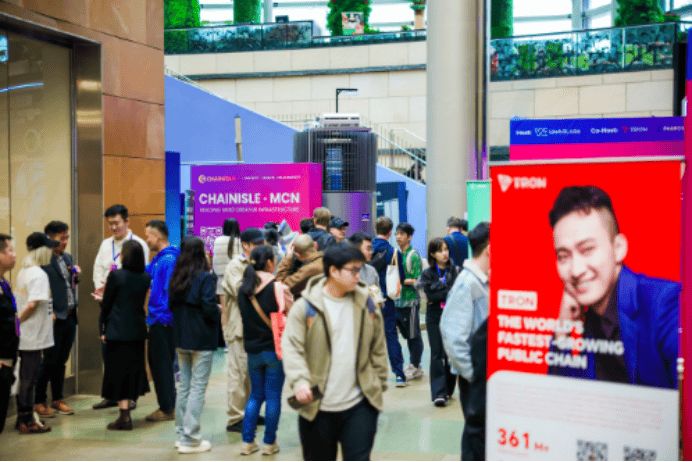
Core Insights - The 2026 Hong Kong Consensus Conference has commenced, serving as a global benchmark for the blockchain and Web3 sectors, featuring industry innovators and thought leaders [1] - Sun Yuchen, founder of TRON, delivered a keynote speech on building resilient blockchain infrastructure for a changing world, providing new perspectives on the development of blockchain technology [1] Group 1: Resilient Infrastructure - Resilient infrastructure is identified as a key factor for sustainable development in the blockchain ecosystem, addressing challenges such as performance bottlenecks, security risks, and compliance pressures [2] - TRON's network has achieved over 4000 TPS (transactions per second) through a layered architecture, balancing throughput and confirmation delays, while cross-chain protocols facilitate multi-asset flow [2] - The modular consensus algorithm introduced by TRON allows for efficiency or decentralization prioritization based on different scenarios, catering to diverse needs in DeFi, NFTs, and stablecoins [2] Group 2: Open and Collaborative Blockchain Network - TRON emphasizes the importance of building an open and collaborative network, moving away from isolated innovations, and has supported over 500 innovative projects through a one-stop development toolchain and ecosystem development fund [4] - Strategic partnerships with over 40 leading institutions have been established, covering various applications such as payment, identity verification, and supply chain finance, facilitating the transition of blockchain technology from labs to real-world applications [4] - TRON has implemented a comprehensive risk control system, including automatic auditing of smart contracts and real-time monitoring of abnormal transactions, ensuring data integrity and compliance across more than 15 jurisdictions [4] Group 3: Industry Evolution - Sun Yuchen's remarks reflect a shift in the blockchain industry from a focus on speed to resilience, and from singular technological innovation to ecological collaboration, marking a maturation of the sector [5] - The successful hosting of the Hong Kong Consensus Conference underscores the driving force of collaborative innovation in advancing the industry [5] - Building resilient blockchain infrastructure is not only a technical challenge but also a shared responsibility within the industry, essential for supporting the ambitious vision of the Web3 world [5]
当区块链遇见供应链:一场透明与信任的翻译革命
Sou Hu Cai Jing· 2026-02-23 16:48
Group 1 - The core idea of the articles emphasizes the intersection of blockchain technology and supply chain management, highlighting the challenges of transparency, data silos, and trust in traditional supply chains, and how blockchain offers innovative solutions [1] - The translation of technical terms and concepts in this field is crucial, as accurate terminology is essential for effective communication and understanding among stakeholders [1][2] - The rapid development of this sector necessitates continuous learning for translators to keep up with new terminology and concepts [1][2] Group 2 - In translation practice, professionals must ensure high precision, as even a minor error can lead to significant operational issues in technical documents [2] - Different types of documents, such as white papers and academic papers, require tailored approaches to balance technical accuracy and commercial appeal [2] - The importance of precise translation is underscored by the need for accurate communication in various sectors, including cross-border e-commerce and humanitarian aid, where transparency is vital [2][3] Group 3 - The example of South American coffee beans illustrates the practical application of blockchain in supply chains, where translation plays a key role in maintaining trust and transparency throughout the process [3] - Accurate translations of certification and quality reports are essential for ensuring the reliability of the entire supply chain [3] - The role of translation extends beyond commercial applications, significantly enhancing the transparency and trustworthiness of humanitarian aid efforts [3]

孙宇晨现身GWDC2026:定义稳定币与AI融合的下个十年
Sou Hu Cai Jing· 2026-02-23 14:35
Core Insights - The annual GWDC2026 event highlighted the significance of stablecoins in the Web3 ecosystem, with TRON's founder, Justin Sun, presenting a vision for the future of digital economy driven by stablecoins and AI [1][3]. Group 1: Stablecoins in the Digital Economy - TRON's stablecoins have a daily circulation exceeding $15 billion, supporting over 1 million independent addresses, with TRC20-USDT holding a market share of over 26% and an annual transaction volume surpassing $17 trillion [3]. - Stablecoins are positioned as the backbone of inclusive finance, simplifying transactions to the ease of sending a text message and making payments as convenient as scanning a QR code [3]. Group 2: AI Integration in Blockchain - The integration of AI is set to transform the collaborative efficiency of blockchain, with TRON's AI-driven smart contract optimization system improving transaction verification speed by nearly 40% and achieving a risk warning accuracy rate exceeding 99% [5]. - AI tools enable real-time tracking of fund flows, providing transparent and traceable decision-making for compliance, while automated market-making protocols enhance decentralized trading experiences [5]. Group 3: Expanding Ecosystem and Collaborations - TRON has established partnerships with 46 Fortune 500 companies, creating a distributed supply chain system covering 3,800 suppliers and processing 24 million megawatt-hours of green electricity transactions annually [6]. - The ecosystem is evolving from on-chain to off-chain, reconstructing traditional industry collaboration models, with a vision to create a secure, inclusive, and open global settlement layer [6]. Group 4: Future Vision - TRON aims to deeply penetrate three key areas in the next five years: green economy, digital identity, and AI + blockchain, driving technological innovation and social collaboration [6]. - The ultimate goal is to ensure traceability in every transaction and accountability in every collaboration, allowing equal access to the digital economy for all individuals [6][8].
孙宇晨All in AI背后:区块链的下一个增长点在哪里?
Sou Hu Cai Jing· 2026-02-22 02:06
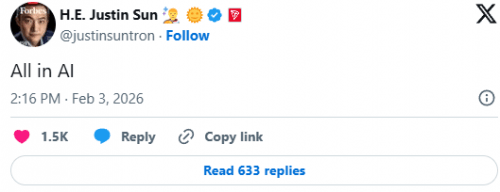
Core Viewpoint - The founder of TRON, Sun Yuchen, has publicly declared an "All in AI" strategy, emphasizing the importance of integrating artificial intelligence with blockchain technology for industry growth [1][2]. Group 1: AI and Blockchain Integration - Sun Yuchen believes that AI has the potential to drive the next wave of growth in the industry, but stresses the need for precise product-market fit [2]. - Current explorations in AI and blockchain are largely conceptual and lack products that resonate with consumers, indicating a need for a significant breakthrough akin to a "ChatGPT moment" [2][3]. - The industry must rely on proven applications like payments and settlements to support steady progress in blockchain technology [2]. Group 2: Practical Applications and Infrastructure - Despite a rational view of the current state, Sun Yuchen remains optimistic about the long-term potential of AI and blockchain collaboration, contingent on developers creating practical tools that meet real needs [3]. - The launch of AINFT.com is part of the effort to transition from concept to practice, aligning with the "All in AI" vision [3]. - TRON has been focused on technological innovation and ecosystem development, enhancing its underlying architecture to improve network performance, which is now a crucial part of global digital financial infrastructure [3]. Group 3: Real-World Impact of Blockchain - Sun Yuchen highlights the inclusive value of blockchain technology, noting its role in facilitating convenient global transactions, such as the digital dollar, especially in regions with currency trust issues [6]. - In countries like Bolivia, USDT on the TRON network has become a vital financial access channel, addressing local financial needs [6]. - The emphasis on real-world applications reflects the belief that both AI and blockchain must ultimately solve practical problems and be genuinely utilized by users [6][8]. Group 4: Future Directions - The "All in AI" declaration signifies a focus on developing usable products beyond mere concepts, with TRON aiming to enhance global digital financial infrastructure while exploring AI and blockchain integration [8].
孙宇晨拒绝概念空转,波场TRON做区块链务实派
Sou Hu Cai Jing· 2026-02-21 16:54
Core Insights - Sun Yuchen announced "All in AI" on the X platform, igniting discussions in the blockchain industry, emphasizing practical product development over theoretical concepts [1] - The integration of AI and blockchain is at a critical turning point, with a need for applications that directly address user needs rather than remaining at the conceptual level [1][5] - The launch of AINFT.com aims to provide practical solutions that combine AI and blockchain, marking a shift from theory to actionable strategies [1][5] Industry Developments - TRON's underlying architecture has achieved significant breakthroughs, with a single-chain throughput of 4000 TPS and a modular consensus algorithm adaptable to various scenarios [2] - The TRON ecosystem supports over 200 million users, with peak daily transactions exceeding 30 million, establishing itself as a reliable foundation for global commercial applications [2] - TRON's digital dollar settlement system facilitates seamless global fund transfers, addressing financial exclusion in regions like Bolivia where USDT is used for daily transactions and high-end imports [2] Strategic Collaborations - TRON's ecosystem expansion includes partnerships with 46 Fortune 500 companies to build a distributed supply chain system, processing 24 million MWh of green electricity transactions annually [4] - DeFi toolkits support cross-border payment settlements and on-chain derivatives trading, allowing users to engage directly in global markets through smart contracts [4] Future Directions - The deep integration of AI and blockchain is seen as a long-term industry direction, with a focus on practical applications that meet real-world demands [5] - The evolution of technology will center around practical scenarios, such as stablecoins addressing cross-border payment issues and AI enhancing transaction efficiency [5] - The ongoing advancements in TRON's infrastructure reflect a user-centered approach, validating the idea that technology should solve real problems rather than chase abstract concepts [7]