Physical AI

Search documents
51WORLD今起招股:将成“Physical AI第一股”,亦为今年港股18C收官之作
3 6 Ke· 2025-12-18 08:36
Core Viewpoint - 51WORLD is set to become the first "Physical AI" stock listed on the Hong Kong Stock Exchange, with its IPO expected to raise up to HKD 841 million, marking it as the last tech company to go public in Hong Kong this year [1][6]. Group 1: Company Overview - Founded in 2015, 51WORLD has developed a comprehensive technological capability in Physical AI, encompassing data fuel, spatial models, and training platforms, creating a closed-loop ecosystem that is difficult to replicate [2]. - The company has built a high-fidelity digital twin environment and a reinforcement learning environment that enhances the performance of spatial intelligent models [2]. - 51WORLD possesses a vast library of high-quality 3D assets and has established a full-stack approach to synthetic data technology, achieving a synthetic data authenticity rate of 90% and scene controllability of 100% [2]. Group 2: Product and Market Application - The company has launched two new AI platforms, Clonova and Aperdata, which bridge the digital and physical worlds, and is focusing on AI and 3D integration [3]. - 51WORLD's products are utilized by over 1,000 large and medium-sized enterprises across 19 countries, with applications in smart driving, transportation hubs, smart factories, and smart energy [3]. Group 3: Financial Performance - The revenue of 51WORLD for the years 2022, 2023, and 2024 is projected to be CNY 170 million, CNY 256 million, and CNY 287 million respectively, with a 63.6% increase in revenue from CNY 33 million in the first half of 2024 to CNY 54 million in the same period of 2023 [4]. Group 4: Investment and Market Position - 51WORLD has completed multiple rounds of financing, attracting investments from notable companies and funds, including domestic GPU pioneer Moore Threads and AI leader SenseTime [5]. - The listing of 51WORLD is expected to introduce a rare investment opportunity in the Physical AI sector to the Hong Kong market, which currently lacks companies with a complete Physical AI ecosystem and commercial validation [6].
“Physical AI第一股”五一视界开启招股:预计12月30日上市,葛卫东是股东
Sou Hu Cai Jing· 2025-12-18 06:23
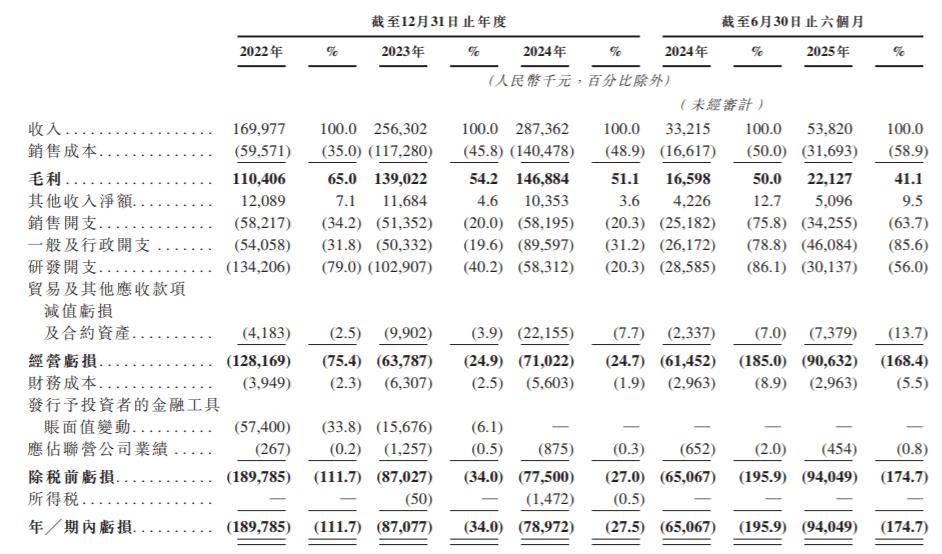
Core Viewpoint - Beijing 51World Digital Twin Technology Co., Ltd. (referred to as "51World") has launched its IPO, aiming to raise approximately HKD 841 million with a share price of HKD 30.5, and is expected to be listed on December 30 [1] Company Overview - 51World was established in February 2015 and focuses on creating a digital twin of Earth's 5.1 million square kilometers, leveraging core competencies in 3D graphics, simulation, and artificial intelligence [1] - The company has built a comprehensive physical AI ecosystem covering data, models, and platforms, with commercial applications in smart driving and smart factories [1] Market Position - According to Frost & Sullivan, 51World is the first company in the digital twin industry to propose and implement the Earth cloning plan, ranking first in revenue in China's digital twin industry for 2024 [1] - As of December 31, 2024, 51World leads in financing amounts within China's digital twin solutions market and is the first in the industry to achieve over HKD 250 million in revenue within a year [1] Financial Performance - For the fiscal years ending December 31, 2022, 2023, 2024, and the first half of 2025, 51World's revenues were HKD 169.977 million, HKD 256.302 million, HKD 287.362 million, and HKD 53.820 million respectively [2] - The corresponding net losses for these periods were HKD 189.785 million, HKD 87.027 million, HKD 77.500 million, and HKD 65.067 million [2] Funding History - 51World has undergone eight rounds of financing, ranking first in financing amounts in China's digital twin solutions market as of December 31, 2024, with the last round valuing the company at HKD 4.4 billion [3] - Notable investors include prominent funds such as Lightspeed, Yunjiu, StarVC, and SenseTime, as well as individual investors like Ge Weidong and Liang Bota [3][5] Shareholding Structure - As of the latest feasible date, LS 51World, Sky9 51World, and SenseTime hold 17.32%, 3.4%, and 2.3% of the shares respectively, while Ge Weidong and Liang Bota hold 2.2% and 1.7% through Grandwin HK [5]

摩尔线程、葛卫东共同投资!“Physical AI 第一股”51WORLD开启招股
Sou Hu Cai Jing· 2025-12-18 05:55
Core Viewpoint - The listing of 51WORLD marks a significant event in the Hong Kong stock market, particularly in the Physical AI sector, with the company aiming to raise up to 8.41 billion HKD through its IPO [2][3] Group 1: Company Overview - 51WORLD, established in 2015, has developed a comprehensive technological capability in Physical AI, focusing on three key components: data fuel, spatial models, and training platforms [2] - The company has created a closed-loop ecosystem in Physical AI, integrating synthetic data, spatial intelligent models, and simulation training platforms, establishing significant technological and ecological barriers [2] Group 2: Business and Commercialization - 51WORLD has launched three core business lines: 51Aes (digital twin platform), 51Sim (synthetic data and simulation platform), and 51Earth (digital earth platform), with applications across over 1,000 large and medium-sized enterprises globally [3] - The company's Physical AI products have been commercialized in various verticals, including smart driving, transportation hubs, smart factories, and smart energy [3] Group 3: Financial Performance - The company's revenue has shown strong growth, increasing from 170 million CNY in 2022 to 287 million CNY in 2024, representing a compound annual growth rate of 30.02% [3] - In the first half of 2025, 51WORLD achieved revenue of 53.82 million CNY, a 62% increase compared to the same period in 2024 [3] Group 4: Investment and Market Position - 51WORLD has attracted significant investment from notable entities, including domestic GPU leader Moore Threads and AI leader SenseTime, as well as well-known funds like Lightspeed, Yunjiu, Star VC, and individual investors such as Ge Weidong and Liang Bota [3] - The listing of 51WORLD is expected to fill a value gap in the AI hard technology sector within the Hong Kong stock market, as there are very few companies that combine a complete Physical AI ecosystem with proven commercialization [3]

51WORLD今起招股:将成「Physical AI第一股」,亦为今年港股18C收官之作
IPO早知道· 2025-12-18 05:25
Core Viewpoint - 51WORLD is set to become the first "Physical AI" stock listed on the Hong Kong Stock Exchange, with an IPO planned to raise up to HKD 841 million, highlighting its unique position in the market as a comprehensive Physical AI company [1][5]. Group 1: Company Overview - Founded in 2015, 51WORLD has developed a complete technological capability in the three key components of Physical AI: data fuel, spatial models, and training platforms, creating a closed-loop ecosystem that is difficult to replicate [2]. - The company has built a high-fidelity digital twin environment and a reinforcement learning environment that allows agents to understand, plan, and predict the physical world [3]. Group 2: Technology and Innovation - 51WORLD has accumulated a vast library of high-quality 3D assets and possesses comprehensive synthetic data technology paths, achieving a synthetic data authenticity rate of 90% and scene controllability of 100% [3]. - The company has launched two new AI platforms, Clonova and Aperdata, to bridge the digital and physical worlds, enhancing its technological offerings [3]. Group 3: Financial Performance - 51WORLD's revenue has shown significant growth, with figures of CNY 170 million, CNY 256 million, and CNY 287 million projected for 2022, 2023, and 2024 respectively, and a 63.6% increase in revenue from CNY 33 million to CNY 54 million in the first half of 2024 [4]. Group 4: Market Position and Investment - The company has completed multiple rounds of financing, attracting investments from notable firms and individuals, positioning itself as a rare Physical AI enterprise with a proven commercial application in various sectors [5].

“Physical AI第一股”五一视界开启招股 全球发售2397.5万股
Sou Hu Cai Jing· 2025-12-18 03:10
每股定价30.5港元,若发售量调整权及超额配股权均未行使,公司预计募资7.31亿港元。若行使超额配股权,最高可募资8.41亿港元。招股日期为2025年 12月18日至2025年12月23日,并预计于2025年12月30日在港交所挂牌上市。 业内认为,作为以18C章程冲刺港股的压轴选手,五一视界兼具成长性与稀缺性。业绩表现持续亮眼,公司营收从2022年的1.7亿元增长至2024年的2.87亿 元,年复合增长率达30.02%。2025年上半年实现营收5382万元,较2024年同期增长62%。 有分析人士认为,当前港股市场中,兼具 "全链条物理AI闭环生态 + 商业化实证"的Physical AI企业极为稀缺,五一视界的上市有望为港股市场引入这一稀 缺赛道的核心投资标的,填补 AI 硬科技板块的价值缺口。 封面新闻记者 付文超 12月18日,记者获悉,Physical AI 赛道领军企业51WORLD(五一视界)开启招股,全球发售2397.5万股,香港发售119.9万股,国际配售2277.6万股,另 有15%超额配股权。 ...

港股年末IPO迎高峰!六家公司同日招股 拟于12月30日集中上市
智通财经网· 2025-12-18 01:52
Core Viewpoint - The Hong Kong capital market is experiencing a concentrated IPO wave with six companies from various industries launching public offerings, showcasing trends in new economic sectors such as artificial intelligence, biotechnology, and high-end consumer goods [1] Group 1: Companies and Their Offerings - Insilico Medicine is set to launch the largest Biotech IPO in the Hong Kong market for 2025, planning to issue approximately 94.69 million shares at a price of HKD 24.05 per share, leveraging its Pharma.AI platform for over 30 innovative projects in oncology, immunology, fibrosis, and metabolism [2][3] - Five One Vision, recognized as the "first Physical AI stock," aims to sell 23.975 million shares globally, with a price of HKD 30.5 per share, potentially raising up to HKD 841 million if the over-allotment option is exercised [2][3] - XunCe, a leading provider of real-time data infrastructure and analytics solutions in China's asset management sector, plans to issue 22.5 million shares with a price range of HKD 48-55 per share [3] - Meilian Holdings, a major service provider in China's prefabricated steel structure construction market, intends to issue 24.6 million shares at a price range of HKD 7.10-9.16 per share [3] - Woan Robotics, a global provider of home robotic systems, plans to issue 22.2223 million shares at a price range of HKD 63-81 per share [3] - Lin Qingxuan, a representative of high-end domestic skincare products in China, aims to issue 13.9665 million shares at a price of HKD 77.77 per share [3] Group 2: Market Position and Investment - Insilico Medicine has attracted a strong base of cornerstone investors, including Eli Lilly, Tencent, Temasek, Schroders, UBS, and Oak Tree Capital, along with a robust pre-IPO investment lineup featuring notable firms like Warburg Pincus and Sequoia China [2] - Five One Vision has established a comprehensive technological capability in Physical AI, supported by significant investments from leading firms such as Moolec Science and SenseTime, as well as prominent individual investors [3] - XunCe holds an 11.6% market share in China's real-time data infrastructure and analytics market, ranking first in the asset management sector as of 2024 [3] - Meilian Holdings ranks third in the prefabricated steel structure construction market in China with a market share of 3.5% [3] - Woan Robotics targets markets in Japan, Europe, and North America, focusing on advanced robotic systems [3] - Lin Qingxuan's core product, camellia oil essence, has been the top-selling facial essence oil in China for 11 consecutive years since 2014 [3]
2025年港股18C收官之作,"Physical AI第一股"五一视界开启招股
Ge Long Hui· 2025-12-18 00:55
Group 1 - The core viewpoint of the news is that 51WORLD is set to launch its IPO on December 18, 2025, aiming to raise up to HKD 841 million through the issuance of 23.975 million shares at a price of HKD 30.5 per share, with a subscription period from December 18 to December 23, 2025, and expected listing on December 30, 2025 [1] Group 2 - 51WORLD, established in 2015, has developed a comprehensive technological capability in Physical AI, creating a closed-loop ecosystem that includes synthetic data, spatial intelligence models, and simulation training platforms, making it one of the few companies globally with all three key components of Physical AI [2] - The company has launched three core business lines: 51Aes (digital twin platform), 51Sim (synthetic data and simulation platform), and 51Earth (digital earth platform), with its products and solutions being widely adopted by over 1,000 large and medium-sized enterprises across 19 countries and regions [2] - 51WORLD's revenue has shown strong growth, increasing from HKD 170 million in 2022 to HKD 287 million in 2024, representing a compound annual growth rate of 30.02%, with HKD 53.82 million in revenue achieved in the first half of 2025, a 62% increase compared to the same period in 2024 [2] Group 3 - The company has attracted significant investment from notable players in the industry, including domestic GPU pioneer Moore Threads and AI leader SenseTime, as well as well-known funds such as Lightspeed, Yunjiu, Star VC, and individual investors like Ge Weidong and Liang Bota [3] - The listing of 51WORLD is expected to fill a value gap in the AI hard technology sector within the Hong Kong stock market, as there are very few Physical AI companies that possess a complete closed-loop ecosystem and commercial validation [3]
2025年港股18C收官之作,“Physical AI第一股”五一视界开启招股
Ge Long Hui· 2025-12-18 00:49
Core Viewpoint - 51WORLD (五一视界), a leading company in the Physical AI sector, has launched an IPO with a global offering of 23.975 million shares priced at HKD 30.5 per share, aiming to raise approximately HKD 731 million, potentially up to HKD 841 million if the over-allotment option is exercised [1][2]. Group 1: IPO Details - The IPO will take place from December 18 to December 23, 2025, with the listing on the Hong Kong Stock Exchange expected on December 30, 2025 [1]. - The offering includes 1.199 million shares for the Hong Kong public and 22.776 million shares for international placement, along with a 15% over-allotment option [1]. Group 2: Company Overview - Founded in 2015, the company has developed a comprehensive technological capability in the three key components of Physical AI: data fuel, spatial models, and training platforms [1]. - 51WORLD has established a closed-loop ecosystem of Physical AI, integrating synthetic data, spatial intelligent models, and simulation training platforms, creating significant technological and ecological barriers to entry [1]. Group 3: Business Operations - The company has launched three core business lines: 51Aes (digital twin platform), 51Sim (synthetic data and simulation platform), and 51Earth (digital earth platform) [2]. - Its products and solutions are widely used by over 1,000 large and medium-sized enterprises across 19 countries and regions, with successful commercialization in verticals such as intelligent driving, transportation hubs, smart factories, and smart energy [2].
2025年港股18C收官之作 “Physical AI第一股”五一视界开启招股
智通财经网· 2025-12-18 00:05
Group 1 - The core viewpoint of the article highlights the upcoming IPO of 51WORLD, a leading company in the Physical AI sector, which aims to raise up to HKD 8.41 billion through its global offering of 23.975 million shares priced at HKD 30.5 each [1][2] - The IPO is scheduled from December 18 to December 23, 2025, with the listing on the Hong Kong Stock Exchange expected on December 30, 2025 [1] - 51WORLD has established a comprehensive technological capability in Physical AI, integrating data fuel, spatial models, and training platforms, creating a unique ecosystem that is difficult to replicate [2][3] Group 2 - The company has launched three core business lines: 51Aes (digital twin platform), 51Sim (synthetic data and simulation platform), and 51Earth (digital earth platform), with applications in over 1,000 large and medium-sized enterprises across 19 countries [2] - 51WORLD's revenue has shown significant growth, increasing from HKD 170 million in 2022 to HKD 287 million in 2024, representing a compound annual growth rate of 30.02% [2] - In the first half of 2025, the company achieved revenue of HKD 53.82 million, a 62% increase compared to the same period in 2024 [2] Group 3 - The company has attracted substantial investment from notable entities, including domestic GPU pioneer Moore Threads and AI leader SenseTime, as well as well-known venture capital firms and individual investors [3] - The rarity of companies in the Hong Kong market that combine a full-chain Physical AI ecosystem with commercial validation positions 51WORLD as a key investment target in the AI hard technology sector [3]
Tesla Rally Signals a Bigger Investment Story: ETFs to Consider
ZACKS· 2025-12-17 17:36
Core Insights - Tesla is shifting its identity beyond electric vehicles (EVs) to include self-driving technology and robotics, which may be beneficial for the company and its investors [1][3] - Investors are increasingly viewing Tesla as a long-term investment, focusing on its self-driving technology and humanoid robots rather than just its EV business [2] - The recent trials of fully driverless vehicles in Austin have positively impacted Tesla's stock, pushing its market capitalization to approximately $1.63 trillion [4] Tesla's Strategic Shift - The company is moving towards "physical AI," with driverless taxis and robotics becoming central to its long-term strategy as the EV market faces uncertainty [3] - Tesla's robotaxi fleet in Austin currently has fewer than 30 vehicles, with plans to expand to 60 by the end of 2025 [5] - The timeline for generating meaningful revenues from robotaxi technology remains uncertain due to regulatory approvals and public confidence [7] Innovations and Future Prospects - Tesla's Optimus humanoid robots are positioned as a significant future innovation, with potential applications in various sectors beyond mobility [8] - The average brokerage recommendation for Tesla is 2.76, indicating a mix of Strong Buy, Buy, and Hold ratings from analysts [9] - Tesla's stock has gained approximately 28% year-to-date and 14% month-to-date, reflecting a positive sentiment despite the broader EV market slowdown [11] ETFs Exposure - Several ETFs have significant exposure to Tesla, including Simplify Volt TSLA Revolution ETF (53.32%), Consumer Discretionary Select Sector SPDR Fund (22.39%), and others [12]