会员体系

Search documents
淘宝即将上线大会员体系
Zheng Quan Shi Bao Wang· 2025-08-05 09:21
Group 1 - The core point of the article is that Taobao is set to launch a new membership system that integrates resources from other Alibaba platforms such as Ele.me, Fliggy, and Hema, offering benefits across shopping, food delivery, travel, and transportation [1]

锅圈发布2025年中期业绩报告:营收同比增长21.6%,净利润同比增长122.5%
Xin Lang Cai Jing· 2025-08-04 10:29
Core Insights - The company, Guoquan Food (Shanghai) Co., Ltd., reported significant growth in its mid-year performance for the period ending June 30, 2025, with revenue reaching 3.24 billion RMB, a year-on-year increase of 21.6%, and net profit soaring by 122.5% to 190 million RMB [1][3] Financial Performance - Revenue for the first half of 2025 was 3.24 billion RMB, with a gross profit of 717 million RMB and a gross margin of 22.1% [1] - Net profit reached 190 million RMB, marking a substantial increase of 122.5% year-on-year, while core operating profit also stood at 190 million RMB, up by 52.3% [1][3] - The company announced a cash dividend of 190 million RMB and a share buyback of 111 million RMB, bringing total shareholder returns for 2025 to over 499 million RMB, a 130.7% increase [3] Strategic Adjustments - Since the second half of 2023, the company has undergone strategic structural adjustments focusing on store operations, brand positioning, and diversified marketing channels, which have translated into substantial growth in 2025 [2] - The company has expanded its store network to 10,400 locations, with a net increase of 740 stores, including 270 new rural stores, enhancing its presence in lower-tier markets [2] Membership and Customer Engagement - The registered membership base reached 50.3 million, a 62.8% increase, with prepaid card balances growing by 37.2% to 590 million RMB, indicating strong customer loyalty and engagement [3] - The company’s membership system has become a key growth driver, with high-recharge members spending significantly more than regular customers [6] Supply Chain and Product Innovation - The company has established seven proprietary factories, increasing its self-production ratio and enhancing quality control and bargaining power [4] - A digital central warehouse network has been developed, allowing for next-day delivery to stores and improving inventory turnover days by 18.2% to 41.7 days [4] - In the first half of 2025, the company launched 175 new SKUs, focusing on product combinations that cater to various consumer needs [4][5] Future Outlook - The company plans to continue strengthening its existing strategies, including community central kitchens and smart retail, while exploring new business models to expand its product line and market reach [7] - There are intentions to cautiously evaluate overseas expansion opportunities, targeting Chinese communities abroad with home meal solutions [7]
被巨头们盯上的酒旅,还有钱赚吗
3 6 Ke· 2025-07-08 04:21
Group 1: Market Dynamics - The local lifestyle sector, including travel and accommodation, is becoming a key battleground for major players like JD and Alibaba, as they seek to tap into the lucrative opportunities presented by the travel industry [1][4] - Ctrip's core OTA business is projected to exceed 1.2 trillion yuan in transaction volume by 2024, with Q1 2025 revenue reaching 13.8 billion yuan and a net profit of 4.3 billion yuan, showcasing the sector's profitability [1][3] - The hotel industry is experiencing a structural adjustment, with increased competition and a shift in revenue logic from average daily rate (ADR) to occupancy rate (OCC) [6][12] Group 2: Hotel Industry Challenges - Despite a 14.8% increase in domestic travel demand, hotel brands are struggling to capture profits, with major players like Huazhu and Jinjiang facing declining revenue growth rates [2][8] - High commission rates from OTAs are squeezing hotel profits, with over 60% of high-star hotels reporting that OTA commissions severely compress their profit margins [7][11] - The reliance on OTAs for customer acquisition is creating a vicious cycle for smaller hotels, leading to increased marketing costs without guaranteed profitability [7][10] Group 3: Strategic Responses - Major hotel brands are seeking to reduce their dependence on OTAs by increasing their own membership base, with Huazhu aiming for 85% of its bookings to come from direct channels [8][14] - High-end hotels like Marriott are embracing partnerships with OTAs to attract younger consumers and diversify their service offerings, indicating a shift in strategy to enhance customer engagement [9][10] - JD's entry into the travel sector aims to disrupt the OTA market by offering a zero-commission model and leveraging its supply chain to reduce costs for hotels [12][13] Group 4: Future Outlook - The competition in the OTA market is expected to evolve beyond price wars to focus on ecosystem, service, technology, and innovation capabilities, emphasizing the importance of member value [14][15] - The online travel market in China is projected to exceed 1.5 trillion yuan by 2025, with Ctrip expected to hold a 56% market share, indicating a stable yet competitive landscape [12]

山姆与盒马,谁才是下沉市场的“王”?
东京烘焙职业人· 2025-07-01 05:07
Core Viewpoint - The competition between Sam's Club and Hema is characterized by a dual strategy of "high-end confrontation + down-market harvesting," reshaping the retail landscape in China through innovative business models focused on consumer needs and behaviors [3][4]. Group 1: Down-Market as a New Battleground - The down-market refers to the market in third-tier cities, counties, and rural areas, which constitutes the largest part of China's consumer market. The "billion-county" phenomenon is expanding, indicating strong consumer demand for high-quality products [5][6]. - Sam's Club has successfully entered the down-market, with its first store in a county-level city achieving record sales on opening day, demonstrating the strong purchasing power of consumers in these areas [5]. - Hema has also made significant strides, with 30% of its new stores in 2024 located in third-tier and county-level cities, achieving impressive sales figures that surpass some first-tier city stores [6][8]. Group 2: Motivations for Down-Market Expansion - The retreat of traditional retailers has created a market vacuum that new giants like Hema and Sam's Club are eager to fill, as evidenced by the closure of over 200 stores by Yonghui Supermarket in 2024 [8]. - Consumer upgrading trends are evident in down-markets, with Hema's new store in Xuzhou achieving sales of 45 million yuan in its first month, challenging the notion that down-market consumers lack purchasing power [8]. - Both companies are driven by internal growth needs, with Hema finally achieving profitability in 2024 and Sam's Club aiming to maintain growth momentum after surpassing 100 billion yuan in sales [8][9]. Group 3: Similarities and Differences in Strategies - Both Sam's Club and Hema emphasize product quality, leveraging their respective supply chains to offer high-quality goods to consumers [12]. - Sam's Club relies on a strong global procurement network, while Hema focuses on local supply chains and digital operations to meet local market demands [9][10]. - Hema employs a multi-format strategy, with Hema Fresh targeting high-consumption groups and Hema NB discount stores catering to price-sensitive consumers [11][12]. Group 4: Insights for the Industry - Retailers should conduct thorough market research to accurately identify target consumer groups in down-markets, tailoring their offerings accordingly [14]. - Optimizing supply chains is crucial, with lessons to be learned from Hema's local supply chain strategies and Sam's global sourcing practices [14][15]. - Emphasizing digital operations can enhance inventory management and improve consumer experience, as demonstrated by Hema's success in this area [15].


京东把补贴战火烧进OTA“老家”
Sou Hu Cai Jing· 2025-06-12 02:30
Core Viewpoint - JD.com is aggressively expanding into the travel and hospitality market, employing strategies similar to its previous entry into the food delivery sector, including high subsidies and talent acquisition from competitors [1][2][19]. Group 1: Business Strategy - JD.com has upgraded its "JD Travel" to "Life Travel," making it a primary feature on its app alongside food delivery and instant retail, indicating a strategic focus on local lifestyle services [1]. - The company is offering significant subsidies for hotel bookings, with reports indicating a per-order subsidy of 30 to 60 yuan, and new users receiving a 140 yuan welcome package [2][19]. - JD.com aims to replicate its food delivery success in the travel sector by emphasizing price transparency and no bundling in ticket sales, with a focus on quality selections [1][2]. Group 2: Market Competition - The competition in the travel market is intensifying, with JD.com directly challenging established OTA platforms like Ctrip and Meituan, leading to a fierce battle for market share [1][19]. - Despite JD.com's price advantages, many hotels remain cautious about joining its platform due to concerns over resource control and system reliability, as past issues with the food delivery system have raised doubts [4][5][21]. - The travel industry is shifting towards a focus on quality, experience, and efficiency, with major players like Ctrip and Meituan enhancing their service ecosystems [21]. Group 3: User Acquisition and Membership - The cost of acquiring new users in the internet platform space has reached over 3,000 yuan, highlighting the competitive landscape for user retention and loyalty [9]. - JD.com is looking to expand its PLUS membership benefits to cover a broader range of lifestyle services, similar to strategies employed by competitors [10][12]. - The company is also focusing on acquiring talent from competitors, notably hiring key figures from Meituan's travel division to strengthen its team [16][17]. Group 4: Financial Performance - JD.com's new business segment, which includes food delivery, has seen a significant increase in operating losses, with the loss rate rising from 13.8% to 23.1% [19]. - The travel sector is viewed as a high-margin opportunity, with Ctrip's gross margin reaching 80.32% and Meituan's travel business operating margin at 38.5% [13][14]. Group 5: Future Outlook - The upcoming summer travel season is expected to be a critical period for JD.com's travel business, with the potential for significant growth if the company can effectively implement its strategies [25].

零食集合店零售模式分析:量贩式选品与会员体系构建
LINSHOU· 2025-06-10 03:35
Investment Rating - The report indicates a positive investment rating for the snack collection store industry, highlighting its rapid growth and market potential [26]. Core Insights - The snack collection store industry is characterized by a direct procurement model, offering a wide variety of products at competitive prices, with a significant market expansion projected [12][18]. - The industry has evolved through various phases, with notable growth in the number of stores and market size, particularly from 2019 to 2024 [22][26]. - The report emphasizes the importance of a well-structured membership system and effective product selection strategies to enhance customer loyalty and sales [54][135]. Summary by Sections 1. Industry Overview - Snack collection stores, also known as bulk snack stores, eliminate the distributor layer by sourcing directly from manufacturers, focusing on low prices and product diversity [12]. - The market size for snack collection stores in China is expected to grow from 4.08 billion yuan in 2019 to 104.59 billion yuan in 2024, capturing over 40% of the snack sales market [26]. 2. Bulk Selection Strategy - Effective product selection can attract more customers, with a mix of well-known brands and private label products to enhance store traffic and conversion rates [28][34]. - The strategy includes placing popular brands at prominent locations to draw customers while maintaining a higher margin on private label products [36][51]. 3. Membership System Construction - A robust membership system enhances customer loyalty by offering exclusive benefits such as discounts and priority access [54][57]. - The design of the membership system should be fair and incentivizing, with clear criteria for upgrading membership levels based on spending [60][61]. 4. Industry Competitive Landscape - The market is dominated by major players like Wanchen Group and Snack Very Busy, with significant store counts and market shares [82][84]. - Competitive strategies include aggressive market expansion and brand consolidation to enhance market presence [87][89]. 5. Consumer Demand Analysis - The primary consumer demographic includes younger generations (90s and 00s), with a strong preference for convenience and variety [90]. - Consumers are increasingly drawn to snack collection stores due to their competitive pricing and diverse product offerings, often perceiving them as more affordable than traditional supermarkets [92][102]. 6. Industry Development Trends - The industry is moving towards an integrated online and offline retail model, leveraging technology for personalized marketing and improved customer engagement [106][108]. - Future trends indicate a focus on quality, health, and personalized experiences, with an expected increase in market concentration [139].
美团京东阿里,为何争相讨好会员?
Xin Lang Cai Jing· 2025-06-03 07:45
Group 1 - The core point of the article highlights the intense competition among Chinese internet platforms regarding membership systems, particularly in the context of the ongoing "618" shopping festival, with companies like Meituan, JD.com, and Alibaba enhancing their membership offerings to attract and retain users [1][16][18] - Meituan has integrated its various services into a unified membership system, offering significant benefits such as unlimited hotel upgrades and discounts, while also launching promotional campaigns to boost user engagement [4][7][35] - JD.com has upgraded its PLUS membership to include new services and benefits, aiming to enhance user loyalty and expand its market share in the face of rising competition from platforms like Meituan and Pinduoduo [20][28] Group 2 - Alibaba is also increasing its investment in its 88VIP membership program, providing additional coupons and benefits to enhance user retention and engagement during major shopping events [14][29] - The article discusses the strategic shift from traditional discount-based membership models to more integrated and personalized membership ecosystems, reflecting a broader trend in consumer behavior and market dynamics [24][25][36] - The competition for membership loyalty is driven by the need to adapt to changing consumer preferences and the saturation of the user base, with companies focusing on creating value beyond mere discounts [18][20][22] Group 3 - The article emphasizes the importance of building a robust membership ecosystem that can integrate various services and enhance user experience, drawing parallels with Amazon's successful Prime membership model [36][41] - Companies are increasingly recognizing the need to create a compelling value proposition for members, moving away from simple transactional benefits to a more holistic approach that fosters long-term loyalty [39][41] - The future of membership systems in the industry is expected to focus on personalized experiences and ecosystem integration, positioning them as critical components of competitive strategy [36][37][41]


从支付宝到滴滴,酒店集团下一个“会员联姻”对象会是谁?
3 6 Ke· 2025-05-29 01:05
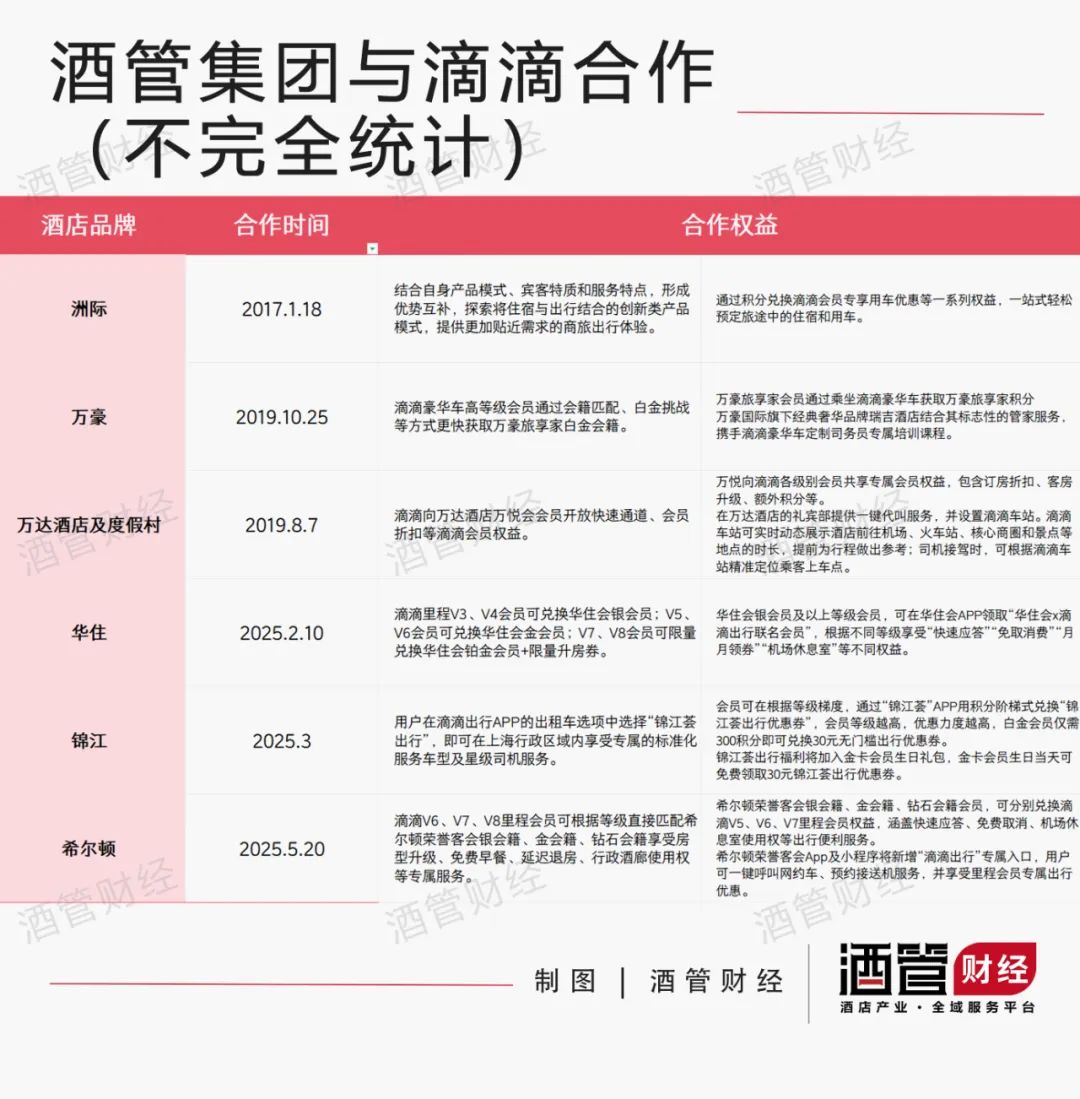
Core Insights - Hotel groups are increasingly partnering with ride-hailing services like Didi to enhance their membership ecosystems, similar to previous collaborations with Alipay [2][3] - The collaboration between Hilton and Didi aims to integrate accommodation and transportation resources, creating a "one-stop" membership benefits system that enhances the travel experience for modern travelers [4][5] - The trend of binding hotel memberships with high-frequency services like transportation is driven by the need to activate "sleeping members" and increase engagement through daily usage scenarios [7][8] Hotel Group Collaborations - Multiple hotel brands, including InterContinental, Marriott, Wanda, and Huazhu, have established partnerships with Didi, offering various member benefits such as ride discounts and exclusive services [5][6] - The partnerships allow for reciprocal benefits, where members can exchange loyalty points and gain access to enhanced services across both platforms [7][8] Membership Engagement Challenges - Hotel membership systems traditionally focus on low-frequency usage, leading to low engagement rates, with some groups reporting active member rates below 10% [7] - The integration with Didi provides a solution by embedding hotel membership into daily commuting and travel needs, thus increasing the frequency of member engagement [8][12] Future Directions - The hotel industry is exploring further collaborations beyond transportation, potentially integrating fitness data or office services to create a more comprehensive membership experience [12][13] - The shift towards a "big membership" era reflects a broader transformation in the hotel industry, moving from a focus solely on accommodation to encompassing a full range of lifestyle services [14][15] User Loyalty and Value Creation - Membership systems are becoming critical for enhancing market competitiveness, with member contributions to direct sales reaching 45%-50% [14] - The evolution of loyalty programs into lifestyle currencies allows for greater user engagement and satisfaction, as members can utilize their points across various services beyond just hotel stays [16][17]

江南布衣20250527
2025-05-27 15:28
Summary of Jiangnan Buyi Conference Call Company Overview - Jiangnan Buyi has shown improving growth rates from low single-digit to high single-digit growth since the beginning of the year, with an expected annual revenue growth close to 5% and profit growth potentially exceeding previous low expectations [2][4][33]. Key Points Revenue and Profit Guidance - The company anticipates a conservative internal guidance for revenue growth at mid-single digits and profit growth at low single digits for the fiscal year 2025, with potential for better-than-expected performance [2][4]. Inventory Management - Promotional events have limited impact on inventory reduction, relying more on online off-season discounts and offline outlet channels. The sell-through rate for autumn/winter products decreased, leading to increased inventory, but the long product lifecycle maintains profitability [2][7]. Brand Strategy - The LESS brand division operates independently, experimenting with the Classita brand. If successful, this model may be extended to other brands to enhance operational efficiency and brand vitality [2][8]. Membership Growth - The company adds approximately 60,000 new members monthly, with a stable increase in membership. High-repurchase-rate members value unique experiences and privileges, such as exclusive events and stylist services [2][9][11]. Discount Management - Discounts improved year-on-year in the first half of fiscal 2025, with expectations to maintain this trend in the second half. Overall discount management is effective, contributing to healthy retail growth [2][14]. Sales Performance - Sales performance in April and May showed sequential improvement, with April experiencing mid-single-digit growth and May exceeding double-digit growth in the first half, although there was a slowdown in the latter half of May [3][4]. Distribution Strategy - The performance of distribution areas slightly outperformed direct sales areas, with high-tier cities being sensitive to economic fluctuations but showing recent improvements. The transition from direct sales to distribution is stable, with no major changes expected in future strategies [5][17][18]. Brand Performance - Different brands within the company showed varied performance, with women's and children's clothing performing better than men's clothing. This trend is expected to continue into the second half of the year [22]. Product Innovation - The company maintains a balance between classic and innovative designs, with approximately 70-80% of products being classic or safe styles and 20-30% being new designs [23]. Future Plans - Jiangnan Buyi plans to open offline stores, starting with pilot locations near its headquarters, and aims to establish single-brand and children's collection stores [28]. Dividend Policy - The company intends to maintain a stable dividend policy, with an expected payout ratio of 75% for fiscal 2025, signaling a commitment to high dividends [5][32]. Overall Development - Despite the broader economic environment not fully recovering, the company has achieved steady positive growth and maintains high-quality development without resorting to discount promotions [33].
2025音乐App终极对决:QQ曲库最大,网易评论最疯,Apple Music最纯粹
3 6 Ke· 2025-04-29 00:56
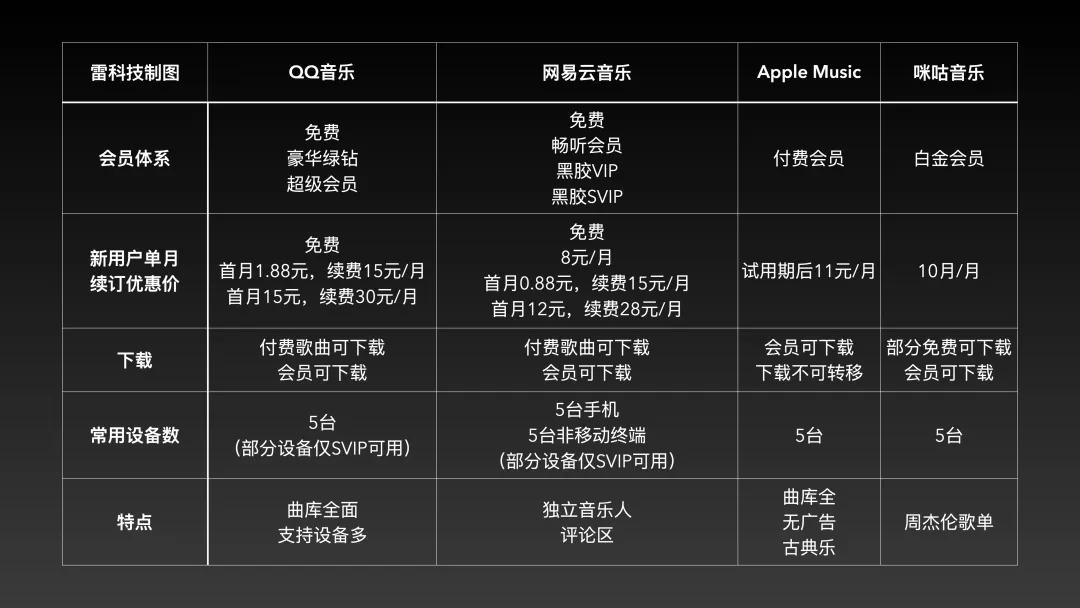
Core Viewpoint - The article discusses the competitive landscape of music streaming platforms in China, highlighting the differences in membership systems, music libraries, and additional features among QQ Music, NetEase Cloud Music, Apple Music, and Migu Music [1][2][26]. Membership Systems - QQ Music, NetEase Cloud Music, and Migu Music offer free membership tiers, allowing users to access a portion of the music library without payment, while Apple Music requires a paid subscription after a one-month free trial [2][3]. - QQ Music has multiple membership levels, including luxury green diamond and super membership, while NetEase Cloud Music offers several tiers, including black vinyl VIP and SVIP [2][3]. Music Library Size - QQ Music is noted for its extensive music library, covering a wide range of genres and eras, making it a top choice for users seeking variety [5][10]. - Apple Music, while lacking in the ability to purchase music directly in China, has a rich library due to its global partnerships and is particularly strong in classical music [10][11]. - NetEase Cloud Music excels in independent music, attracting many independent artists through its music creator program [13]. - Migu Music, while not as extensive in mainstream music, has a unique advantage with its comprehensive collection of Jay Chou's songs due to a long-standing partnership with China Mobile [14][16]. Additional Features - NetEase Cloud Music is recognized for its vibrant user community and engaging comment sections, which enhance user interaction [17][19]. - QQ Music has developed a diverse audio content ecosystem, including audiobooks and podcasts, through partnerships with external platforms [21][22]. - Apple Music lacks additional content features, focusing solely on music, while Migu Music offers limited features compared to its competitors [22][26]. Platform Compatibility - All four music apps are available on mobile and tablet platforms, but only QQ Music and Migu Music offer native apps for HarmonyOS 5 [23][24]. - QQ Music, NetEase Cloud Music, and Apple Music provide desktop applications, while Migu Music only has a web version due to copyright restrictions [24][25]. User Preferences - QQ Music is recommended for users who prioritize a large music library and additional audio content, while Apple Music is suitable for those who prefer a straightforward subscription model [26][28]. - NetEase Cloud Music is ideal for fans of independent music and those who enjoy community engagement through comments [28]. - Migu Music is suggested as a supplementary option for Jay Chou fans or China Mobile users with bundled membership benefits [28]. Industry Trends - The article notes a shift in music consumption habits, with short video platforms like Douyin (TikTok) emerging as significant competitors to traditional music apps, emphasizing the need for music apps to evolve beyond just music listening [29].