
基层减负

Search documents
湖南常德持续健全为基层减负长效机制——“现在这种忙法,忙得充实”(在现场·看作风)
Ren Min Ri Bao· 2025-08-21 12:18
Core Viewpoint - The article highlights the positive impact of reducing bureaucratic burdens on grassroots governance in rural areas, particularly in the context of the efforts made in the Port Zhongping Village of Changde, Hunan Province, leading to improved community services and better engagement with residents [5][6]. Group 1: Community Engagement and Services - The village has established a new employment service station and a live-streaming platform to assist farmers, which has shown promising sales, particularly for ecological rice [2][4]. - Village officials, such as Liu Guiying, are actively engaging with residents, providing support to the elderly, and collecting feedback on agricultural services [3][4]. Group 2: Reduction of Bureaucratic Burdens - There has been a significant reduction in the number of reports and forms that village officials need to complete, with Liu Guiying reporting a 33% decrease in paperwork compared to the previous year [6]. - The number of meetings and documents issued by various units in the district has decreased by 38% year-on-year, allowing officials to focus more on community service [6][8]. Group 3: Infrastructure Improvements - The village has completed several infrastructure projects, including a water pressure enhancement project benefiting 200 households, the transformation of 670 acres of high-standard farmland, and the construction of new roads and pathways to improve agricultural and tourism access [9].
“现在这种忙法,忙得充实”(在现场·看作风)
Ren Min Ri Bao· 2025-08-20 22:30
Group 1 - The article highlights the busy yet fulfilling work of village officials in Xiangzhongping Village, emphasizing their commitment to serving the community and addressing the needs of residents, particularly the elderly [1][4] - The village has established new employment service stations and agricultural live-streaming initiatives, which have shown positive results, especially in selling ecological rice [2][5] - Recent reforms have significantly reduced bureaucratic burdens on village officials, allowing them to focus more on practical community service rather than administrative tasks [5][6] Group 2 - The number of reports that village officials need to fill out has decreased by one-third compared to the previous year, indicating a move towards reducing unnecessary paperwork [6] - The village has successfully completed various infrastructure projects, including a water pressure enhancement project and high-standard farmland transformation, which have improved the living conditions for residents [8] - The implementation of a "no disturbance inspection" mechanism has streamlined oversight processes, allowing village officials to spend more time directly engaging with the community [8]
变“小马大车”为“轻车壮马”(评论员观察)
Ren Min Ri Bao· 2025-08-13 21:50
Core Viewpoint - The article emphasizes the need to clarify responsibilities at the grassroots level to alleviate the burden on local officials and improve efficiency in governance [1][2][3] Group 1: Clarification of Responsibilities - The change from "responsible for the acceptance and review of low-income individuals" to "responsible for the acceptance and preliminary review of low-income individuals" reflects the limited authority of local officials, which helps to delineate responsibilities and avoid overburdening them [1] - The implementation of three types of responsibility lists across 38,000 townships and streets in the country aims to clarify the duties that local officials should undertake, thus facilitating a reduction in their workload [1] Group 2: Efficiency Improvement Measures - The establishment of a smart community platform in Shandong's Jining City has significantly reduced the time required for tasks, demonstrating the effectiveness of technology in enhancing operational efficiency [2] - Jiangsu Province's initiative to create a "circulation pool" for administrative positions aims to alleviate staffing shortages by allowing personnel to flow across regions and departments, thereby improving resource allocation and efficiency [2] Group 3: Collaborative Governance - The formation of public welfare coalitions in Anhui's Huaibei City illustrates the importance of community collaboration, where various organizations come together to provide resources and services, reducing the financial burden on local communities [2] - The article highlights the significance of grassroots officials who actively engage with their communities, showcasing their ability to respond effectively to emergencies and fulfill their responsibilities [3]
整治形式主义关键是科学考核|经观社论
Jing Ji Guan Cha Bao· 2025-08-12 07:18
Core Viewpoint - The article emphasizes the need for continuous efforts to reduce formalism and lighten the burden on grassroots officials, highlighting the release of the "Several Regulations on Reducing Burdens for Grassroots" as a significant step in this ongoing battle against formalism [1][5]. Summary by Relevant Sections Manifestations of Formalism - Recent years have seen formalism manifest in excessive meetings, mandatory attendance, frequent inspections, and burdensome reporting requirements, which have significantly increased the workload of grassroots civil servants [1][4]. - The introduction of digital tools has added new layers of complexity, with mandatory use of government apps for reporting and tracking, further exacerbating the burden on officials [1]. Specific Measures in the Regulations - The "Several Regulations" propose targeted measures to address the issue of excessive documentation and meetings, such as limiting the length of official documents to 5,000 words and task-specific documents to 4,000 words [1][2]. - The regulations also prohibit using meeting attendance, documentation, and online engagement metrics as performance evaluation criteria [1][2]. Challenges in Implementation - Despite central government efforts to curb formalism, the tendency persists, with an increase in the number of evaluation criteria for grassroots officials, leading to a shift from positive to negative incentives in performance assessments [3][4]. - The proliferation of evaluation items has resulted in a culture where officials focus on avoiding mistakes rather than achieving results, leading to a cycle of meetings and documentation that fails to address real issues [3][4]. Recommendations for Improvement - To effectively reduce burdens on grassroots officials, it is essential to scientifically set evaluation projects and goals, replacing fragmented assessments with comprehensive evaluations that prioritize outcomes [5]. - The article argues that empowering grassroots officials and fostering an environment conducive to innovation is crucial for the success of broader reforms [5].
从重会场到更重现场的“会风”之变(在现场·作风建设新成效)
Ren Min Ri Bao· 2025-08-10 22:20
Core Viewpoint - The article emphasizes the importance of reducing meeting frequency and duration to allow government officials to focus more on practical work and community engagement, aligning with the central government's directives to combat formalism and improve efficiency [3][5][10]. Group 1: Meeting Reduction Initiatives - The city of Quzhou initiated a "No Meeting Day" on Tuesdays in 2018, which has since been promoted across Zhejiang province, leading to a significant reduction in meeting frequency and an increase in time spent in the field [3][5]. - Various regions, including Quzhou and Ulan Taole, have implemented measures to streamline meetings, resulting in a nearly 20% reduction in the number of meetings and allowing officials to spend over half their time serving the community [5][10]. Group 2: Practical Outcomes - Officials like Huang Xin from Quzhou have reported that the time saved from fewer meetings allows them to address community needs more effectively, leading to better identification and resolution of local issues [2][3]. - In Ulan Taole, the introduction of a "Three Musts" meeting system has reduced the number of monthly meetings from eight to three, enabling more efficient project implementation and increased engagement with local farmers [8][10]. Group 3: Efficiency Improvements - The article highlights that shorter, more focused meetings have led to significant time savings, allowing officials to concentrate on actionable tasks rather than lengthy discussions [6][7]. - The overall approach has resulted in improved meeting quality and effectiveness, with local governments adopting stricter meeting management practices to minimize unnecessary gatherings [10].


经观社论|整治形式主义关键是科学考核
经济观察报· 2025-08-09 07:21
Core Viewpoint - The article emphasizes the need to alleviate the burden of formalism on grassroots officials by implementing targeted measures to reduce excessive meetings, documentation, and inspections, thereby allowing for more effective governance and innovation [2][3][6]. Summary by Sections Background and Current Situation - The "Several Regulations on Reducing Burdens for Grassroots" was issued by the Central Committee and the State Council, showing a significant positive response, with over 95% of respondents indicating that the measures to combat formalism have been effective [2]. - Formalism manifests in various ways, including excessive meetings, mandatory attendance, frequent inspections, and the burdensome use of government apps for reporting, which significantly increases the workload of grassroots officials [2][3]. Specific Measures Proposed - The regulations propose specific measures to reduce formalism, such as limiting the length of documents to 5,000 words and task-specific documents to 4,000 words, and eliminating the use of meeting attendance and social media metrics as performance evaluation criteria [2][3]. Analysis of Formalism - The article discusses the increasing complexity of performance evaluations for grassroots officials, which have expanded from 9 major items in 2011 to 4 major items with 109 sub-items and 371 detailed items by 2020, leading to a shift from positive to negative incentives in performance assessments [4]. - This shift has resulted in a culture where officials focus on avoiding mistakes rather than achieving results, leading to a cycle of meetings and documentation that detracts from actual problem-solving [5]. Recommendations for Improvement - The article advocates for a reduction in the volume of documents and meetings, and a shift from "formality" to "substance" in evaluations, suggesting that this will help unleash the potential of grassroots governance and foster innovation [5][6]. - It stresses the importance of setting scientific assessment criteria that prioritize results over formal compliance, allowing grassroots officials the space and motivation to innovate and take responsibility [6].

明确规范基层职责是整治形式主义的重要环节
第一财经· 2025-08-08 00:45
Core Viewpoint - The article emphasizes the importance of reducing bureaucratic burdens at the grassroots level, highlighting the ongoing efforts and achievements in combating formalism within the governance structure [3][4]. Summary by Sections Background and Importance - The re-release of the "Regulations on Reducing Burdens at the Grassroots Level" by the Central Government indicates a strong commitment to addressing formalism and its impact on grassroots governance [2][3]. - The success of these regulations is reflected in a survey where over 95% of respondents reported positive effects from the measures implemented [3]. Specific Measures - The regulations outline 21 specific measures aimed at reducing bureaucratic burdens, including the simplification of documents, meetings, and inspections, as well as clarifying responsibilities at the grassroots level [4][6]. - A key focus is on establishing clear responsibilities to prevent the overload of tasks that detract from primary duties, such as teaching in schools [6][7]. Implementation and Accountability - The regulations stress the need for a clear delineation of responsibilities to avoid overburdening grassroots entities with tasks outside their core functions [6][7]. - There is an emphasis on strengthening accountability for violations of these regulations, with a mechanism for reporting and addressing issues at various administrative levels [9]. Challenges and Obstacles - The article identifies two main obstacles to reducing formalism: the performance-driven mindset of higher authorities and the compliance mentality at the grassroots level [9]. - Addressing these issues is crucial for the successful implementation of the regulations and for fostering a more effective governance environment [9].

从痕迹到实绩背后的“填表”之变(在现场·作风建设新成效)
Ren Min Ri Bao· 2025-08-06 22:49
Group 1 - The article emphasizes the shift from filling out forms to solving problems on-site, aiming to reduce bureaucratic inefficiencies and improve community satisfaction [3][7][6] - In Chongqing, local officials have adopted a hands-on approach to address community issues, such as replacing outdated streetlights, which had been neglected due to bureaucratic processes [3][6] - The article highlights the importance of community engagement and collaboration among various departments to effectively resolve issues that were previously left unaddressed [5][6] Group 2 - In Kaifeng, the implementation of a "multi-form consolidation" strategy has simplified the process for villagers, reducing the number of forms needed for various administrative tasks [10][11] - The article discusses how this reduction in paperwork has allowed village officials to focus more on community needs rather than administrative burdens [11] - The introduction of technology in administrative processes, such as facial recognition in Ma'anshan, has streamlined service delivery and reduced the need for citizens to provide multiple forms of proof [12][13] Group 3 - The concept of "no proof cities" in Ma'anshan aims to shift the responsibility of proof from citizens to the government, enhancing efficiency in administrative processes [13][14] - The article notes that while the requirement for proof has not been eliminated, the method of verification has been improved through technology, reducing bureaucratic delays [13][14] - The overall goal is to combat formalism and bureaucratic inefficiencies, ensuring that citizens receive timely and effective services [14]
我说变化丨“我对未来越来越有信心”
Zhong Yang Ji Wei Guo Jia Jian Wei Wang Zhan· 2025-08-05 00:40
刘瑞红,陕西省安康市汉滨区建民街道忠诚村党支部书记。 我们村有307户1060人,虽然规模不大,但事情不少。以前村干部一天经常要参加好几场会议,其他时 间也常被填各类报表和台账占据,大部分精力都耗在会场和办公室,影响了实际工作。 2023年初,区里针对村级组织负担重的问题,有针对性地为基层减负。来我们村调研的区纪委监委干部 告诉我,我们村和其他村级组织普遍存在"六多"问题:报表多、台账多、会议多、留痕多、检查多、牌 子多。之后,区里出台了为村级组织减负增效工作实施方案,重点从精简会议活动、减少报表台账、清 理办公场所标识标牌等方面入手,切实为基层工作人员减轻负担。 以前,区里一开会就要叫上村里的干部,我们经常得去凑人数;现在好了,和村里工作不相关的会,就 不叫咱们去了。以前,考核村干部干得好不好,就看你有没有成立这个那个组织;现在不看这个了,主 要看干部是不是真为村里办了事。还有,以前上级经常要求我们填表、报材料;现在不经过正规程序, 不能随便让村干部填表,此外,各类考核、检查也都统筹整合到一起,频次降低了不少。 这些实实在在的举措,把我们村干部从"文山会海"中解脱出来。现在,大家有更多精力办实事、解难 题、 ...
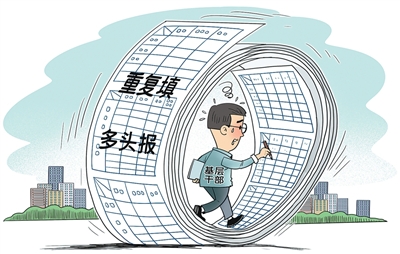
湖北枣阳推行“一套表”改革为基层减负(党旗在基层一线高高飘扬)
Ren Min Ri Bao· 2025-08-04 22:39
上午9点多,湖北襄阳枣阳市南城街道沙店社区老年学校内人头攒动,沙店社区邀请来医护人员,为老 年人进行爱心义诊和免费体检。80岁的郝金凤一摸口袋,发现身份证忘了带,没法登记体检。党员网格 员赵莹莹迅速掏出手机,点开社区智慧平台小程序,检索到郝金凤的身份证号码并录入系统。顺利完成 了各项检查,郝金凤松了口气。 沙店社区下辖131个小区,拥有常住人口5.6万人。"人多事多,以前上面一要数据,我们就得加班填 表""一位居民去世了,需要给多个部门重复上报信息""不仅要电子版,还要打印出来加盖公章送过 去"……曾经的工作状态,赵莹莹记忆犹新。 为破解基层报表多、重复报、多头报的负担,去年6月起,枣阳市深入调研,探索推进"一套表"改革。 枣阳市委常委、组织部部长康丹介绍,过多过滥的填表造册,源于职责不清、边界不明。为此,枣阳市 细化制定村级主责、协助、负面清单,将18大类主责事项细化为37项具体工作清单,将3大类协助事项 细化为80项工作清单,将12大类负面事项直接列为负面工作清单。比如司法局的社区矫正工作,列为村 (社区)协助事项后,基层只需做好协助工作,不用再填报相关表格。 在权责清晰的基础上,枣阳市大力推进表格源头减 ...