
快速恢复制裁机制

Search documents
【环球财经】伊朗将暂停与国际原子能机构合作
Xin Hua She· 2025-09-21 00:37
Core Points - Iran's Supreme National Security Council announced the suspension of cooperation with the International Atomic Energy Agency (IAEA) due to the actions of the UK, France, and Germany in pushing for the restoration of UN sanctions against Iran [1] - The meeting, chaired by President Ebrahim Raisi, discussed the regional situation and the recent actions of the three European countries regarding Iran's nuclear issue [1] - Despite ongoing cooperation with the IAEA, Iran's cooperation will be "effectively suspended" due to the "improper actions" of the European countries [1] Summary by Sections - **Iran's Response to European Actions** - Iran opposes the "snapback sanctions" mechanism initiated by the UK, France, and Germany, which was based on Iran's failure to comply with the nuclear agreement [1] - The three countries notified the UN Security Council on August 28, triggering a 30-day period for the Council to decide on the continuation of sanctions [1] - **Recent Developments** - On September 19, a resolution aimed at continuing the lifting of sanctions against Iran was not passed in the Security Council due to opposition from nine countries, including the US, UK, and France [1] - Iran had previously reached an agreement with the IAEA on September 9 regarding the resumption of verification activities in Iran [1]
中方代表:美方是造成当前伊核问题困局的根源
Yang Shi Xin Wen· 2025-09-20 13:52
Core Viewpoint - The UN Security Council failed to pass a resolution to continue lifting sanctions on Iran, highlighting geopolitical tensions and differing stances among member states [1] Group 1: Voting Outcomes - China, Russia, Pakistan, and Algeria voted in favor of the resolution, while the US, UK, France, and seven other countries voted against it [1] - South Korea and Guyana abstained from the vote [1] Group 2: China's Position - China's UN representative emphasized strong opposition to the push for a "snapback" sanctions mechanism by certain countries, viewing it as unfair and unreasonable [1] - The root cause of the current impasse in the Iran nuclear issue is attributed to the US's unilateral withdrawal from the nuclear agreement in 2018 and the subsequent escalation of sanctions [1] Group 3: Implications of the Vote - The actions of the UK, France, and Germany to initiate the "snapback" sanctions are seen as detrimental to rebuilding trust and resolving differences among parties [1] - There are concerns that such actions could lead to unpredictable and catastrophic consequences, undermining years of diplomatic efforts [1]
热点问答丨恢复制裁“箭在弦上” 伊核问题走向何方
Xin Hua Wang· 2025-09-20 07:23
Group 1 - The UN Security Council did not pass a resolution to continue lifting sanctions on Iran, increasing the risk of reinstated sanctions [1][2] - The "snapback" mechanism allows any signatory of the Iran nuclear deal to request the UN Security Council to restore sanctions if Iran is deemed to have violated the agreement [1][2] - The UK, France, and Germany initiated the "snapback" mechanism citing Iran's violations of the nuclear agreement [2][4] Group 2 - The current impasse in the Iran nuclear issue is largely attributed to the unilateral actions of the US, which withdrew from the nuclear deal in 2018 and reinstated sanctions [3] - Since the US withdrawal, Iran has gradually ceased compliance with parts of the nuclear agreement, although it maintains that these measures are reversible [3] - The US has pressured Iran to negotiate by threatening military action, but Iran has refused to abandon its uranium enrichment activities [3] Group 3 - Following the Security Council's vote, Iran's Foreign Ministry condemned the actions of the European countries as illegal and provocative, while also stating that diplomatic channels remain open [5] - Iran has a week to engage in diplomatic discussions with the UK, France, and Germany to prevent the reinstatement of sanctions [5] - Iranian officials have warned that if sanctions are reinstated, they may cease cooperation with the International Atomic Energy Agency and consider withdrawing from the Non-Proliferation Treaty [6]
【环球财经】恢复制裁“箭在弦上” 伊核问题走向何方
Xin Hua She· 2025-09-20 06:10
Core Viewpoint - The UN Security Council failed to pass a resolution to continue lifting sanctions on Iran, increasing the risk of Iran facing renewed UN sanctions [1][2] Group 1: Mechanism of "Snapback Sanctions" - The "snapback sanctions" mechanism allows any signatory of the 2015 Iran nuclear deal to request the UN Security Council to restore sanctions if Iran is deemed to have "seriously violated" the agreement [1] - The UK, France, and Germany initiated this mechanism on August 28, citing Iran's violations of the nuclear agreement [1] Group 2: US Responsibility - The current impasse in the Iran nuclear issue is attributed to a series of unilateral actions by the US government, including its withdrawal from the nuclear deal in 2018 and the re-imposition of sanctions [3] - Since May 2019, Iran has gradually ceased compliance with parts of the nuclear agreement, although it has stated that these measures are "reversible" [3] - The US has threatened military action against Iran while demanding negotiations, but Iran has rejected the demand to completely abandon uranium enrichment [3] Group 3: Future of the Iran Nuclear Issue - Iran's Foreign Ministry condemned the actions of the European countries as illegal and provocative, while also stating that diplomatic channels remain open [5] - Iran has a week to engage in diplomatic discussions with the UK, France, and Germany to prevent the restoration of sanctions [5] - Iranian officials have warned that if sanctions are restored, they may cease cooperation with the International Atomic Energy Agency and consider withdrawing from the Treaty on the Non-Proliferation of Nuclear Weapons [5][6] - Analysts suggest that such a withdrawal would end international oversight of Iran's nuclear activities, potentially leading to increased tensions in the Middle East [6]
英法德试图对伊朗“快速恢复制裁” 中国代表:坚决反对
Xin Hua Wang· 2025-09-20 06:08
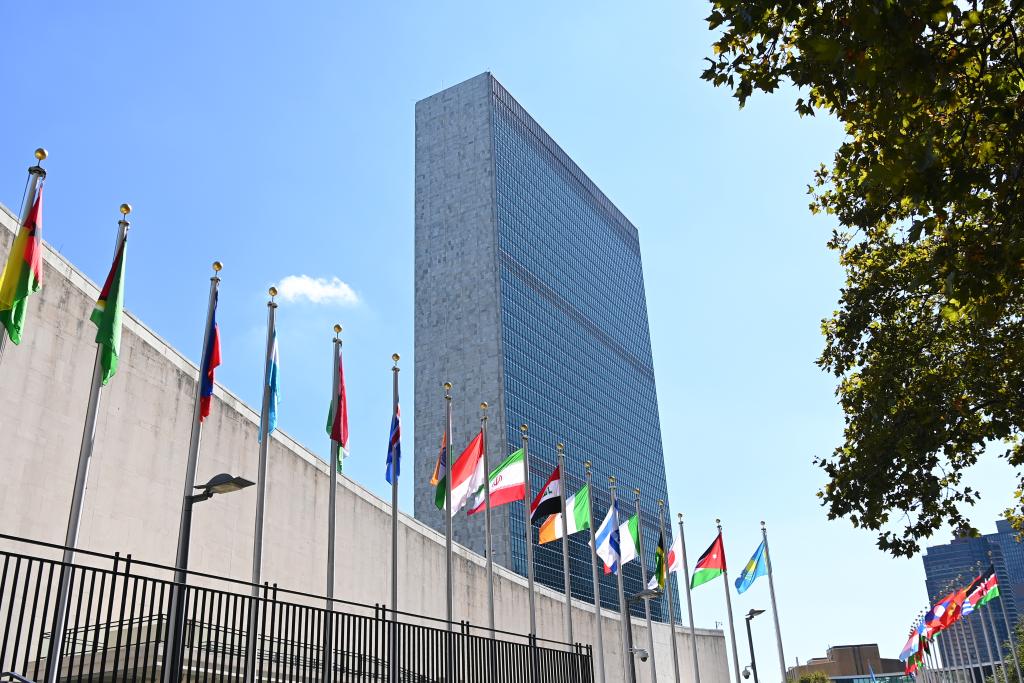
这是位于纽约的联合国总部外景(9月18日摄)。新华社记者李睿摄 英法德强推"快速恢复制裁" 决议草案由9月安理会轮值主席韩国提出,未达到决议通过所需的9票赞成。中国、俄罗斯、巴基斯坦、阿尔及利亚投赞成票,美国、英国、法国 等9国投反对票,韩国和圭亚那弃权。 决议草案如获通过,将根据2015年伊朗核问题全面协议以及核可这一协议的安理会第2231号决议相关规定,继续解除联合国对伊朗的制裁措施。 6月20日,在瑞士日内瓦,德国外长瓦德富尔(中右)、英国外交大臣拉米(中左)、法国外长巴罗(中)与媒体见面(手机照片)。伊朗与英法 德三国外交部长当地时间20日19时左右结束在瑞士日内瓦持续约3个小时的会晤。这是以色列与伊朗发生军事冲突以来,伊朗首次与西方国家高级 官员进行面对面磋商。新华社记者王其冰摄 新华社北京9月20日电在美、英、法等9国投反对票的情况下,联合国安理会19日未能通过一份旨在继续解除对伊朗制裁措施的决议草案。英、 法、德等国同时试图启动对伊朗"快速恢复制裁"机制。伊朗外交部当天对此发表声明谴责。中方代表对此表示明确反对,强调政治外交解决伊核 问题的必要性。 接下来,伊朗同英法德三国及相关国家仍有一周左右 ...

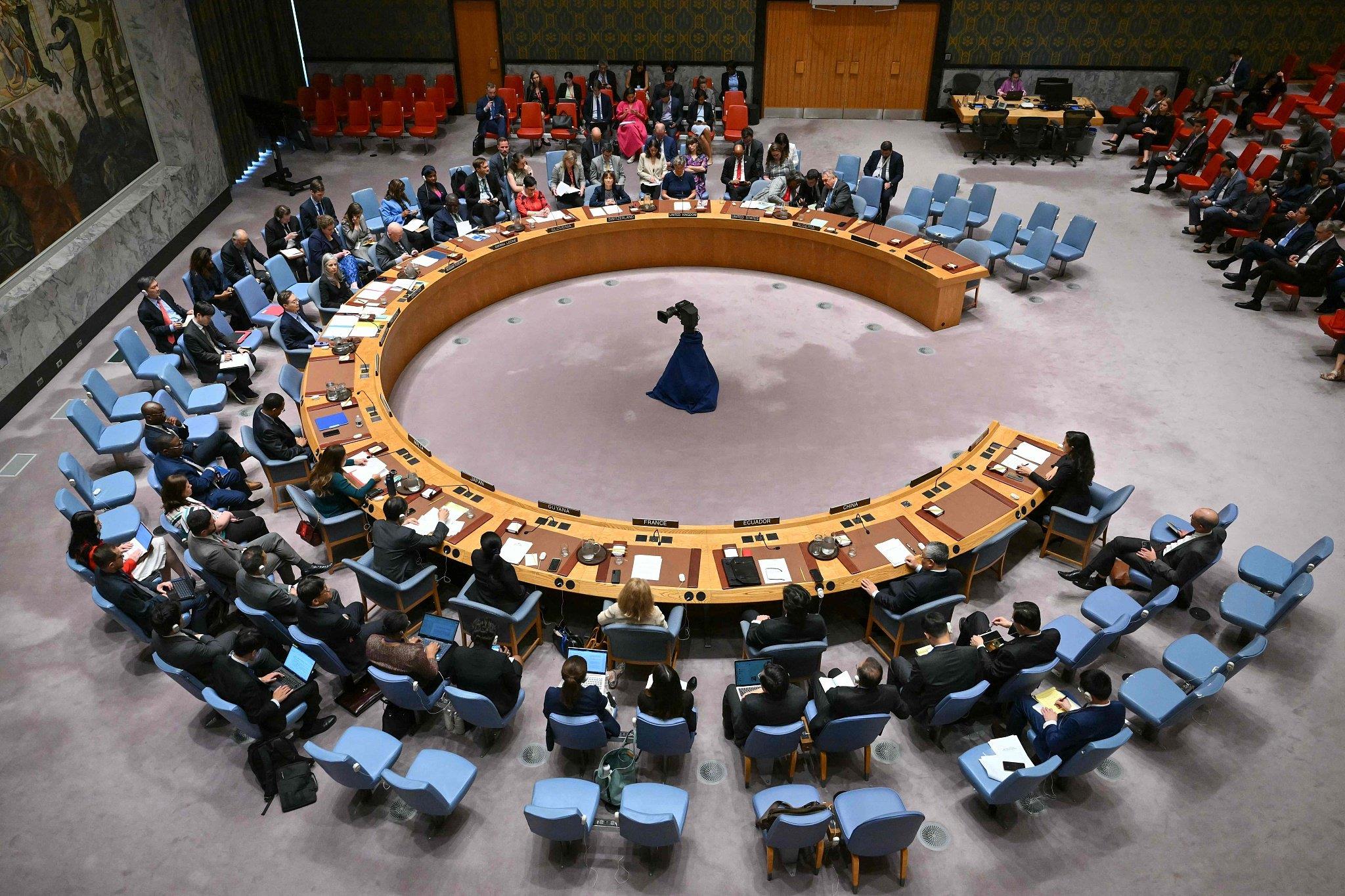
联合国安理会未能通过伊朗制裁豁免草案
Yang Shi Xin Wen· 2025-09-20 02:08
Group 1 - The UN Security Council failed to pass a resolution to extend the sanctions waiver on Iran, with the proposal not receiving the required nine votes for approval [2] - The resolution was proposed by South Korea, the rotating president of the Security Council in September, and was opposed by the US, UK, and France among others [2] - If the resolution had passed, it would have continued to lift UN sanctions on Iran based on the 2015 nuclear deal and Security Council Resolution 2231 [2] Group 2 - The UK, France, and Germany triggered the "snapback" sanctions mechanism on August 28, citing Iran's "serious non-compliance" with the nuclear deal [2][3] - The "snapback" mechanism allows for the restoration of sanctions if the Security Council does not pass a resolution to continue the sanctions waiver within 30 days [2] - There are concerns regarding the legality of the "snapback" mechanism activation by the UK, France, and Germany, as it bypassed the required "dispute resolution mechanism" [3] Group 3 - Iran has expressed opposition to the activation of the "snapback" mechanism and reached an agreement with the International Atomic Energy Agency regarding the resumption of verification activities in Iran [3] - Despite the failure to pass the sanctions waiver resolution, negotiations on the issue may continue during the upcoming General Assembly debate [3]
英国、法国、德国强推安理会恢复对伊制裁!伊朗声明:此举非法、不合理且挑衅 损害核不扩散机制
Mei Ri Jing Ji Xin Wen· 2025-09-20 01:20
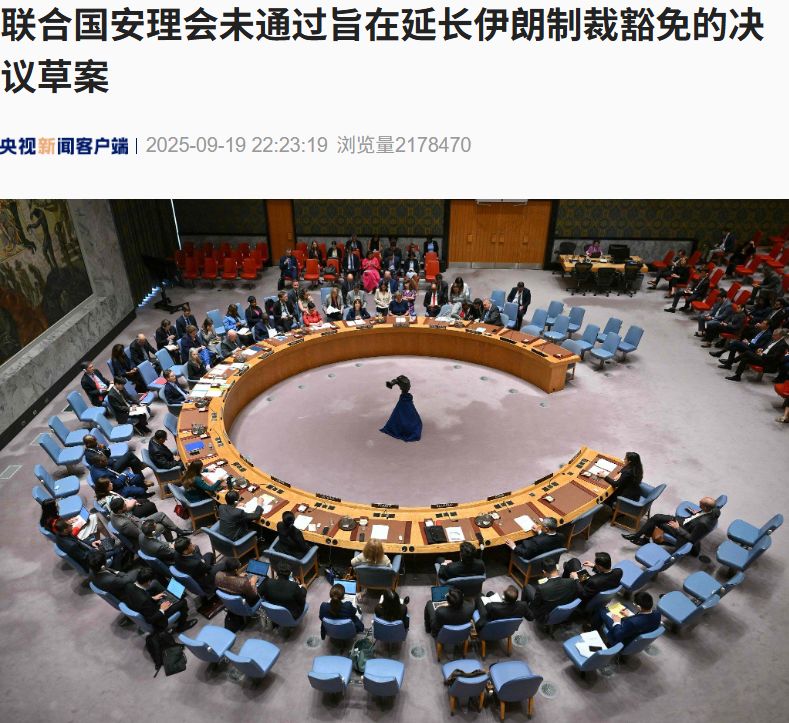
据央视新闻,伊朗外交部当地时间9月19日晚发表声明,谴责英国、法国、德国当天试图强行推动联合国安理会 恢复制裁伊朗的决议,表示伊朗决心继续推进和平核计划,同时保留"回应的权利"。 声明说,英法德此举"非法、不合理且挑衅,严重损害当前外交进程"。在安理会没有达成共识且有多个理事国 反对的情况下,此举进一步侵蚀安理会的信誉,损害核不扩散机制。 决议草案如获通过,将根据2015年伊朗核问题全面协议以及核可这一协议的安理会第2231号决议相关规定,继 续解除联合国对伊朗的制裁措施。 图片来源:央视新闻 今年8月28日,英法德外长致函安理会,宣布伊朗"严重不履行"承诺,因此触发"快速恢复制裁"机制。根据该机 制,即日起,如果安理会未能在30天内就继续解除对伊朗制裁通过决议,联合国对伊朗的相关制裁将恢复。 伊核协议参与方英国、法国、德国8月28日通知联合国安理会,以伊朗违反这一协议为由,启动"快速恢复制 裁"机制。根据该机制,即日起,如果安理会未能在30天内就继续解除对伊朗制裁通过决议,联合国对伊朗的相 关制裁将恢复。 然而,英法德三国启动"快速恢复制裁"机制的合法性存疑,因为根据伊核协议和安理会第2231号决议,启动" ...
4票赞成、9票反对、2票弃权!联合国安理会未通过,中国、俄罗斯等投赞成票
Mei Ri Jing Ji Xin Wen· 2025-09-19 23:24
Core Points - The UN Security Council voted on September 19 regarding the extension of sanctions relief for Iran, resulting in 4 votes in favor, 9 against, and 2 abstentions, leading to the restoration of sanctions on September 28 [1] - China, Russia, Pakistan, and Algeria voted in favor of extending the relief period, but the lack of 9 votes for approval means sanctions will be reinstated [1] - Despite the failure to pass the resolution, negotiations may still occur during the upcoming high-level meeting of the 80th UN General Assembly [1] Summary by Sections Sanctions and Agreements - The 2015 nuclear deal between Iran and the P5+1 (US, Russia, China, UK, France, Germany) required Iran to limit its nuclear program in exchange for sanctions relief, which was later endorsed by the Security Council through Resolution 2231 [1] - This resolution includes a "snapback" mechanism allowing signatories to respond to Iran's violations, effective until October 18 of this year [1] Recent Developments - On August 28, the foreign ministers of the UK, France, and Germany announced the initiation of the "snapback" mechanism, stating that if the Security Council does not pass a resolution to extend sanctions relief within 30 days, sanctions will be restored [1] - A draft resolution co-authored by China and Russia proposed extending the nuclear deal and Resolution 2231 for an additional six months until April 18, 2026, but it has not yet been put to a vote [1]
联合国安理会未能通过继续解除对伊朗制裁的决议草案
Xin Hua She· 2025-09-19 22:20
Core Points - The UN Security Council failed to pass a resolution to continue lifting sanctions on Iran, with the proposal not receiving the required nine votes for approval [1] - The resolution was proposed by South Korea, the rotating president of the Security Council for September, and received support from China, Russia, Pakistan, and Algeria, while the US, UK, and France opposed it [1] - If passed, the resolution would have continued to lift sanctions based on the 2015 Iran nuclear deal and relevant Security Council Resolution 2231 [1] - The UK, France, and Germany initiated a "snapback" mechanism on August 28, citing Iran's violations of the nuclear deal, which would restore sanctions if no resolution is passed within 30 days [1] - The legality of the "snapback" mechanism is questioned, as it bypassed the required "dispute resolution mechanism" outlined in the nuclear deal and Resolution 2231 [1] - Iran has expressed opposition to the "snapback" mechanism and reached an agreement with the International Atomic Energy Agency on September 9 regarding the restoration of verification activities in Iran [1] Diplomatic Developments - Iran, along with the UK, France, Germany, and other relevant countries, has approximately one week to engage in diplomatic discussions to prevent the restoration of sanctions [2]
伊朗谴责英法德三国强推安理会恢复对伊制裁
Xin Hua She· 2025-09-19 21:57
Core Points - Iran's Foreign Ministry condemned the actions of the UK, France, and Germany for attempting to force the UN Security Council to reinstate sanctions against Iran, asserting Iran's commitment to continue its peaceful nuclear program while reserving the right to respond to any illegal actions [1] - The statement emphasized that the actions of the three countries were illegal, unreasonable, and provocative, damaging the current diplomatic process and undermining the credibility of the Security Council [1] - Iran reiterated its determination to pursue its peaceful nuclear program and called on responsible members of the international community to reject the push for reinstating sanctions [1] Summary by Sections - **Iran's Response to Sanctions** Iran expressed its strong opposition to the UK, France, and Germany's attempt to reinstate sanctions, stating that it would continue its peaceful nuclear program and maintain the right to respond to any illegal actions [1][2] - **UN Security Council Dynamics** The UN Security Council held a vote on a resolution to continue lifting sanctions against Iran, which failed due to opposition from the US, UK, and France among others, indicating a lack of consensus [1][2] - **Fast-Track Sanction Mechanism** The UK, France, and Germany initiated a "fast-track reinstatement" mechanism based on Iran's violations of the nuclear agreement, which could lead to the restoration of six previous resolutions and associated sanctions if no decision is made within 30 days [2]