
快速恢复制裁机制

Search documents
伊朗称开罗协议不再有效
Zhong Guo Xin Wen Wang· 2025-11-21 08:53
Core Viewpoint - Iran has declared the Cairo Agreement no longer valid in response to a resolution passed by the International Atomic Energy Agency (IAEA) Board of Governors, which was pushed by the US, UK, France, and Germany regarding Iran's nuclear issue [1] Group 1: Iran's Response to IAEA Resolution - Iranian Foreign Minister Amir-Abdollahian stated that the actions of the US, UK, France, and Germany are illegal and unreasonable, undermining the credibility and independence of the IAEA [1] - Iran has formally notified IAEA Director General Grossi that the Cairo Agreement, aimed at restoring cooperation between Iran and the IAEA, is no longer effective [1] Group 2: Background and Context - Following airstrikes by Israel and the US in June, Iran suspended its cooperation with the IAEA [1] - In September, Iran and the IAEA reached an agreement in Cairo to restore cooperation on Iran's nuclear issues [1] - The resolution passed by the IAEA Board of Governors on November 20 is seen by Iran as a repetition of political stances by the US and its allies, distorting obligations and attempting to compensate for failures in the "snapback sanctions" mechanism [1]
英法德强推联合国恢复对伊朗制裁 俄罗斯:不承认!不执行!
Xin Hua Wang· 2025-10-03 01:27
Core Points - The UN has reinstated sanctions on Iran due to the "snapback" mechanism pushed by the UK, France, and Germany, which Russia does not recognize and will not enforce [1][2] - Russia's Foreign Minister Lavrov has advised the UN against hastily implementing sanctions and re-establishing a sanctions committee [4] - Iran's Foreign Minister has criticized the European countries' actions as legally and procedurally flawed, asserting Iran's willingness to resolve issues through diplomacy [4] - Iranian President Pezeshkian stated that Iran has made necessary arrangements to overcome the reinstated sanctions, emphasizing that the situation is manageable [5] - The backdrop includes the 2015 nuclear agreement, the U.S. withdrawal in 2018, and subsequent tensions leading to the current sanctions [7] Group 1 - The UN has completed the process to reinstate sanctions on Iran, which Russia does not acknowledge [1][2] - Russia's stance is that the "snapback" mechanism is not valid for them, creating a divide in international response [2] - Lavrov's communication with the UN Secretary-General indicates Russia's opposition to the sanctions [4] Group 2 - Iran's leadership has expressed confidence in managing the consequences of the reinstated sanctions [5] - Diplomatic efforts by Iran with European nations during the UN General Assembly have yielded some results, despite U.S. demands being unacceptable [5] - The historical context of the nuclear agreement and subsequent U.S. actions has led to the current geopolitical tensions [7]

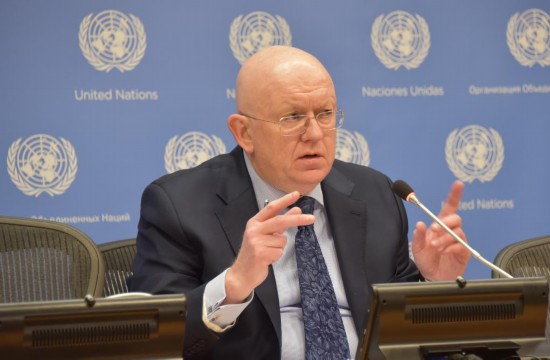
兜兜转转又陷困局 伊朗宣布暂停与国际原子能机构合作
Sou Hu Cai Jing· 2025-10-01 13:52
Core Points - The Iranian Supreme National Security Council announced the suspension of cooperation with the International Atomic Energy Agency (IAEA) in response to the push by the UK, France, and Germany to restore UN sanctions against Iran, escalating the already complex nuclear issue [1][12] - The European push for sanctions is seen as a deliberate attempt to create a new crisis, as Iran's non-compliance with the 2015 nuclear agreement is being cited despite the US's earlier withdrawal from the agreement in 2018 [1][12] - Iran's response, while indicating resistance, remains relatively restrained compared to past actions, leaving a potential "window of time" for international mediation [8][12] Summary by Sections European Actions - The European countries' insistence on a "snapback" mechanism for sanctions is viewed as an artificial crisis creation, with Iran being portrayed as the victim in the situation [1] - The lack of genuine support from Europe following the US withdrawal has led to increased pressure on Iran [1] Potential Consequences - If sanctions are reinstated, Iran could face restrictions on international communication, asset freezes, and stricter controls on technology and arms exports, potentially increasing internal pressures and regional instability [4][7] - Israel may see the renewed tensions as an opportunity to take military action against Iran [4][7] Iranian Response - Iran's current reaction is less aggressive than in previous instances, with only the suspension of IAEA cooperation rather than more extreme measures like withdrawing from the Non-Proliferation Treaty [8] - This restraint may provide an opportunity for international actors to negotiate and de-escalate the situation [8][12] International Community's Role - The international community is urged to seize the opportunity to mediate and promote dialogue to prevent the nuclear issue from spiraling out of control [8][12]
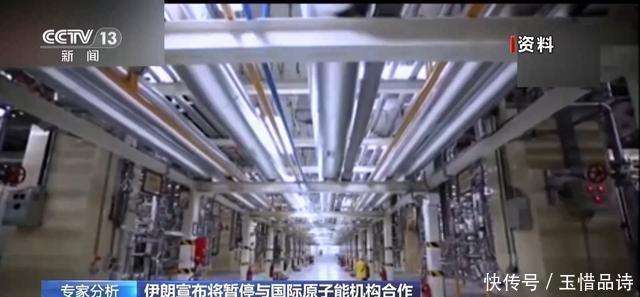
伊朗:不会屈服
中国能源报· 2025-09-30 11:34
Core Viewpoint - Iran is facing continuous sanctions due to its refusal to yield to Western pressures, as stated by President Pezeshkian, who emphasized that the West's belief in subduing Iran is a mere fantasy [1]. Group 1: Sanctions and International Relations - The "snapback" mechanism of sanctions related to Iran's nuclear deal has been activated, leading to the restoration of UN sanctions against Iran as of September 27, 2023 [1]. - The European Council announced on September 29, 2023, the reimplementation of a series of sanctions against Iran that had been suspended after the 2015 nuclear agreement [1]. - The renewed sanctions include travel bans on individuals, asset freezes for both individuals and entities, and prohibitions on providing funds or economic resources to listed targets [1].
“迄今最严厉移民驱逐行动之一”,外媒爆:特朗普政府包机遣返约百名伊朗人
Huan Qiu Wang· 2025-09-30 07:20
Group 1 - The Trump administration is set to deport approximately 100 Iranians from the United States back to Iran, marking one of the most severe immigration enforcement actions to date [1][3] - A U.S. charter flight has already departed from Louisiana and is expected to arrive in Iran via Qatar, with the deportation plan confirmed to be in its final stages [3] - The United Nations has restored sanctions against Iran as of September 27, following the completion of the "snapback" mechanism in the Iran nuclear deal, with the European Union also confirming the reinstatement of sanctions on September 29 [3] Group 2 - Since April, the U.S. and Iran have engaged in five rounds of indirect negotiations mediated by Oman, but significant disagreements remain on key issues such as uranium enrichment [3] - The sixth round of negotiations, originally scheduled for June 15, was canceled due to an Israeli attack on Iran, which escalated tensions and led to military responses from both sides [3] - In response to Iran's violations of the nuclear agreement, the UK, France, and Germany initiated the "snapback" mechanism to pressure Iran into resuming negotiations [3]
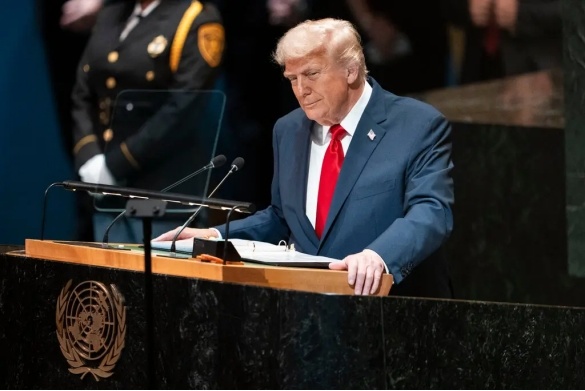
伊朗多方回应联合国恢复对伊制裁
Zhong Guo Xin Wen Wang· 2025-09-29 06:36
Core Points - Iran's response to the UN's reinstatement of sanctions includes statements from the Supreme National Security Council, the Foreign Ministry, and the military, indicating a unified stance against Western demands [1] - The UK, France, and Germany announced the completion of the "snapback" sanctions process, confirming the reactivation of six sanctions resolutions against Iran [1] - Iran's military leadership asserts readiness to respond decisively to any potential threats or acts of aggression [1] Group 1 - The Iranian Supreme National Security Council criticized Western restrictions on Iran's core rights related to uranium enrichment and missile production, claiming these excessive demands have stalled any potential agreements [1] - The Iranian military is reportedly making progress in modernizing its defense systems, with the military prepared for any threats [1] - A closed-door meeting of the Iranian parliament discussed the possibility of withdrawing from the Treaty on the Non-Proliferation of Nuclear Weapons in response to the reinstated sanctions [1] Group 2 - Iran's Foreign Minister sent a letter to the UN Secretary-General stating that the reinstatement of sanctions lacks legal basis and constitutes a serious procedural abuse [2] - The letter emphasized that the UN Security Council Resolution 2231 should terminate on October 18, 2023, and Iran will not recognize any attempts to restore or extend sanctions after this date [2] - The 2015 nuclear agreement included a commitment from Iran to limit its nuclear program in exchange for the lifting of sanctions, with the "snapback" mechanism allowing for measures against Iranian violations [2]
欧盟:立即恢复制裁
中国能源报· 2025-09-29 05:31
Core Viewpoint - The European Union has announced the immediate reimplementation of all previously lifted sanctions related to Iran's nuclear activities due to Iran's failure to comply with the Joint Comprehensive Plan of Action (JCPOA) commitments [1][3]. Group 1: Sanctions Restoration - The restoration of sanctions is triggered by the "snapback" mechanism due to Iran's non-compliance with the JCPOA [3]. - On August 28, the UK, France, and Germany notified the UN Security Council of Iran's failure to comply with the nuclear agreement, initiating the "snapback" mechanism under Resolution 2231 [3]. - The UN Security Council failed to pass a resolution to extend the sanctions waiver for Iran within the 30-day period, leading to the reactivation of sanctions effective September 27 [3]. Group 2: Iran's Response - Iranian Foreign Minister Zarif criticized the UK, France, and Germany's activation of the "snapback" mechanism as legally invalid, politically reckless, and procedurally flawed [4]. - Zarif announced that if sanctions are reactivated, Iran will suspend the agreement reached with the International Atomic Energy Agency (IAEA) on September 9 [4].
热点问答|欧美强搞制裁 伊朗如何应对
Xin Hua Wang· 2025-09-29 00:30
Group 1: Core Points - The "snapback" sanctions against Iran have been activated by the UK, France, and Germany due to Iran's violations of the nuclear agreement, with the sanctions taking effect on September 27 [1][2] - The sanctions include a weapons embargo, prohibition of uranium enrichment, and global asset freezes on individuals and entities related to Iran [2] Group 2: Iran's Response - Iranian President Raisi stated that Iran does not seek to develop nuclear weapons and is open to diplomatic dialogue, but rejected the U.S. demand to relinquish all enriched uranium [3][4] - Iran's Foreign Minister criticized the activation of sanctions as legally and procedurally flawed, urging the UN Secretary-General to prevent any attempts to restart the sanctions mechanism [3][5] Group 3: Future of the Nuclear Issue - Iranian officials warned that if the U.S. and European countries ignore Iran's goodwill and proceed with sanctions, Iran may suspend cooperation with the International Atomic Energy Agency (IAEA) [5][6] - Analysts believe that while Iran's economy may face short-term impacts from the sanctions, it is unlikely to suffer a decisive blow due to previous extensive U.S. sanctions [6]
欧美强搞制裁 伊朗强硬回应:不合理、不合法、不放弃
Yang Shi Xin Wen· 2025-09-29 00:17
Core Points - The "snapback" mechanism of sanctions against Iran has been activated by the UK, France, Germany, and the US, with the UN confirming the re-imposition of sanctions effective from September 27 [1][3] - The sanctions include measures from six UN Security Council resolutions related to Iran's nuclear program, military, and financial sectors, affecting 43 individuals and 78 entities [3] - The EU has announced it will immediately reinstate all previously lifted sanctions related to Iran's nuclear activities [5] Group 1: Sanctions Activation - The UN Secretary-General confirmed the reactivation of sanctions based on Security Council Resolution 2231, which includes resolutions from 2006 to 2010 [3] - The sanctions cover various sectors, including Iran's nuclear program and military, with notable figures such as the late nuclear scientist Mohsen Fakhrizadeh and IRGC commander Qassem Soleimani included in the sanctions list [3] Group 2: Iran's Response - Iran's Foreign Ministry condemned the sanctions as illegal and unreasonable, accusing the UK, France, and Germany of failing to uphold their commitments under the nuclear agreement [7][14] - Iranian officials, including the Speaker of Parliament and military leaders, stated that Iran would respond firmly to any actions taken based on these sanctions [9][11] - Iran's Foreign Minister emphasized that the claims made by the US and European nations lack legal basis and undermine the credibility of international diplomacy [14] Group 3: Future of the Nuclear Issue - The nuclear issue remains unresolved, with Iran having gradually ceased compliance with the nuclear agreement since the US withdrawal in 2018, and recent tensions escalating following military actions [17][19] - Analysts suggest that while Iran's economy may face short-term impacts from the renewed sanctions, the overall effect may not be decisive due to prior extensive sanctions already in place [21] - There is still potential for diplomatic dialogue, but increased pressure from the US and Europe could exacerbate tensions [21]
联合国确认安理会涉伊朗制裁决议已重新生效
Yang Shi Xin Wen Ke Hu Duan· 2025-09-28 14:46
Core Points - The United Nations Secretary-General's spokesperson confirmed the reactivation of six sanctions resolutions against Iran as of September 27, 2023, based on Security Council Resolution 2231 [1][2] - The reactivated sanctions include Resolution 1737, which lists 43 individuals and 78 entities involved in Iran's nuclear program, military, and financial sectors [1] Group 1 - The six sanctions resolutions reactivated include Resolutions 1696, 1737, 1747, 1803, 1835, and 1929 [1] - The "snapback" mechanism was initiated by the UK, France, and Germany on August 28, citing Iran's violations of the nuclear agreement [2] - The Security Council's draft resolution aimed at extending the 2015 Iran nuclear deal was not passed, leading to the restoration of sanctions [2]