Net Interest Margin (NIM)

Search documents
Ally(ALLY) - 2025 Q4 - Earnings Call Transcript
2026-01-21 15:00
Financial Data and Key Metrics Changes - Adjusted EPS for 2025 was $3.81, up 62% year-over-year [4] - Core ROTCE increased to 10.4%, up more than 300 basis points compared to 2024 [4] - Adjusted net revenue reached $8.5 billion, a 3% increase year-over-year, and a 6% increase when excluding the sale of the card business [5] - CET1 ended the year at 10.2%, with a fully phased-in CET1 of 8.3%, up 120 basis points in 2025 [5][19] Business Line Data and Key Metrics Changes - Retail auto and corporate finance loans grew by 5% in 2025, driven by strong performance in core franchises [6] - Dealer Financial Services originated $43.7 billion in consumer loans, an 11% increase year-over-year [8] - Insurance written premiums exceeded $1.5 billion, marking a record for the company [9] - Corporate finance achieved a 28% ROE with strong growth in the loan portfolio [9] Market Data and Key Metrics Changes - Retail deposit balances reached $144 billion, reinforcing the company's position as the largest all-digital direct bank in the U.S. [10] - The company served 3.5 million customers, marking the 17th consecutive year of customer growth [10] - Retail auto net charge-offs for the year were 1.97%, below the 2% mark, indicating strong credit performance [23] Company Strategy and Development Direction - The company undertook a strategic refresh in 2025, focusing on areas with clear competitive advantages [3] - A $2 billion open-ended share repurchase authorization was announced, indicating confidence in future growth [7] - The company aims to maintain expense discipline while investing in core businesses and technology [15][32] Management's Comments on Operating Environment and Future Outlook - Management expressed optimism for 2026, emphasizing the importance of bridging strategy to execution [46] - The company is focused on building strong volumes with appropriate margins and pricing in the auto franchise [47] - Management acknowledged macroeconomic uncertainties, particularly regarding the labor market and used vehicle prices [50][54] Other Important Information - The company executed two credit risk transfer transactions totaling $10 billion in notional retail auto loans [6] - Adjusted tangible book value per share increased by nearly 20% over the past year [20] Q&A Session Summary Question: NIM progression and drivers - Management confirmed expectations for NIM to be down quarter-over-quarter in Q1 but expressed confidence in a strong exit trajectory for the year [37][39] Question: Retail auto coverage ratio - Management indicated that reserve releases are not factored into return expectations, focusing instead on prudent credit management [41][44] Question: 2026 outlook and risks - Management highlighted optimism for 2026, with a focus on maintaining strong fundamentals and managing macroeconomic risks [46][50] Question: NIM upper bound and ROE expectations - Management clarified that achieving mid-teens ROE requires high threes NIM, sub-2% retail auto NCO rate, and disciplined capital and expense management [60]

Dime(DCOM) - 2025 Q4 - Earnings Call Transcript
2026-01-21 14:32
Financial Data and Key Metrics Changes - Core EPS for Q4 2025 was $0.79, representing an 88% increase year-over-year, driven by record total revenues of $124 million [5][23] - NIM increased by 10 basis points to 311 basis points, with average earning assets up over $650 million on a linked-quarter basis [6][24] - Core deposits rose by $1.2 billion year-over-year, with a significant liquidity position allowing for future lending opportunities [6][7] Business Line Data and Key Metrics Changes - Business loans grew by over $175 million on a linked-quarter basis and over $500 million year-over-year, with approximately $400 million of this growth coming from new specialized industries [8][44] - Non-interest income for Q4 was $11.5 million, exceeding guidance [28] - The loan loss provision declined to $10.9 million, with the allowance to loans increasing to 91 basis points [28] Market Data and Key Metrics Changes - The company reported strong deposit growth across all channels, with total deposits up approximately $800 million versus the prior quarter [24] - Non-interest-bearing deposits reached nearly 31% of total deposits, with a goal to increase this ratio over time [66][68] Company Strategy and Development Direction - The company is focused on organic growth, with a strategy to build out its commercial banking platform and industry verticals [10][11] - Plans for 2026 include significant loan repricing opportunities and a target to operate at a sub-50% efficiency ratio [12][13] - The company aims to diversify its balance sheet and loan portfolio, expecting significant growth in both areas [12] Management's Comments on Operating Environment and Future Outlook - Management expressed confidence in the strong organic growth environment and the execution of their strategy, anticipating continued momentum into 2026 [11][14] - The company highlighted a target-rich environment for lending opportunities and expects to see a path to a structurally higher NIM and enhanced earnings power over time [34][31] Other Important Information - The company has a total capital ratio of more than 16%, positioning it favorably against local peers [10][28] - The Manhattan branch is operational, with additional locations expected to open by the end of the first year [11] Q&A Session Summary Question: What industries accounted for the growth in business loan balances? - Approximately $400 million of the $500 million year-over-year growth in business loans came from new specialized industries, particularly healthcare [44] Question: What is the current loan and deposit situation in New Jersey? - About 8% to 10% of the loan portfolio is in Northern New Jersey, with a deposit-to-loan ratio of 15%-20% [46] Question: How is the deposit pipeline looking and what are the pricing strategies? - New customer acquisition requires offering high twos to low threes on money market accounts, with an overall cost of deposits around 168 basis points [51][52] Question: What is the status of the rent-regulated loan book? - The 100% rent-regulated book is around $350 million, down from $500 million two years ago, with maturities and repricings expected to be around $250 million for 2026 [58] Question: What is the strategy for deploying cash and securities? - The company is not rushing to deploy cash but is looking for opportunities in the market, with a focus on maintaining a flexible balance sheet [72][75]

Simmons First National (SFNC) - 2025 Q4 - Earnings Call Transcript
2026-01-21 14:30
Financial Data and Key Metrics Changes - The net interest margin (NIM) increased by 94 basis points compared to the previous year, reaching 381 basis points in Q4 2025, with a linked quarter growth of 31 basis points [12][65]. - The return on average tangible common equity (ROTCE) was reported at 16% for the quarter, indicating strong performance [46][65]. - Pre-provision net revenue increased by 60% year-over-year, reflecting significant revenue growth [65]. Business Line Data and Key Metrics Changes - Loan growth in Q4 2025 was robust, with a reported annualized growth rate exceeding 7%, driven by strong production despite elevated paydowns [7][10]. - The pipeline for loans ready to close reached a multi-quarter high, indicating positive momentum for future growth [10]. - The company experienced a decline in agricultural loans and mortgage warehouse loans, which were impacted by seasonal adjustments and divestitures [8]. Market Data and Key Metrics Changes - The competitive environment for loans has intensified, particularly in commercial real estate (CRE), where irrational pricing has affected profitability [22]. - The deposit competition remains strong, especially from smaller banks, but the company maintains a dominant market share in many areas [21]. Company Strategy and Development Direction - The company is focused on organic growth and investing in business capabilities, particularly in low-cost deposits and private banking [52][54]. - There is an emphasis on improving operational efficiency through automation and process standardization, with a goal to enhance profitability [32][35]. - The strategic focus includes expanding capabilities in commercial and middle-market C&I, with significant investments in talent and processes [53]. Management's Comments on Operating Environment and Future Outlook - Management expressed optimism about loan growth prospects for 2026, citing a strong pipeline and improved quality of opportunities [39]. - The company anticipates stable NIM moving forward, with expectations of continued benefits from backbook repricing [18][19]. - The overall credit quality remains stable, with no significant concerns identified during recent assessments [27]. Other Important Information - The company has reduced its square footage by 6%, contributing to cost savings and operational efficiency [35]. - The effective tax rate for Q4 was lower than expected for 2026, which may impact future profitability metrics [48]. Q&A Session Summary Question: What are the drivers behind loan growth in Q4? - Management noted that loan growth was driven by a combination of improved pipeline quality and favorable timing, rather than aggressive rate cuts or lowered profitability standards [38]. Question: How clean is the reported NIM number? - The NIM growth was attributed to a balance sheet restructure and core NIM expansion, with expectations for stability in the near term [12][13]. Question: What is the outlook for asset quality? - Management indicated that asset quality remains stable, with no significant issues identified during recent evaluations [27]. Question: What are the strategies for growing customer deposits? - The company is focusing on enhancing consumer banking practices and expanding private banking services to attract more deposits [52][54]. Question: How does the company view the competitive landscape for loans and deposits? - Management acknowledged increased competition in loan pricing, particularly in CRE, while noting strong market positions in deposit competition [21][22].

Mercantile Bank Q4 Earnings Call Highlights
Yahoo Finance· 2026-01-20 16:17
Core Insights - Mercantile Bank reported a fourth-quarter 2025 net income of $22.8 million, or $1.40 per diluted share, an increase from $19.6 million, or $1.22 per diluted share, in the fourth quarter of 2024, with full-year net income reaching $88.8 million, or $5.47 per diluted share, compared to $79.6 million, or $4.93 per diluted share, in 2024 [1][6] Financial Performance - The bank's fourth-quarter net interest margin (NIM) remained stable at approximately 3.43%, despite a decrease in the 90-day average SOFR rate by 68 basis points over the last five quarters [8][9] - Average loans increased to $4.63 billion, up $62 million year-over-year, while average deposits rose by $302 million to $4.83 billion, resulting in a net surplus of funds of $240 million [11] - The allowance for credit losses stood at 1.21% of total loans, with very low non-performing loans (NPLs) averaging 12 basis points over the last six years [12] Acquisition Impact - The acquisition of Eastern Michigan Bank, completed on December 31, 2025, is expected to enhance liquidity and deposits, and improve NIM through higher-yielding acquired securities [3][7] - Early integration efforts have been described as positive, with management indicating that Eastern's balance sheet is already influencing consolidated metrics such as liquidity and margin [2][4] 2026 Outlook - The bank is targeting 5-7% annualized loan growth for 2026, with expectations of NIM improvement due to the Eastern acquisition, while also anticipating higher non-interest expenses related to expansion and digital conversion [5][15] - The effective tax rate for 2026 is projected at 17%, incorporating continued tax credit benefits [18] Capital and Shareholder Returns - Mercantile ended 2025 with a total risk-based capital ratio of 13.8%, while Eastern Michigan Bank's ratio was 15.3%, both exceeding "well-capitalized" thresholds [19] - The company did not repurchase shares in 2025, with $6.8 million remaining under its current repurchase plan, and management's appetite for buybacks has increased [20]

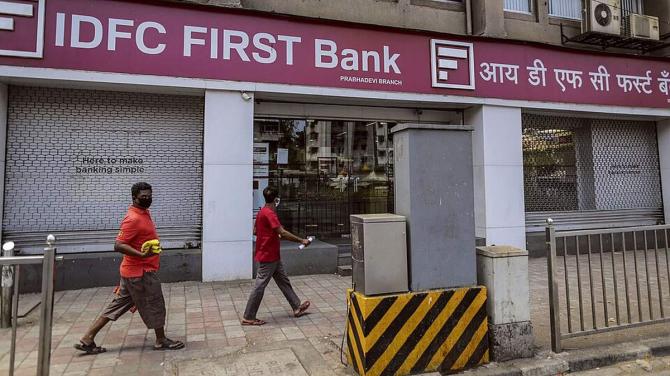
IDFC First Bank cuts savings account rates, introduces new balance slabs
Rediff· 2026-01-09 17:54
Core Viewpoint - IDFC First Bank has revised its savings account interest rates, introducing new slabs for small and medium balance categories, effective January 9, 2025, while maintaining competitive rates in the industry [1][3]. Summary by Category Interest Rate Changes - The savings rate for balances below ₹1 lakh is now set at 3% [4]. - A new slab has been introduced where the savings account rate for deposits above ₹1 lakh to below ₹10 lakh is pegged at 5%, and for balances above ₹10 lakh to ₹10 crore at 6.5% [5]. - Previously, the savings account rate for balances above ₹5 lakh to up to ₹5 crore was 7%, and for those above ₹5 crore to up to ₹10 crore was 6.75% [5]. Comparison with Other Banks - Other mid-sized private sector lenders like IndusInd Bank, Federal Bank, and Yes Bank offer interest rates of 2.50% for savings account balances below ₹1 lakh, while Bandhan Bank offers 2.70% [7]. - RBL Bank provides a 3% savings account rate for deposits below ₹5 lakh [7]. - For balances above ₹1 lakh to up to ₹1 crore, rates among these lenders range between 2.75% and 5.35% [8]. Impact on Financial Metrics - The reduction in savings account rates is anticipated to enhance the net interest margin (NIM) of IDFC First Bank, which reported a 59 basis point drop in NIM to 5.59% in Q2 FY26 compared to the previous year [6].


Hancock Whitney Hits 52-Week High: Should You Buy the Stock Now?
ZACKS· 2025-12-18 18:16
Core Viewpoint - Hancock Whitney Corp. (HWC) shares reached a 52-week high of $67.10, closing at $66.05, with a 23.2% increase over the last six months, outperforming the industry and S&P 500 Index [1][8]. Group 1: Stock Performance - HWC stock has outperformed Bank OZK (OZK) but underperformed F.N.B. Corp (FNB) over the past six months, with FNB and OZK shares increasing by 27.7% and 7.7%, respectively [2]. - The stock's performance indicates a strong upward trend, suggesting potential for further growth despite reaching a new high [4]. Group 2: Revenue and Growth Factors - HWC's total revenues have experienced a compound annual growth rate (CAGR) of 3.5% from 2019 to 2024, with continued growth expected in the first nine months of 2025 [5][8]. - The company announced a multi-year organic growth plan, including hiring additional associates and expanding its presence in Florida and Texas [6]. - The Zacks Consensus Estimate for 2025 revenues is projected at $1.51 billion, reflecting a year-over-year growth of 4.7%, while the 2026 estimate is $1.59 billion, indicating a growth of 4.9% [9][10]. Group 3: Financial Metrics - HWC's net interest margin (NIM) is expected to expand due to relatively higher interest rates and stabilizing deposit costs, with the NIM rising to 3.37% in 2024 from 3.34% in 2023 [12][13]. - The company maintains a solid balance sheet with total debt of $2.10 billion and cash and deposits amounting to $1.43 billion as of September 30, 2025 [14]. - HWC has received investment-grade ratings of BBB and Baa3, indicating a strong capital position and ability to meet debt obligations [15]. Group 4: Shareholder Value and Dividends - HWC announced a 12.5% increase in its quarterly dividend to 45 cents per share in January 2025, following a 33.3% hike in 2024 [16]. - A new share repurchase plan was approved to buy back up to 5% of its shares, enhancing shareholder value through efficient capital distributions [17][18]. Group 5: Analyst Sentiments - The Zacks Consensus Estimate for HWC's 2025 earnings remains at $5.70 per share, with a slight upward revision for 2026 earnings to $5.96, indicating growth rates of 7.1% and 4.6% for 2025 and 2026, respectively [20]. - HWC's current trailing P/E ratio of 11.71X is below the industry average of 12.55, suggesting the stock is undervalued compared to peers [22].


中国金融 - 从中央经济工作会议看金融:净息差稳定、风险与信贷需求-China Financials-Financials Read Across From CEWC stable NIM, risks and credit demand
2025-12-15 01:55
Summary of Key Points from the Conference Call Industry Overview - **Industry**: China Financials - **View**: Attractive for the financial sector in 2026, with stable loan yield and net interest margin (NIM) expected due to modest rate cuts and rational loan pricing [5][2] Core Insights 1. **Loan Yield and NIM Stability**: The financial sector is likely to experience stable loan yields and NIM in 2026, supported by modest rate cuts and rational loan pricing as the government shifts focus away from quantitative targets for total social financing (TSF) and M2 [2][8] 2. **Credit Demand Support**: Credit demand is expected to be cushioned to prevent a sharp decline, aided by government bond issuance and infrastructure investments, which will be more balanced in terms of efficiency and scale due to higher project selection standards [2][3] 3. **Risk Control Focus**: Continued emphasis on risk control across various sectors, including manufacturing, property, local debt, and smaller financial institutions, is anticipated to benefit financial stocks. The 2025 Central Economic Work Conference (CEWC) aims to reduce the number of mid-to-small financial institutions, potentially benefiting the consolidation of smaller banks and brokers [3][8] Additional Important Points 1. **Policy Shift**: The shift from timely rate and reserve requirement ratio (RRR) cuts in 2024 to a more flexible use of policy tools in 2025 indicates a continued commitment to a modestly loose monetary policy [8] 2. **Infrastructure Credit Demand**: The use of central government-led investments and policy bank facilities is suggested to cushion infrastructure credit demand, which is crucial for maintaining economic stability [8] 3. **Anti-Involution Efforts**: Ongoing efforts to combat anti-involution are expected to help slow the accumulation of credit risk in manufacturing sectors, reinforcing the importance of risk management [8] Conclusion The insights from the conference call indicate a cautiously optimistic outlook for the China financial sector, with stable yields, controlled credit demand, and a focus on risk management as key themes for 2026. The government's strategic shifts in policy and investment are expected to play a significant role in shaping the financial landscape.
Lending rates moving lower to raise pressure on bank NIMs
The Economic Times· 2025-12-14 19:14
Core Viewpoint - Banks' net interest margins (NIMs) are expected to face renewed pressure following recent cuts in the marginal cost of funds-based lending rate (MCLR) by major banks, including State Bank of India (SBI), which may delay margin recovery due to limited scope for deposit rate cuts amid competition from alternative investment options like mutual funds [1][10]. Group 1: MCLR Rate Cuts - SBI has reduced its benchmark MCLR rate by five basis points across all tenures, effective from December 15 [2][4]. - Other banks, including Indian Overseas Bank (IOB), Bank of Baroda, and HDFC Bank, have also implemented similar five basis point cuts in their MCLR rates [10]. - The interest rate on SBI's special Amrit Vrishti 444-day deposit scheme has been cut by 15 basis points to 6.45%, while the rate for the two to less than three years deposit bucket has been reduced from 6.45% to 6.40% [2]. Group 2: Impact on NIMs - The recent MCLR cuts are expected to exert pressure on bank margins, as deposit rates have limited room for further reductions [7][10]. - Interest rates on fresh loans have decreased by 76 basis points since the RBI began its rate cut cycle in February, while rates on outstanding loans have fallen by 58 basis points [8]. - More than 85% of bank loans are priced via an external benchmark or through MCLR, meaning that any cuts directly impact margins, especially if deposit rates remain stable [10]. Group 3: Future Expectations - Bankers anticipate that the improvement in margins expected in the third quarter may be further delayed due to the current rate environment [7][11]. - A fund manager at Nirmal Bang PMS predicts that bank margins may only improve in the first quarter of the next fiscal year, indicating a slowdown in expected margin improvements [11][12]. - Growth during the busy season is expected to come from higher-yielding segments like personal and SME loans, which could help mitigate some of the negative impacts on margins [12].

Webster Financial (NYSE:WBS) Conference Transcript
2025-12-10 18:22
Summary of Webster Financial Conference Call Company Overview - **Company**: Webster Financial (NYSE: WBS) - **Balance Sheet**: $83 billion - **Headquarters**: Connecticut - **Geographic Footprint**: Northeast U.S. from New York to Rhode Island and Massachusetts, with national businesses - **Business Segments**: - Commercial Banking - Healthcare Financial Services - Consumer Banking - **Competitive Advantage**: Diversified funding base with approximately $10 billion in low-cost, granular, long-duration deposits [1][3][4] Core Business Insights - **Healthcare Financial Services**: - HSA Bank is the largest custodian of health savings accounts with 3.5 million account holders, generating low-cost deposits and fees [6][7] - Ametros, a workers' compensation settlement business, is growing at about 25% per annum and has $1 billion in deposits [6][7] - **Financial Performance**: - Consistent financial performance despite a volatile operating environment - Loan growth has outpaced the market, with expectations of reaching 7% growth by year-end [8][15] - Credit metrics are in line with peers, with a focus on resolving credit challenges in specific portfolios [9][30] Market and Economic Outlook - **2026 Expectations**: - Anticipated mid-single-digit loan growth, with potential for industry outperformance [21][22] - Regulatory changes expected, particularly regarding category four compliance, which may shift upward [26][27] - **Interest Rate Environment**: - Balance sheet has shifted to a more neutral position regarding interest rates, improving resilience [19][20] Strategic Initiatives - **Deposit Pricing**: Plans to be more aggressive on deposit pricing to improve net interest margin (NIM) [9][18] - **Cross-Selling Opportunities**: Focus on cross-selling traditional banking products to HSA account holders and Ametros clients [52] - **Technology Investments**: Continued investment in technology and operational improvements to enhance efficiency and service delivery [9][28] Regulatory and Competitive Landscape - **Regulatory Environment**: Positive changes in regulatory attitudes, with expectations for increased flexibility in bank management [26][27] - **Competition from Private Credit**: Acknowledgment of competition from private credit, leading to strategic partnerships to enhance competitiveness [36][40] Capital Management and Shareholder Returns - **Capital Priorities**: Focus on organic growth and strategic acquisitions that enhance healthcare verticals without significant dilution [53][65] - **Share Buybacks**: Aggressive share repurchase strategy, indicating confidence in the company's valuation [53][54] Conclusion - **Future Performance**: Webster Financial aims to maintain consistent performance through a strong deposit franchise, effective capital management, and strategic growth initiatives [70][71]

How Columbia Banking Intends to Defend NIM as Rates Ease in 2026
ZACKS· 2025-12-08 16:55
Core Viewpoint - Columbia Banking System (COLB) is focusing on relationship deposits, funding mix shifts, and fee growth to protect its net interest margin (NIM) as the interest rate cycle changes [1] Group 1: NIM and Financial Performance - Columbia Banking's NIM improved to 3.84% in 3Q25 from 3.56% a year ago, with expectations of NIM being "just north of" 3.90% in 4Q25 and 1Q26 [2] - The bank's deposits are granular and diversified, with a focus on full-relationship funding and proactive repricing, targeting deposit betas around 50% for rate cuts to support NIM expansion [3][9] - Columbia Banking is expected to manage down $8 billion of inherited transactional loans over approximately eight quarters starting from 3Q25, reallocating towards relationship commercial and industrial (C&I) and owner-occupied commercial real estate (CRE) [5] Group 2: Strategic Initiatives and Synergies - The merger with Pacific Premier has increased cross-selling opportunities, generating over 1,200 referrals since closing, which has contributed to deposit inflows [4][9] - Management's near-term focus includes cost normalization after systems work in 1Q26 and achieving full synergy capture by 3Q26 [1] Group 3: Market Position and Competitors - Columbia Banking currently holds a Zacks Rank 3 (Hold), indicating a balanced outlook, with key points to monitor including the 1Q26 system conversion and quarterly NIM outcomes [6] - Key peers include East West Bancorp (Zacks Rank 2) and Zions Bancorporation (Zacks Rank 2), both of which are experiencing varying impacts on their NIM due to market conditions [7][8]