Weight loss drugs

Search documents
Where Will Viking Therapeutics Be in 3 Years?
The Motley Fool· 2025-05-02 08:20
Core Insights - Viking Therapeutics is positioned to potentially capitalize on a rapidly growing weight loss drug market projected to reach $150 billion by the early 2030s [1][7] - The company is focused on developing its lead drug candidate, VK2735, which is a dual GLP-1 and GIP receptor agonist aimed at treating obesity [8] - Viking's stock has experienced significant volatility since its IPO, reflecting the inherent risks associated with pre-revenue biopharmaceutical companies [3][6] Company Overview - Viking Therapeutics is a clinical-stage biopharmaceutical company with a narrow pipeline, currently developing two compounds in late-stage clinical trials [6] - The company has no sales or profits, which is typical for pre-revenue firms in the pharmaceutical sector [4] - Viking has a market capitalization of $2.9 billion, indicating potential investment upside if it successfully penetrates the weight loss market [10] Drug Development and Trials - VK2735 has shown promising results in its phase 2 trials, with patients losing up to 14.7% of their body weight in 13 weeks [9] - The company is conducting both injectable and oral versions of VK2735, with the injectable version performing well in trials [9] - Viking is preparing to initiate phase 3 trials for VK2735, with expectations for FDA approval potentially by mid- to late-2028 [10] Financial Position - Viking Therapeutics has over $851 million in cash and no debt, providing a solid financial foundation for ongoing development [11] - The company's cash burn rate was approximately $88 million over the past year, suggesting it has sufficient funding for several years [11]


Did Eli Lilly Just Say Checkmate to Novo Nordisk?
The Motley Fool· 2025-04-21 08:30
Core Insights - Novo Nordisk has experienced significant revenue growth due to its weight loss drugs, semaglutide (Ozempic and Wegovy), establishing itself as a leader in a billion-dollar market [1] - Eli Lilly has entered the market with its own weight loss drug, tirzepatide (Mounjaro and Zepbound), and is expected to contribute to the market's growth, projected to reach $130 billion by the end of the decade [2] Company Developments - Novo Nordisk and Eli Lilly's drugs are self-administered weekly injections, with both companies exploring oral formulations to enhance patient convenience [3][6] - Eli Lilly's recent clinical trial for orforglipron, an oral GLP-1 drug, showed promising results, reducing weight by an average of 7.9% and meeting primary endpoints for lowering A1C levels [8][9] Market Dynamics - The demand for weight loss drugs has surged, leading to supply challenges that both companies have addressed through increased manufacturing [5] - The introduction of oral drugs could shift consumer preferences, as pills are generally easier to take than injections, potentially increasing demand for Lilly's products [10][11] Competitive Landscape - While Eli Lilly's advancements may position it favorably against Novo Nordisk, both companies are likely to thrive in the growing market for weight loss drugs, with injectable and oral forms coexisting [12] - The potential approval of Lilly's oral drug could significantly impact market dynamics, possibly making it the leading player in the weight loss drug sector [13]



A Weight Loss Drug Candidate Essentially For Free As Skye Bioscience Is Trading At Cash Value
Seeking Alpha· 2025-04-16 11:50
Group 1 - Weight loss drug companies have experienced a decline from their peak hype approximately one year ago, with Novo Nordisk A/S, the manufacturer of Ozempic and Wegovy, seeing its stock price cut by more than half [1] Group 2 - The article highlights the author's background as a private investor based in Toronto, Canada, with a focus on capital markets and Canadian small cap stocks [1]


Hims' Weight Loss Expansion: Real Growth or Just Hype?
MarketBeat· 2025-04-10 12:00
Core Viewpoint - Hims & Hers Health has announced the offering of Eli Lilly's Zepbound, a weight loss drug, which is seen as a significant development despite concerns about its potential impact on the company's growth [1][5][9] Group 1: Product Offerings - Hims & Hers Health will now provide Zepbound, which has shown an average weight loss of around 21% at the highest dose, outperforming Novo Nordisk's Wegovy, which has an average weight loss of 15% [2][4] - The company will also offer liraglutide, another weight loss treatment, priced at $299 per month, significantly lower than Zepbound's $1,899 per month [10][11] Group 2: Market Reaction - Following the announcement of Zepbound, Hims & Hers shares rose by 5%, indicating positive market sentiment [2] - However, after the FDA announced the end of the semaglutide shortage, Hims' shares plummeted by nearly 26%, highlighting the volatility in the company's stock performance [4][5] Group 3: Competitive Landscape - Eli Lilly clarified that it has no affiliation with Hims & Hers, suggesting that Hims is acting merely as a middleman without unique business advantages [7][8] - The pricing strategy for Zepbound raises concerns, as it is significantly higher than Eli Lilly's direct offering, which could deter potential customers [8][9] Group 4: Future Growth Potential - The addition of liraglutide may cater to a niche market for patients looking to lose smaller amounts of weight, potentially expanding Hims' subscriber base [12][13] - Overall, the recent announcements are not seen as groundbreaking, but they may help maintain interest in Hims' weight loss offerings [13]


Viking Therapeutics, Down 40%, Just Reached a New Milestone. Is the Stock a Buy Now?
The Motley Fool· 2025-04-02 08:40
Core Insights - Viking Therapeutics is positioned in the rapidly growing weight loss drug market, which is projected to exceed $100 billion by the end of the decade according to Morgan Stanley analysts [1] - The company is currently conducting clinical trials for its VK2735 drug, which has shown promising results [1][3] - Despite a significant stock surge of 121% following positive trial results last year, Viking's stock has declined approximately 40% this year [2] Company Developments - Viking has completed enrollment for a phase 2 trial of its VK2735 oral candidate, with results expected in the second half of this year [3] - The VK2735 injectable formulation has met primary and secondary endpoints in trials, showing a mean body weight reduction of up to 14.7% after 13 weeks [7] - The oral version of VK2735 demonstrated weight loss of up to 8.2% in just 28 days during phase 1 trials [7] Industry Context - The weight loss drug market is currently dominated by GLP-1 and dual GIP/GLP-1 receptor agonists, such as Ozempic and Wegovy from Novo Nordisk, and Mounjaro and Zepbound from Eli Lilly [4][5] - High demand for these drugs has led to them being on the FDA's shortage list, which has only recently changed due to increased manufacturing capacity [5] - There is potential for Viking to carve out a market share in this competitive landscape, especially given the high demand for weight loss solutions [8] Financial Position - Viking Therapeutics has over $900 million in cash, which supports the development of its weight loss program [9] - There is speculation that Viking could attract takeover offers from larger pharmaceutical companies interested in its weight loss portfolio [9]

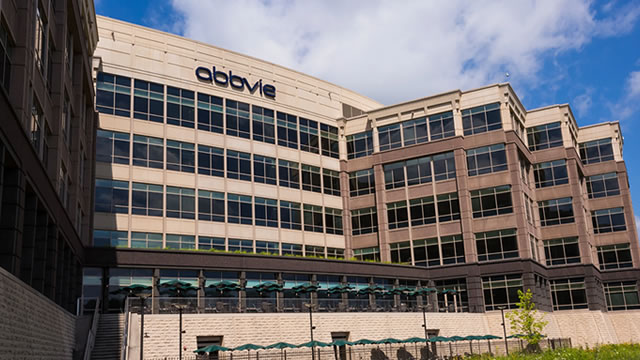
Healthy Returns: AbbVie is the newest potential weight loss drug market player
CNBC· 2025-03-04 19:59
Core Insights - AbbVie is entering the weight loss drug market by partnering with Danish drugmaker Gubra, committing up to $2.2 billion for the development of Gubra's experimental obesity drug, GUB014295 [1][2] Financial Terms - AbbVie will pay Gubra $350 million upfront and up to nearly $1.9 billion contingent on meeting specific development and sales milestones [2] Drug Mechanism - GUB014295 is an injection that mimics amylin, a gut hormone that suppresses appetite and reduces food intake, differing from existing obesity drugs that target GLP-1 [3][4] Competitive Landscape - Other companies, including Novo Nordisk and Zealand Pharma, are also developing amylin-targeting products, with some being further along in development than Gubra's drug [5] Potential Benefits - Targeting amylin may reduce gastrointestinal side effects and muscle loss compared to GLP-1 targeting treatments, although these benefits need to be validated in clinical trials [6] Strategic Implications - AbbVie's entry into the obesity market could create synergies with its existing business areas, such as inflammation and aesthetics, potentially enhancing its product offerings [6][8] Market Context - The deal is significant as AbbVie seeks new top-selling drugs following the patent expiration of its major product, Humira [8][9] CEO Statement - AbbVie CEO Robert Michael emphasized the partnership as a compelling opportunity to address patient needs and foster long-term growth for the company [9]