
Tariffs

Search documents
Volkswagen And It's Lowered Upside With Additional Tariffs
Seeking Alpha· 2026-01-20 14:00
Core Viewpoint - The article discusses the investment potential and performance of Volkswagen AG (VWAGY), highlighting its long-term growth prospects and current market position. Group 1: Company Performance - Volkswagen AG has shown resilience in the automotive market, with a significant focus on electric vehicle (EV) production and sustainability initiatives [1]. - The company reported a year-over-year increase in sales, with a notable rise in demand for its electric models, contributing to overall revenue growth [1]. Group 2: Market Trends - The automotive industry is experiencing a shift towards electrification, with increasing consumer preference for EVs, which Volkswagen is well-positioned to capitalize on [1]. - Regulatory changes and government incentives for EV adoption are expected to further boost Volkswagen's market share in the coming years [1].



Amazon CEO Jassy says Trump's tariffs have started to 'creep' into prices
CNBC· 2026-01-20 13:50
Amazon CEO Andy Jassy said President Donald Trump's sweeping tariffs are starting to be reflected in the price of some items, as sellers weigh how to absorb the shock of the added costs.Amazon and many of its third-party merchants pre-purchased inventory to try to get ahead of the tariffs and keep prices low for customers, but most of that supply ran out last fall, Jassy said in a Tuesday interview with CNBC's Becky Quick at the World Economic Forum in Davos, Switzerland. "So you start to see some of the ta ...


Davos, Trump's Greenland tariffs, Stellantis' tough run and more in Morning Squawk
CNBC· 2026-01-20 13:22
Group 1: Netflix and Warner Bros. Discovery - Netflix has submitted an all-cash offer for Warner Bros. Discovery's assets, indicating a strategic move in the competitive media landscape [1] - This bid follows reports that Netflix was likely to adjust its offer, highlighting the ongoing negotiations and potential shifts in the media industry [1] Group 2: Market Reactions and Economic Events - U.S. stock futures have dropped significantly as investors are selling off U.S. assets, reflecting a negative market sentiment following a losing week for major indexes [1] - The World Economic Forum (WEF) has commenced in Davos, Switzerland, with business leaders expressing concerns over geoeconomic issues and misinformation [6] - U.S. Treasury Secretary Scott Bessent stated that President Trump is demonstrating that the U.S. is "back," amidst ongoing tariff threats and international tensions [6] Group 3: Tariff Threats and Legal Challenges - President Trump has threatened to increase tariffs on eight European countries unless Greenland is sold to the U.S., with proposed tariffs starting at 10% and rising to 25% [3][4] - The legality of Trump's tariffs is under scrutiny, with the Supreme Court expected to rule on the matter soon, which could have significant implications for U.S. trade policy [8] Group 4: Stellantis Performance - Stellantis, the parent company of Jeep and Fiat, has seen its U.S.-listed stock decline approximately 43% since its merger on January 16, 2021, while Italian-listed shares have fallen about 40% [11] - The company is undergoing a turnaround under new CEO Antonio Filosa, who aims to regain market share for Jeep and Ram after a period of declining sales [12] Group 5: South Korean Food Exports - South Korea's food exports reached a record of over $13 billion last year, driven largely by instant noodle exports, which surged 22% to just over $1.5 billion [14] - The popularity of Korean food products, including cheese-flavored spicy noodles, is linked to a broader cultural interest in South Korean pop music and television [15]



Wall Street is once again banking on the TACO trade because they’ve been ‘burned’ by believing Trump before
Yahoo Finance· 2026-01-20 12:33
Geopolitical Tensions - Investors are attempting to stay calm amid escalating tensions between the U.S. and Europe, using past experiences as guidance for navigating current geopolitical volatility [1] - Analysts express unease due to President Trump's assertion that several European nations could face new tariffs if they do not support the U.S. bid to purchase Greenland, which Denmark is not selling [2] Market Reactions - The VIX volatility index has increased by 27% over the past five days, marking its highest level since April of the previous year when broad tariffs were announced [3] - European markets are experiencing declines, with Germany's DAX down 1.57%, London's FTSE down 1.4%, and France's CAC 40 down 1.2% [4] - Asian markets are also affected, with Tokyo's Nikkei 225 down 1.11% and Hong Kong's Hang Seng Index down 0.29% [4] - U.S. futures indicate a downward trend for the S&P 500, down 1.75% at the time of writing, while gold prices are rising, up 1.17% [4] Historical Context - The current market situation is reminiscent of the market plummet following Trump's Rose Garden address on April 2, referred to as "Liberation Day," despite subsequent delays in tariff implementation [5] - Jim Reid from Deutsche Bank notes that there is potential for larger market movements, highlighting the precarious nature of Trump's tariff impositions due to an upcoming Supreme Court ruling on their legality [6] - The market has previously overreacted to tariff threats, as seen during Trump's escalation with China in October, which led to a 2.71% decline in the S&P 500 before a trade truce was extended [6]
Stock Index Futures Plunge After Trump’s Tariff Threats on Europe Over Greenland
Yahoo Finance· 2026-01-20 11:29
Market Overview - Wall Street's major equity averages closed slightly lower, with power suppliers like Talen Energy (TLN) and Constellation Energy (CEG) leading the declines, dropping over -11% and -9% respectively [1] - Mosaic (MOS) fell over -4% after weak preliminary Q4 results, while J.B. Hunt Transport Services (JBHT) reported weaker-than-expected Q4 revenue, leading to a decline of more than -1% [1] - On a positive note, Micron Technology (MU) rose over +7% after a director purchased approximately $7.8 million worth of shares [1] Economic Data - U.S. industrial production rose +0.4% month-over-month in December, exceeding expectations of +0.1%, while manufacturing production unexpectedly increased by +0.2% against an expected decline of -0.2% [6] - The upcoming U.S. core personal consumption expenditures (PCE) price index, a key inflation gauge, is highly anticipated, especially since it was delayed due to a government shutdown [9] Corporate Earnings - The fourth-quarter corporate earnings season is heating up, with major companies like Netflix (NFLX), Intel (INTC), and Johnson & Johnson (JNJ) expected to report. S&P 500 companies are projected to see an average earnings increase of +8.4% for Q4 compared to the previous year [11] International Developments - European equities faced downgrades to Neutral by Citi strategists due to renewed transatlantic tensions, particularly related to President Trump's tariff threats against European nations opposing his Greenland acquisition bid [14] - In Japan, concerns over public finances are affecting market sentiment, with long-term government bond yields reaching record highs amid speculation about potential consumption tax cuts [19]
S&P500 and Nasdaq 100: Trump Tariffs Threaten to Erase All 2026 US Stock Gains
FX Empire· 2026-01-20 10:15
Core Viewpoint - The content emphasizes the importance of conducting personal due diligence and consulting with competent advisors before making any financial decisions, particularly in relation to investments in cryptocurrencies and CFDs [1]. Group 1 - The website provides general news, personal analysis, and third-party materials intended for educational and research purposes [1]. - It explicitly states that the information should not be interpreted as a recommendation or advice for investment actions [1]. - The accuracy and reliability of the information are not guaranteed, and users are cautioned against relying solely on the content provided [1]. Group 2 - The website discusses the complexities and high risks associated with cryptocurrencies and CFDs, highlighting the potential for significant financial loss [1]. - It encourages users to conduct their own research and fully understand the instruments and risks involved before making investment decisions [1].

Trump threatens more tariffs. Investors gasp.
MarketWatch· 2026-01-20 10:15
Core Insights - The current situation presents higher stakes compared to previous instances, yet the strategies employed remain strikingly similar [1] Group 1 - The industry is facing increased pressure and challenges that may impact future performance [1] - Historical patterns in decision-making and strategic responses are being observed again in the current context [1]

Novartis could have a U.S. deal that shields it from tariffs, CEO tells CNBC
CNBC· 2026-01-20 10:14
Group 1 - Novartis CEO Vas Narasimhan believes the company has an agreement with the U.S. to protect it from tariffs, citing a $23 billion investment in manufacturing as a defensive measure [1] - U.S. President Donald Trump announced a plan to impose 10% tariffs on several European countries, which will increase to 25% by June 1, as part of a broader economic strategy [2] - The pharmaceutical sector in Europe is likely to be significantly affected by these tariffs, as medicines and related products represent one of the EU's largest exports to the U.S., totaling €84.4 billion ($98.1 billion) in the first three quarters of the previous year [3]


The First Year of Donald Trump's Economy in 7 Charts
Business Insider· 2026-01-20 09:48
Economic Overview - Donald Trump was re-elected as president in 2025, introducing new economic plans affecting trade, immigration, and the federal workforce [1] - Economic uncertainty has impacted consumers, job seekers, and small to midsize businesses due to potential policy changes [1][2] - The effective tariff rate has reached its highest level in decades, significantly affecting trade dynamics [15] Job Market - The US added only 584,000 jobs in the past year, marking the lowest job growth outside a recession since 2003 [5] - Federal employment decreased by 9% year-over-year, driven by efforts to increase government efficiency [11] - Manufacturing employment declined by 0.5% from the previous year, continuing a trend of job losses in the sector [13] Consumer Spending - Despite economic uncertainty, consumer spending remains strong, characterized by a "K-shape" recovery where wealthier individuals are spending more while lower-income households are cutting back [20] - Spending has been primarily driven by high-income individuals and those with assets, such as homeowners and stock market investors [21] Inflation and Economic Growth - Inflation has decreased from a peak of about 9% in 2022 but remains above the Federal Reserve's target of 2% [18] - Real GDP showed growth in the second and third quarters of 2025 after a decline in the first quarter, indicating resilience in the economy despite job market challenges [9][8] - The jobless expansion is expected to continue due to demographic shifts and reduced net migration affecting the labor supply [9][10]
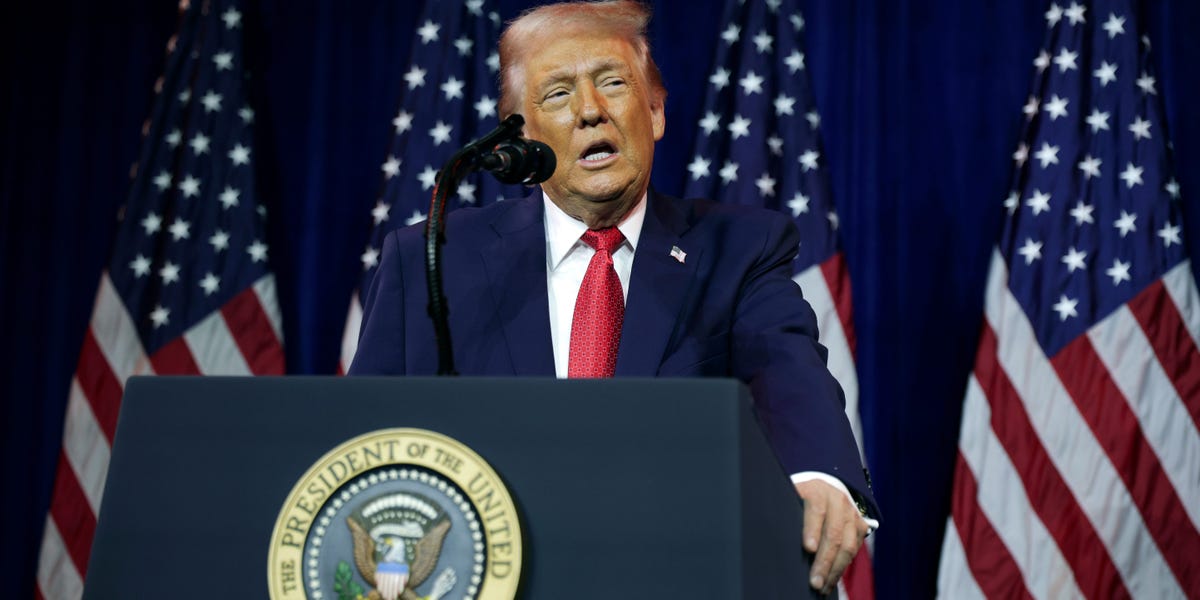
Week Ahead: Trade War Risks Are Back—and Markets Are Pricing Them In
Investing· 2026-01-20 08:47
Core Viewpoint - US stock futures declined significantly due to renewed trade tensions between the US and Europe, particularly regarding tariffs related to Greenland, ahead of the earnings season [2][3]. Economic Data and Earnings Calendar - Trump's upcoming speech at Davos is expected to focus on housing affordability, proposing measures such as banning large institutional homebuyers and directing Fannie Mae and Freddie Mac to purchase more mortgage bonds to reduce borrowing costs [5]. - Delayed PCE inflation data for October and November will be released on Thursday, providing the Federal Reserve with crucial insights on price pressures before their policy meeting [5]. - The Supreme Court is set to hear arguments regarding Fed Governor Lisa Cook's challenge against President Trump's attempt to remove her, which could impact the central bank's independence [6]. Market Reactions - Asian stocks fell, and US futures dropped by approximately 1% as trade-war fears affected market sentiment [8]. - The MSCI Asia Pacific Index decreased by 0.5%, with most sectors experiencing losses, while futures indicated further declines for US and European equities [8]. - Citigroup downgraded European equities to neutral due to escalating US-EU tensions and tariff uncertainties affecting earnings, while upgrading Japan to overweight and favoring emerging markets for better risk-reward [8]. Commodity and Currency Movements - The dollar remained under pressure, with 10-year US Treasury yields reaching a four-month high of approximately 4.27% [8]. - Gold prices hit a record high of $4,701.23 per ounce, reflecting a more than 70% increase since the beginning of Trump's second term [8]. - Oil prices remained steady as traders assessed the implications of US efforts to control Greenland and the potential for escalating US-EU trade tensions [8]. Earnings Reports - Netflix is expected to report Q4 results with an EPS of $0.55 (up 28% year-over-year) and revenue of $11.97 billion (up 17%), driven by popular content [10]. - 3M Company is projected to show only single-digit sales and EPS growth for 2026, with JPMorgan maintaining a neutral rating [11]. - United Airlines anticipates a third consecutive earnings decline with around 3% sales growth, while Goldman Sachs has reiterated a buy rating [11]. - Charles Schwab is expected to report a 22% increase in revenue and a 50% increase in earnings for the full year [12].
