台独

Search documents
福建舰通过台湾海峡,外交部回应!
Zheng Quan Shi Bao· 2025-09-12 10:21
Core Viewpoint - The Chinese government emphasizes its stance on sovereignty and territorial integrity regarding Taiwan and expresses concerns over international relations, particularly with the U.S. and the Middle East situation [2][3][4][5][6]. Group 1: Taiwan Strait and Military Activities - The Fujian aircraft carrier's passage through the Taiwan Strait is described as a normal arrangement for scientific testing and training, not targeting any specific goal [2]. - The Chinese government reaffirms that Taiwan is an inseparable part of China and opposes any official exchanges between Taiwan and other countries, particularly in Europe [3]. Group 2: U.S. Relations and Statements - The Chinese government condemns illegal violence and opposes U.S. politicians who use China as a scapegoat, as well as the spread of false information about China [4]. - There is a strong opposition to unilateral sanctions imposed by the U.S. on entities like the Houthi movement in Yemen, which is viewed as a violation of international law [6]. Group 3: Middle East Situation - The Chinese government expresses deep concern over the escalating situation in the Middle East, condemning actions that violate the sovereignty and security of Middle Eastern countries and calling for peace and negotiation efforts [5].
福建舰通过台湾海峡,外交部回应!
证券时报· 2025-09-12 09:57
Group 1 - The core viewpoint of the article emphasizes China's stance on sovereignty and territorial integrity, particularly regarding Taiwan and its military activities in the Taiwan Strait [2][3][4] - The article highlights China's condemnation of foreign interference in its internal affairs, specifically regarding Taiwan's international engagements and the actions of certain U.S. politicians [3][4] - It expresses China's concerns over the escalating situation in the Middle East, advocating for peace and dialogue rather than violence [5][6] Group 2 - The article discusses China's opposition to unilateral sanctions imposed by the U.S., labeling them as violations of international law and norms [6] - It reiterates China's commitment to its national interests and the principle of one China, urging other nations to respect this stance [3][4] - The article calls for international cooperation to address regional conflicts and emphasizes the importance of restoring stability through negotiation [5]

外交部:“台独”是死路一条
Yang Shi Xin Wen Ke Hu Duan· 2025-09-12 08:10
Core Viewpoint - The Chinese government firmly opposes any official exchanges between Taiwan and countries that have diplomatic relations with China, emphasizing that Taiwan is an inseparable part of China and that any attempts to promote "Taiwan independence" will ultimately fail [1] Group 1 - The spokesperson, Lin Jian, highlighted that the individual in question is merely a local foreign affairs official from Taiwan [1] - The Chinese government has expressed strong dissatisfaction and has lodged formal representations with relevant countries regarding their interactions with Taiwan [1] - There is a call for European countries to adhere to the One China principle and take effective measures to prevent visits by "Taiwan independence" figures [1] Group 2 - The Chinese government warns the Taiwan authorities that the pursuit of "Taiwan independence" is a dead end [1] - Any attempts to create the notion of "two Chinas" or "one China, one Taiwan" in the international community are destined to fail [1]
台外事部门负责人窜访欧洲,外交部:强烈不满、坚决反对,已向有关国家提出严正交涉
Huan Qiu Wang· 2025-09-12 07:42
Core Viewpoint - The Chinese government reaffirms its stance that Taiwan is an inseparable part of China and opposes any official exchanges between Taiwan and countries that have diplomatic relations with China [1] Group 1 - The Chinese Foreign Ministry emphasizes that there is only one China and that Taiwan is a part of its territory [1] - The Ministry expresses strong dissatisfaction and firm opposition to any support for "Taiwan independence" activities and has lodged serious representations to relevant countries [1] - The Ministry urges European countries to adhere to the one-China principle and take effective measures to prevent visits by "Taiwan independence" figures [1] Group 2 - The Chinese government warns Taiwan authorities that "Taiwan independence" is a dead end and that any attempts to create the notion of "two Chinas" or "one China, one Taiwan" will ultimately fail [1]
国台办:两岸沟通协商谈判当然要在一个中国原则基础上进行
Xin Hua Wang· 2025-09-10 09:58
Group 1 - The core viewpoint emphasizes that cross-strait communication and negotiation must be based on the One China principle, and that the Democratic Progressive Party (DPP) must acknowledge the "1992 Consensus" for dialogue to resume [1][2] - The DPP's refusal to recognize the "1992 Consensus" has led to a halt in cross-strait communication since 2016, and the current administration's insistence on "Taiwan independence" is seen as a barrier to peace [1][2] - The spokesperson criticized the DPP's claims of "equal dignity" in negotiations, arguing that it attempts to alter historical and legal facts regarding cross-strait relations, which will ultimately hinder dialogue [2] Group 2 - The DPP's recent statements about strengthening defense capabilities and increasing defense budgets are viewed as a misguided approach that could harm the welfare of Taiwanese citizens [2] - The spokesperson highlighted that the DPP's actions, including reliance on external forces and military posturing, are detrimental to Taiwan's social welfare and security [2] - Criticism was directed at the DPP for attempting to deflect responsibility for its governance failures by blaming external factors, which has led to widespread discontent among the Taiwanese populace [3] Group 3 - The DPP's policies are accused of creating instability for cross-strait families, particularly for spouses from the mainland, by imposing political pressures and undermining their rights [3][4] - The spokesperson pointed out that the DPP's actions against cross-strait marriages are aimed at fabricating issues related to nationality and manipulating the concept of "two countries" [3][4] - The DPP's governance is characterized as oppressive and detrimental to the well-being of individuals living in Taiwan, particularly those with ties to the mainland [4]
国台办批赖清德加码交“保护费”、当“提款机”
Zhong Guo Xin Wen Wang· 2025-09-10 06:56
Core Viewpoint - The Taiwan authorities, under Lai Ching-te, are increasing defense spending, aiming for over 3% of GDP next year and over 5% by 2030, while maintaining a stance of "Taiwan independence" which is criticized as detrimental to Taiwan's future and welfare [1] Group 1 - Lai Ching-te's administration insists on strengthening defense capabilities, which is seen as a move towards "Taiwan independence" and reliance on external forces [1] - The Taiwan Affairs Office spokesperson, Chen Binhua, argues that this approach leads to wasteful spending of public funds and does not guarantee safety or peace for Taiwan [1] - The spokesperson emphasizes that the future and security of Taiwan depend on peaceful development of cross-strait relations and reunification with the mainland [1] Group 2 - Lai Ching-te's notion of "equal dignity" is viewed as an attempt to engage in dialogue without recognizing the One China principle, which is seen as an obstacle to cross-strait negotiations [1] - The Taiwan authorities are accused of trying to alter historical and legal facts regarding cross-strait relations, which is deemed futile [1]
抗战历史不容歪曲 胜利荣耀同属两岸
Yang Shi Xin Wen Ke Hu Duan· 2025-09-08 03:00
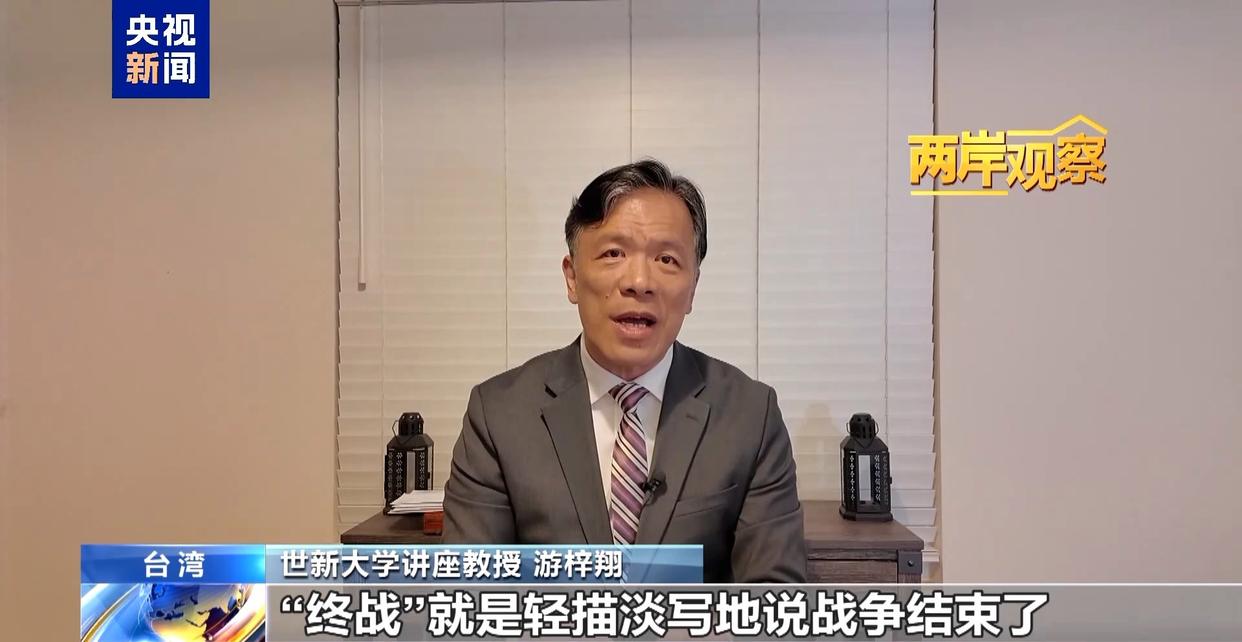
Group 1 - The core viewpoint of the articles revolves around the controversy surrounding Lai Ching-te's remarks on the 80th anniversary of the victory in the Anti-Japanese War, which are seen as an attempt to distort history and provoke division between Taiwan and mainland China [1][3][12] - Experts emphasize that the victory in the Anti-Japanese War and Taiwan's return to China should be commemorated as a shared honor for both sides, rather than inciting hatred [1][3][7] - Lai's use of the term "end of war" instead of "victory in the Anti-Japanese War" is criticized for downplaying the aggressor's responsibility and attempting to sever ties between the two sides [5][9][11] Group 2 - The articles highlight the historical context of Taiwan's struggle against Japanese colonial rule, noting that many Taiwanese sacrificed their lives for the cause, and that the victory in the Anti-Japanese War was crucial for Taiwan's liberation [11][12][14] - Lai Ching-te's comments are viewed as aligning with Japanese right-wing ideologies, which is seen as a betrayal of historical facts and a disservice to the sacrifices made by ancestors [7][9][14] - The current political climate is described as one where Taiwan's leadership is increasingly reliant on external powers, particularly Japan, due to changing perceptions from the United States [9][18]
台湾社会这样对待大陆阅兵:民间沸腾、庙堂无声
经济观察报· 2025-09-04 12:07
Core Viewpoint - The article emphasizes the need to analyze Taiwan's society through the lens of "official" (庙堂) and "civil" (民间) rather than the traditional divisions of pro-unification and pro-independence, highlighting that both sides are part of an established interest group [1][3]. Group 1: Civil Response to Military Events - The public reaction in Taiwan to the military parade on September 3 can be summarized as "civilian excitement, official silence" [2]. - Media outlets like China Times and CTi News provided extensive coverage of the military parade, reflecting a detailed and engaged public discourse [5]. - Prominent figures advocating for cross-strait communication and unification expressed strong emotional responses, with political commentator Qiu Yi describing the parade as the most spectacular and moving he has ever seen [6][7]. Group 2: Official Response and Criticism - In contrast to the public's enthusiasm, the official response from Taiwan's leadership was notably muted, with only a few statements from Lai Ching-te drawing attention [9]. - Lai's comments included a controversial reference to the victory in the Second Sino-Japanese War as a "ceasefire," which drew criticism from the opposition for being overly accommodating to Japan and ceding narrative control to mainland China [10]. - The lack of vocal support from the opposition party (蓝营) indicates a complex political landscape where few are willing to openly engage with the sentiments expressed by the public [10].
台海观澜 | 台湾社会这样对待大陆阅兵:民间沸腾、庙堂无声
Jing Ji Guan Cha Wang· 2025-09-04 02:37
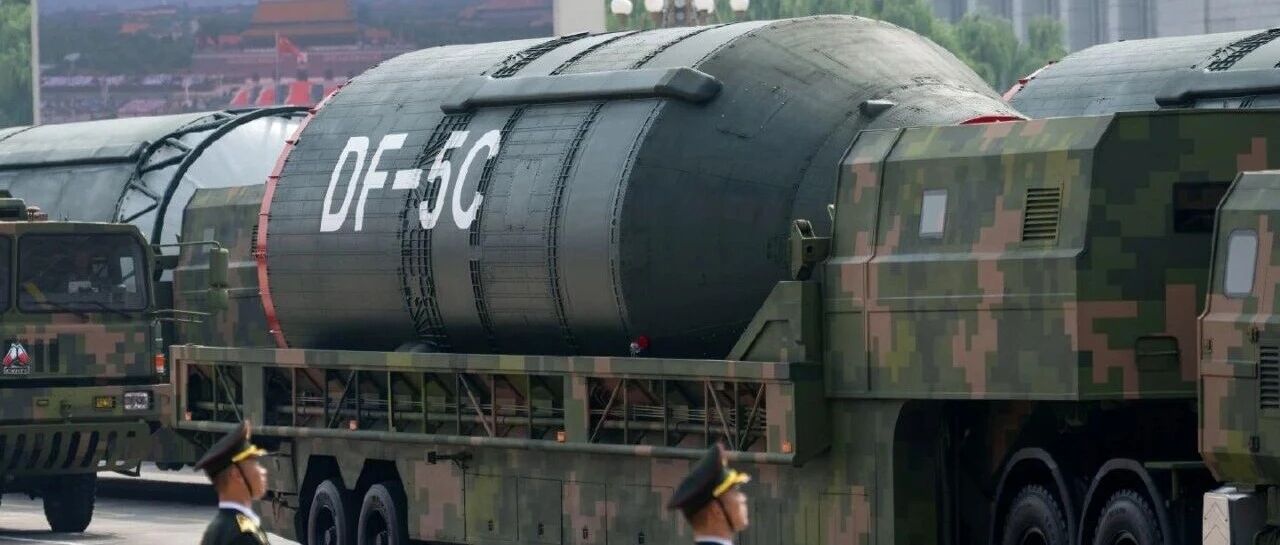
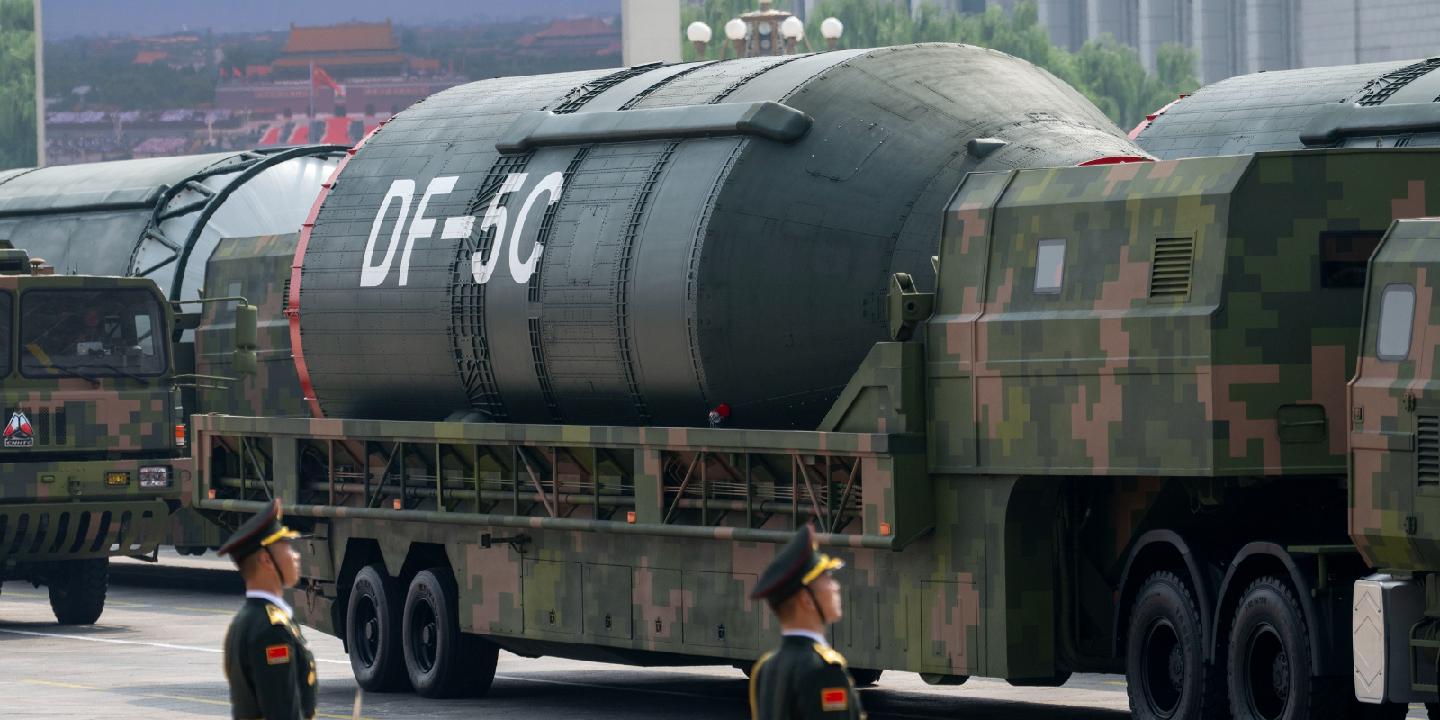
Group 1 - The core viewpoint of the article highlights the contrasting reactions between the Taiwanese public and the political elite regarding the recent military parade in mainland China, with the public showing enthusiasm while the political leaders remain largely silent [2][8] - The Taiwanese public is increasingly open to the future development of cross-strait relations, moving beyond traditional divisions of pro-unification and pro-independence [3][4] - Media outlets such as China Times and CTi News provided extensive coverage of the military parade, reflecting a strong interest in the event among the public [5] Group 2 - Prominent figures advocating for cross-strait exchanges expressed strong emotions about the parade, with political commentator Qiu Yi describing it as a deeply moving experience that instilled pride in being Chinese [6] - Expert opinions highlighted the military capabilities showcased during the parade, with notable features including advancements in unmanned and AI technology, improved stealth capabilities, and enhanced nuclear strike capabilities [7] - In stark contrast, the political elite in Taiwan, particularly the leadership, exhibited minimal response, with only notable comments from Lai Ching-te, who faced criticism for his remarks regarding Japan and the lack of direct commentary on the parade [9][10]
国民党主席应是没有杂质的“纯蓝人”
经济观察报· 2025-08-27 11:57
Group 1 - The next chairman of the Kuomintang (KMT) should be a "pure blue" individual, free from impurities, to lead the party out of its current predicament [2][4][8] - The KMT is facing a leadership election on October 18, with several candidates expressing interest, including Zheng Liwen and Luo Zhichang [2][10] - The concept of a "pure blue" person is inspired by Taiwan's political landscape, particularly the remarks of Lai Ching-te regarding eliminating impurities from politics [4][5] Group 2 - A core requirement for the next KMT chairman is a steadfast political stance, particularly in recognizing the "One China" principle and the "1992 Consensus" [9] - Zheng Liwen is the only candidate who has publicly identified as Chinese, stating she would respond as "I am Chinese from Taiwan" when asked about her nationality [10] - The KMT has historically struggled with internal inconsistencies, with past leaders deviating from core principles, contributing to the party's decline [9] Group 3 - The next chairman should possess a pure and selfless character, avoiding the "sauce jar culture" that has plagued the KMT, which leads to internal conflicts and undermines unity [11][12] - Luo Zhichang has made a public commitment to not run in the 2028 elections if elected chairman, demonstrating a selfless approach [12][13] - The KMT's internal culture has stifled talent development, and a strong chairman is essential to overcome this issue and enhance the party's effectiveness [13]