
AI bubble

Search documents
A simple reason why the biggest investors say they aren't worried about AI bubble, tech stock selling
CNBC· 2025-11-16 17:07
Core Insights - The largest investors are focusing on the public tech sector due to the transformative potential of artificial intelligence (AI) [1][2] - Despite concerns about over-concentration in major tech stocks, investment managers remain optimistic about the U.S. tech sector and AI investments [2][3] Investment Perspectives - Philippe Laffont from Coatue Management highlighted the "hyper-scaler advantage," where major companies like Alphabet, Microsoft, and Amazon are expected to invest over $500 billion in AI next year [3][4] - Bill Ford from General Atlantic emphasized that large public companies are leading AI advancements, which provides confidence in their stock valuations [4][5] AI Investment Strategies - General Atlantic is actively investing in AI across its portfolio of 200 companies, seeing significant returns from these investments in areas like customer care and digital marketing [6][5] - Laffont acknowledged the rapid increase in tech stock valuations but stressed the importance of understanding both bullish and bearish perspectives on these valuations [7][12] Market Dynamics - The current tech landscape differs from the dotcom bubble, with established companies projected to generate nearly $1 trillion in free cash flow annually without significant debt [13][14] - Ford noted that the investments made by large public companies in AI are based on their revenue and earnings, indicating a healthy market environment [16][17] Notable Company Performances - Alphabet has rebounded as a leading tech stock, with significant investor interest, including a stake from Berkshire Hathaway [9][10] - The Nasdaq index remains close to its all-time high, reflecting strong performance in the tech sector despite recent declines [11] Future Outlook - Both Laffont and Ford expressed optimism about the long-term growth potential of AI, suggesting that decreasing costs in computing will not lead to a market collapse [17][18] - The ongoing investments in AI are seen as essential for companies to compete for substantial market opportunities [16][17]


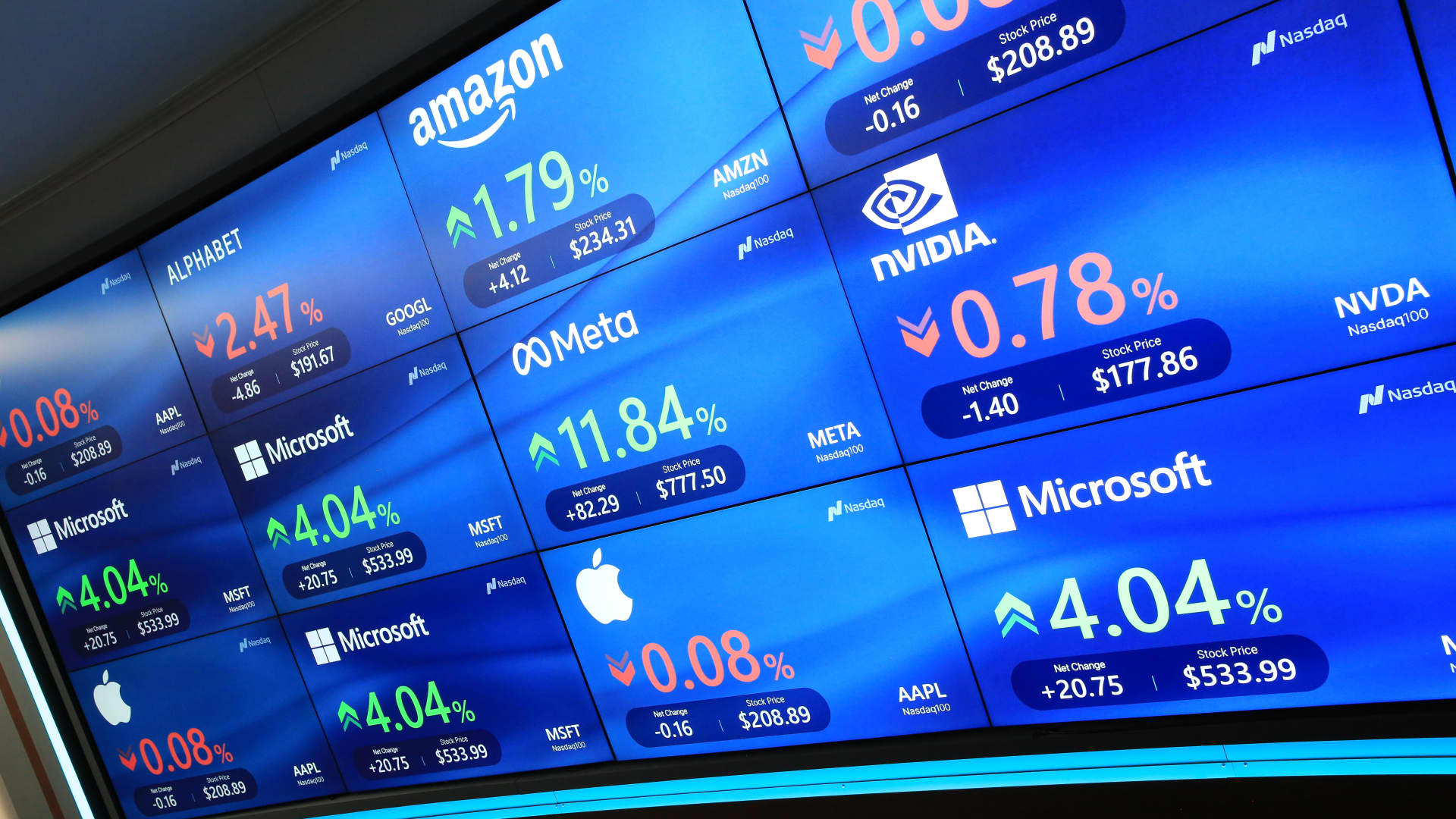
AI Bubble Fears Soar, Trump’s Economic Approval Dips, and US-China Trade War Broadens
Stock Market News· 2025-11-16 03:08
Group 1: AI Bubble Concerns - Investor anxiety regarding a potential "AI bubble" has reached unprecedented levels, with Google searches for the term skyrocketing to a new all-time high, peaking at 100 on October 2, indicating widespread public and investor interest [3] - The "Magnificent 7" technology companies—Alphabet, Amazon, Apple, Meta, Microsoft, Nvidia, and Tesla—now account for a record 37% of the S&P 500's total market capitalization, raising concerns about market concentration risk [4] - AI-related capital expenditures have surpassed U.S. consumer spending as the primary driver of economic growth in the first half of 2025, contributing 1.1% to GDP growth [4] Group 2: Economic Approval Ratings - Public confidence in former President Donald Trump's handling of the economy has significantly eroded, with only 33% of U.S. adults approving of his management, a drop from 43% in March [5] - A CNN/SSRS poll shows Trump's overall approval rating at 37% and his disapproval rating at a high of 63%, with 61% of respondents believing his policies have worsened the economy [6] Group 3: US-China-EU Trade Tensions - Global trade tensions between China, the U.S., and the EU are expanding beyond traditional sectors, now encompassing critical goods such as soybeans, electric vehicles, batteries, and semiconductor chips [7] - Tariffs on semiconductors imported from China are set to double from 25% to 50% starting in 2025, while tariffs on electric vehicles will surge from 50% to 100% later this year [8] - A recent "one-year trade truce" between China and the U.S. addresses critical issues in rare earth exports and agricultural purchases, with China committing to significant agricultural purchases, including 12 million metric tons of soybeans this season [10]





AI stocks soared in 2025, but are valuation and bubble concerns killing the rally?
Youtube· 2025-11-15 16:24
The AI trade has powered markets for nearly two years now, fueling trillion dollar valuations and reshaping entire sectors from semiconductors to cloud infrastructure. We hit the streets to get Americans take on AI and how it affects their lives. >> Are you afraid of AI taking your job.>> I think AI is coming and it's going to be used in ways that are good, but also possibly ways that are harmful. I do see where it's being supplemented. um for things writing emails, writing proposals and contracts.So I coul ...


Nvidia Stock May Rise 30% As OpenAI's Value Dips, Say 300 AI Experts
Forbes· 2025-11-15 15:40
Core Insights - Nvidia's upcoming Q3 earnings report is anticipated to significantly impact the market, with expectations for strong performance based on historical data [3][9] - The AI chip industry, led by Nvidia and OpenAI, is experiencing a bubble, but investment opportunities are perceived to outweigh risks at this time [5][12] - The future of generative AI and Nvidia's stock is contingent on the leadership of OpenAI's CEO, Sam Altman, and the overall health of the AI market [35] Nvidia's Q3 Report Expectations - Nvidia is expected to report a 56% increase in revenue to $54.83 billion and a 54% increase in adjusted EPS to $1.25 [10] - The company has a strong track record, beating Wall Street earnings estimates 90% of the time over the past five years [9] - Ongoing restrictions on selling advanced AI chips to China may impact revenue, but record data center revenue could lead to higher profitability [11] AI Industry Overview - The generative AI industry is heavily reliant on the success of Nvidia and OpenAI, with potential declines in value for related sectors if they falter [4][5] - A recent AI summit revealed a bullish outlook for Nvidia stock among industry insiders, despite concerns about an AI bubble [12][13] - New business models leveraging AI, such as those in education and legal services, are emerging as significant opportunities [18][19] Investment Opportunities and Threats - Two optimistic scenarios for AI investment include the discovery of profitable applications and a slower pace of investment leading to adjusted valuations [12][13] - The AI summit attendees estimated Nvidia's value could reach $6 trillion by 2026, while OpenAI's revenue could hit $30 billion [17] - Notable investments in AI infrastructure and applications are being made by venture capitalists, indicating confidence in the sector's growth [15][16] Key Business Models and Leaders - Innovative AI business models are being developed, such as those that enhance educational tools and improve legal industry efficiency [18][19] - Prominent leaders in the AI space, including the CEOs of Harvey and Eleven Labs, are driving significant advancements in their respective fields [25][26] - The conference showcased a range of compelling speakers, highlighting the depth of knowledge and vision within the AI industry [22][27] Social and Political Context - San Francisco's mayor discussed improvements in public safety and real estate values, reflecting a changing urban landscape that may influence tech investment [29][30] - The conference also touched on broader societal issues, including the challenges of raising children in high-cost areas like San Francisco [34]
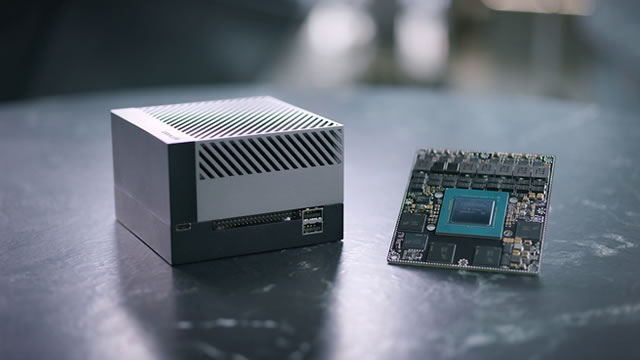
Attention Nvidia Investors: 3 Things to Watch on Nov. 19
The Motley Fool· 2025-11-15 12:10
Core Viewpoint - Nvidia's upcoming third-quarter earnings report is highly anticipated due to growing concerns about a potential AI bubble and the company's pivotal role in the AI chip market [1][2]. Group 1: Demand and Innovation - Nvidia's CEO Jensen Huang indicated strong demand for the company's latest AI chip architecture, Blackwell, with cumulative shipments projected to reach approximately $500 billion over 2025 and 2026 [2][3]. - The company has maintained a gross margin above 70%, reflecting high profitability on sales, which is crucial for its ongoing success [5]. Group 2: Competitive Landscape - Rival Advanced Micro Devices has reported record quarterly revenue and introduced a strategy to lead the next generation of AI computing, highlighting the competitive environment Nvidia faces [3]. Group 3: Market Opportunities - Nvidia has been excluded from the Chinese market due to U.S. export restrictions, but Huang sees potential for Nvidia in China, estimating the market opportunity could be worth "a couple of 100 billion dollars by the end of the decade" [7][8].

AI's valuation problem reaches a 'mini panic moment'
Yahoo Finance· 2025-11-15 11:00
Core Insights - The growing discussion around an AI bubble coincides with rising tech valuations and investor anxiety about potential market instability [1] - A perspective suggests that the influx of capital into unproven AI ventures may be a rational strategy, akin to venture capital investing, where multiple bets are placed to offset potential losses with a few successful investments [2] Group 1: Market Sentiment - Recent tech pullbacks have created a tense environment for investors, particularly highlighted by the situation with Palantir, despite its strong performance [5] - Analyst Dan Ives indicates that the current negative sentiment around AI is likely a temporary panic, predicting a significant rally in tech stocks as investors capitalize on the AI revolution [6] Group 2: AI Investment Dynamics - Ives emphasizes that the deployment of AI technologies, particularly through Nvidia and major tech platforms, represents the initial phase of a broader tech transition, with substantial downstream economic benefits projected [7] - For every dollar spent on Nvidia, it is estimated that $8 to $10 will be generated through related AI products and services [7] Group 3: Company-Specific Insights - Palantir's CEO, Alex Karp, defended the company's valuation and criticized analysts who have advised against investing, noting the strong retail interest in Palantir [8]

A Veteran Fund Manager on Why He's Staying Away From Top Tech Stocks
Business Insider· 2025-11-15 10:15
Core Viewpoint - The AI sector is experiencing a debate over whether it is in a bubble, with many agreeing that top stocks appear expensive, leading to concerns about a potential correction in the tech market [1][2]. Group 1: Market Performance and Concerns - The AI trade has significantly contributed to market growth in 2025, but there are doubts about sustaining this momentum as the economy slows [2]. - The tech-heavy Nasdaq index has faced selling pressure due to concerns over valuations and a less favorable outlook for interest rate cuts [3]. - Sector leaders like Palantir, Tesla, and Nvidia have struggled recently, supporting the view that AI-driven momentum may be diminishing [4]. Group 2: Economic Indicators - Several indicators suggest a weakening economy, including declining consumer sentiment, rising job losses, and ongoing tariff concerns [4]. - Although GDP growth appears stable, there are signs of softening demand within the economy [4]. Group 3: Investment Strategies - As the AI trade shows signs of fragility, investment strategies are being considered to mitigate potential tech-driven losses [5]. - Compelling investment opportunities are identified outside of AI and tech, particularly in sectors that benefit from slowing growth or persistent inflation, such as gold, precious metals, utilities, energy, and certain real estate investments [6]. Group 4: Specific Stock Recommendations - Despite a cautious outlook on tech, there is optimism for Uber Technologies and Mercado Libre, which have shown strong performance in 2025, with Uber up 52% and Mercado Libre up 20% [7]. - Both companies are noted for having multiple growth drivers, providing them with significant potential for further gains [7]. Group 5: Investment Balance - Balance is emphasized as crucial for investors navigating the shifting AI trade and a weakening economy [8]. - Selectivity is advised, with a focus on balancing AI exposure with assets that generate steady cash flow and perform well in slower growth or higher volatility environments [9].



Wall Street Week Ahead: Skittish tech stock investors turn to Nvidia results for next cues
The Economic Times· 2025-11-15 03:51
Core Viewpoint - The S&P 500 index ended the week flat after a volatile period, with concerns about the economic outlook and U.S. interest rates overshadowing optimism from the end of the government shutdown [1] Group 1: Market Performance - The Cboe's VIX index, a measure of market volatility, reached its highest level in about a month, indicating increased investor anxiety [1] - The S&P 500 tech sector has struggled recently, while other sectors like healthcare, materials, and financials have shown solid gains [10] Group 2: Nvidia's Role in the Market - Nvidia is considered the "epicenter" of AI infrastructure expansion, and its upcoming earnings report is crucial for the tech sector and related industries [2][11] - Nvidia shares have increased approximately 1,000% since the launch of ChatGPT in November 2022, with a year-to-date gain exceeding 40% [3][11] - Analysts expect Nvidia to report a 53.8% year-over-year increase in fiscal third-quarter earnings per share, with projected revenue of $54.8 billion [5][11] Group 3: Future Expectations - Analysts have raised their revenue expectations for Nvidia's fiscal 2027 to about $285 billion, reflecting a 15% increase since late May [6][11] - Investors are looking for positive guidance from Nvidia regarding demand and spending trends, especially in light of significant capital expenditures from major companies like Microsoft and Amazon [7][12] - There is a growing demand for proof of concept regarding returns and cash flows from AI investments, indicating a shift in investor sentiment [9][12]

Did Stocks Just Stage a 'Mini Panic'—or Something Worse? What Experts Are Saying
Investopedia· 2025-11-14 21:30
Core Insights - Tech stocks experienced their worst week since early April, raising concerns about a potential AI bubble [1] - The Nasdaq Composite index surged nearly 60% from April 8 to October 29, primarily driven by AI-related investments across various sectors [2] - Investor sentiment has shifted, with some expressing skepticism about the sustainability of AI investments, while others remain optimistic due to strong fundamentals and recent Federal Reserve rate cuts [3] Market Significance - AI optimism has been a key driver of stock market gains over the past three years, significantly impacting major stock indexes [4] - The recent debate over AI stocks has tempered the previously bullish sentiment, leading to cautious outlooks from market experts [5] Expert Opinions - Analysts believe the recent tech stock pullback is temporary, with Nvidia's upcoming earnings report seen as a potential catalyst for recovery [8] - Dan Ives from Wedbush Securities views the current situation as a short-lived panic, expecting Nvidia's earnings to validate the AI investment thesis [9] - Jamie Cox from Harris Financial Group suggests that the conditions for a major tech bubble are not yet present, indicating a buying opportunity for high-quality tech stocks [9] - Thomas Lee from Fundstrat Global Advisors emphasizes that the underlying productivity gains from AI remain intact despite profit-taking [9] - Eric Teal from Comerica Wealth Management notes the need for caution due to high valuations, while also recognizing the momentum in the market [9] - Mark Smith from Wells Fargo Advisors reassures that strong earnings performance among S&P 500 companies mitigates fears of a significant market correction [9] - Aaron Schaechterle from Janus Henderson highlights the importance of focusing on companies with proven business models amid the AI demand surge [9]
Megacap earnings story presents risk with reliance on startup usage
Youtube· 2025-11-14 20:11
Group 1 - Tech stocks are rebounding after three consecutive days of losses, but concerns about the AI bubble persist [1] - The source of concern may lie in private AI markets, as startup burn impacts big tech's profitability [1][2] - AI startups are raising significant capital, with Curser valued at nearly $30 billion despite only generating $1 billion in annualized revenue [2] Group 2 - Startups like Curser are heavily investing in AI models, which in turn drives revenue for big tech companies [3] - Soft Bank has divested from Nvidia, a major public beneficiary of the AI boom, to invest in OpenAI, a significant private loss generator [4] - A potential pullback in startup funding could negatively affect the earnings narrative for mega-cap tech companies [4]
