
Monetary Policy

Search documents
Australia's financial conditions influenced by global factors, central banker says
Yahoo Finance· 2025-11-26 02:06
Core Insights - The Reserve Bank of Australia (RBA) acknowledges that global factors significantly influence Australia's financial conditions, with low equity risk premia and credit spreads indicating potentially easier conditions than expected [1][2] - There is uncertainty regarding the neutral interest rates, which have not decreased since the pandemic and may have even increased [2][4] Financial System Structure - The Australian financial system, primarily bank-dominated, suggests that capital market developments may have less impact on financial conditions compared to economies like the United States [2] International Market Review - There is minimal evidence of a significant shift away from U.S. dollar assets, although some market participants are managing increased risks associated with the U.S. dollar [3] - Central banks in emerging markets have been increasing their gold reserves since the freezing of Russian reserves in 2022, indicating a continuing trend [3] Monetary Policy Context - The RBA has reduced interest rates three times this year to 3.6%, but a surge in inflation during the third quarter has led to expectations that financial conditions may no longer be restrictive [4] - Financial markets currently imply less than a 50% probability of an additional rate cut by the RBA in May next year [4] - The RBA is focused on determining the neutral rate, which is crucial for balancing economic stimulation and inflation control within the target band of 2-3% [4]
Kevin Hassett Frontrunner for Fed Chair, SPACS Latched to Crypto DATS | Bloomberg Crypto 11/25/2025
Bloomberg Television· 2025-11-25 18:46
Federal Reserve Policy & Leadership - Kevin Hassett 被认为是下任美联储主席的热门人选,他与特朗普总统在经济和货币政策上的观点一致[1][3] - 市场预期 Hassett 可能会推动更快的降息,导致两年期国债收益率下降至 346% 左右,十年期国债收益率低于 4%[33][80] - Hassett 的任命可能会导致美联储内部出现分歧,影响 2026 年及以后的货币政策[38] - 现任美联储主席 Jerome Powell 的任期到 2026 年 5 月结束,但特朗普总统可能希望尽快任命 Hassett [10][11] Market & Economic Outlook - 市场普遍认为,美联储的独立性至关重要,但特朗普政府希望确保所有利率都降低[17][18] - 经济数据喜忧参半,零售销售数据略有疲软,但信用卡追踪数据显示 10 月份有所回升,整体经济表现良好[23] - 预计 12 月或 1 月可能会降息 25 个基点,但 2026 年初的财政刺激可能会给通胀带来上行压力,导致美联储暂停降息[21][25][27] - 劳动力市场正在放缓,但财政刺激可能会稳定劳动力市场,并可能给就业带来上行压力[28][30] Crypto & SPACs - 讨论了加密货币领域的 SPACS(特殊目的收购公司)与数字资产 Treasury 公司的合并,类似于“Turducken”结构[46][48][49] - 几家 SPAC 公司正在与加密货币公司合作,但比特币价格自历史高位下跌 30%,可能影响投资者对这些交易的看法[50][52] - 以太坊的价格自 8 月份高点下跌约 40%,但 Dynamo 仍然看好以太坊的长期发展,并认为其在人工智能发展中扮演重要角色[57][58][62] - Hyperion DEFI 的股价自 7 月份以来下跌了约 75%,该公司正在通过构建新的收入来源来应对数字资产跟踪公司面临的挑战[65][66]


Bessent says there's a 'very good chance' Trump names new Fed chair before Christmas
CNBC· 2025-11-25 13:11
Core Viewpoint - U.S. Treasury Secretary Scott Bessent anticipates that President Trump will announce the new Federal Reserve chair by the holiday season, indicating progress in the selection process [1][2]. Group 1: Federal Reserve Chair Succession - Bessent is leading the search for a successor to current Chair Jerome Powell and has one interview remaining [2]. - There is a strong possibility that an announcement will be made before Christmas, although the final decision rests with the President [2]. - Trump has expressed a desire to fire Powell and has encouraged Bessent to influence the Fed to lower interest rates [2][3]. Group 2: Monetary Policy Context - Bessent noted that monetary policy has become increasingly complex, suggesting that it involves more than just cutting interest rates [3]. - Trump humorously remarked about the urgency of addressing monetary policy issues, indicating the pressure on Bessent to deliver results [3].

美国消费市场图表集(2025 年第四季度)-US Consumer Chartbook 4Q 2025
2025-11-25 05:06
Summary of US Consumer Chartbook 4Q 2025 Industry Overview - The report focuses on the US consumer sector, analyzing labor market trends, income, consumption, sentiment, and credit conditions. Key Points Economic Outlook - The US economy is expected to experience softer consumption growth in the near term due to slower job growth and elevated inflation, with a sequential improvement anticipated throughout 2026 [3][11] - A fiscal boost from higher tax refunds in 1Q 2026 is expected to support disposable income, although spending effects will be more gradual throughout the year [3][4] Consumer Spending Forecasts - Real personal consumption is projected to grow by 1.8% in 2025, 1.6% in 2026, and 1.8% in 2027 [4][8] - After a strong 2024 with a 3.1% growth, consumption growth is expected to slow to 1.8% in 2025 and 1.6% in 2026 [8] Labor Market Insights - Payroll growth has slowed, with an average of 62k jobs added monthly, and the unemployment rate is expected to rise to 4.5% by the end of 2025 [44][45] - Labor force participation is projected to decline slightly, influenced by restrictive immigration policies [52] Wealth and Income Dynamics - Household net wealth has increased by $59 trillion, or 50%, since 2019, reaching $176.3 trillion as of mid-2025 [19][92] - The top 20% of income earners hold 71% of household net wealth, indicating a K-shaped recovery where high-income consumers benefit more from wealth effects [19][20] Tax Refund Expectations - An estimated $40 billion increase in tax refunds is expected due to retroactive tax cuts, potentially rising to $60 billion if more benefits are distributed through refunds [30][31] - The average tax refund is projected to increase by approximately $450, marking the highest average in recent years [31] Consumer Sentiment and Spending Intentions - Consumer sentiment has declined, particularly among low- and middle-income households, with spending intentions softening for holiday purchases compared to the previous year [70][76] - Higher prices are cited as a significant barrier to increased holiday spending, especially in luxury and mid-luxury categories [76] Credit and Balance Sheet Conditions - Net worth remains elevated as asset growth outpaces liability growth, with household debt continuing to rise [104][113] - The personal saving rate has declined slightly, reflecting a drawdown of excess savings accumulated during the pandemic [101][96] Consumption Trends - Goods spending is expected to slow significantly in the near term due to price increases from tariffs, while services spending remains stable [85][82] - Despite a projected jump in disposable income in 1Q 2026, the spending effects of fiscal measures are expected to be more evenly distributed throughout the year [37] Additional Insights - The report highlights the potential for a K-shaped recovery, where high-income consumers are likely to benefit more from economic improvements, while low- and middle-income consumers face ongoing challenges [20][19] - The anticipated fiscal support from tax refunds and easing monetary policy may provide a more favorable backdrop for consumer spending in 2026 [3][11]

No Jobs Data, No Fed Meeting? The Central Bank's December Interest Rate Decision Just Got Harder
Investopedia· 2025-11-25 01:04
Core Insights - The Federal Reserve faces a challenging decision at its upcoming policy meeting regarding whether to cut borrowing costs to support the job market or maintain rates to combat inflation, with the possibility of delaying the meeting altogether due to delayed economic data [1][3][6] Economic Implications - A delay in the December policy meeting could allow the Fed to make a more informed decision based on crucial employment data scheduled for release after the current meeting date [2][6] - The Fed's policy committee is reportedly divided on whether to prioritize inflation control or support the job market, with financial markets indicating an 83% probability of a rate cut in December [8] Data Availability and Decision-Making - The government shutdown has created a data blackout, complicating the Fed's ability to calibrate monetary policy effectively, leading to speculation about postponing the meeting to gather more information [3][4][8] - Without key economic data for October and November, the upcoming meeting may rely more on sentiment rather than concrete evidence, raising concerns about the decision-making process [9]

The Fed Is In Crisis Over Rate Cuts
From The Desk Of Anthony Pompliano· 2025-11-24 22:01
Federal Reserve & Monetary Policy - A crisis is underway at the Federal Reserve, with Jerome Powell facing a revolt from fellow central bankers due to disagreements on monetary policy [1][2][6] - Two Fed governors dissented at the same meeting in July, a rare occurrence not seen since 1993, signaling potential cracks in the central bank's armor [4][6] - There's nearly an even split among voting members of the rate-setting Federal Open Market Committee (FOMC) regarding a December rate cut, with approximately 63% odds assigned by the market to a rate cut and 95% odds on Poly Market for a 25 basis point cut [6][7] - The author anticipates the central bank will likely cut another 25 basis points, despite preferring a 50 basis point cut to bring interest rates below 3% [13][14] - Market chaos is expected if the Fed doesn't cut interest rates, as financial markets are anticipating cheap capital [16] Economic Data & Poverty Line - The traditional poverty line calculation, based on a 1963 formula of food costs multiplied by three, may be outdated due to significant changes in household spending patterns [17][21][22] - Applying the original poverty line logic to current spending patterns suggests a modern poverty line for a family of four could be between $130,000 and $150,000 per year [25][26] - Two-thirds of Americans may be living below this modern poverty line, indicating the economic data may be inaccurate and not reflecting people's actual financial struggles [27][28] Bitcoin & Market Volatility - Bitcoin has experienced a 35% drawdown from its all-time high, which is considered a healthy reset in the context of its historical volatility [41] - Over the last decade, Bitcoin has drawn down 30% or more 21 times, with seven of those drawdowns being 50% or more [39] - Bitcoin's volatility may be decreasing, potentially leading to smaller drawdowns (around 40% instead of 80%) [42] - Despite recent price drops, the S&P is only about 5% off all-time highs, and most markets around the world are up double digits, suggesting a broader bull trend [30][37]

Morgan Stanley's Wilson Worried Fed Is Dragging Its Feet
Bloomberg Television· 2025-11-24 14:22
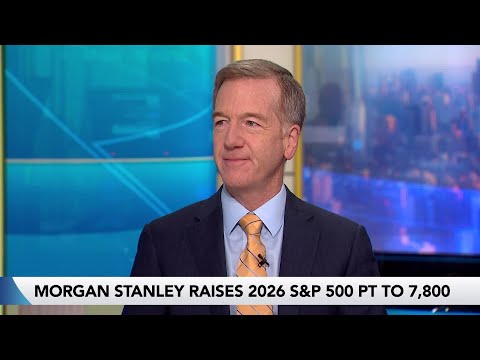
The team at Morgan Stanley releasing their outlook for 2026, writing We raise our S&P 500 price target to 7800, driven by strong earnings growth. We believe that we're in the midst of a new bull market and earnings cycle, especially for many of the lagging areas. Michael Asset of Morgan Stanley joins me now.Wonderful to see you, Mike. Thanks, Alison. So let's start on the optimism you have and optimistic for quite a while talking about the rotation into the adopters, not just the tech behemoths.Why are you ...
X @Bloomberg
Bloomberg· 2025-11-24 12:50
Interest Rate Forecasts - Brazil economists cut their 2026 year-end interest rate forecasts for the first time since September [1] Inflation and Monetary Policy - Inflation is gradually coming down in Brazil [1] - The central bank maintains a hawkish stance on monetary policy [1]
美国经济-12 月维持鸽派立场,明年重启降息-US Economics Weekly-Dovish hold in December, cuts resume next year
2025-11-24 01:46
Summary of Key Points from the Conference Call Industry Overview - The report focuses on the **US economy** and its outlook for 2026, particularly in relation to **monetary policy** and **labor market dynamics** [1][3][7]. Core Insights and Arguments - **Economic Growth and Inflation**: The US economy is expected to experience **moderate growth** and **decelerating inflation** in 2026, with a forecasted real GDP growth of **1.8%** in 2026 and **2.0%** in 2027 [7][16]. - **Federal Reserve Actions**: Anticipation of **three additional rate cuts** by the Federal Reserve in **January, April, and June 2026** as the labor market continues to soften [3][15][29]. - **Labor Market Trends**: The labor market is characterized by a **low-hire/low-fire** environment, with an expected increase in the unemployment rate to **4.7%** by **2Q 2026** [12][29]. - **Consumer Spending**: Consumer spending is projected to recover gradually, with real consumption rising by **1.6%** in 2026 and **1.8%** in 2027, although it remains constrained by slow hiring and tariff impacts [10][11]. - **AI Spending Impact**: AI-related spending is expected to contribute approximately **0.4 percentage points** to growth in 2026 and 2027, accounting for about **20%** of the overall growth forecast [11][23]. Additional Important Insights - **Inflation Dynamics**: Inflation is projected to peak at **2.8%** and **3.1%** for headline and core PCE inflation in **1Q 2026**, before decelerating to **2.5%** and **2.6%** by **4Q 2026** [13][14]. - **Tariff Effects**: The effective tariff rate is expected to rise to approximately **16%**, impacting consumer prices and overall economic activity [32][33]. - **Public Policy Landscape**: The report indicates a shift from a fluid policy environment to a more stable one, with significant implications for trade, immigration, deregulation, and fiscal policies [8][9]. - **Alternate Economic Scenarios**: Three alternate scenarios are presented: demand-driven upside, productivity-driven upside, and a mild recession, each with different implications for growth and inflation [17][18][19]. Conclusion - The overall outlook for the US economy in 2026 suggests a transition towards modest growth and easing inflation, influenced by labor market conditions and fiscal policies, with significant contributions expected from AI-related spending. The Federal Reserve's monetary policy will play a crucial role in navigating these economic dynamics.
Could Stablecoins Spark a New Contagion? BIS Warns, Coinbase Pushes Back
Yahoo Finance· 2025-11-23 14:00
Group 1 - The potential for a stablecoin run could lead to significant fire sales of U.S. Treasuries, reminiscent of the 2008 financial crisis triggered by Lehman Brothers [1][4] - Recent U.S. tariff threats have caused substantial volatility in the crypto market, with a notable $20 billion loss in under a day following a 100% tariff threat on China [2] - The depeg of USDC in March 2023, following the Silicon Valley Bank failure, exemplifies how real-world financial shocks can lead to rapid redemptions in fiat-backed stablecoins [3] Group 2 - Central bank officials warn that a run on dollar-pegged stablecoins could necessitate a reevaluation of monetary policies due to the potential for fire sales of U.S. Treasury bonds [4] - If tariffs lead to higher yields and lower liquidity, the stability of Treasury bills could be compromised, especially when they are most needed [5] - The stablecoin market is projected to grow significantly, potentially reaching $2 trillion within three years, but there are underlying risks due to the concentration of market control by Tether and Circle [5]