
Interest rates

Search documents
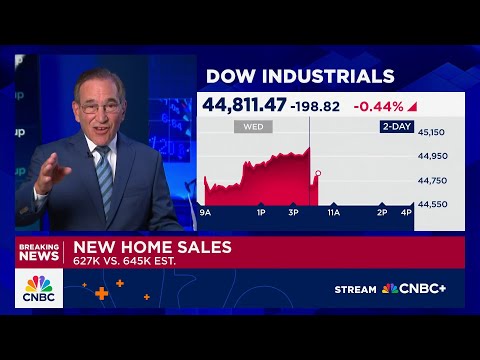
June new home sales 627K vs. 645K expected
CNBC Television· 2025-07-24 14:26
Market Overview - New home sales in June came in at 627,000 seasonally adjusted annualized units, below the expected 650,000 [1] - June's figure is only slightly above the seven-month low of 623,000 from the previous month, representing an increase of approximately 05% [1] - The spring shopping season was weak, leading to building inventory in new homes [2] - Weakness is observed in existing home sales as well [2] Interest Rates and Fed Policy - Interest rates remain persistently high [2] - There are no guarantees regarding the tenure even if the Fed lowers rates [2] - The twos 10 spread has been hovering around 50 basis points, with little movement expected due to the upcoming Fed meeting [3]

PCA(PKG) - 2025 Q2 - Earnings Call Transcript
2025-07-24 14:02
Financial Data and Key Metrics Changes - The company reported second quarter net income of $242 million or $2.67 per share, an increase from $199 million or $2.20 per share in 2024 [4] - Excluding special items, net income was $224 million or $2.48 per share compared to $199 million or $2.20 per share in 2024, reflecting a $0.28 per share increase driven by higher prices and lower fiber costs [4][5] - Second quarter net sales were $2.2 billion in 2025, up from $2.1 billion in 2024 [4] - Total company EBITDA for the second quarter, excluding special items, was $451 million in 2025 compared to $400 million in 2024 [4] Business Line Data and Key Metrics Changes - In the Packaging segment, EBITDA excluding special items was $453 million with sales of $2 billion, resulting in a margin of 22.6%, compared to last year's EBITDA of $400 million and sales of $1.9 billion with a margin of 21% [5][6] - The Paper segment reported EBITDA excluding special items of $30 million with sales of $146 million, yielding a margin of 20.8%, compared to $31 million and $150 million in sales in 2024 [12] Market Data and Key Metrics Changes - Domestic containerboard and corrugated products prices and mix were $0.95 per share above 2024, with export containerboard prices up $0.03 per share versus last year's second quarter [8] - Export containerboard sales were lower, with a production of 85,000 fewer tons than in 2024 [6] Company Strategy and Development Direction - The company announced an agreement to acquire the Greif containerboard business, which is expected to provide a strong growth platform for both containerboard and corrugated products [7][10] - The acquisition is anticipated to be completed by the end of the third quarter, subject to regulatory approval [7] Management's Comments on Operating Environment and Future Outlook - Management noted that while corrugated customers remained cautious, there was steady improvement in bookings and shipments as July progressed [15] - The company expects higher corrugated shipments and containerboard production in the third quarter, despite lower export containerboard sales due to the global trade environment [15][16] - Management expressed optimism about potential upside if global trade issues and tariffs are resolved [70] Other Important Information - Cash provided by operations was $300 million in the quarter, with free cash flow of $130 million [13] - The company has a quarter-end cash balance, including marketable securities, of $956 million, with liquidity of approximately $1.3 billion [14] Q&A Session Summary Question: Can you talk about bookings and billings to start the new quarter? - Bookings are trending at 2% over Q2 2024, with a good start compared to last year's strong performance [23] Question: What was behind the better performance in operations? - The company operated at approximately 99% uptime performance, executing efficiently despite some downtime due to demand [25] Question: Can you clarify the impact of export sales on revenue and EBITDA? - The increase in revenue and EBITDA per ton is primarily due to price increases rather than mix changes [29] Question: What is the outlook for e-commerce growth? - Customers in the e-commerce sector are still growing mid-single digits, with more growth expected in the second half of the year [79] Question: How will the Greif acquisition impact recycled mix and customer sets? - The recycled mix is expected to increase from around 20% to approximately 30% post-acquisition, providing better opportunities in the market [86] Question: What is the expected marginal cost of the new debt from the Greif acquisition? - The company is modeling about a 5.5% interest rate on the new debt, resulting in around $100 million incremental interest [100]

20-year bond auction sees robust demand
CNBC Television· 2025-07-23 18:43
Global Bond Market & Treasury Yields - Global bond issuance is a key factor influencing Treasury yields [1] - The market anticipates interest rates may remain elevated for an extended period [2] - The 20-year Treasury auction showed strong performance with the lowest net yield change on the curve, although rates initially dipped before rising again [2][3] Japanese Government Bonds (JGB) - Japan's role as a significant debt issuer is crucial to monitor [4] - JGB ten-year yield is around 1.58%, considered elevated [4] - The interest rate differential between JGBs and US Treasuries is influenced by currency exchange rates [5] Dollar Index - Despite a slight increase in interest rates, the dollar index did not strengthen significantly [5] - The dollar index's 3.5-year low close on July 2nd at 96.78 is a critical level to watch, as technicians may sell if it's breached [6]
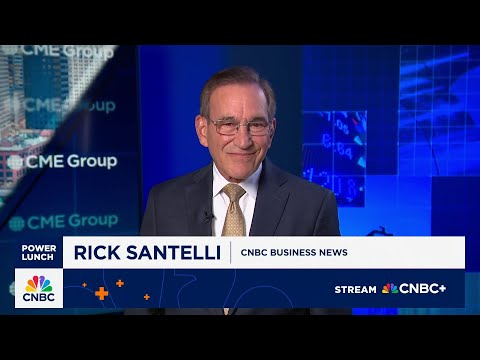
It's a good environment for equities and debt year-to-date, says Canyon's Joshua Friedman
CNBC Television· 2025-07-23 15:28
Market Resilience & Economic Outlook - The market and economy have shown resilience to higher tariff rates [1] - Strong employment continues, with inflation easing to the mid-2% range [3] - Credit markets are very strong, with significant refinancing activity at tight spreads [3] Interest Rates & Monetary Policy - There's a possibility of interest rate cuts, although some anticipate no cuts this year [2] - Markets are acting in a benign fashion [3] - The Federal Reserve's balance sheet has decreased from 40% to 22% of government debt, with continued sales of $40 billion per month, potentially easing conditions at the long end [7][8] Debt Market Activity - Approximately $45 billion in deals were announced on Monday, marking the fourth largest day or week in market history [4] - Companies are repricing deals with portable provisions, indicating strong investor demand [4][5] Consumer Impact - Approximately 87% of homeowners have mortgage rates well below current levels, impacting housing [8] - Roughly two-thirds of mortgages are 200 basis points below current financing rates, creating concern for consumers [8] Business Environment - Businesses are benefiting from the current environment and performing well [5] - Earnings revisions are trending upward, and unemployment remains low, creating a favorable environment for both equity and debt markets [6]
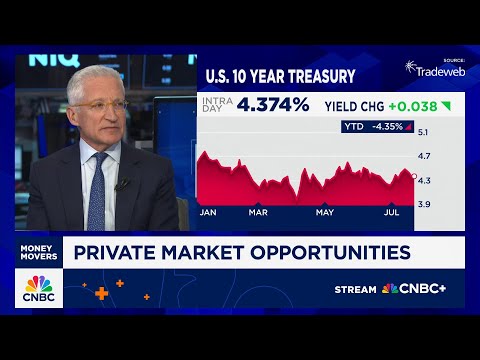
Expect the capex trajectory to remain very strong, says Joe Lavorgna
CNBC Television· 2025-07-23 13:09
Capex Boom & Economic Growth - Business equipment production rose 23% in Q1, and GDP accounts showed a 24% increase [4] - Q2 showed a near 11% increase, resulting in a 17% annualized gain over two quarters, the largest since 1997 (excluding the pandemic) [4][5] - The extension of tax policy incentivized companies to invest in capital [6] - Expects capex trajectory to remain strong, fostering upward pressure on wages [7] - Sees potential for a "blue wages boom" with non-supervisory production workers earning bigger paychecks [7] - The administration's outlook is based on 3% growth, considered doable due to productivity trends and labor force participation [18][20] - Expects AI boom to generate quicker payoffs from capital investment [20] - If growth reaches 3%, there could be an additional $4 trillion not counted by the CBO, potentially alleviating deficit concerns [21] Tariffs & Inflation - Tariffs have not had the expected effect on price data, with most of the tariff being absorbed in the margin [12] - The majority of the tariff has been absorbed in the margin [12] - The US could be collecting $300 billion in tariffs, but inflation data has been minimal [13] - Energy costs and capex tend to be disinflationary, offsetting potential lingering effects from tariffs [14] International Trade & Investment - Japan will commit over $500 billion (550 billion) to the US through an innovation fund [16]
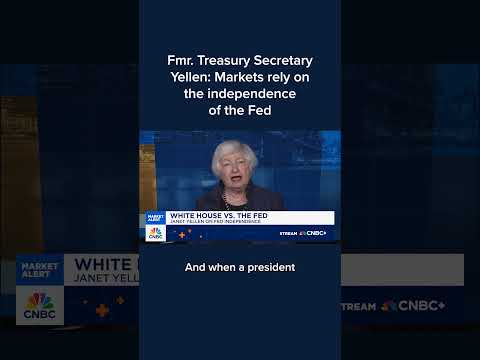
Fmr. Treasury Secretary Yellen: Markets rely on the independence of the Fed
CNBC Television· 2025-07-22 14:00
Fed Independence & Market Stability - Markets rely on the Fed's independence and commitment to price stability and maximum employment for assessing the US economy's soundness and investment security [1] - Presidential threats to remove a Fed chair to lower interest rates for government financing, rather than price stability, are disconcerting to markets [1] Monetary Policy & Inflation Risk - History shows that when pressure drives monetary policy, high inflation is the inevitable consequence [1]
5 Stocks to Buy on Solid Rebound in Retail Sales Amid Price Pressures
ZACKS· 2025-07-22 13:11
Core Insights - The U.S. retail sector has shown resilience with a notable rebound in retail sales, indicating strong consumer spending despite price pressures and tariffs [1][4][6] Retail Sales Performance - Retail sales reached $720.1 billion in June, increasing by 0.6% month over month after a 0.9% decline in May, surpassing analysts' expectations of a 0.1% rise [4][9] - Year-over-year, retail sales rose by 3.9% in June, driven by increases in auto dealership sales (up 1.2%) and building material and garden equipment stores (up 0.9%) [4][6] - Online retail sales grew by 0.4%, while sales at sporting goods, hobby, and book stores increased by 0.2% [4] Economic Implications - The strong retail sales figures suggest that the economy remains robust, potentially influencing the Federal Reserve to delay interest rate cuts [2][6] - Tariff-driven price increases have contributed to the rise in retail sales, but market participants are optimistic about future trade deals mitigating negative impacts [7] Investment Opportunities - Five retail stocks have been identified as having growth potential due to positive earnings estimate revisions and strong Zacks Ranks: Amazon.com, Dollar Tree, Advance Auto Parts, Casey's General Stores, and Levi Strauss [2][3][9] - Amazon.com, Inc. has an expected earnings growth rate of 13.4% for the current year, with a Zacks Rank of 1 [10] - Dollar Tree, Inc. has an expected earnings growth rate of 7.8% and a Zacks Rank of 2 [12] - Advance Auto Parts, Inc. is projected to have an earnings growth rate of over 100%, also holding a Zacks Rank of 2 [14] - Casey's General Stores, Inc. has an expected earnings growth rate of 7.2% and a Zacks Rank of 2 [16] - Levi Strauss & Co. has an expected earnings growth rate of 4% and a Zacks Rank of 1 [18]


X @The Economist
The Economist· 2025-07-21 23:40
With interest rates near two-decade highs, it is no wonder that homebuyers want to cut corners. Some strategies are risky—especially for sellers https://t.co/H5wQE02LpW ...
Jim Bullard: FOMC needs to lower rates further
CNBC Television· 2025-07-21 20:13
Monetary Policy & Economic Outlook - The US economy is showing signs of strength with improved sentiment and strong retail sales [1] - The Federal Reserve (Fed) is perceived to be in a comfortable position to observe economic developments before making policy changes, given the unemployment rate is near the natural rate and inflation is moderating [2] - The Fed is expected to re-engage with its recalibration campaign, potentially starting in September, to further lower rates [4] - The committee anticipates the neutral rate to be around 3%, suggesting further room for rate cuts [10] - A more realistic estimate for the neutral rate might be 325% to 350%, allowing the Fed some flexibility [11] - The Fed aims to bring inflation down to the lower end of the 2% range and ideally asymptote to 2% [11] Inflation & Fed's Response - The Fed's 2022 policy of sharply increasing the policy rate successfully reduced inflation without causing a recession [6] - The Fed's actions were followed globally, with some emerging markets even anticipating and moving ahead of the Fed [8] Fiscal Policy Impact - Some believe the Fed misplayed the 2021 episode, partly due to substantial expenditure authorized by Congress and the White House, which fueled inflation [6]
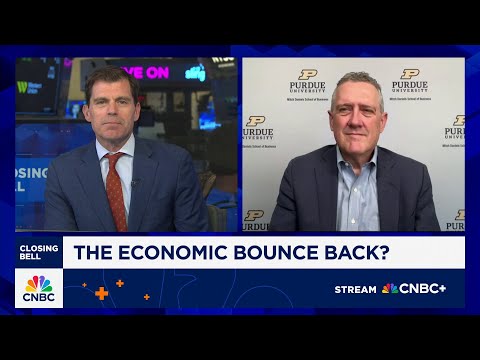
We need to open up the Fed and move to a different construct, says Judy Shelton
CNBC Television· 2025-07-21 13:18
Monetary Policy & Federal Reserve Critique - The speaker advocates for monetary regime change at the Federal Reserve, suggesting deeper problems beyond short-term interest rate adjustments [3][4] - The speaker criticizes the Federal Reserve's models, constructs, and meeting choreography, calling for a strategic approach aligned with government economic and national security goals [4] - The speaker questions the Federal Reserve's independence, arguing it shields the Fed from legitimate criticism and Congressional oversight, violating democratic governance norms [7][8] - The Federal Reserve has been operating at a loss since September 2022 and holds over 900 billion USD in unrealized capital losses [9] Interest on Reserves (IOR) & Banking System - The Federal Reserve is paying hundreds of billions of USD to commercial banks to keep money in cash reserve accounts instead of lending or investing [9] - Paying interest on reserves (IOR) originated as an emergency measure in October 2008 during the global financial meltdown [12] - The speaker suggests eliminating the Federal Reserve's use of paying interest on reserves and shrinking its portfolio to raise interest rates [17] Quantitative Easing (QE) & Inflation - Quantitative easing (QE) involved the Federal Reserve purchasing government assets to lower interest rates to zero [13][14] - The Federal Reserve credited banks' cash balance accounts for millions of USD with a keystroke when purchasing Treasury securities, creating base money [14][15] - The speaker argues that paying banks to keep money at the Federal Reserve is more lucrative than making loans, hindering financial intermediation [16]
