Sustainability

Search documents
SuperCircle Raises $24M For AI-Driven Textile Recovery
Ventureburn· 2025-12-10 21:48
Core Insights - SuperCircle has raised $24 million in funding to expand its AI-powered textile waste recovery platform [1][10] - The company aims to address the growing issue of retail waste, with over $163 billion of unsold inventory discarded annually [3] - SuperCircle's platform provides retailers with tools to comply with environmental regulations and improve recovery rates [2][5] Company Overview - SuperCircle builds a full-stack platform for end-of-life textiles, transforming waste into assets for retailers [2] - The company has already diverted over 6 million textiles from landfills and aims to divert over one billion by 2030 [9] - SuperCircle collaborates with over 75 partners, including notable brands like J.Crew and GUESS [5] Technology and Operations - The platform utilizes a digital operating layer that analyzes textiles at the item level, creating a digital twin for optimal reuse or recycling [4] - SuperCircle's AI model identifies the best channel for each returning item, reducing losses and increasing recovered value [5][6] - Future developments will focus on predictive sorting and enhancing digital twins for more complex decision-making [12] Market Context - Retailers are facing tighter margins and operational pressures, necessitating a unified system for textile recovery [7] - Investors believe SuperCircle sets a new standard for waste infrastructure, providing visibility in a traditionally opaque sector [8] - The shift towards circular operations aligns with broader industry trends, as brands seek reliable and measurable sustainability outcomes [13] Funding and Growth Plans - The $24 million Series A funding will support technology upgrades, expand the reverse logistics network, and strengthen data architecture [10] - The company plans to deepen supply chain integrations and support rapid onboarding for larger enterprise clients [10][11] - SuperCircle's leadership anticipates a new phase in the industry where retailers must demonstrate the value of every product throughout its lifecycle [11]



Husqvarna (OTCPK:HSQV.Y) 2025 Earnings Call Presentation
2025-12-10 07:30
Financial Targets & Growth Strategy - Husqvarna Group aims for average annual organic sales growth of 3-5% over a business cycle[51, 52, 82] - The company targets an operating margin exceeding 10% over a business cycle, excluding items affecting comparability[53, 54, 84, 85] - Husqvarna Group targets a return on capital employed (ROCE) of 15% over a business cycle, excluding items affecting comparability[55, 56, 86, 87] - The company plans transformative cost-out measures to achieve over 4 billion SEK in savings by 2030[58, 93] Business Performance & Portfolio Management - Husqvarna Group reported net sales of 47.6 billion SEK for Q3 2025 R12, with an operating margin of 6.4%[32] - Aftermarket sales reached approximately 9 billion SEK in Q3 2025 R12, with an ambition to exceed 12 billion SEK in sales by 2030[62] - Approximately 80% of Husqvarna Group's sales come from market positions ranked 1 or 2[33] - Residential sales account for approximately 60% and professional sales for approximately 40% of the company's sales as of Q3 2025 R12[39] Sustainability - Husqvarna Group aims for a 60% reduction in CO₂ emissions by 2030, calculated against a 2015 baseline[76] - The company targets 25% of net sales from circular offerings by 2030[77]
Husqvarna Group Capital Markets Day: Transforming to profitable growth
Prnewswire· 2025-12-10 07:16
Core Insights - Husqvarna Group is hosting its Capital Markets Day to outline strategic priorities and innovations aimed at long-term growth until 2030 [1] - CEO Glen Instone emphasizes the commitment to profitable growth through strategic portfolio management and operational excellence [2] Financial Targets - The company reiterates its dividend policy of 40% of net income [3] - New long-term financial targets include an average annual organic sales growth of 3-5% over a business cycle, an operating margin of over 10%, and a Return on Capital Employed (ROCE) of 15% [9] Sustainability Goals - Husqvarna Group aims to reduce CO2 emissions by 60% from the 2015 baseline by 2030 and plans for circular offerings to account for 25% of net sales [9] Cost-Reduction Initiatives - A transformational cost-out program is being implemented from 2026 to 2030, expected to yield annual run-rate savings of SEK 4 billion by the end of the period [4][5] - The program will incur SEK 1.5 billion in non-recurring costs, with SEK 1 billion expected to impact cash flows [5] Operational Efficiency - The cost-out program will focus on optimizing sourcing, geographical manufacturing footprint, and transitioning to a more asset-light business model [4] - The phasing of savings and costs will be communicated as the main activities are implemented [6]

The Boardroom Revolution: How Three Books Convinced CEOs to Go Green
The European Business Review· 2025-12-10 05:34
Core Insights - The article discusses the evolution of corporate attitudes towards sustainability, highlighting a shift from a focus on quarterly earnings to long-term environmental stewardship as a means of enhancing shareholder value [1][20]. Group 1: Historical Context - Corporate boardrooms traditionally prioritized quarterly earnings and shareholder returns, viewing environmental initiatives as costs that could harm competitiveness [2]. - By the late 1990s, CEOs began voluntarily committing to ambitious environmental targets, driven by literature demonstrating that long-term value creation necessitated environmental stewardship [1][20]. Group 2: Influential Literature - Pioneering works in the early 1990s addressed executives' concerns by showing how sustainability could enhance shareholder value through operational efficiency and risk reduction [3]. - The 1992 publication "Changing Course," prepared for the Rio Earth Summit, mobilized 50 CEOs to document improvements in environmental performance alongside financial results [5]. - Paul Hawken's "The Ecology of Commerce" challenged industrial capitalism assumptions, advocating for businesses to become restorative and improve environmental systems [9][10]. Group 3: Case Studies and Examples - Ray Anderson, CEO of Interface Inc., committed to "Mission Zero," aiming to eliminate the company's environmental footprint, and achieved significant cost savings through efficiency improvements [13][14]. - The book "Natural Capitalism" provided a framework for reimagining business models around sustainability, emphasizing competitive advantage and innovation [16][17]. Group 4: Measurement and Accountability - The development of metrics to quantify sustainability performance enabled boards to manage and evaluate environmental initiatives alongside traditional financial metrics [23][24]. - This measurement capability allowed executives to set targets and hold management accountable for sustainability results, mirroring the approach used for financial objectives [24]. Group 5: Legacy and Current Trends - Today's CEOs routinely commit to science-based climate targets and view environmental leadership as essential for long-term competitiveness, a transformation rooted in earlier literature [25][26]. - Major corporations now link executive compensation to sustainability metrics and integrate climate risk into their enterprise risk management frameworks [26].


BASFY Launches Low-VOC Catalyst to Align With Sustainability Goals
ZACKS· 2025-12-09 17:20
Core Insights - BASF SE has launched a new low-VOC amine catalyst, Lupragen N 208, aimed at enhancing its product line for polyurethane foam production [1][8] - The new catalyst is designed to work alongside the existing Lupragen N 205, expanding BASF's offerings in the polyurethane industry [2][8] - Lupragen N 208 integrates into the polyurethane polymer network, effectively reducing odor and meeting low-VOC standards for various applications [3][8] Company Performance - BASF's shares have increased by 10.2% over the past year, contrasting with a 22.8% decline in the broader industry [5] - The company currently holds a Zacks Rank of 3 (Hold), indicating a neutral outlook [6] - Comparatively, other companies in the Basic Materials sector, such as Kinross Gold Corporation, Fortuna Mining Corp., and Harmony Gold Mining Company, have higher Zacks Ranks, suggesting stronger investment potential [6]


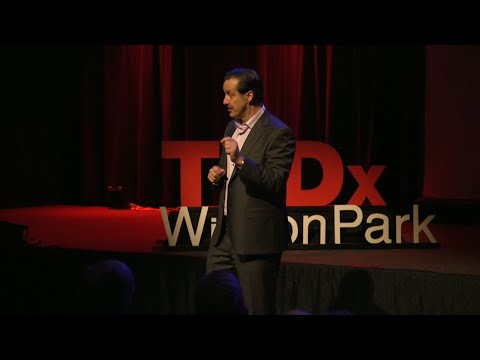
What Pigs Can Teach Us About Human Health and Sustainability | Charles Mayfield | TEDxWilsonPark
TEDx Talks· 2025-12-09 16:44
Pig Farming Industry & Historical Context - Pigs, introduced to North America in the 1400s-1500s, were once intimately familiar to everyone [1] - In the last century, pigs have faced numerous challenges, jeopardizing their contributions [2] - The perception of pigs needs to change, recognizing their contributions to medicine, farming, culinary arts, and skincare [4] - From the 1970s, the pork industry transitioned to concentrated animal feeding operations (CAFOs), turning pigs from heroes into villains [8] Medical Contributions - Galen, a famous doctor, credited much of his understanding of the human body to pigs through public dissections [5] - Up until the last decade, nearly every surgeon trained using pigs [6] - Pigs provide hormones and fluids for medical care, including heparin, insulin, and bile extracts [6] - Pig parts are used in heart valve replacements [6] - John's Hopkins was awarded over $21 million to advance pig organ viability for addressing the organ donor shortage [7] Farming & Sustainability - 986% of pork in the US is raised in factory farms, depriving pigs of sunshine, exercise, clean air, and water [7] - Pig manure, a valuable soil input, is transformed into toxic sludge in CAFOs, poisoning air and water [9] - Pigs' rooting behavior is essential and not solely tied to hunger [9] - Factory farming on concrete denies pigs this essential function [10] Culinary & Nutritional Aspects - The industry should look beyond bacon and consider nose-to-tail cooking [11] - Culinary roots are in lard, not tallow, but Crisco replaced lard in popularity [12] - World War II rationing further diminished lard's use [13] - Pastured pork lard is less prone to oxidation and has a better omega-6 to omega-3 fatty acid ratio [14] Skincare Applications - Pig skin and fat have historically been used for wound care and skin treatments [16] - The skincare industry is dominated by a vegan ethos, despite crop agriculture causing the deaths of over 18% billion wild animals annually [16] - Lard from pasture-raised pigs closely matches the lipid matrix of human skin [19] - Lard is non-comedogenic and deemed safe for cosmetic use in 2017 [20] Ethical Considerations & Future Actions - For many pigs, the only good day is the day their life ends [21] - The industry needs to increase pastured pork production from 1-2% to 5-10% in the coming decade [22] - Consumers can request pastured pork at grocery stores or find local farmers [22][23]
Suzano Launches Nature Strategy and Reinforces the Strategic Importance of Biodiversity Conservation to the Business
Businesswire· 2025-12-09 15:41
Core Insights - Suzano has launched its Nature Strategy, emphasizing the importance of biodiversity in its business operations and decision-making processes [1][5] - The strategy is developed in collaboration with IUCN and follows a science-led approach based on the mitigation hierarchy: avoid, reduce, restore, and transform [2][4] - The company has identified 125 endangered species within its operational territories, with 24 prioritized for conservation actions [3] Group 1: Nature Strategy Development - The Nature Strategy incorporates the STAR metric to map sensitive areas and identify endangered species, guiding priority actions for their conservation [3] - The internal analysis for the strategy covers 2.9 million hectares of land owned by the company, expanding to about 10 million hectares when including analyzed watersheds [4] - The strategy aligns with global biodiversity goals, including the Kunming-Montreal Global Biodiversity Framework [6] Group 2: Stakeholder Engagement - The development of the Nature Strategy involved over 25 stakeholders, including experts, government representatives, academia, NGOs, and local communities, ensuring diverse perspectives [7] - The strategy aims to connect 500,000 hectares of forest fragments and enhance water availability in critical watersheds [6] Group 3: Industry Context - The global biodiversity situation is concerning, with 75% of terrestrial ecosystems altered by human activity and approximately 25% of assessed species endangered [5] - Suzano's commitment to biodiversity is seen as essential for the resilience of its business and the communities it serves [5]


Klabin (OTCPK:KLBA.Y) 2025 Investor Day Transcript
2025-12-09 14:02
Klabin Day 2024 Conference Call Summary Company Overview - **Company**: Klabin - **Industry**: Paper and Pulp Key Points and Arguments Business Model and Strategy - Klabin emphasizes its unique business model that cannot be easily replicated by competitors, particularly due to its geographical advantages in Brazil for growing pine and eucalyptus trees [6][8][10] - The company has a diversified product portfolio that includes moisture-resistant products, which are primarily made from pine, and is positioned to meet the needs of various markets, including food-grade products and hygiene [15][17] - Klabin has strategically split its operations into three segments to reduce volatility and target niche markets with higher pricing potential [13][19] Financial Performance - Gabriela Woge, the CFO, highlighted that Klabin raised $10 billion in capital, significantly changing its debt structure by reducing dollar-denominated debt and extending payment timelines [5] - The company aims to maintain stable costs, with projections indicating that costs will remain below inflation rates through 2026 [38][41] - Klabin's cardboard customers have long-term contracts (3-5 years) that account for inflation fluctuations, providing revenue stability [20] Production and Operational Efficiency - Klabin has faced production challenges but has successfully normalized production levels, leading to positive results despite global uncertainties [40][43] - The company has invested in high-end technology to improve efficiency, such as reducing the weight of its paper products while maintaining quality [50] - Klabin is focused on operational continuity and has a dedicated team to assess and improve its production processes [51] Market Position and Competitive Advantage - Klabin is recognized as a market leader in Brazil and has established contracts with major global brands in the food and beverage sector [15][19] - The company has a strong asset base, with land values in key regions (Paraná, São Paulo, Santa Catarina) significantly exceeding its market capitalization [11][33] - Klabin's ability to assess land potential and execute large investments positions it as a benchmark in the Latin American market [34] Future Outlook - Klabin does not have new investments in the pipeline but is focused on leveraging existing assets and improving cash flow generation [31][32] - The company plans to continue selling land to enhance financial results, with expectations of achieving higher prices for these assets [46][62] - Klabin is preparing for a new cycle of operational continuity and forestry operations to ensure sustainable growth [50][51] Challenges and Risks - The company acknowledges challenges related to climate issues, inflation, and fluctuating costs, but remains committed to maintaining cost stability [40][43] - Klabin's management is aware of the need to adapt to market changes and is actively seeking initiatives to offset rising costs [43] Additional Important Information - Klabin's governance structure and operational continuity have been well established, serving as a benchmark in the industry [53] - The company is committed to paying dividends and maintaining shareholder value, with plans to issue new shares to increase its capital base [46][47] - Klabin's long-term strategy includes preparing for future investments in forestry and land management to ensure sustainable operations [50][51] This summary captures the essential insights from the Klabin Day 2024 conference call, highlighting the company's strategic direction, financial performance, market position, and future outlook.
Diginex Limited Announces Robust 293% Revenue Growth and Enhanced Balance Sheet for Six Months Ended September 30, 2025
Globenewswire· 2025-12-09 13:00
Core Insights - Diginex Limited reported a transformative first half of fiscal 2025 with a 293% revenue growth, reaching $2.0 million compared to $0.5 million in the prior-year period, driven by strong demand for ESG reporting and supply chain solutions [4][7][8] - The company strengthened its financial position through a successful IPO, warrant exercise, and the acquisition of Matter DK ApS, valued at approximately $13 million, enhancing its AI-driven ESG data capabilities [4][10] - Diginex maintains a debt-free balance sheet, with net assets increasing to $10.9 million as of September 30, 2025, up from $4.6 million at the end of March 2025 [7][10] Revenue Performance - Total revenue for the six months ended September 30, 2025, rose by $1.5 million (293%) to $2.0 million, primarily due to subscription and license fees increasing from $0.2 million to $1.9 million [8] - Advisory fees remained stable at $0.1 million, while customization revenue declined as the company focused on core product development [8] Expenses and Losses - General and administrative expenses increased by $3.4 million to $8.1 million, largely due to a $2.2 million rise in professional fees related to M&A activities [9] - The company reported a net operating loss of $6.0 million for the period, compared to a loss of $4.2 million in the first half of 2024 [7][14] Strategic Developments - Diginex is enhancing its AI-powered platforms, including the launch of an AI-powered ISSB Disclosure Tool, aimed at helping organizations align with international sustainability standards [5][7] - The company evaluated numerous strategic growth and M&A initiatives to expand its sustainability, compliance, and risk intelligence ecosystem [7] Balance Sheet Highlights - As of September 30, 2025, Diginex's net assets were $10.9 million, with a significant increase in cash and cash equivalents to $1.85 million from $3.11 million at the beginning of the period [10][15] - The company has maintained a debt-free status, preserving financial flexibility for future growth initiatives [10]